Owen Bradley
 Modern televisions are extraordinarily thin, and that thinness comes at a cost: there is simply no room inside for speakers that move enough air to sound convincing. Almost everyone who upgrades their audio hears an improvement bigger than the one they got from upgrading the screen. The question is how far to go. The soundbar vs surround sound decision pits a single tidy bar against a system of separate speakers placed around the room, and the right answer depends less on which sounds better in the abstract and more on your room, your wiring tolerance, your budget, and how you actually watch. This guide lays out both honestly, including the middle ground that suits most living rooms.
What Each System Actually Is
A soundbar is a single enclosure holding several drivers, with amplification and processing built in, usually paired with a wireless subwoofer that can sit anywhere within reach of a power socket. It connects to the television with one cable and is designed to be set up in under fifteen minutes.
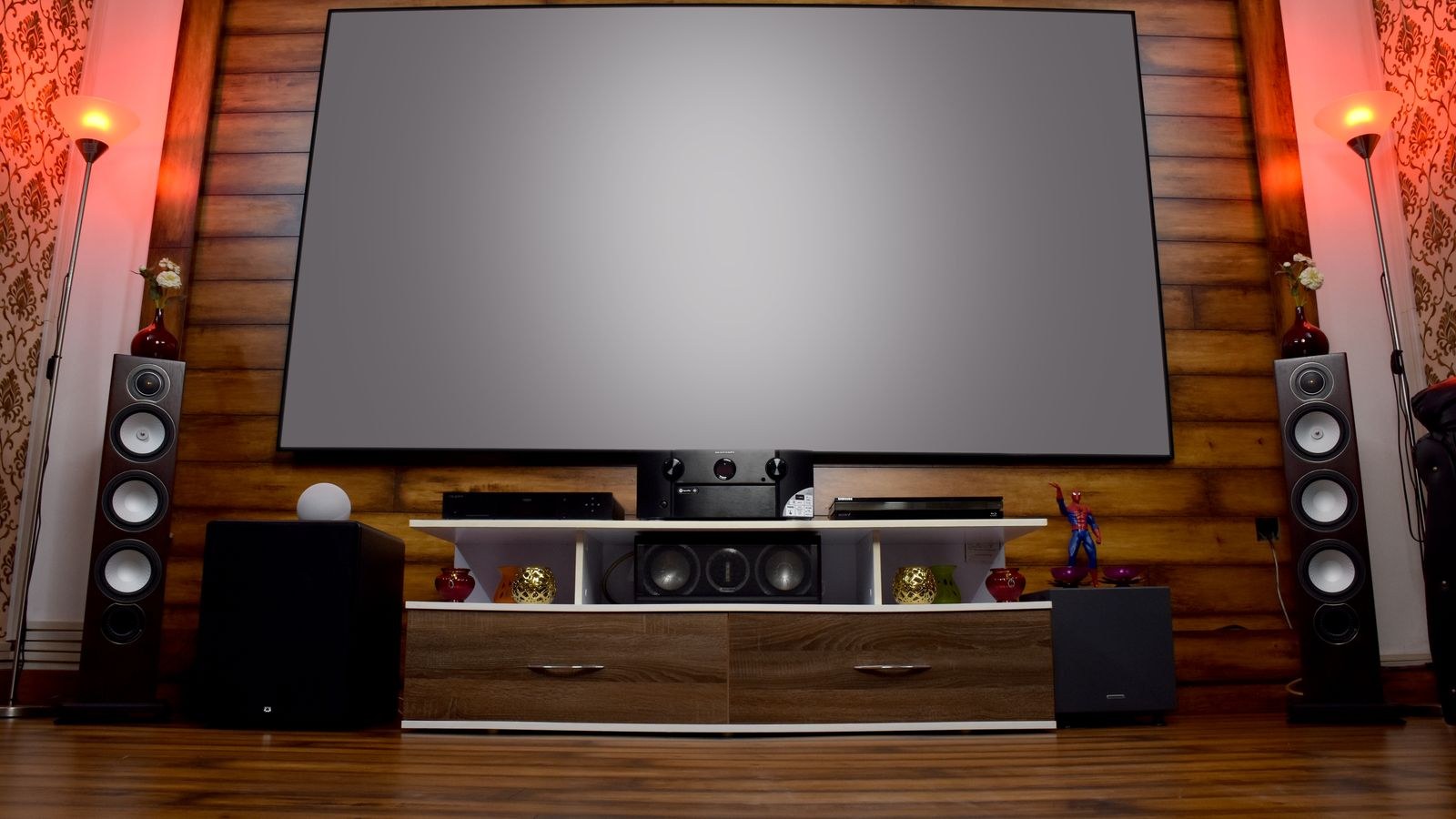
A surround sound system is separate speakers placed deliberately around the seating position, driven by an AV receiver that handles decoding, amplification, and switching. A 5.1 layout means front left, centre, front right, two surrounds behind or beside you, plus a subwoofer. Each speaker is a real box in a real place, connected by real cable.
That structural difference explains everything that follows. One is a product; the other is an installation.
Sound Quality: Where the Gap Is Real
For dialogue clarity, which is the single most common complaint about television audio, a good soundbar solves the problem completely. A dedicated centre driver aimed at the sofa makes speech intelligible in a way built-in television speakers never manage, and for many households that is the entire upgrade they needed.
Where separates pull ahead is in the things that require physical distance and real cabinet volume: genuine directional effects from behind you, dynamic range that does not compress when a scene gets loud, and the ability to fill a large room without strain. A rear speaker three metres behind your head produces an effect no amount of processing from a bar at the front can fully replicate, because the sound genuinely originates back there.
What Height Channels Change
Object-based formats add overhead information. Separate systems handle this with ceiling speakers or upward-firing modules placed properly. Premium bars fire drivers at the ceiling to bounce sound down, which works surprisingly well in rooms with flat, hard ceilings around eight to ten feet and works poorly in rooms with vaulted, beamed, or absorbent ceilings. If your ceiling is unusual, the bar’s headline Atmos claim may not survive contact with your room.
Room Size and Shape Decide More Than Price
In a small to medium room, roughly up to 200 square feet, with the sofa within three metres of the screen, a good soundbar with a capable subwoofer is genuinely close to a budget surround system, and it is far easier to live with. The room is small enough that reflections do the work processing was designed to fake.
In a large or open-plan space, the calculation flips. A single bar has to project across a much greater distance, output limits become audible, and the sweet spot for reflected effects disappears entirely. Rooms with open sides, high ceilings, or seating spread across a wide arc reward real speakers placed where the sound is supposed to come from.
Shape matters too. A long narrow room suits a bar reasonably well. A square room with a sofa in the middle and openings on two sides frustrates every bounce-based effect a bar tries to produce.
Installation, Wiring, and Living With It
This is the most underrated factor in the whole comparison. A soundbar involves one HDMI cable, one power lead, and pairing a subwoofer. It sits on the console or mounts under the screen and the job is done before the film starts.
A surround system means running speaker cable to the rear of the room, finding somewhere for a receiver that dissipates heat, mounting or standing four to seven speakers, and running room correction. Rear cable is the sticking point that stops most projects, since getting wire behind the seating without it crossing a walkway usually means lifting carpet, running trunking, or accepting a visible cable. Wireless rear kits exist and have improved, but the rears still need mains power wherever they end up.
Renting and Reversibility
If you rent, a bar leaves no trace. Surround speakers may require wall brackets, cable clips, or floor stands, all of which are workable but far more disruptive. Weigh how long you plan to stay in the space before committing to an installation you would have to undo.

Cost: Comparing Like With Like
Entry soundbars start very cheap but often add little beyond a modest bump in clarity. The meaningful tier starts around $250 to $400, where you get a real centre channel and a wireless subwoofer, and premium bars with upward-firing drivers and rear satellites run past $800.
A separates system has to fund a receiver before a single speaker, so the entry point is higher. A basic receiver plus a five-speaker package and subwoofer lands in similar territory to a premium bar, though the quality of the individual speakers at that price is usually modest. Spend beyond that and separates pull away decisively, because every additional pound goes into drivers and cabinets rather than processing.
The other financial difference is upgradeability. A bar is a sealed product; when you want more, you replace it. A separates system can be improved a piece at a time, which spreads cost over years and means nothing is wasted. If you are weighing what a given budget buys on the bar side, our roundup of the best soundbar speakers shows where the meaningful quality steps sit between tiers.
Choosing Between Them: A Practical Framework
- Main complaint is unclear dialogue: a soundbar fixes this for the least money and effort.
- Room under 200 square feet: a bar with a good subwoofer is close enough to separates.
- Large or open-plan room: separates, because output and placement both matter more.
- Cannot run rear cable: a bar, or a bar with a wireless rear kit.
- Film and music are a real hobby: separates, for the ceiling in quality and upgrade path.
- Renting short term: a bar, every time.
- Budget under $400: a bar buys more usable performance at that price.
The Middle Ground Worth Knowing About
The lines have blurred. Many bars now sell with matching wireless rear satellites, giving you genuine rear channels without a receiver or speaker cable, and the results are convincingly close to a modest 5.1 setup for a fraction of the effort. This modular bar approach has become the default recommendation for a large share of living rooms.
Coming the other way, compact separates packages now use small satellite speakers that hide easily and receivers that are far simpler to configure than a decade ago. If the idea of real speakers appeals but bookshelf-sized boxes do not fit your room, a look at compact 5.1 speaker packages shows how small a proper surround layout can now be.
Where the Subwoofer Fits
Whichever route you take, the subwoofer does more for perceived impact than any other single component. It handles the frequencies that neither a bar’s drivers nor typical satellites can reach, and it is why a modest system with a decent sub outperforms an expensive one without. If your current setup lacks low end, browsing speaker systems with a subwoofer is the fastest route to a noticeable improvement.
Common Mistakes to Avoid
The first is buying more channels than the room can support. A seven-channel layout in a room with the sofa against the back wall wastes two speakers, since surrounds need space behind and beside the listener to work. Match the layout to the geometry you have.
The second is ignoring placement. A perfectly good system placed badly, with the centre channel blocked by furniture or the subwoofer wedged into a corner, sounds worse than a cheaper system placed thoughtfully. Run the receiver’s room correction if you have it, and move the subwoofer around before deciding it is the wrong subwoofer.
The third is connection. Use the television’s eARC HDMI port for a bar rather than optical, since optical cannot carry the highest-quality formats. On a receiver, run sources into the receiver and one cable out to the screen so switching and decoding happen in one place.
Frequently Asked Questions
Can a soundbar really replace surround sound?
In a small or medium room, a premium bar with a subwoofer and rear satellites comes genuinely close for film watching. In a large room, or for anyone who cares about precise effect placement, separates still hold a clear advantage.
Do I need an AV receiver for a soundbar?
No. A soundbar has amplification and decoding built in and connects directly to the television. A receiver is only needed for a separates system, where it drives passive speakers and switches sources.
How many speakers do I actually need?
Five plus a subwoofer suits most rooms. Move to seven only if you have space behind the seating for genuine rear speakers. For a deeper look at the layouts, our guide to surround sound speakers covers how each configuration behaves in real rooms.
Is wireless surround as good as wired?
Modern wireless rear kits are reliable and the latency is managed automatically. They still need mains power at each rear speaker, so they solve the signal cable problem but not the power one.
What should I upgrade first?
The front three channels and the subwoofer carry the vast majority of a film’s content. Get those right before adding rears or height channels. Our overview of home theater speakers explains why the centre channel in particular deserves a disproportionate share of the budget.
Final Thoughts
There is no universal winner here, only a good match and a poor one. If your room is normal-sized, your main frustration is mumbled dialogue, and you would rather spend an evening watching films than routing cable, a quality soundbar with a real subwoofer is the sensible choice and you will not feel short-changed. If your room is large, you care about where sounds come from, and you want a system that improves piece by piece over years rather than being replaced wholesale, separates remain the higher ceiling and the better long-term value. Start with the room, be honest about the wiring you are willing to do, and the answer for 2026 usually becomes obvious before you have compared a single specification.