Owen Bradley
 A rug pad is the least glamorous purchase in the entire furnishing process and one of the few that pays for itself twice over. It stops the rug sliding, keeps the corners flat, cushions every step, and quietly doubles the working life of the fibres above it by absorbing the crushing force of foot traffic. Get the wrong one, though, and you can stain a hardwood floor so badly that refinishing is the only fix. This rug pad buying guide covers the four main pad types, how thickness should follow your flooring and pile height, and which materials are genuinely safe on modern floor finishes. It takes ten minutes to understand and saves a great deal of regret.
What a Rug Pad Actually Does
People buy pads to stop slipping, which is the most visible benefit but not the most valuable one. The bigger job is protecting the rug itself. Every footstep grinds the rug’s backing against a hard floor, and that friction abrades the base of the fibres from below where you never see it. A pad absorbs that movement, so the pile wears evenly from the top instead of failing from the bottom.
A pad also lifts the rug fractionally off the floor, allowing air to circulate underneath. Without that gap, moisture and dust get trapped, which matters in humid climates and over concrete or basement slabs. And it improves the underfoot feel dramatically: a thin flatweave over a good pad feels more expensive than a thick rug lying directly on tile.
- Prevents slipping and the bunching that creates trip hazards.
- Extends rug life by absorbing compression and friction.
- Protects the floor from grit ground between the rug backing and the finish.
- Adds cushioning and makes a room noticeably quieter.
- Keeps edges flat, which is where most rug damage starts.
The Four Main Types of Rug Pad
Felt Pads
Felt pads are made from dense pressed fibres, usually recycled synthetic or wool blends, and they are all about cushioning and insulation. They add real plushness underfoot and are the right choice under a large rug that is already held in place by furniture. What they do not do is grip: a felt pad alone will not stop a small rug sliding on a polished floor.
Rubber Pads
Thin natural rubber pads are the grip specialists. They hold a rug firmly on hard flooring and are ideal for small runners, entry rugs and any rug with no furniture on it. Because they are thin, typically an eighth of an inch or less, they add little cushioning. Look specifically for natural rubber rather than PVC or plastic-coated alternatives.
Felt and Rubber Combination Pads
The combination pad bonds a felt cushioning layer to a natural rubber gripping layer and is the best all-round choice for most rooms. You get the plushness of felt with the hold of rubber, and it works on both hardwood and tile. It costs more than either type alone, but for a living room rug that has to stay put and feel good, it is the sensible default.
Non-Slip Pads for Carpet
Laying a rug over wall-to-wall carpet is a different problem. Ordinary pads do nothing because the rug slides on the carpet pile, not on the pad. What you need is a pad with a textured or needled surface designed to interlock with carpet fibres, sometimes sold as a carpet-to-carpet or rug-on-carpet pad. These are thin by design, since adding loft over existing carpet creates an unstable, spongy surface.
The same principle applies to any hard surface you place over carpet. A rolling office chair on a rug over carpet, for example, needs a rigid base rather than a soft pad, which is why purpose-built desk chair mats for carpet use a stiff panel with gripper spikes instead of the cushioning approach that works elsewhere.
Choosing Thickness
Thickness is a balance between comfort and practicality, and the right answer depends on the pile height and where the rug sits.
- 1/16 to 1/8 inch: thin rubber or carpet-to-carpet pads. Use under flatweaves, in doorways where clearance is tight, and beneath rugs on existing carpet.
- 1/4 inch: the most versatile thickness. Comfortable underfoot, works under most medium-pile rugs, and clears the majority of interior doors.
- 3/8 inch: a plush option for bedrooms and low-traffic lounges where you want maximum softness and door clearance is not an issue.
- 1/2 inch and above: rarely a good idea. It makes rug edges roll, creates a pronounced trip lip, and can make furniture feel unstable.
Two situations call for deliberately thin pads. Under a dining table, thick padding lets chair legs sink and catch, so stick to a quarter inch or less. In an entryway or any doorway, measure the gap under the door before choosing, because a pad that stops a door swinging is an everyday irritation.
Matching the Pad to Your Floor
This is the part that causes genuine damage when it goes wrong. Modern hardwood finishes, especially polyurethane, react badly to certain plastics. A cheap pad made from PVC, or one with a plasticised coating, can chemically bond to the finish over months of contact. The result is a cloudy, sticky haze or a printed pattern of the pad’s mesh that cannot be cleaned off and requires sanding and refinishing to correct.
On hardwood and engineered wood, use natural rubber or felt, and avoid anything described as vinyl, PVC or “plastic grip”. Luxury vinyl plank and sheet vinyl are even more sensitive, because plasticisers migrate between the two vinyl surfaces and cause permanent discolouration. Natural rubber and felt remain the safe pairing there too.
Tile and stone are more forgiving but tend to be slippery, so favour a combination pad with a real rubber layer. Over concrete or in a basement, choose a breathable felt or felt-and-rubber pad rather than a solid moisture barrier, so any dampness in the slab can escape instead of being trapped under the rug.
Sizing and Cutting a Pad
A pad should be about one inch smaller than the rug on every side, so it disappears under the edges and lets the rug taper down to the floor naturally. A pad cut flush to the rug edge tends to peek out and creates a hard lip; a pad that is much too small leaves the corners unsupported and they will curl.
- Measure the rug’s true dimensions rather than trusting the label, since handmade rugs vary.
- Buy or order a pad in the nearest larger standard size.
- Lay the pad flat and place the rug on top, centring it so the overhang is even.
- Mark the pad an inch inside the rug edge with chalk or a marker.
- Cut along the line with heavy scissors or a utility knife against a straight edge.
- Lay the pad rubber side down, then unroll the rug over it from one end.
Let both the pad and the rug relax for a day or two before judging any waviness. Most creases from shipping settle on their own; stubborn corners can be weighted with books overnight.
Living With a Rug Pad
Pads are close to maintenance free, but a few habits keep them working. Lift the rug and shake out the pad once or twice a year, since fine grit does eventually work through. Check the rubber layer for hardening or crumbling every couple of years, because natural rubber does age and a brittle pad loses grip and can leave residue. Rotate the rug and pad together so that wear patterns from traffic spread evenly.
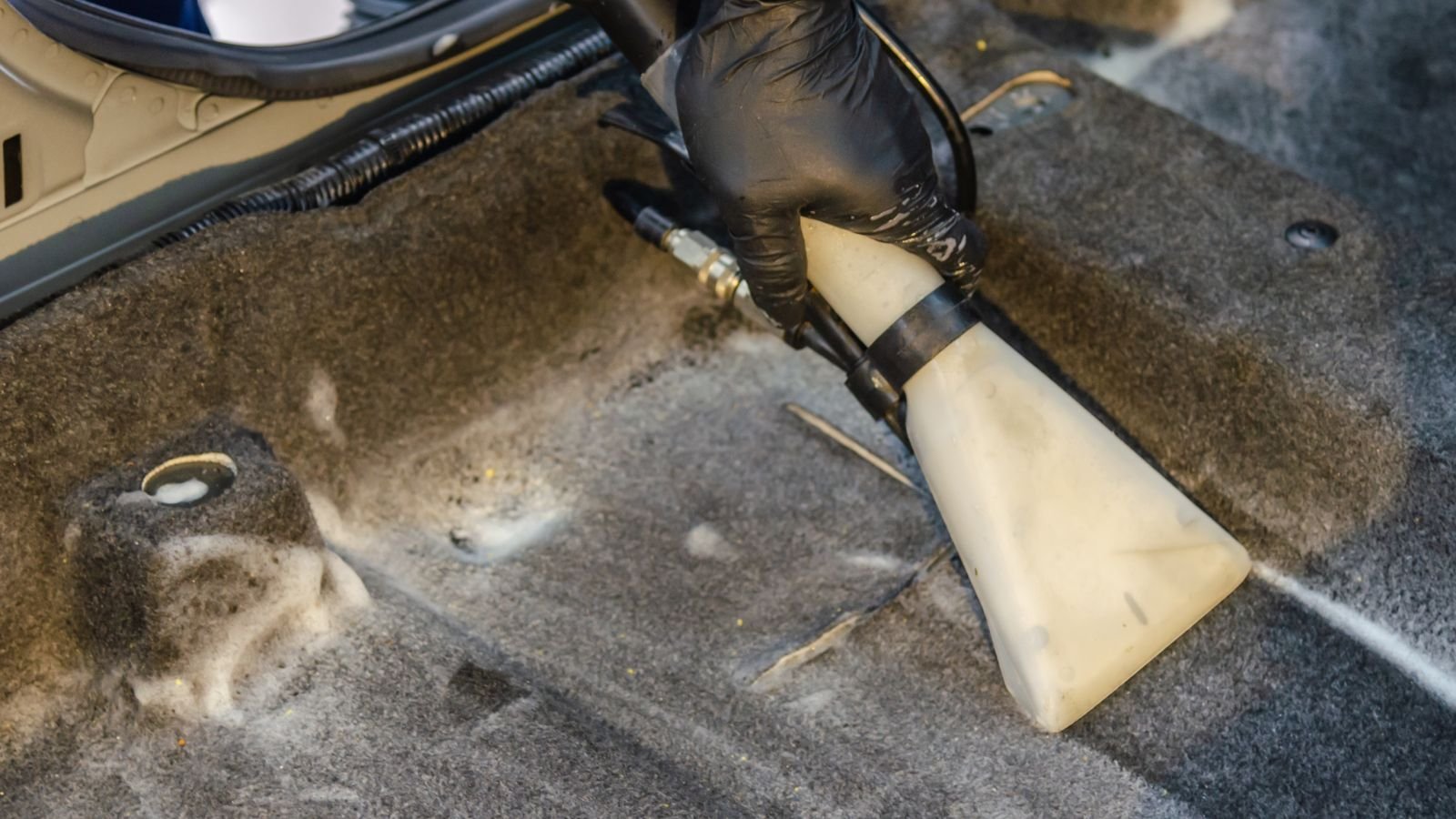
Cleaning routines matter here too. A pad reduces the abrasion that destroys pile from beneath, but the grit sitting on top still needs removing regularly. On hard flooring around the rug, one of the machines from our roundup of vacuum cleaners for hardwood floors avoids the brush-roll scratching that a carpet-focused machine can cause, while the rug itself is better served by the height-adjustable models in our guide to vacuums for carpets. For periodic deep cleaning, remember to remove the rug from the pad first; the extraction machines covered in our comparison of carpet cleaning machines push moisture through the backing, and a soaked felt pad takes days to dry and can mildew.
Furniture and Compression
Heavy furniture will compress a felt pad permanently at the contact points, which is normal and not a defect. Where a sofa or heavy chair sits on the rug edge, a thinner pad often behaves better than a plush one because there is less material to deform. If you are still choosing seating, note that pieces with broad feet spread the load far better than narrow tapered legs; the weight and leg design of the models in our guide to living room sofas makes a visible difference to how a padded rug holds its shape over years.
Budget and What You Get
For an 8×10 rug, a thin rubber pad typically runs $30 to $60, a quarter-inch felt pad $60 to $110, and a felt-and-rubber combination pad $90 to $180. Cheap mesh pads under $25 are the ones most likely to use PVC and to break down into a sticky residue, which makes them a false economy given the cost of refinishing a floor.
Judged against the rug it protects, even a premium pad is a small fraction of the total. If the rug cost several hundred dollars or more, the combination pad is straightforwardly the right call. Reserve the thin rubber pads for small runners and entry mats where cushioning is not the point.
Common Mistakes
- Using a PVC or vinyl mesh pad on hardwood. It can permanently haze or print onto the finish.
- Choosing a pad that is too thick. Half-inch pads roll the edges and create trip hazards.
- Cutting the pad the same size as the rug. It will show at the edges and stop the rug lying flat.
- Using a standard pad over wall-to-wall carpet. Only a carpet-specific gripping pad stops movement.
- Sealing a slab floor. A non-breathable pad over concrete traps moisture underneath.
- Never lifting the pad. Grit accumulates below and slowly abrades both the rug backing and the floor.
Frequently Asked Questions
Do I need a rug pad if the rug sits under heavy furniture?
Yes, though for a different reason. The furniture prevents sliding, but the pad still absorbs traffic compression and stops the exposed portions of the rug abrading against the floor. It also improves how the walking areas feel underfoot, which is where you notice a rug most.
Which rug pad is safe for hardwood floors?
Natural rubber, felt, or a bonded felt-and-rubber combination. Avoid anything containing PVC, vinyl or an unspecified “plastic” grip layer, since these can react with polyurethane finishes and leave marks that only sanding will remove.
How thick should a rug pad be?
A quarter inch suits most living rooms and bedrooms. Drop to an eighth of an inch or less under dining tables and in doorways where chairs must glide and doors must clear. Go to three eighths only where you want maximum plushness and clearance is not a concern.
Can I use a rug pad on top of carpet?
Only a pad designed for it. Standard felt or rubber pads slide on carpet pile and make matters worse. Carpet-specific pads have a needled or textured face that grips the fibres below, and they are deliberately thin to avoid an unstable stack.
Final Thoughts
Choose the pad by answering three questions: what is the floor made of, how thick is the rug, and does anything heavy sit on it. Natural rubber or a felt-and-rubber combination is safe on wood and vinyl; a quarter inch suits most rooms; and thinner is better under dining chairs, in doorways and over existing carpet. Cut it an inch smaller than the rug on all sides and lift it once a year to shake out grit. Spend the modest amount a proper pad costs and the rug you laid this 2026 will stay flat, stay put and last considerably longer than it otherwise would.