Owen Bradley
 The programmable vs manual thermostat debate usually gets settled with a marketing number rather than an honest answer. You have probably seen the claim that scheduling your heating saves a tidy double-digit percentage on energy bills. That figure is real under specific conditions, and close to zero under others. Which camp you fall into depends less on the hardware and more on how predictable your days are, how well your house holds heat, and whether you will actually leave the schedule alone once it is set. This comparison lays out where each type genuinely wins, what the savings depend on, and how to choose without paying for capability you will never touch in 2026.
What Each Type Actually Does
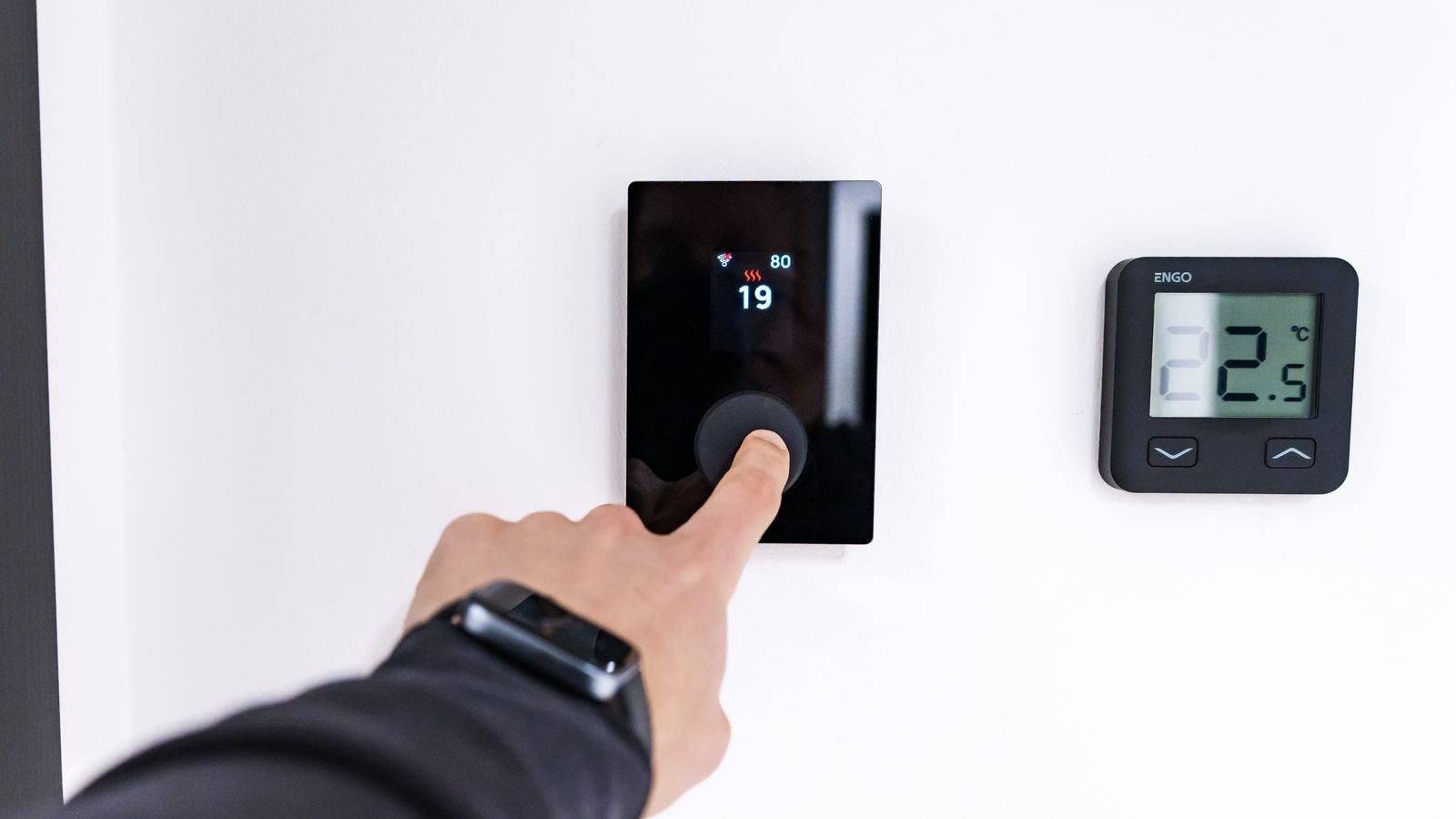
A manual thermostat holds one temperature until you change it. That is the whole feature set. It may be a mechanical dial with a bimetallic strip or a digital model with a small display and up and down buttons, but either way it maintains a single setpoint indefinitely. There is nothing to configure, nothing to forget, and nothing to reset after a power cut.
A programmable thermostat adds a clock. You define periods across the day, each with its own target temperature, and the unit switches between them automatically. Common formats are 7-day, where every day gets its own schedule; 5-1-1, which separates weekdays, Saturday, and Sunday; and 5-2, which treats the whole weekend the same. All of them include a temporary hold button so you can override the schedule without rewriting it.
Neither type needs internet, an account, or an app. That matters to a lot of buyers who want energy management without a connected device on the wall. If you want to compare non-connected options across both categories, our overview of the best thermostats covers the full range, while the best non smart thermostats list narrows it to units with no connectivity at all.
Where the Savings Actually Come From
Here is the mechanism that gets lost in the marketing: a programmable thermostat saves nothing by existing. It saves money only by running setbacks, periods when the house is deliberately allowed to drift away from your comfort temperature because nobody needs it. The savings come from the setback itself, not from the fact that a clock triggered it.
The physics is straightforward. Heat loss from a building is proportional to the temperature difference between inside and outside. Drop the indoor temperature during an eight-hour overnight period and that difference shrinks, so less heat escapes and the furnace runs less. The reheat cost when the setback ends is real but smaller than the accumulated saving, because the walls and furniture cooled gradually rather than instantly.
Two variables decide how much you gain. The first is setback depth: a two degree drop barely registers, while a seven to ten degree drop over a long period produces meaningful reductions. The second is setback duration: brief dips of an hour or two do almost nothing because the building mass never fully cools. Long, deep setbacks are where the money is.
Why the Same Schedule Saves Different Amounts
A drafty older house with minimal insulation responds quickly to setbacks and reheats quickly too, so schedules pay off strongly. A well-insulated modern home with high thermal mass barely cools during an eight-hour setback, which means both the saving and the reheat cost are small. Climate matters as well: a mild winter with small indoor-outdoor differences leaves less to save than a harsh one. Anyone comparing models on the strength of scheduling should read our breakdown of the best programmable thermostats alongside a realistic assessment of their own building.
The Case for a Manual Thermostat
Manual units win on reliability and simplicity. There is no schedule to drift out of sync after a daylight saving change, no settings lost when the batteries die, and no interface to relearn. For anyone who finds menu navigation frustrating, this is not a small advantage.
They also win whenever occupancy is unpredictable. If somebody is home most of the day, or the household works rotating shifts, there is no consistent empty window to exploit. A programmed setback that fires while a family member is on the sofa gets overridden, and repeated overrides erase the benefit entirely while adding daily annoyance.
Cost is the third advantage. Manual thermostats sit at the bottom of the price range and typically outlast programmable ones because they contain less electronics. If your heating bill is modest to begin with, the payback period on a more capable unit can stretch past the point where it matters. Digital manual models that add an accurate sensor and readable screen without scheduling occupy a useful middle ground, covered in our roundup of the best digital home thermostats.

The Case for a Programmable Thermostat
Programmable units win decisively in households with a predictable empty period. A home that is unoccupied from eight in the morning until six in the evening, five days a week, has fifty hours of setback opportunity per week that a manual thermostat can only capture if somebody remembers to turn the dial down twice a day, every day, without fail. Nobody does that consistently for a whole winter.
They also handle the overnight setback that most people want but few execute well. Sleeping in a cooler room is generally more comfortable, and having the heat climb back up half an hour before the alarm means you never wake to a cold house. That single feature converts many sceptics, because it improves comfort rather than trading it away.
A well-designed programmable model gives you an easy temporary hold for unusual days and a permanent hold for holidays, so the schedule bends without breaking. Look for a vacation or away mode, since a two-week trip at a deep setback saves more than months of ordinary scheduling.
Honest Advice for Irregular and Work-From-Home Routines
Remote and hybrid work has quietly weakened the case for aggressive scheduling. If you are at your desk at home three days a week and in an office two, a fixed weekday schedule will be wrong roughly forty percent of the time. You end up overriding constantly, which is worse than either extreme.
There are two sensible responses. The first is to program only the reliable periods and leave the rest at a comfortable constant. Overnight setback is almost always safe, since everyone sleeps, so a schedule that does nothing but drop the temperature from bedtime to morning captures a large share of available savings with zero disruption. The second is to accept a manual thermostat and adjust it deliberately when you leave for a full day, treating it as a conscious action rather than an automated one.
What does not work is programming an ambitious schedule you fight with daily. Every override costs comfort or attention, and after a few weeks most people simply hold the thermostat at one temperature permanently, at which point they have paid for a programmable unit and are using it as a manual one.
A Realistic Schedule Template
- Wake period: comfortable temperature starting thirty minutes before you get up.
- Day period: setback only if the house is genuinely empty on that day of the week.
- Evening period: back to comfortable, timed to your usual arrival home.
- Night period: the deepest setback, running through the full sleeping window.
Four periods is enough. Units offering six or eight per day tempt people into over-engineering a schedule that then needs constant correction. If you want more detail on structuring these blocks around real occupancy, see our walkthrough on how to choose a thermostat schedule.
Comfort, Accuracy, and the Details Between Them
Both categories vary widely in sensor accuracy and switching differential, and those specifications affect daily comfort more than scheduling does. A mechanical manual thermostat may allow a swing of two or three degrees around its setpoint, which some people notice as rooms feeling alternately stuffy and chilly. A good digital unit of either type holds within about one degree.
Cycle behaviour matters too. Frequent short cycles are inefficient and hard on equipment, particularly air conditioning compressors, so look for compressor protection that enforces a minimum off period. Backlighting, digit size, and physical buttons all shape how pleasant the device is to use at six in the morning, and none of them appear in energy savings calculations.
Mistakes That Undermine Both Types
Cranking the setpoint far above your target does not heat the house faster. A thermostat is a switch, not a throttle; the furnace runs at the same output either way, and you simply overshoot and waste fuel. This mistake is equally common with both types.
Poor placement ruins any thermostat. Sunlight, a nearby lamp, a draughty door, or a supply register blowing across the sensor produces readings that have nothing to do with the rest of the house. Setting deep setbacks in a home with poorly insulated pipes is another risk, since letting indoor temperatures fall too far invites freezing in unheated cavities. Keep any setback above a safe floor.
Frequently Asked Questions
Does a programmable thermostat really save money?
It can, but only through setbacks you would not otherwise apply manually. Households with long, reliable empty periods and a leaky building envelope see the largest reductions. Households that are occupied all day, or that override the schedule regularly, save little or nothing.
Is it cheaper to leave the heating at one temperature?
No. The idea that reheating costs more than the setback saved is a persistent myth. Lowering the indoor temperature always reduces heat loss during that period, and the recovery energy is less than the accumulated saving, provided the setback lasts several hours.
How deep should a setback be?
Seven to ten degrees below your comfort setting works well for overnight and full-day absences in most homes. Go deeper only if the building is well protected against freezing. Shallow setbacks of two or three degrees produce very little benefit.
Which is better for a heat pump?
Heat pumps recover slowly and may trigger expensive auxiliary electric heat during a large temperature climb. Use shallow setbacks of two to four degrees, or choose a model with adaptive recovery that starts warming early enough to avoid the backup stage. A manual thermostat held steady is often the simpler choice.
Can I switch back to manual operation?
Yes. Almost every programmable thermostat has a permanent hold that disables the schedule entirely, turning it into a manual unit. That makes a programmable model the lower-risk purchase if you are undecided, since it can behave either way.
Final Thoughts
The right answer depends on your routine, not on which device is more advanced. If your household empties out on a dependable schedule and your home loses heat readily, a programmable thermostat with a few well-chosen setbacks will pay for itself and improve morning comfort at the same time. If somebody is home most days, if your hours are unpredictable, or if you know yourself well enough to admit you will never touch a programming menu, a good digital manual thermostat delivers the same comfort with none of the friction. Either way, the setback is what saves money, so choose the device that makes you most likely to actually use one.