Owen Bradley
 Porch piracy is the rare crime that takes almost no skill and carries almost no risk. A box sits unattended in plain view, the thief walks up as though they belong there, and the whole event is over in eight seconds. Most homeowners respond by buying a camera, which is a reasonable first move but only half a solution: a camera records the theft, it does not prevent it. Real package theft prevention works in layers, combining tools that stop a grab from being possible with tools that make the thief think twice and tools that give you evidence when both fail. This guide ranks the options by how well each one actually keeps your parcels, explains where each fits, and shows how to combine them without spending more than the packages are worth.
How Porch Theft Actually Happens
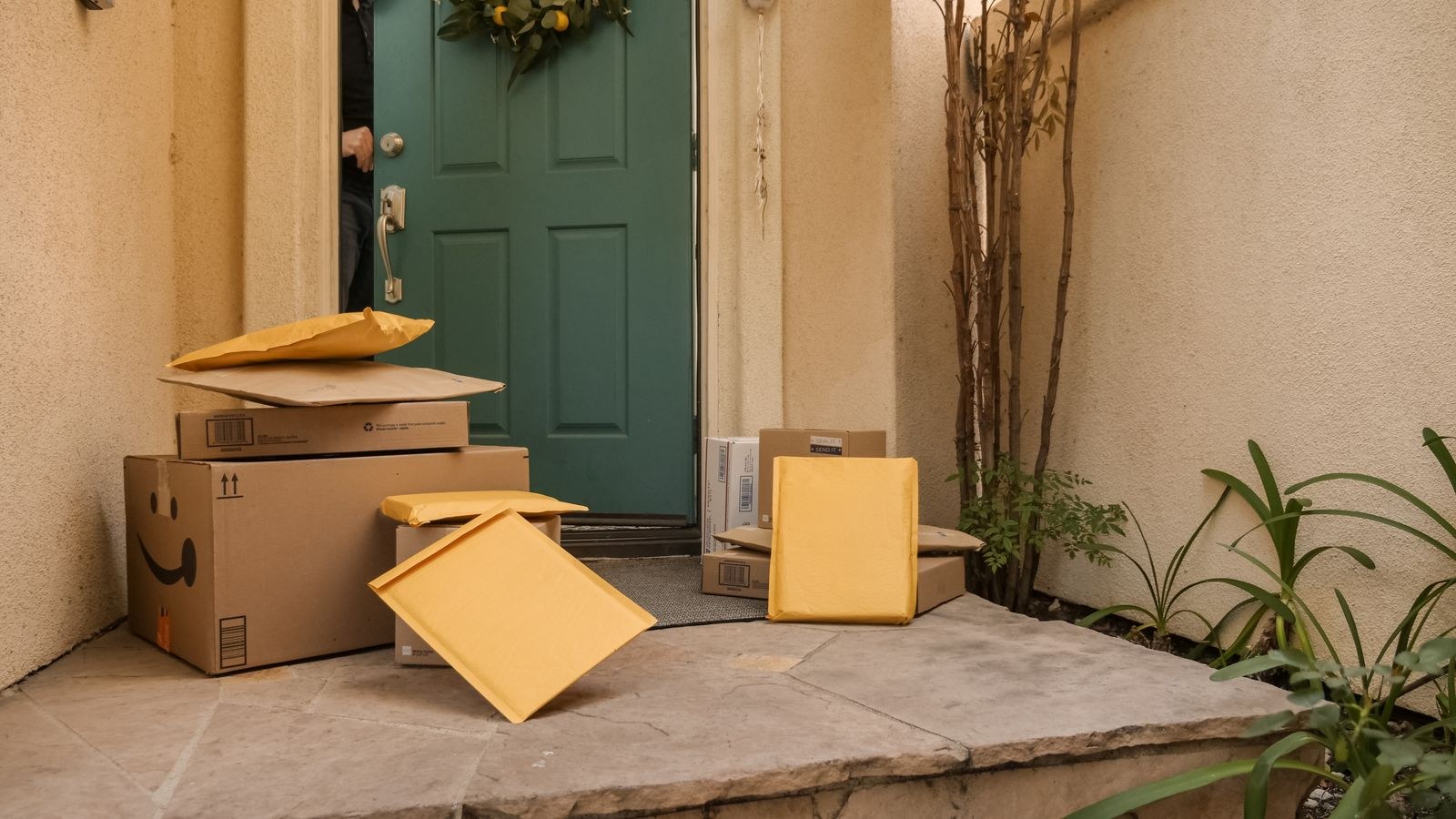
Understanding the pattern tells you where to spend. Most thefts are opportunistic rather than targeted. Someone follows delivery vans through a neighborhood, or simply walks a street in the hour after a delivery wave, looking for boxes visible from the road. They rarely open gates, rarely climb, and almost never force anything. Speed and visibility drive the whole crime.
That gives you three levers. Remove visibility so the box cannot be seen from the street. Remove access so a visible box cannot be picked up. Remove time so the package is not sitting out for hours in the first place. Every product and habit below pulls one of those levers, and the effective ones pull more than one.
Tier One: Never Leave the Package Out
The cheapest and most effective prevention costs nothing, because it removes the opportunity entirely. Before buying hardware, exhaust the free options.
- Carrier pickup points and parcel lockers. Most major carriers now let you redirect a shipment to a staffed store or an automated locker bank. The package is never exposed, and you collect it when convenient. For anything expensive, this is the single best answer.
- Ship to work. If your workplace accepts personal deliveries, a staffed reception desk is a free secure drop.
- Delivery instructions. Nearly every carrier app accepts a note. “Place behind the planter, out of view from the street” removes visibility at zero cost, and drivers generally follow clear, specific instructions.
- Scheduled and windowed delivery. Choosing a slot when someone is home eliminates exposure time. Some carriers charge a small fee for a narrow window; on a high-value order it is cheap insurance.
- Signature required. Adds friction for you but guarantees the box is handed to a person.
Households that adopt two or three of these habits often cut their exposure more than any device could. Hardware is best treated as the backstop for the deliveries you cannot control.
Tier Two: Lockboxes and Parcel Drop Safes
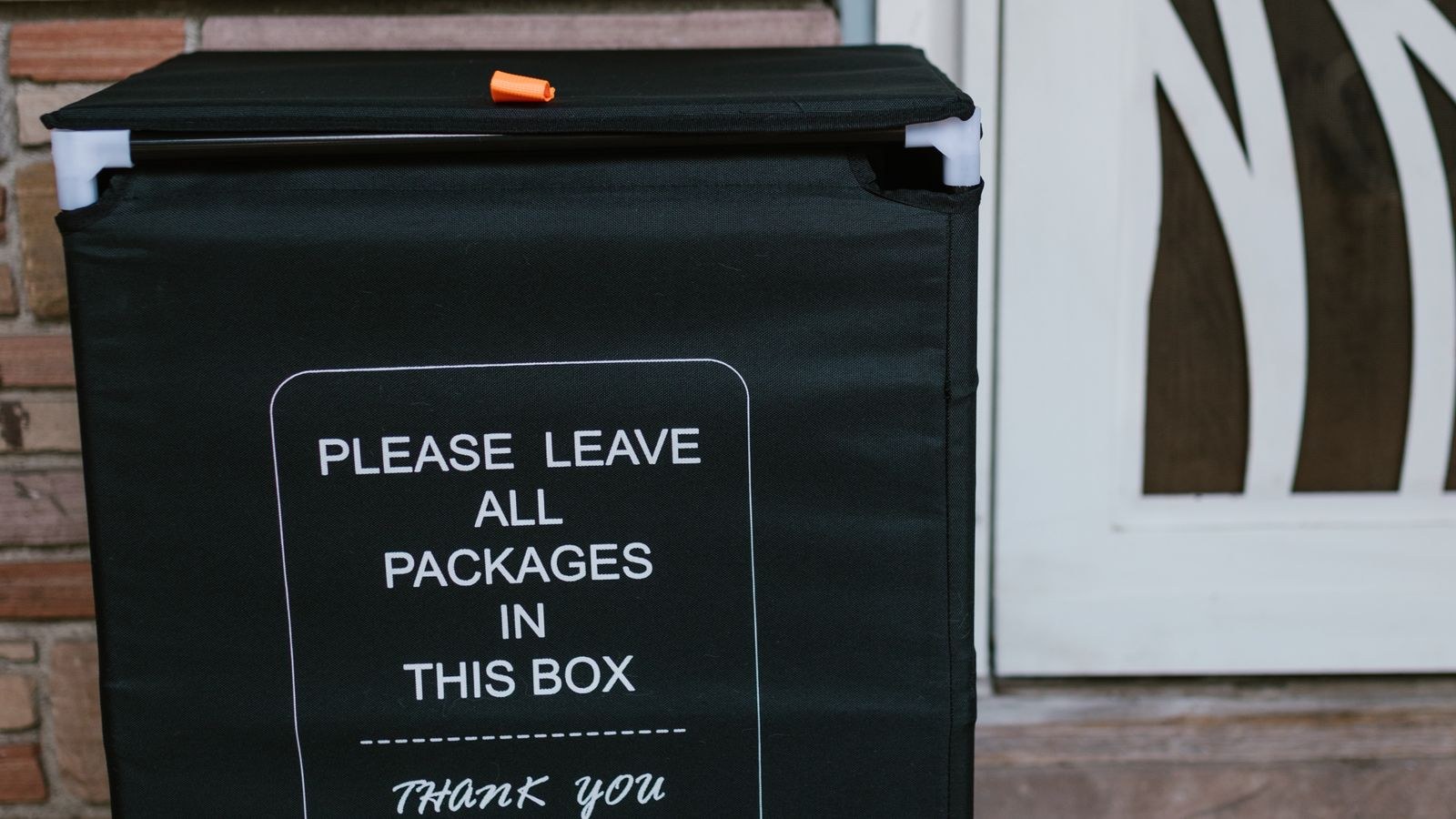
A parcel lockbox is the only mainstream product that physically prevents theft rather than merely recording it. The concept is simple: a weatherproof steel container sits by the door, the driver opens the lid or door, drops the parcel inside, and it locks on closing. You retrieve it with a key or code.
Buying one well comes down to four decisions.
Capacity
Measure the largest box you actually receive rather than the average one. Interior volumes commonly run from around 2 cubic feet for a small unit up to 6 cubic feet or more for a family-sized drop safe. Undersized boxes are the most common regret, because an oversized parcel that will not fit gets left on top of the lockbox, defeating the whole purpose.
Anchoring
An unanchored lockbox is just a heavier package. Every serious unit provides bolt holes in the base for lagging into a concrete porch or a deck joist, and better ones include an internal cable anchor for renters who cannot drill. If you cannot bolt it down, at minimum run a hardened cable through the anchor point to a railing post or a structural column. A quality shackle-resistant lock on that cable matters as much as the box itself; the same criteria that separate strong from weak options in a roundup of the best padlocks apply directly here.
Access Method
One-way drop slots are the most driver-proof design, since nothing needs to be explained. Combination or keypad doors let drivers enter a code you supply in delivery notes, which works well with a regular route driver but fails with substitutes. Smart lockboxes that unlock via an app or a one-time code offer the best of both, at higher cost and with a battery to maintain.
Weather and Build
Look for powder-coated steel of at least 16 gauge, a lid that overlaps the body so water sheds away from the seam, and drainage in the base. Thin sheet metal boxes can be peeled or pried at the lid corner with a modest tool, and plastic units are convenient but offer little real resistance.
Tier Three: Cameras and Video Doorbells
Cameras do three useful things: they deter the subset of thieves who look for them, they alert you in time to intervene, and they produce evidence for carriers, insurers, and police. What they do not do is stop a determined grab. Treat a camera as detection and deterrence, not as a lock.
A video doorbell is the natural first camera because it watches the exact spot where parcels land and it doubles as a delivery notification. The specifications that matter for theft are not the ones marketing emphasizes.
- Field of view and aspect ratio. A tall, head-to-toe view is far more useful than a wide one, because it shows the doorstep and the package rather than just a face at chest height. Look for a vertical or square-ish view rather than a letterbox frame.
- Response latency. The gap between motion and a usable live view decides whether you can speak to someone while they are still on the porch. Wired units are consistently faster to wake than battery units.
- Package detection. Alerts that specifically announce a parcel arriving, and in better systems a parcel leaving, cut through motion-alert fatigue.
- Pre-roll capture. A few seconds of buffered video before the trigger often captures the approach and the vehicle, which is the part police can actually use.
- Reliable night performance. Many thefts happen after dark. Infrared range and a bright, even porch light matter more than headline resolution.
Comparing these features across models is easier with a shortlist in hand; our roundup of the best wifi doorbell cameras groups units by response speed and detection quality, and the broader video doorbell systems comparison covers packages that pair a doorbell with a chime and local storage.
Adding a Second Camera With a Wider View
A doorbell alone gives you a close-up of a hood and a hand. A second outdoor camera mounted higher on the wall or under an eave, aimed down the walkway toward the street, gives you the approach, the walk-off direction, and often a vehicle. That second angle is what turns a useless clip into an identifiable one. Choose a unit with a spotlight and a siren, since light plus noise interrupts a theft in progress far more reliably than a silent recording. Weatherproofing rated IP65 or better, and a mounting height of about 9 to 10 feet, keep the camera out of reach and out of the rain. A selection of models suited to this role appears in our guide to the best outside cameras, and if you want help matching sensor and lens specs to a porch scenario specifically, the walkthrough on how to choose a camera for package theft covers the trade-offs in more depth.
Deterrence: Cheap Measures That Change Behavior
Thieves make a quick judgment about whether a porch is worth the risk. Several inexpensive touches tilt that judgment.
- Motion-activated lighting. A porch that lights up as someone approaches removes the anonymity darkness provides and startles opportunists.
- Visible camera placement. Hidden cameras gather better evidence; visible cameras prevent more thefts. Where prevention is the goal, let it be seen.
- Screening. A planter, a trellis, or a low privacy panel that blocks the doorstep from street view removes the target from the scan entirely.
- Signage. A modest sign noting video recording is in use costs a few dollars and works on the casual thief who is choosing between your porch and the next one.
- A dog, or the sound of one. Bark-response devices are gimmicky, but audible dogs remain among the most effective deterrents there are.
Building a Layered Setup by Budget
You do not need everything. Match the layers to what you receive and where you live.
- Minimal, near zero cost: standing delivery instructions to hide parcels out of street view, carrier notifications enabled, and a habit of collecting boxes promptly.
- Moderate: a video doorbell with package detection, motion-activated porch lighting, and a mid-size anchored lockbox for routine deliveries.
- Comprehensive: the above plus a wide-angle spotlight camera covering the approach, a large drop safe with a smart lock, and high-value items always routed to a carrier pickup point.
The comprehensive tier still costs less than a single stolen laptop, which is the calculation worth making. Households in apartment buildings or in areas with heavy foot traffic should weight spending toward lockboxes and redirected deliveries, since visibility is impossible to control there.
Common Mistakes
The biggest error is buying a camera and stopping. It generates footage of a theft you could have prevented for the same money with a lockbox and better delivery instructions. The second is placing an unanchored lockbox, which occasionally results in losing both the parcel and the box. The third is ignoring the size question: a lockbox that fits 80 percent of your deliveries leaves the other 20 percent sitting on the porch lid, and those are often the largest and most valuable. The fourth is neglecting lighting, which quietly halves the usefulness of every camera you own after sunset.
What to Do When a Package Is Stolen
- Confirm the delivery status and check around the property, including with neighbors, since misdelivery is more common than theft.
- Save the original video clip with its timestamp intact rather than a re-shared copy.
- Report to the retailer first. Most major sellers will replace or refund an item marked delivered but not received, and this is usually the fastest resolution.
- File a report with the carrier, which triggers a driver inquiry and creates a record.
- File a police report if the value is meaningful; it supports insurance claims and helps map local patterns.
- Adjust the setup afterward: add the layer that would have stopped this specific theft.
Frequently Asked Questions
Do lockboxes actually get used by drivers?
Usually, if the process is obvious. A clearly labeled box placed directly at the door with a one-way drop lid gets used most consistently. Codes and app-based access get skipped more often, especially by substitute drivers.
Is a camera worth it if it will not stop the theft?
Yes, as part of a layered setup. It provides the arrival alert that lets you retrieve a parcel quickly, deters a share of opportunists, and produces the evidence that retailers and insurers ask for.
Who is responsible for a stolen package?
It depends on the retailer’s policy and the shipping terms, but in practice most large sellers replace items marked delivered but missing. Signature-required shipping shifts the responsibility more clearly onto the carrier.
Will homeowners insurance cover it?
Often, but the loss is frequently below the deductible, so a claim rarely makes sense for a routine parcel. It matters mainly for high-value items.
Final Thoughts
Package theft is a logistics problem more than a security problem, and the households that solve it in 2026 are the ones that stop the box from sitting exposed in the first place. Route the expensive things to a locker or a staffed pickup point, give the driver a specific place to hide the rest, install an anchored lockbox large enough for what you actually order, and let a well-lit camera cover the gap. Layered that way, the eight-second grab simply has nothing to grab.