Owen Bradley
 Dry indoor air is one of those problems you feel before you can name it. Cracked lips, a scratchy throat every morning, static shocks from the door handle, a piano that will not hold its tuning, and hardwood floors that develop hairline gaps in midwinter are all symptoms of the same thing: air that has lost too much of its moisture. A humidifier fixes that, but only if you buy one sized and specified for the room it will actually sit in. This humidifier buying guide walks through room coverage, tank capacity and runtime, mist technology, noise ratings, filter costs, and the safety points that matter most in a nursery or a bedroom, so that when you shop in 2026 you know exactly which machine belongs on your nightstand and which one is a waste of counter space.
Start by Measuring the Room, Not the Machine
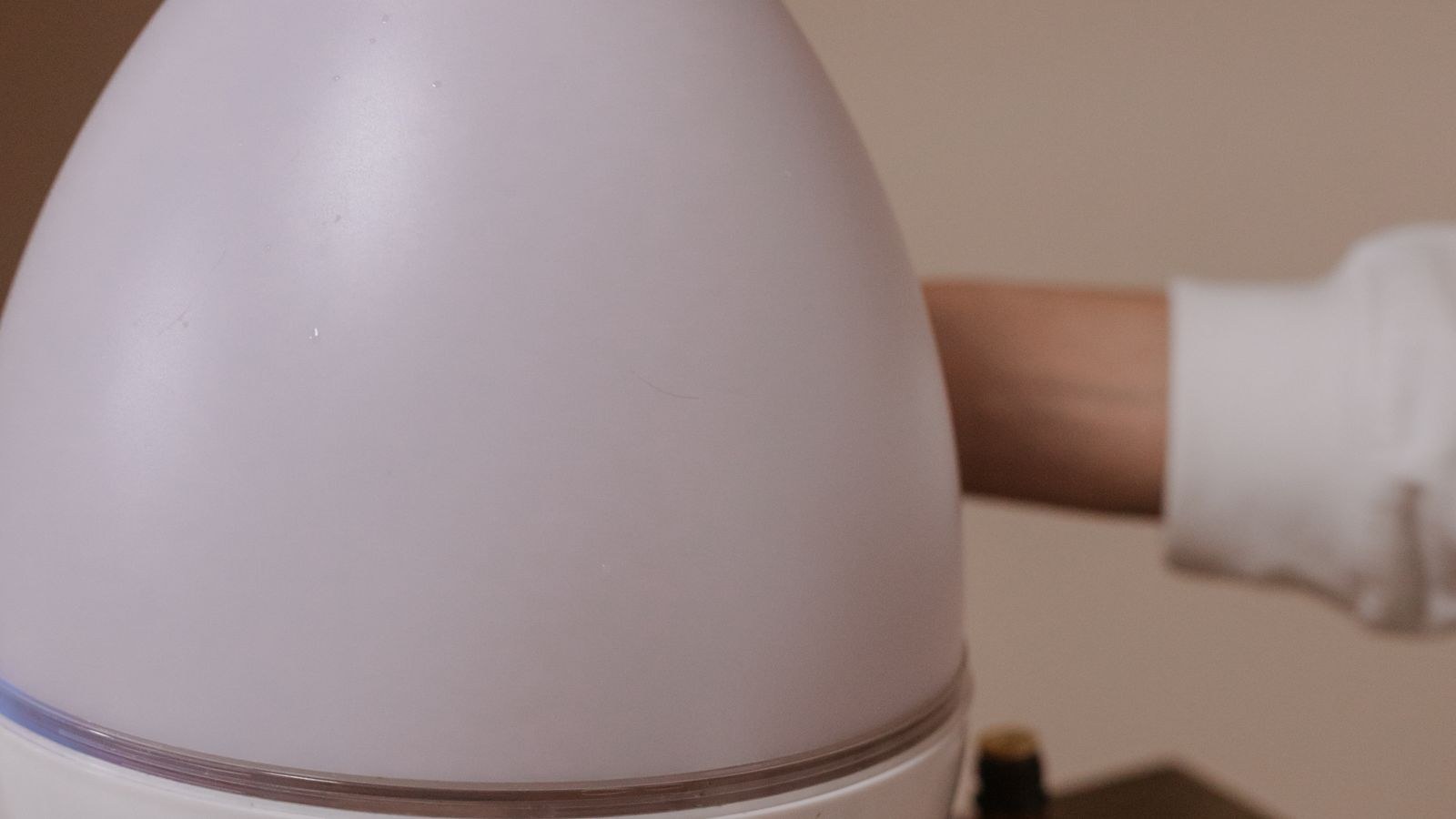
Every humidifier carries a coverage rating in square feet, and that number is the single most useful figure on the box. Undersize the unit and it will run flat out around the clock without ever lifting humidity above the low thirties. Oversize it and you will overshoot into condensation on the windows, damp patches on the walls, and eventually mold, which is a far more expensive problem than dry skin.
Measure the room’s floor area first, then account for ceiling height. Standard ratings assume an 8-foot ceiling; if yours is 10 or 12 feet, or the room opens into a hallway or a stairwell, add roughly 25 to 50 percent to your effective square footage. As a working scale, a personal or desktop unit suits spaces under about 200 square feet, a mid-size tabletop unit handles 300 to 500 square feet, a console unit covers 600 to 1,000, and anything larger belongs to a whole-house solution tied into the ductwork.
One Big Unit or Several Small Ones
Moisture does not travel well between rooms with the doors closed, so a single large humidifier parked in the living room will do almost nothing for a bedroom down the hall. If your complaint is nighttime congestion or morning dryness, a modest unit in the bedroom will outperform a much larger one elsewhere in the house. Shoppers who want a small footprint for a desk, a hotel room, or a single sleeper should compare the best personal humidifiers, which trade coverage for silence and portability. If dryness is genuinely house-wide and you are tired of refilling tanks, look instead at the best whole home humidifiers that feed off the plumbing and the furnace blower.
Understanding Mist Technology
Almost every portable humidifier falls into one of three families, and the differences shape noise, maintenance, and safety more than they shape raw output.
- Ultrasonic cool mist uses a vibrating ceramic plate to fling microscopic droplets into the air. It is nearly silent, energy-efficient, and produces the visible plume most people picture. Its weakness is mineral dust: whatever is dissolved in your tap water gets aerosolized and settles as a fine white film on nearby surfaces.
- Evaporative cool mist pulls air through a wet wick with a fan. The wick traps minerals, so there is no white dust and the room cannot be over-humidified past saturation. The tradeoff is fan noise and a replaceable wick filter.
- Warm mist boils water and releases steam. Boiling kills most waterborne bacteria, the output feels pleasant in winter, and there is no white dust, but the units draw far more electricity and hold hot water, which is a real burn hazard around toddlers.
Most buyers land on cool mist for year-round use. If you want a shortlist of proven cool mist designs, our roundup of the best cool mist humidifiers sorts them by room size, and the deeper comparison of cool mist vs warm mist humidifiers covers the health and running-cost differences in detail. If you would rather not choose at all, hybrid machines exist; the best cool and warm mist humidifiers switch between both modes from one tank.
Tank Capacity and Real Runtime
Tank size is printed in gallons or liters, but the figure you actually care about is runtime at your chosen output level. Manufacturers quote runtime at the lowest setting, which is optimistic. A 1-gallon tank advertised at 30 hours will often manage 10 to 14 hours on medium in a genuinely dry room.
Decide how often you are willing to refill. For a bedroom, aim for a tank that clears a full night plus a margin, so you are not woken by an empty-tank chime at 4 a.m. For a living space you occupy all day, a two-refill-per-day machine is tolerable; a four-refill machine is not, and you will stop using it by February.
Pay attention to the tank’s physical design as much as its volume. A wide opening you can fit a hand inside makes cleaning possible; a narrow neck guarantees slime you cannot reach. Top-fill designs, where you pour water straight into an open reservoir, remove the carry-and-flip routine entirely and are worth paying extra for if you refill daily.

Noise: The Spec Most Buyers Ignore
A humidifier is usually bought for a bedroom, which makes noise the deciding feature. Look for a decibel rating rather than a marketing word like “whisper quiet.” Under 30 dB is genuinely inaudible at sleeping distance. Around 35 dB is a soft background hush most sleepers accept. Above 45 dB you are listening to a fan all night.
Ultrasonic units win here because they have no fan or only a small one. Evaporative units are inherently noisier at high output but often drop to a very low level on their lowest speed. Two other noises catch people out: the gurgle of air entering the tank as water drains, and the beep of electronic controls or an empty-tank alert. Check whether beeps and indicator lights can be turned off, because a bright blue LED is as disruptive to sleep as a hum.
Controls, Humidistat, and Smart Features
A built-in humidistat is the difference between a machine that maintains a target and one that simply runs until the tank is dry. With a humidistat you dial in a percentage, the unit measures the room and cycles itself, and you avoid the over-humidification that causes condensation and mold. Without one, you are guessing, and a cheap standalone hygrometer placed across the room becomes essential.
Other controls worth having include a timer, multiple mist levels rather than a single on-off, an auto shutoff when the tank empties, and a directional nozzle so you can aim mist away from furniture and walls. App control and voice assistant support are pleasant but rarely decisive; a reliable physical humidistat matters far more than a phone notification.
Filters, Cleaning, and the Cost You Forget
The purchase price is only part of the bill. Evaporative units need a new wick every one to three months depending on water hardness, and those wicks can add a meaningful annual cost. Some ultrasonic units use demineralization cartridges to reduce white dust, and those are consumable too. Warm mist units avoid filters entirely but accumulate scale on the heating element, which must be descaled with vinegar or citric acid.
Cleaning is not optional. A humidifier is a warm reservoir of standing water, and neglected tanks grow bacteria and mold that the machine then sprays into the air you breathe. Plan on emptying and drying the tank daily, wiping the base weekly, and doing a full descale with white vinegar every one to two weeks. Before buying, take the unit apart mentally: how many pieces, how many crevices, is the base dishwasher-safe, can you reach the mist chamber with a brush? A machine you dread cleaning is one you will clean badly.
Nursery and Bedroom Safety
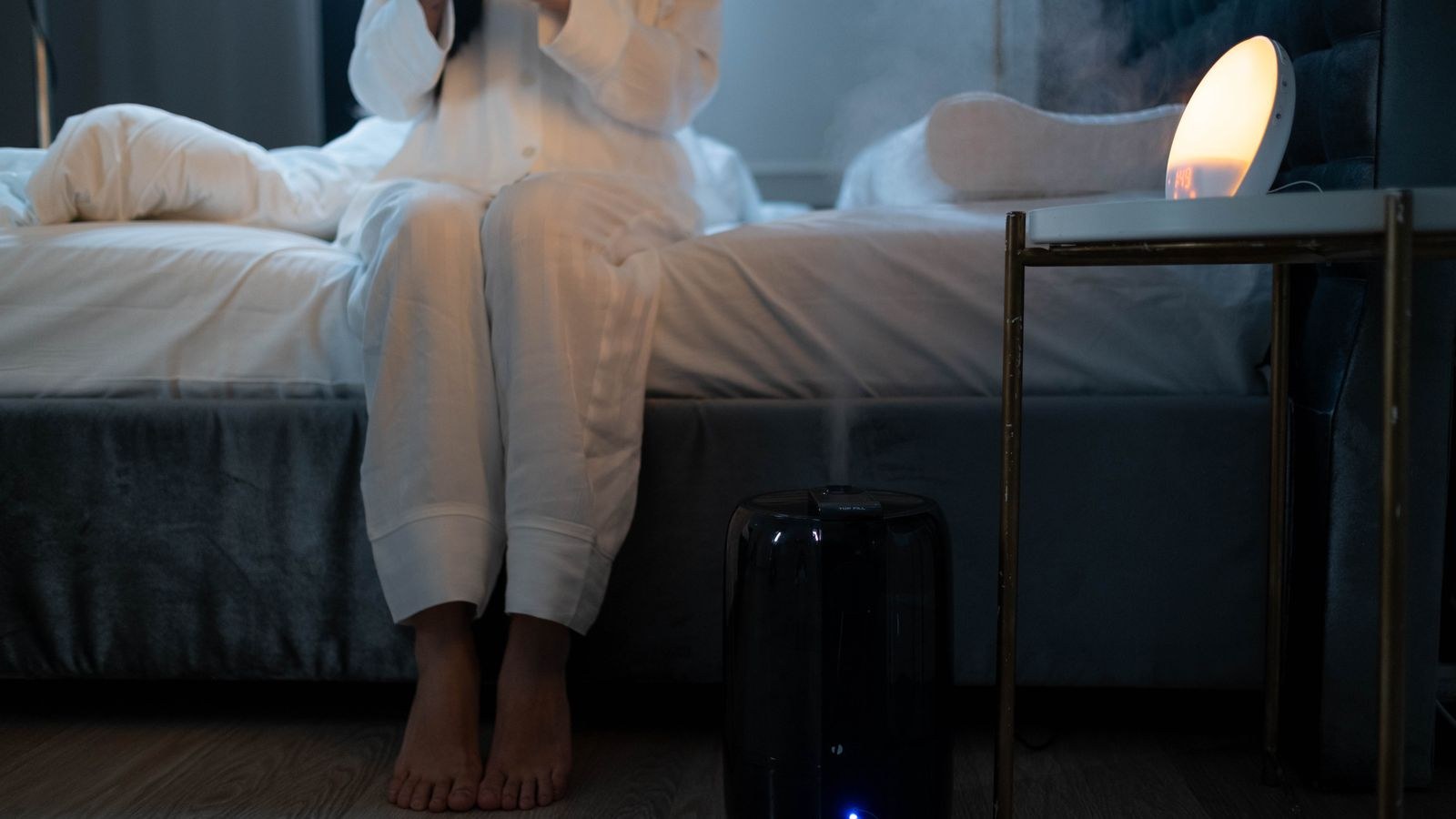
If the humidifier is going in a child’s room, safety outranks every other criterion. Choose cool mist over warm mist so there is no hot water or heating element within reach. Route the cord so it cannot be pulled, and place the unit on a hard, water-resistant surface at least a few feet from the crib and away from outlets, since mist settling on a power strip is a genuine hazard.
Keep humidity in the 40 to 50 percent band in a nursery. Higher levels feel soothing for a stuffy nose but encourage dust mites and mold, both of which are far worse for a developing respiratory system than mildly dry air. Never add essential oils to a unit not explicitly designed for them, as oils degrade plastics and can irritate small airways. Finally, make sure the auto shutoff genuinely works, because a unit that keeps running dry can overheat.
Budget Tiers and What Each Buys You
Entry-level humidifiers, generally in the $25 to $50 range, cover a small bedroom with a simple ultrasonic mister, a single tank, and manual controls. They work, but expect no humidistat, a small tank, and basic plastics.
The $60 to $120 midrange is where most buyers should shop. Here you get a real humidistat, a top-fill tank, several output levels, a genuinely quiet motor, and coverage adequate for a full bedroom or a modest living room. This tier delivers most of the total value.
Above roughly $150 you are buying console-scale output, hybrid warm and cool modes, better build quality, integrated air filtration, and smarter controls. Whole-house units installed on the furnace occupy a separate category entirely, with installation costs to match but no tanks to refill. Spend to the size of your room and the quietness you need, then stop; extra features rarely compensate for a machine that is too small.
Common Mistakes That Waste Money
The most frequent error is buying purely on tank size while ignoring coverage rating, which produces a heavy machine that still cannot lift humidity in a large room. The second is skipping the humidistat and then running the unit continuously until windows fog and paint peels. The third is choosing an ultrasonic unit for a hard-water household and being surprised by white dust on every dark surface within a week.
Two more errors are quieter but costlier. Ignoring filter and wick prices at purchase can double the three-year cost of a cheap evaporative unit. And placing the humidifier badly, tucked against a wall, under a shelf, or directly beside the thermostat, causes moisture to condense on nearby surfaces while the rest of the room stays dry. Give the unit clearance on all sides and put it a couple of feet off the floor if you can.
A Five-Question Buying Checklist
- How many square feet is the room, and does the ceiling height push the effective size higher?
- Cool, warm, or hybrid mist, given who uses the room and how hard your water is?
- Does the tank clear a full night at the setting you will realistically use?
- Is there a built-in humidistat, and can lights and beeps be switched off?
- What do the filters or wicks cost per year, and how easy is the tank to clean by hand?
Frequently Asked Questions
What humidity level should I aim for?
Between 40 and 50 percent is comfortable for most homes. Below 30 percent brings static and dry sinuses; above 60 percent invites dust mites, mold, and window condensation. In very cold weather you may need to drop the target to avoid condensation on single-pane glass.
Do I have to use distilled water?
Not always. Distilled water is strongly recommended for ultrasonic units in hard-water areas because it eliminates white dust and scale. Evaporative and warm mist units tolerate tap water better, since the wick or the boiling chamber traps most minerals.
Can a humidifier make allergies worse?
It can if you overshoot. Dust mites and mold thrive above about 60 percent relative humidity, so an unregulated humidifier can aggravate the exact symptoms it was bought to relieve. Keeping the target in the 40s and cleaning the tank regularly avoids the problem.
How often does it really need cleaning?
Empty and dry the tank daily, and descale with vinegar every one to two weeks. If the water smells or the base feels slippery, you have waited too long.
Final Thoughts
The right humidifier is a boringly practical purchase: size it to the room, pick a mist technology that suits your water and the people sleeping nearby, confirm it will run through the night quietly, and check what the consumables cost before you commit. Everything else on the spec sheet is secondary. Get those four things right and the machine simply disappears into the background of a comfortable winter, which is exactly what you want from it.