Owen Bradley
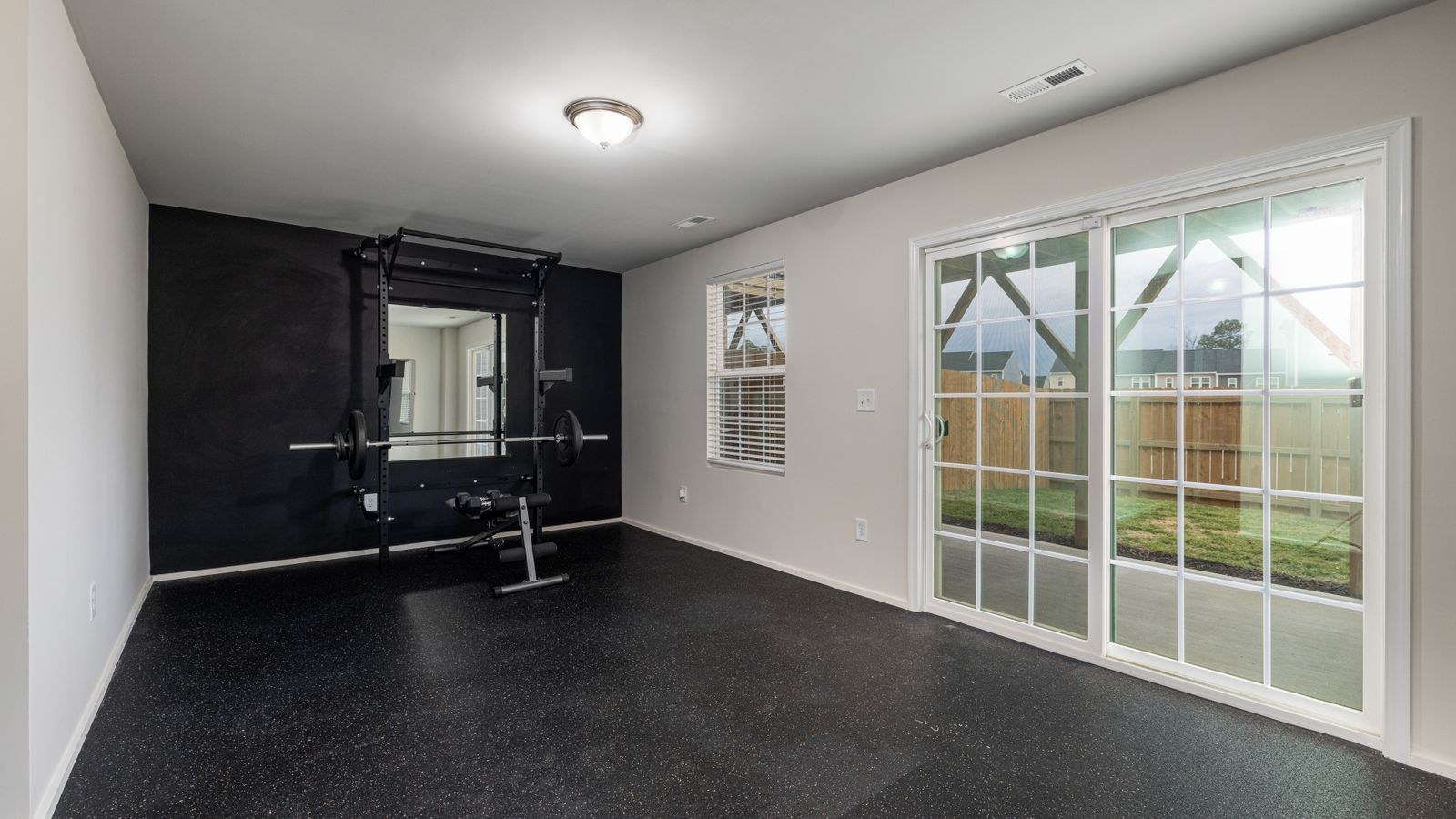
 Most home gyms are lit by whatever fixture the builder installed, which usually means one dim ceiling bulb throwing shadows across the exact spot where you need to see your own form. Good gym lighting is not decoration. It changes how safely you lift, how honestly a mirror reads your posture, and whether a 6 a.m. session feels like a workout or a punishment. This guide walks through brightness targets, color temperature, fixture types, glare control and layout for the three spaces most home gyms end up in: a garage, a basement, or a converted spare bedroom. By the end you should be able to plan a lighting layout in an afternoon and buy hardware once instead of three times.
How Much Light Does a Home Gym Actually Need?
Lighting is measured in lumens, not watts. Watts tell you energy draw; lumens tell you output. A gym is a task space closer to a workshop than a living room, so the target is high. Plan for roughly 50 to 75 lumens per square foot across the whole floor area. A 200 sq ft spare bedroom gym therefore wants about 10,000 to 15,000 lumens total. A two-car garage at 400 sq ft wants 20,000 to 30,000.
That number sounds enormous next to the single 800-lumen bulb most rooms ship with, and that is precisely the problem. Spread across four or six fixtures, though, it is very achievable and surprisingly cheap with LED. The math also explains why one bright fixture never works: concentrating 15,000 lumens into a single point creates a hotspot directly beneath it and gloom everywhere else.
Adjust the target for what you do. Heavy barbell work, gymnastics rings and anything involving a loaded bar overhead deserve the top of the range because you need clear depth perception. Yoga, stretching, and low-intensity cardio can sit comfortably at the lower end, and many people prefer dimmable fixtures so a mobility session at night does not feel like a dental exam.
Ceiling Height Changes the Math
Light intensity falls off with distance. A basement with a 7 ft ceiling gets far more usable brightness from the same fixture than a garage with a 12 ft ceiling, because the beam has less distance to spread. If your ceiling is above 10 ft, add 20 to 30 percent to your lumen budget or choose fixtures with a narrower beam angle that push light downward instead of sideways.
Color Temperature: Where the 4000K Sweet Spot Lives
Color temperature, measured in Kelvin, decides whether the room reads warm and yellow or cool and blue. Living rooms typically use 2700K. Offices sit around 4000K. Hospital corridors and workshops push 5000K and above.
For a home gym, 4000K to 5000K is the practical range. It reads as clean daylight, keeps you alert, and renders skin tone and equipment accurately in the mirror without the sterile blue cast of 6500K. If your gym doubles as a garage or workshop, 5000K makes sense. If it is a bedroom conversion where you also want the room to feel livable, 4000K blends better with the rest of the house.
One useful upgrade is tunable white fixtures, which shift between warm and cool on demand. Cool light in the morning helps you wake up; warm light for an evening cooldown avoids stimulating you right before bed. Also look at the CRI rating: anything at CRI 80 or above renders color acceptably, and CRI 90-plus is worth it if the space doubles as a workshop or you film your lifts.
Fixture Types That Suit Gym Spaces
Different rooms demand different hardware. Four categories cover almost every home gym.
- LED shop lights (linked strips): the default for garages and basements with exposed joists. They hang on chains or mount flush, link end to end from a single outlet, and deliver enormous output per dollar. Our roundup of the best 4 ft LED shop lights covers the linkable models that suit long runs above a rack.
- Flush-mount LED ceiling fixtures: the right answer in a finished spare bedroom where a hanging shop light would look industrial. They sit tight to the ceiling, which matters when a barbell travels overhead. See the best LED ceiling lights for low-profile options with high output.
- High-bay fixtures: built for ceilings above 12 ft, common in detached garages and barn conversions. They concentrate light in a tighter cone so it actually reaches the floor.
- Adjustable track or wall-mounted spots: useful as supplementary lighting to wash a mirror or brighten a specific station without adding ceiling glare.
If you want a broader comparison of what works in dedicated training spaces, our guide to the best gym lighting compares fixture families side by side across room types.
Killing Glare: The Mirror Problem
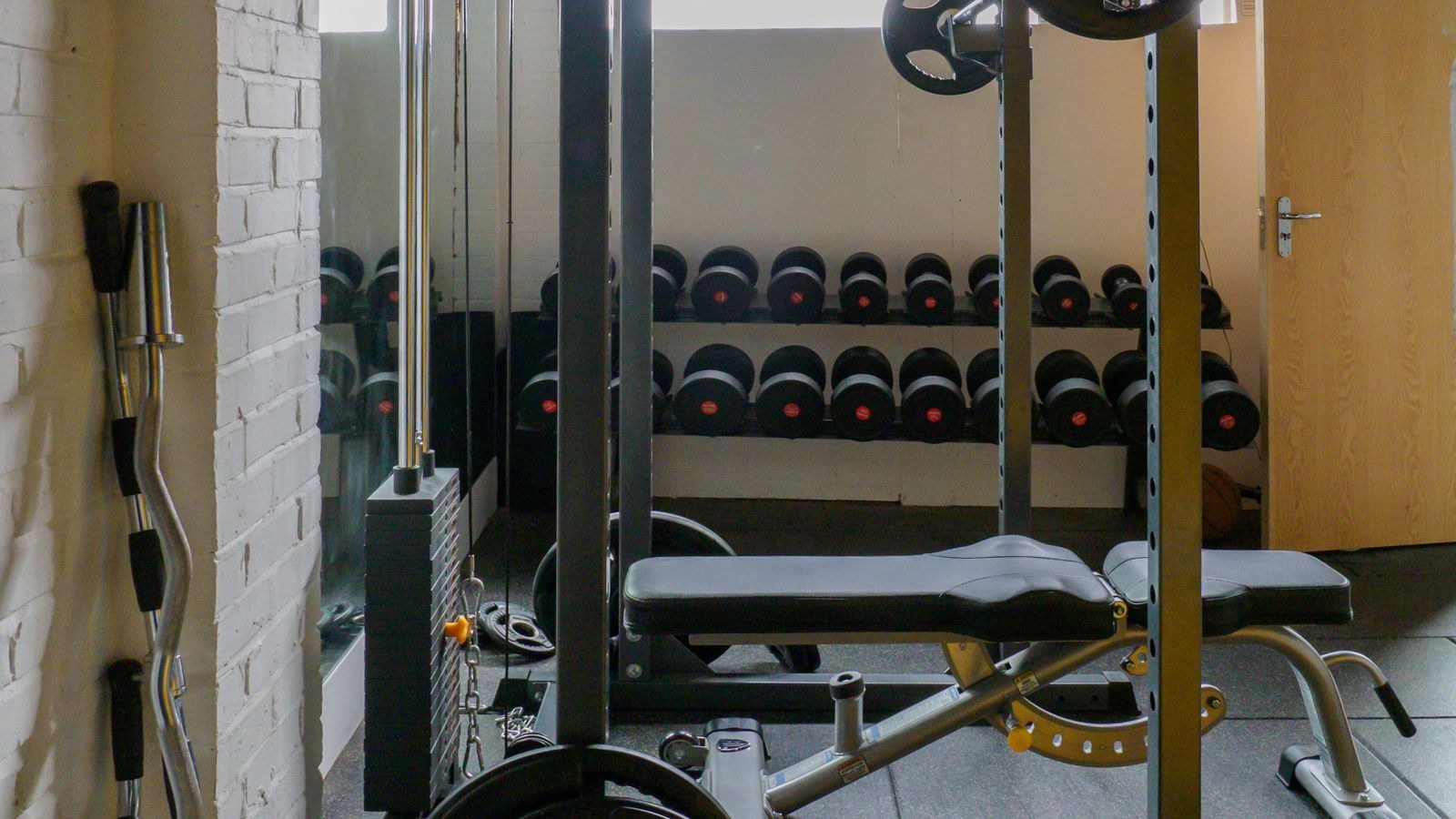
Mirrors are the single biggest source of complaints in home gym lighting. A mirror reflects roughly 90 percent of the light that hits it, so a bright fixture aimed anywhere near one bounces straight back into your eyes at the moment you are trying to check your squat depth.
Three fixes solve almost every mirror glare problem:
- Move the fixture, not the mirror. Position ceiling lights so they sit behind the lifting position relative to the mirror, or at minimum 3 to 4 ft off the mirror wall. A fixture directly above the mirror will always reflect.
- Use diffused fixtures. A frosted lens or a fixture with a milky acrylic cover spreads light over a wide surface instead of a single bright point. Bare LED chips and clear-lens fixtures are the worst offenders because the reflection is a pinpoint your eye cannot ignore.
- Bounce light off the ceiling. If glare persists, add uplighting. Light hitting a white ceiling and scattering down is diffuse by definition and produces almost no visible reflection.
The same logic applies to any glossy surface: epoxy garage floors, rubber tiles with a shine, and the chrome on a squat rack all reflect. A quick test before you commit: hold a flashlight where the fixture will go, stand where you will lift, and see whether you can spot the bulb in the mirror. If you can, move it.
Layout: Where to Put the Fixtures
Even coverage beats raw brightness. The goal is light arriving from multiple directions so your body does not cast a hard shadow onto the floor in front of you, which is exactly what makes footwork and plate loading feel awkward.
A workable rule is to space linear fixtures 4 to 6 ft apart in parallel rows, running the rows along the long axis of the room. For a single-car garage, two rows of two 4 ft fixtures each is a solid starting point. For a 10 by 12 ft spare bedroom, two flush-mount fixtures plus one supplementary lamp usually does the job.
Then think in zones. Your lifting platform or rack area deserves the most light. A cardio corner needs less and benefits from being dimmable if you watch a screen while riding. A stretching or mobility area works well with softer, indirect light. Lighting all three identically wastes output in the places you least need it.
Don’t Forget the Wall Switch
Plan control before you mount anything. Chained shop lights that all run off one pull-chain mean you cannot light only half the room. Running fixtures to a wall switch, or using smart plugs or smart-switch-compatible fixtures, lets you run a full-brightness lifting scene and a low evening scene from the same hardware. Dimmable fixtures need a compatible dimmer; pairing a non-dimmable LED with a dimmer switch causes flicker and buzzing.
Room-by-Room Recommendations
Garage Gyms
Garages have the advantage of height and open joists and the disadvantage of a single circuit shared with the door opener. Linkable 4 ft LED shop lights are almost always the answer: high lumen output, plug-and-play daisy chaining, and no electrician required. Cold weather matters here. Look for fixtures rated to operate below freezing if your garage is unheated, since some LED drivers struggle to start in the cold.
Basement Gyms
Basements are the hardest case because there is often no daylight at all and ceilings are low. Low-profile flush mounts or slim panel fixtures avoid head-clearance issues. Because everything comes from artificial light, push toward the top of the lumen range and consider painting the ceiling and walls a flat white to bounce as much light as possible. Also check for moisture: damp-rated fixtures are worth the small premium.
Spare Bedroom Gyms
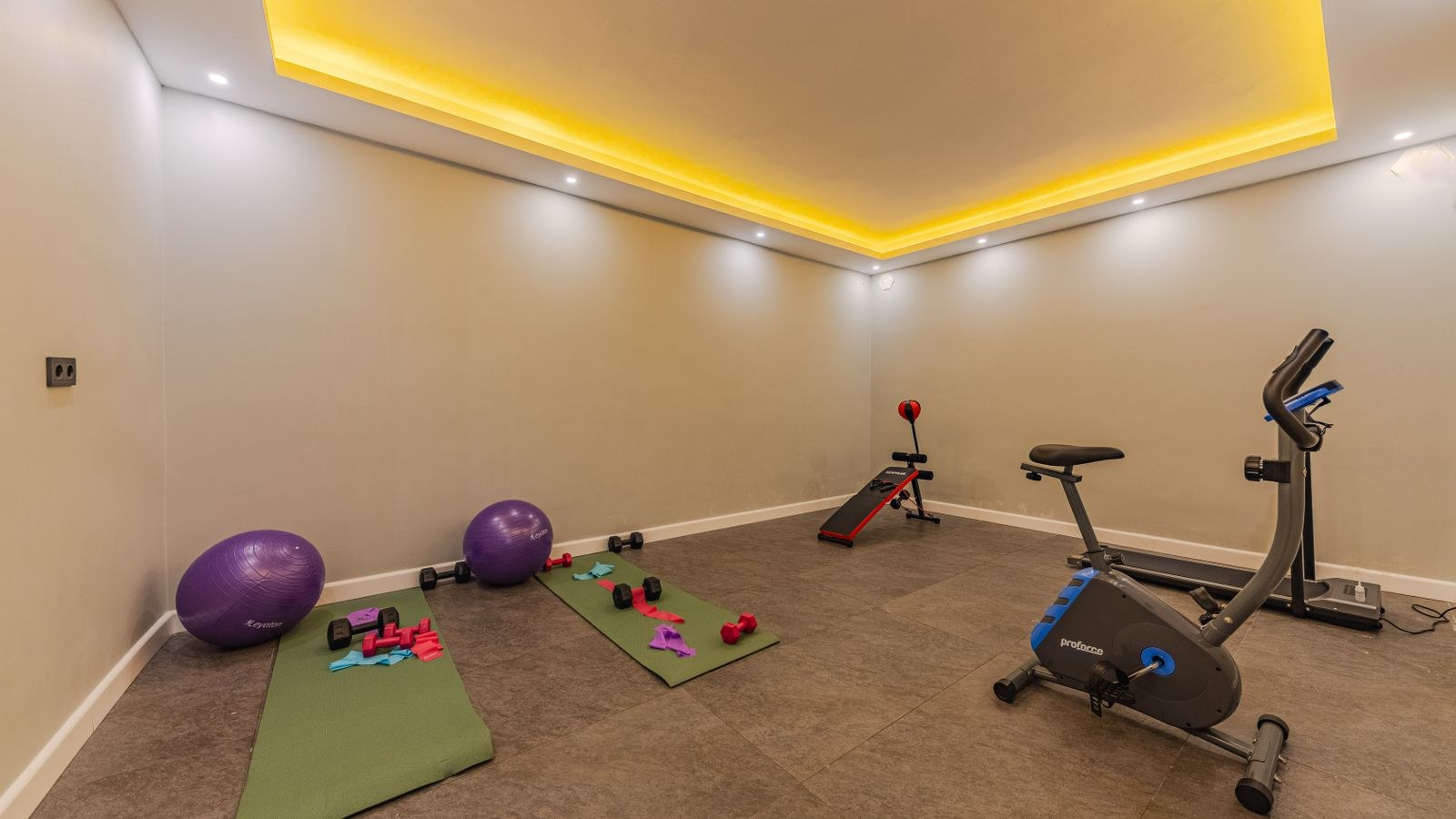
Here aesthetics count, because the room still reads as part of the house. Flush-mount ceiling fixtures with diffused lenses, supplemented by a floor lamp aimed at the ceiling, give you gym-grade brightness without industrial hardware overhead. If you rent, plug-in fixtures and bulb swaps in the existing fixture may be your only options, in which case high-lumen bulbs in a multi-head fixture do a lot of work. Broader options across both home and commercial spaces are covered in our comparison of the best lights for gyms.
Budget Tiers: What You Get for the Money
Home gym lighting is one of the cheapest upgrades in the whole space, which is why so many people regret delaying it.
- Under $100: two or three linkable LED shop lights, or a pair of high-output bulbs in an existing fixture. Enough to transform a single-car garage or small bedroom gym.
- $100 to $300: a full four-to-six-fixture layout with diffused lenses, dimmable drivers, and coverage that eliminates shadows. This is where most home gyms should land.
- $300 and up: tunable white or smart fixtures, high-CRI output for filming, high-bay units for tall ceilings, and dedicated task lighting per zone.
Factor in running cost too. Six 4 ft LED fixtures pulling around 40W each draw about 240W total, which is roughly the same as a single old halogen work light and a fraction of what fluorescent tubes consumed.
Common Mistakes to Avoid
- One fixture, dead center. Guarantees shadows and a hotspot. Always split output across multiple fixtures.
- Buying by wattage. Wattage tells you nothing about brightness on an LED. Read the lumen figure on the box.
- Mounting lights above the mirror. The most common glare cause, and the hardest to fix after the fact.
- Ignoring flicker. Cheap drivers flicker at frequencies your eye may not catch but a phone camera will, which ruins recorded lifts and causes headaches during long sessions. Test with your phone camera before mounting.
- Skipping dimming. A gym you use at 5 a.m. and 9 p.m. benefits enormously from two brightness levels.
- Forgetting ceiling clearance. Overhead pressing, jump rope and pull-up bars all interact with hanging fixtures. Measure your highest movement before you hang anything.
Frequently Asked Questions
What color temperature is best for a home gym?
4000K to 5000K. It reads as neutral daylight, keeps you alert, and shows your form accurately in a mirror without the harsh blue cast that 6500K produces.
How many lumens do I need for a garage gym?
Multiply your floor area by 50 to 75. A 400 sq ft two-car garage needs roughly 20,000 to 30,000 lumens spread across four to eight fixtures.
Are LED shop lights safe to hang over a squat rack?
Yes, provided they are mounted with enough clearance for your tallest overhead movement and secured to a joist rather than drywall alone. Flush-mount fixtures are the safer choice under low ceilings.
Why does my gym mirror look washed out?
Almost always because a bright fixture is reflecting directly into it. Move the light off the mirror wall, switch to a diffused lens, or add ceiling-bounced uplighting.
Do I need a dimmer?
Not strictly, but it makes the room far more usable. Full brightness for lifting and a lower setting for evening mobility work make the space comfortable at any hour. Just pair dimmable fixtures with a compatible LED dimmer.
Final Thoughts
Lighting is the cheapest meaningful upgrade in a home gym and the one people put off longest. Work through it in order: calculate lumens from your square footage, pick 4000K to 5000K fixtures with diffused lenses, spread them 4 to 6 ft apart rather than clustering, keep them off the mirror wall, and add dimming if you train at both ends of the day. Do that once and the room stops feeling like a storage space with weights in it and starts feeling like somewhere you actually want to train. Spend an afternoon on the layout now and you will not think about it again for a decade.