Owen Bradley
 Furniture in a house with young children lives a hard life. It gets climbed, jumped on, drawn on, spilled on and occasionally used as a trampoline. Choosing kid friendly furniture is less about buying cheap disposable pieces and more about picking materials and construction that shrug off daily abuse while staying genuinely safe. This guide covers the washable fabrics worth paying for, the frame and edge details that reduce injuries, the tip-over rules every parent should know, and how to scale seating and tables to a child’s actual size. The aim is furniture you will not resent living with, and will not have to replace the moment the toddler years end.
Start With Safety, Not Style
Style choices are reversible; a safety failure is not. Three hazards dominate in homes with children under six, and each has a straightforward fix.
- Tip-over. Tall, narrow pieces such as dressers, bookcases and media units fall when a child climbs an open drawer. Anchoring is the fix, and it is not optional.
- Sharp corners. Glass tops, square stone edges and thin metal frames sit at exactly head height for a running toddler.
- Pinch and entrapment points. Folding chairs, recliner mechanisms, lift-top storage benches and gaps between cushions and frames catch small fingers.
Beyond hardware, look for a low-emission certification on any engineered wood. Particleboard and MDF can release formaldehyde, and children spend more hours close to bedroom furniture than adults do. Certifications covering indoor air quality and low-VOC finishes are worth prioritizing on case goods, cribs and anything in a sleeping space.
Anchoring Rules Worth Following
Anchor every piece taller than it is wide, plus any dresser regardless of proportion. Use the anchoring kit supplied, drive the screws into a wall stud rather than drywall alone, and re-check the straps twice a year as the wood moves. Place heavy items in bottom drawers to lower the center of gravity, and never put a television on top of a dresser that was not designed as a TV stand. Keep remote controls, toys and other lures off the top surface entirely, because most climbing incidents begin with a child reaching for something.
Fabrics That Actually Wash Clean
The right upholstery turns a juice spill into a two-minute chore. The wrong one turns it into a permanent shadow. Prioritize solution-dyed performance fabrics, where color runs through the fiber so bleach-based cleaning does not fade the piece, and liquids bead on the surface long enough to blot. Microfiber is the value alternative: densely packed fibers resist absorption, release crumbs easily and stand up to scrubbing.
Avoid loose linen, chenille, bouclé and anything with a long nap or visible loops. They trap crumbs, hold odor and snag on toys and zippers. Untreated cotton absorbs everything. Leather and quality faux leather are surprisingly good picks because they wipe clean instantly, though they show deep scratches and can feel cold or sticky depending on the season.
Two construction features matter more than the fabric name itself. Removable zippered covers let you launder a single cushion instead of hiring a cleaner. Reversible cushions double the usable life of the seating surface. Together they are worth more in a family home than an upgrade in fabric grade. Our roundup of the best stain resistant sofas compares treated and solution-dyed options side by side.
Frames, Edges and Construction
Children apply loads furniture was never designed for: sideways force from climbing over the back, repeated impact from jumping, and the full weight of two kids on one arm. That points to kiln-dried hardwood frames joined with corner blocks, dowels and screws rather than staples. Engineered wood frames are acceptable in lower-cost pieces but loosen faster under impact.
Edge profile is the detail most parents overlook. Rounded or bullnose edges on tables, chair backs and case goods absorb an impact that a square edge concentrates. Skip glass tops entirely while children are small; if you inherit one, tempered glass is the minimum standard. On sofas, tight-back designs with attached backs cannot be pulled apart, while loose back cushions become building blocks, which may be a feature or a nuisance depending on your patience.
Check finishes as well. A durable catalyzed lacquer or a hardwearing water-based finish resists crayon and marker far better than an oiled surface, and it survives repeated wiping with a damp cloth. Matte finishes hide scuffs; high gloss shows every fingerprint.
Seating Sized for Children
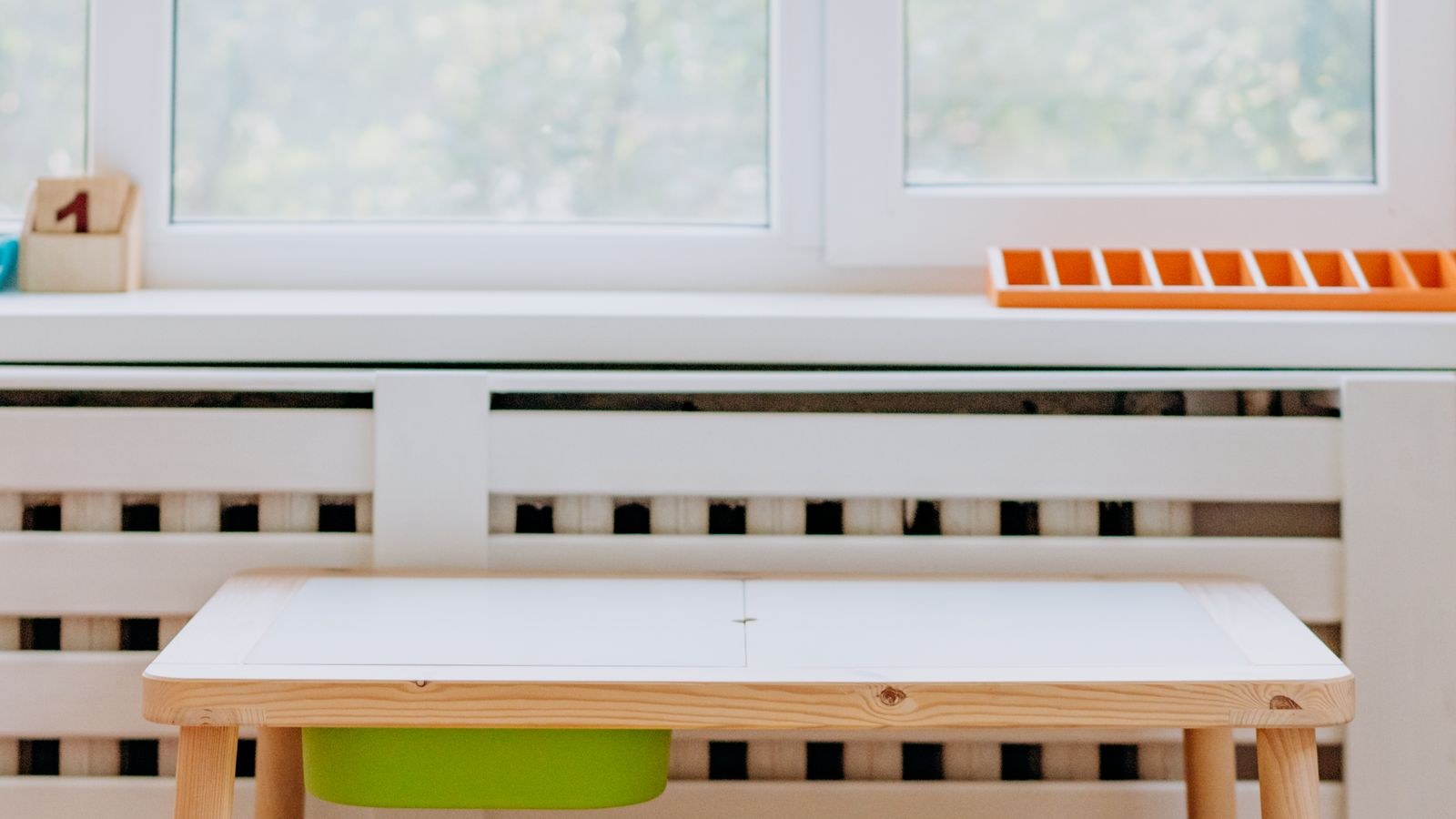
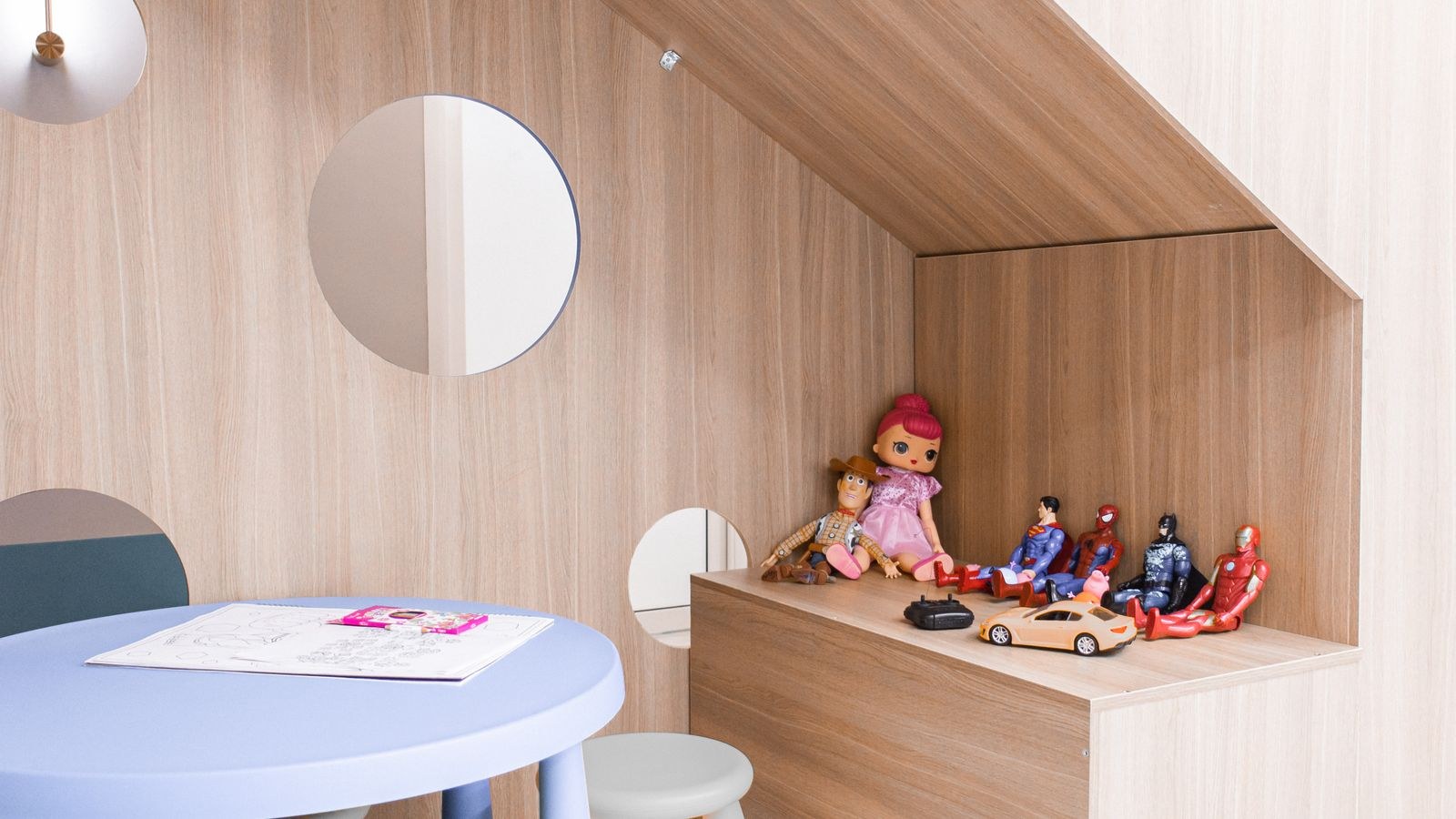
Adult-scale furniture forces children into awkward postures and makes climbing the only way to get seated. Child-scale seating solves both. The rule of thumb is that feet should rest flat on the floor with knees at roughly a right angle, and the table surface should sit near elbow height when seated. For most toddlers that means a seat height around 10 to 12 inches; for early school age, 12 to 14 inches.
Small tables earn their space quickly. They become the craft station, the snack spot and the homework surface, and they keep messy activities off adult furniture. Look for a wipeable top, rounded corners, and a base wide enough that leaning on one edge does not tip it. Stackable or nesting chairs are practical in small rooms. Our lists of the best kids table and chairs and the best toddler table and chairs break the options down by age range and material.
Soft and Floor Seating
Not every seat needs legs. Floor seating suits how children actually play, and it removes the fall risk entirely. Bean bags, floor cushions and low foam chairs give a reading nook a landing spot without adding a hard edge to the room. Look for a double-zipper closure with a child-resistant pull so filling stays inside, a washable outer cover, and fill that does not compress flat within a month. The best bean bag chairs for kids compares fill types and cover materials for durability.
Storage That Children Can Actually Use
Tidying only happens when putting things away is easier than leaving them out. Open bins at floor level beat closed cabinets with catches, and low shelving beats tall units on both safety and usability grounds. Aim for a mix: shallow open shelves for books displayed cover-out, lightweight fabric or plastic bins for bulk toys, and one closed cabinet for items you would rather control.
Avoid toy chests with heavy hinged lids unless they include a slow-close, hold-open mechanism and ventilation holes. A dropping lid is a genuine finger and head hazard. Baskets with soft sides are safer and easier for a small child to drag. Label bins with pictures rather than words for pre-readers, and keep the total number of storage categories small so sorting is achievable.
Living Room Furniture for Family Life
The main sofa takes the heaviest use in most homes, so it deserves the strictest specification. Prioritize a hardwood frame, performance fabric, removable covers and a seat depth that suits adults without leaving children perched on the edge. Sectionals with a chaise create a natural play zone and remove one exposed arm from the room. Modular designs let you reconfigure as children grow, and washable slipcovers on a modular frame are close to the ideal family setup.
Consider height as well. Low-profile sofas reduce the fall distance and let small children climb on without help. Skip pieces with reclining mechanisms while children are young, because the linkages are a known pinch hazard. For broader options built around family durability, see the best family friendly sofas, and for pieces scaled and finished with children specifically in mind, the best sofas for kids.
Budget Tiers and Where to Spend
At the low end you get engineered-wood case goods and basic polyester upholstery. These are reasonable for pieces that will be outgrown within two or three years, such as a toddler table or a first bookcase. Spend the mid-range budget on the sofa and any dresser, because both are long-life items and both carry the highest safety and durability stakes. Top-tier pricing buys solid hardwood, hand-tied suspension and replaceable component covers, which makes sense only if you intend to keep the piece well past the child-rearing years.
A practical strategy is to buy the sofa and dresser once and well, then treat child-scale furniture as consumable. Secondhand solid wood is often better value than new engineered wood, provided you check for stability, intact hardware and a finish that is not flaking.
Common Mistakes Parents Make
The most consequential mistake is skipping wall anchors because a dresser “feels heavy enough.” Weight does not prevent tipping when a child climbs an open drawer. The second is choosing upholstery by feel rather than by cleanability, which is how bouclé and chenille end up in playrooms. The third is buying adult-height seating for children and accepting the climbing that follows. The fourth is over-buying child-scale furniture that becomes useless within eighteen months. Finally, many families keep a lidded toy chest well past the point it is safe, when open bins would work better and cost less.
A Quick Buying Checklist
- Can it be anchored? Any tall or drawer-fronted piece needs a wall strap into a stud.
- Are the edges rounded? Square and glass edges sit at toddler head height.
- Do the covers come off? Zippered, washable covers are the highest-value upholstery feature.
- Is the frame hardwood? Impact loading from jumping is what loosens weak joints.
- Is it the right height? Feet flat on the floor, table at elbow height.
- Any pinch points? Avoid recliners, folding frames and heavy hinged lids.
Frequently Asked Questions
What is the most durable upholstery for a family sofa?
Solution-dyed performance fabric leads on durability because color runs through the fiber and it tolerates aggressive cleaning. Microfiber is the strongest budget alternative, and wipe-clean leather works well if you can live with visible scratches.
Do I really need to anchor every piece of furniture?
Anchor anything taller than it is wide, plus every dresser and anything supporting a television. Tip-over incidents happen quickly and involve furniture that felt perfectly stable to an adult.
How do I remove crayon and marker from furniture?
Test a hidden area first, then work from the mildest option upward: warm water and mild detergent, then an alcohol-based cleaner for permanent marker on sealed finishes. Check the upholstery cleaning code before applying anything wet, since some fabrics require solvent-only cleaning.
Is solid wood worth the extra cost for children’s furniture?
For long-life pieces such as dressers and beds, yes. Solid wood tolerates repeated assembly, resists loosening under impact and can be refinished. For short-life items a child will outgrow quickly, engineered wood is a reasonable saving.
At what age can children use adult-height furniture comfortably?
Most children can use standard dining chairs comfortably somewhere around seven or eight, when their feet reach a footrest or the floor. Before that, a child-scale set or a properly adjusted booster prevents slouching and constant climbing.
Final Thoughts
Kid friendly furniture is a set of practical decisions rather than a separate category of product. Anchor anything that can tip, choose rounded edges over sharp ones, insist on washable removable covers and a hardwood frame where it counts, and scale seating and tables to the child rather than the room. Spend the real money on the two or three pieces that will outlast childhood, and treat the rest as replaceable. Furniture chosen that way handles the crayon-and-cracker phase without looking institutional, and it will still suit the household long after 2026 and the toddler years are behind you.