Owen Bradley
 Almost every new vinyl owner hits the same wall. The turntable spins, the speakers are connected, but the sound is faint, thin, and completely lacking bass, so quiet that you have to crank the volume to hear anything at all. Nothing is broken. The signal simply has not been through a phono preamp. This guide explains what a phono stage actually does, how to tell whether you already have one hiding in your turntable or speakers, and how to fix that thin, quiet sound without buying hardware you do not need in 2026.

What a Phono Preamp Actually Does
A phono preamp, also called a phono stage, performs two separate jobs that no ordinary line input can do. The first is amplification. A moving magnet cartridge outputs roughly 5 millivolts, while a line input expects something in the region of 300 to 500 millivolts. That is a difference of around 40 decibels, which is why a turntable plugged straight into an aux socket sounds so faint even at high volume.
The second job is equalisation, and it is the reason the sound is thin rather than merely quiet. Records are not cut flat. Bass frequencies are deliberately reduced and treble is boosted during mastering, a standard known as the RIAA curve. Without that reduction, deep bass would carve grooves so wide that a single side would hold only a few minutes of music. The phono stage applies the exact mirror image of that curve on playback, restoring bass and taming treble. Skip it and you hear the record exactly as it was cut: quiet, bright, and hollow.
Why It Cannot Be Fixed With Tone Controls
People often try to compensate by turning bass up and treble down on an amplifier. It never quite works. The RIAA curve is a precise, continuously varying correction across the whole audible range, not a simple shelf at each end. Tone controls can nudge the balance but cannot reconstruct the curve, and cranking gain to compensate for the missing 40dB pushes the amplifier into audible noise and hiss long before the music sounds right.
Where the Phono Stage Might Already Be
Before buying anything, check four places. First, the turntable itself: look for a small switch on the back marked phono and line, or a specification mentioning a built-in preamp. Set to line, the deck outputs a full-strength signal ready for any aux input. Second, the amplifier or receiver: an input labelled PHONO, usually with a nearby ground screw, means the stage is built in.
Third, powered speakers. Many modern powered bookshelf models include a dedicated phono input precisely because turntables are popular again, which lets you build a complete system from two boxes and a cable. Our roundup of the best speakers for turntable with preamp collects exactly those models. Fourth, all-in-one record players almost always include a stage internally, since they have nowhere else to put one.
If you find a phono stage in two places, use only one. Running a turntable’s built-in preamp into an amplifier’s phono input double-amplifies and double-equalises the signal, producing distorted, boomy, overloaded sound. Switch the turntable to phono output and let the amplifier handle it, or leave the turntable on line and use an aux input instead.
Symptoms and What They Mean
- Very quiet and thin with no bass. No phono stage in the chain. Add one, or switch the turntable to line output.
- Loud, boomy, distorted, clipping easily. Two phono stages in series. Disable one of them.
- Loud hum or buzz. Missing ground connection. Attach the turntable’s thin ground wire to the amplifier or preamp ground terminal.
- One channel silent or weak. Usually a cable or cartridge connection problem rather than the preamp.
- Hiss with the volume up but no record playing. Excessive gain for your cartridge, common when a moving magnet cartridge runs into a moving coil setting.
Moving Magnet Versus Moving Coil Inputs
Most phono stages are designed for moving magnet cartridges, offering roughly 40dB of gain and a 47 kilohm input impedance, which is the near-universal standard. Moving coil cartridges output a much smaller signal, often under 1 millivolt, and require 60dB or more of gain plus a much lower loading impedance. Feeding a moving coil cartridge into a moving magnet input gives quiet, lifeless sound; the reverse overloads and distorts.
For nearly all first setups this is a non-issue, because entry and mid-level turntables ship with moving magnet cartridges. Only worry about moving coil compatibility if you have specifically bought such a cartridge or plan to upgrade to one later. If you do, look for a stage with a switchable MM/MC mode rather than replacing the whole unit down the line.
Built-In Versus External Stages
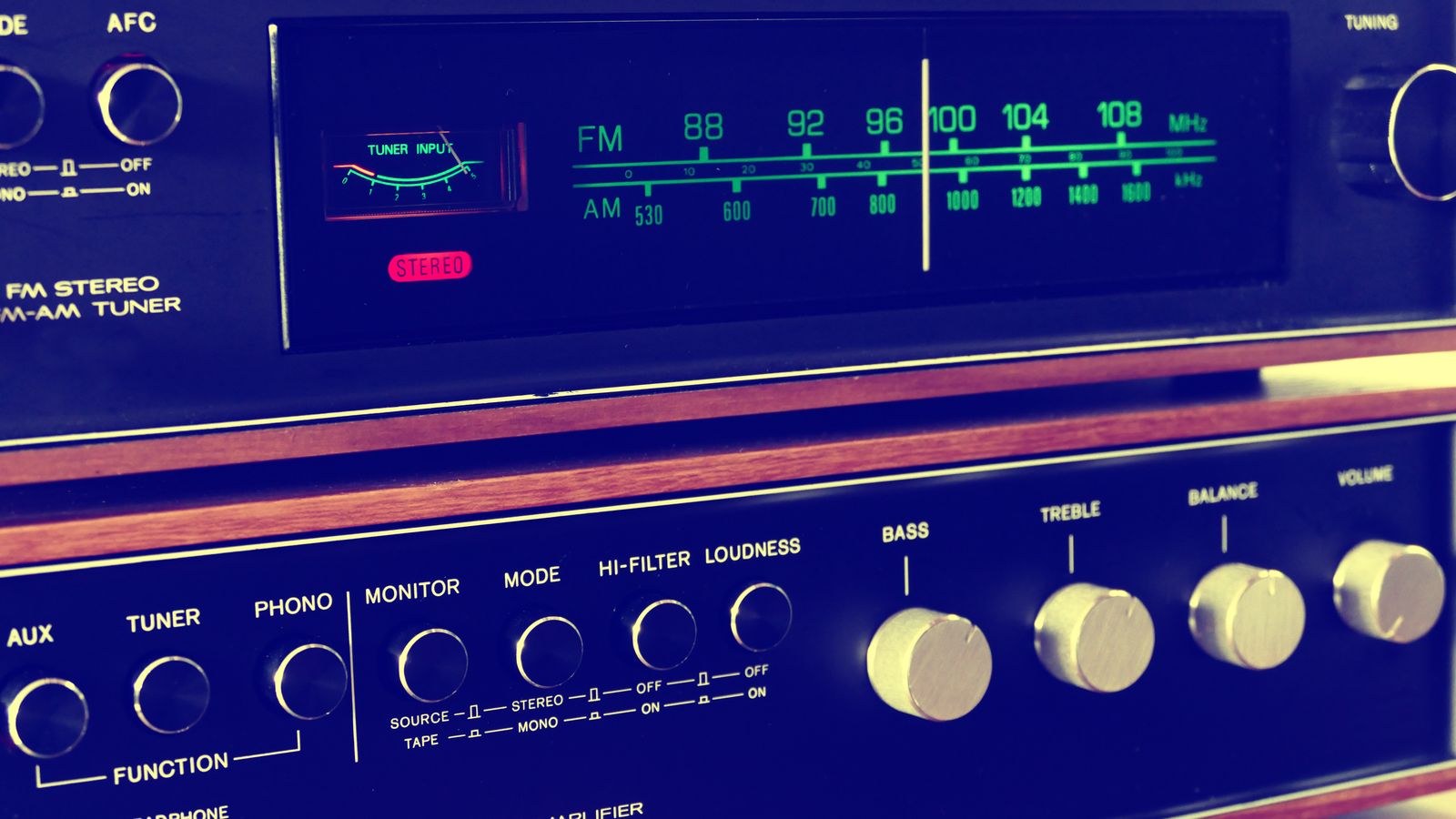
Built-in stages, whether inside a turntable or a pair of powered speakers, are convenient, take no shelf space, and cost nothing extra. In budget gear they are typically competent rather than exceptional: adequate gain, reasonable accuracy, and slightly more noise than a dedicated box. For most listeners at this level, they are entirely good enough, and the switchable design means nothing is locked in.
An external phono stage buys you a better power supply, lower noise floor, more accurate RIAA correction, and often adjustable gain and loading. The improvement is genuinely audible on a resolving system but is easily overshadowed by cartridge quality and speaker choice. The pragmatic order of spending is speakers first, cartridge second, phono stage third. If you already run capable powered monitors, compare the best powered bookshelf speakers to see which include phono inputs before adding another box.
How Much to Spend
A competent external moving magnet stage starts around $50 to $100 and will comfortably outperform the internal stage in a budget turntable. The $150 to $400 band adds lower noise, better parts, and switchable loading. Above that, gains become subtle and only reveal themselves alongside a good cartridge and resolving speakers. Buying a $500 phono stage for a $200 turntable is one of the least efficient upgrades in audio.
Connecting Everything in the Right Order
The signal path is straightforward once the preamp question is settled. The cartridge feeds the tonearm wiring, which exits as a pair of RCA cables plus a thin ground wire. Those RCAs go into the phono input, whether that lives in a separate box, an amplifier, or a powered speaker. The output of that stage then goes to a line-level input, and from there to amplification and speakers.
The ground wire is not optional. Without it, the turntable’s metal chassis floats electrically and picks up mains hum, producing the low buzz that so many new owners assume is a faulty cable. Attach it to the marked ground terminal on whatever component contains the phono stage. If hum persists, try moving the turntable further from the amplifier’s power transformer and avoid coiling audio cables alongside mains leads.
Powered Speakers, Amplifiers, and Simple Systems
The simplest modern vinyl system is a turntable and a pair of powered speakers. Two boxes, one cable pair, no separate amplifier. The only requirement is that a phono stage exists in one of them. If your turntable has a switchable output, almost any powered speaker works. If it does not, choose speakers that include a phono input, or add a small external stage between the two.
If you prefer traditional separates, an integrated amplifier with a phono input plus passive speakers gives more upgrade flexibility and usually more power for larger rooms, and our list of the best speakers for turntable systems covers both routes. Bundled packages take the guesswork out entirely, and our comparison of the best turntable with speakers options highlights which bundles include the preamp so nothing is missing on arrival. For matching speakers to an existing deck, the best speakers for record player guide covers both powered and passive routes.
Fixing Thin or Quiet Sound Step by Step
- Check the turntable’s rear switch. If it reads PHONO and you are plugged into an aux input, move it to LINE.
- Check your amplifier’s input. If the socket is labelled PHONO, the turntable should be set to PHONO, not LINE.
- Confirm exactly one stage is active. Two produces distortion; none produces the thin, quiet sound.
- Attach the ground wire. Fix any hum before judging the tonal balance.
- Verify cartridge type. A moving coil cartridge into a moving magnet input will still sound quiet even with everything else correct.
- Check tracking force. A badly balanced tonearm causes thin, distorted, sibilant sound that mimics preamp problems.
Frequently Asked Questions
Can I just turn the volume up instead?
No. The missing gain is around 40 decibels, so you would run the amplifier at its limit while adding hiss. More importantly, volume does not restore the RIAA equalisation, so the sound stays bass-light and bright no matter how loud it gets.
Does a built-in preamp reduce sound quality?
Not meaningfully at entry level. Internal stages are simple but competent, and the difference from a modest external unit is subtle compared with the difference a better cartridge or better speakers makes. Upgrade the stage after those, not before.
Will a Bluetooth turntable still need a preamp?
No. Any turntable that transmits over Bluetooth must contain a phono stage internally, because the signal has to be amplified and equalised before it can be digitised. Just make sure you are not also feeding a wired phono input at the same time.
Why does my setup hum even with a preamp?
Almost always a grounding issue. Connect the turntable’s ground wire to the terminal on the component holding the phono stage, keep audio cables away from power leads, and move the deck away from transformers. Loose RCA connections can cause similar buzzing.
Do all cartridges need the same preamp?
No. Moving magnet cartridges need about 40dB of gain at 47 kilohms, while moving coil types need 60dB or more and much lower loading. Using the wrong setting produces either a very quiet signal or an overloaded, distorted one, so match the stage to the cartridge.
Final Thoughts
The phono preamp question causes far more frustration than it deserves, because the answer is usually already sitting in equipment you own. Check the turntable’s rear switch, then the amplifier’s inputs, then the speakers, and make sure exactly one phono stage is in the chain. Connect the ground wire, confirm your cartridge type matches the stage’s gain, and only then consider whether an external unit is worth the money. Get that sequence right and the thin, distant sound disappears immediately, replaced by the full-bodied playback vinyl is supposed to deliver, which is a far better use of your budget than guesswork in 2026.