
 Marcus Bell
Your graphics card gets all the attention, but your storage drive decides how long you stare at loading screens. A slow or full drive drags down install times, texture streaming, and even how fast your PC boots into a match. This guide breaks down what actually matters when shopping for gaming storage and points you toward drives worth your budget in 2026.
Quick answer: For most gamers in 2026, our top pick among the best SSDs for gaming pick is the WD_BLACK SN850X 2TB — our #1 rated choice thanks to its blazing-fast Gen4 speeds, huge capacity, and a track record backed by thousands of verified buyers. See the full ranked comparison, budget alternatives, and buying advice below.


Pros
- Rated read/write speeds up to 7,000/5,300 MB/s on the 1TB model, built for PCIe Gen4 boards
- Up to 1,000,000 IOPS on the 1TB and 2TB capacities for fast random access in game loads
- Attached heatsink is designed to reduce thermal throttling during sustained read/write sessions
- Compatible with PlayStation 5 consoles running system software 21.02-04.00.00 or higher
- M.2 2280 form factor drops into any Gen4-capable motherboard slot
Cons
- Heatsink model's added height may not clear the M.2 slot cover on some slim laptops or small-form-factor cases
- Companion customization software is Windows-only, so Mac or Linux users lose that control layer
- Not intended for NAS or server environments, so sustained enterprise-style write workloads fall outside its design target
The SN850 uses PCIe Gen4 NVMe in the M.2 2280 form factor, rated on the 1TB model for sequential read speeds up to 7,000 MB/s and write speeds up to 5,300 MB/s. Both the 1TB and 2TB capacities are rated up to 1,000,000 IOPS, the metric that matters most for fast game loads and level streaming rather than large sequential transfers alone.
An attached heatsink covers the NAND and controller to pull heat away during extended read/write sessions, aimed at holding those rated speeds longer under sustained load rather than throttling down after a few minutes of heavy use.
- PCIe Gen4, M.2 2280 form factor
- Up to 7,000/5,300 MB/s read/write (1TB)
- Up to 1,000,000 IOPS
This SSD is built for gamers moving from a SATA or older Gen3 NVMe drive who want shorter load times and room to store more installed games without constant uninstall-reinstall cycles. The 1TB capacity used here sits in the middle of the WD_BLACK range, with 2TB available for larger libraries.
Because it's not intended for NAS or server duty, buyers planning a home server or a NAS upgrade should look at drives built for continuous, always-on write workloads instead, since gaming follows a more bursty read/write pattern.
- Suited to: gaming PC or PS5 upgrade
- Not designed for NAS or server use
- 2TB capacity available for larger libraries
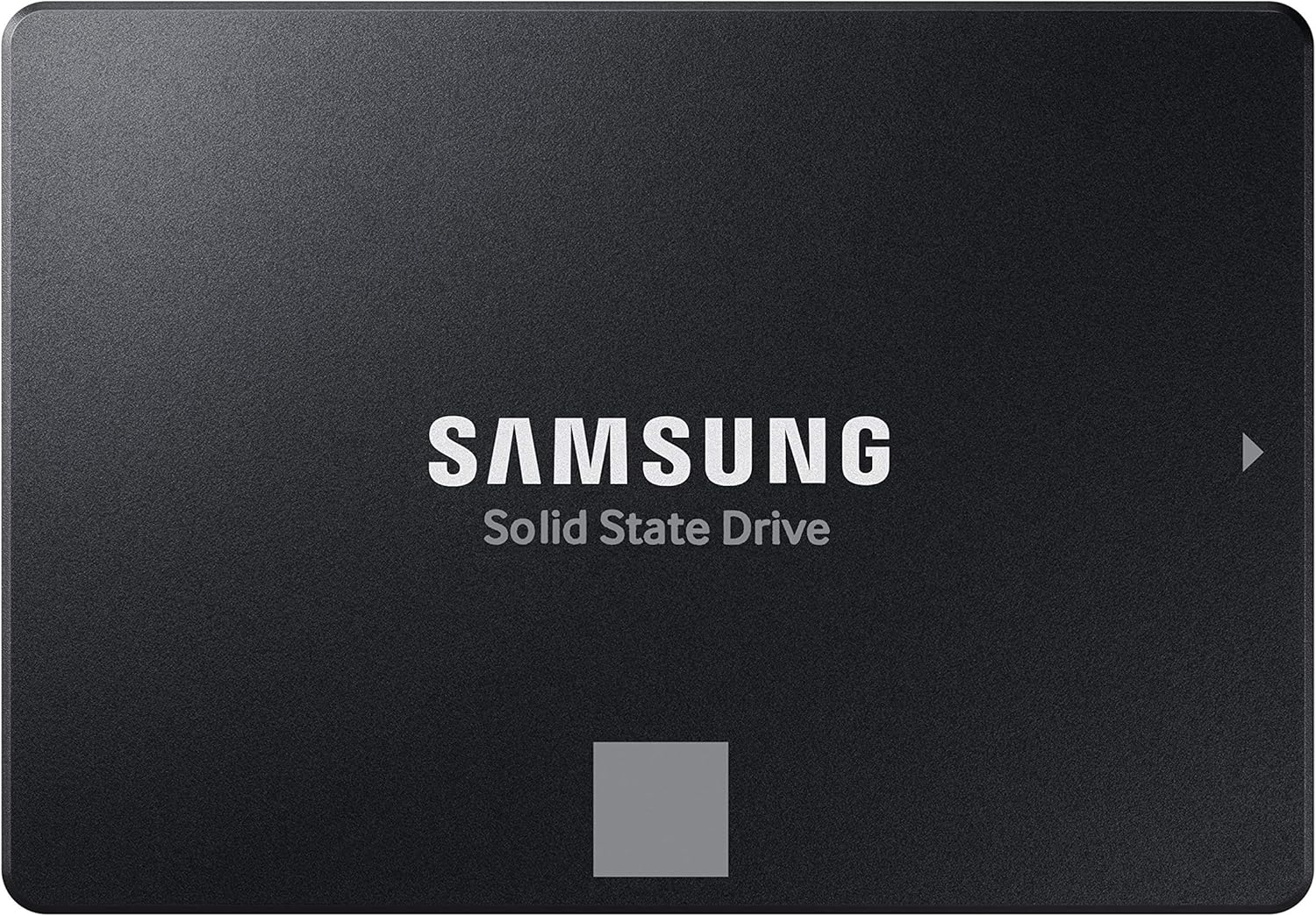
Pros
- Sequential reads to 560 MB/s and writes to 530 MB/s, which saturates the SATA III interface rather than the flash
- Warranted for 600 TBW at the 1TB capacity under a 5-year limited warranty
- Standard 2.5-inch 7mm form factor drops into desktop bays, laptop caddies and NAS trays alike
- Bundled management software reports S.M.A.R.T. health, applies firmware updates and runs secure erase from Windows
- A larger variable write buffer holds speed through long transfers such as 8K video ingest instead of collapsing part way
Cons
- SATA III caps throughput near 560 MB/s, so a free M.2 PCIe slot would deliver several times the sequential speed
- No mounting bracket or SATA cable in the box, so 3.5-inch desktop bays need an adapter tray sourced separately
- Cover ends at five years or 600 TBW written, whichever arrives first
Sequential throughput reaches 560 MB/s reading and 530 MB/s writing, which is the ceiling of the SATA III interface rather than a limit of the flash itself. A larger variable write buffer holds that speed through long transfers instead of collapsing part way into a big file copy.
- Endurance: the 1TB capacity is warranted for 600 TBW, which works out to roughly 300GB written every day for five years.
- Warranty: five years limited, ending at five years or 600 TBW, whichever arrives first.
- S.M.A.R.T. reporting is supported, so wear levels and drive health can be tracked long before failure.
For everyday desktop work, boot and application loading feel close to identical to far faster NVMe drives, because those tasks are dominated by small random reads rather than sequential bandwidth.
The drive uses the standard 2.5-inch 7mm SATA form factor, the same shape as the mechanical laptop drives it usually replaces. That makes it one of the few upgrades that still fits machines a decade old, provided they have a spare SATA port and a bay.
- Desktops: mounts in a 2.5-inch bay, or a 3.5-inch bay with an adapter tray that is not supplied.
- Laptops: drops into any 7mm caddy, while older 9.5mm bays need a spacer to sit tight.
- NAS and video recorders: compatibility has been tested across major chipsets, motherboards and recording devices.
Migration software clones an existing system across so Windows does not need reinstalling, and the management utility then handles firmware updates, health checks and secure erase once the drive is in place.

Pros
- Sequential read speeds up to 3,500 MB/s and sequential write speeds up to 3,400 MB/s over PCIe 4.0
- Random read performance up to 690K IOPS on the 500GB and 1TB capacities
- Backward compatible with PCIe 3.0 slots, so it still functions in older motherboards at reduced bandwidth
- Compact M.2 2280 form factor fits standard laptop and desktop M.2 slots without an adapter
- Nickel coating on the controller paired with a heat spreader label manages heat for more consistent sustained performance
Cons
- Full-rated PCIe 4.0 speeds only apply on PCIe 4.0-capable motherboards; PCIe 3.0 systems cap throughput lower
- No heatsink is bundled, so PS5 or tight-clearance installs may need to add one separately
- 1TB capacity may fall short for users storing large game libraries or 4K video libraries without an additional drive
This 1TB SSD runs over PCIe 4.0 NVMe, rated for sequential speeds up to 3,500 MB/s for reads and up to 3,400 MB/s for writes. Random performance reaches up to 690K IOPS for reads on the 500GB and 1TB capacities, figures aimed at hardcore gamers and tech-focused users running gaming, graphics, and data-analytics workloads that benefit from high throughput.
The drive uses a compact M.2 2280 form factor, optimizing power efficiency for both desktop builds and laptops with M.2 slots. Thermal control is handled through a nickel coating on the controller along with a heat spreader label on the NAND chip, intended to manage heat buildup and help sustain performance during longer read and write operations.
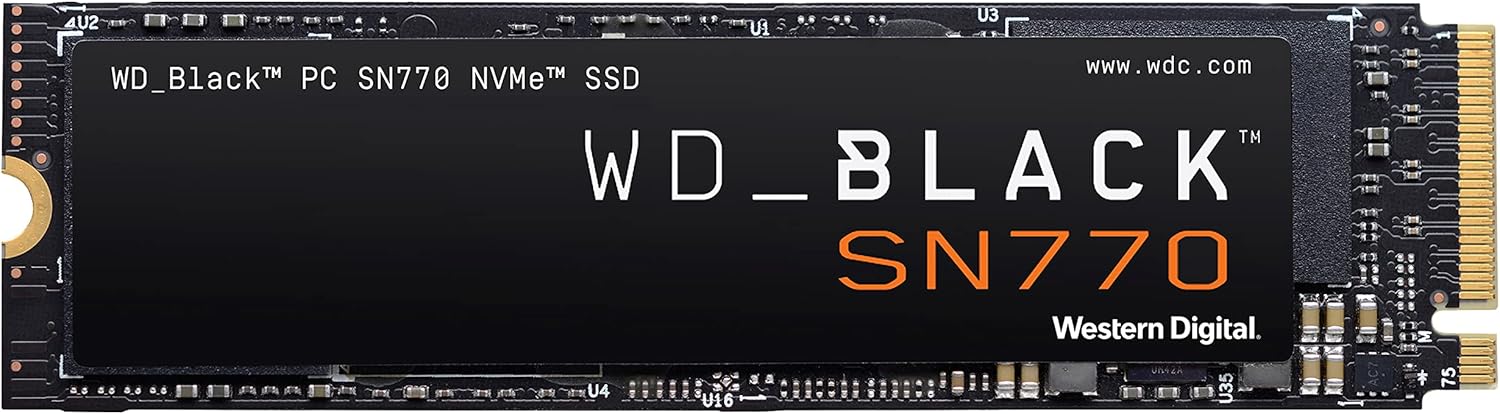
Pros
- Sequential reads to 5,150 MB/s and writes to 4,850 MB/s over a PCIe Gen4 x4 link
- 1,200 TBW endurance, equal to rewriting the full 2TB roughly 600 times
- Standard M.2 2280 single-sided card fits desktop boards and most thin laptops
- Backwards compatible with PCIe Gen3, running at Gen3 ceilings in older machines
- 5-year limited warranty and DirectStorage support for games that stream assets to the GPU
Cons
- DRAM-less design leans on host memory buffer, so sustained writes slow markedly once the cache fills
- The dashboard utility is Windows only, leaving macOS and Linux users without health monitoring
- No heatsink in the box, so a board with no M.2 shield can reach throttling temperatures
The headline figures are 5,150 MB/s read and 4,850 MB/s write across a PCIe Gen4 x4 link, roughly one and a half times what a Gen3 NVMe drive manages and several times what any SATA SSD can reach. Endurance is stated at 1,200 TBW on the 2TB card.
- 1,200 TBW is equivalent to writing the entire 2TB about 600 times over
- Game level loads and large project files benefit most from the sequential headroom
- Everyday app launches feel closer to a Gen3 drive, since those are random reads
The warranty runs 5 years or until that endurance figure is reached, whichever comes first. A typical gaming or work machine writes a small fraction of that total across the whole warranty term.

Pros
- Sequential reads to 7,300 MB/s and writes to 6,300 MB/s over a PCIe Gen4 x4 link
- 2TB of TLC 3D NAND holds roughly 20 to 25 modern 80GB game installs without constant shuffling
- Single-sided M.2 2280 board drops into laptops and the PlayStation 5 expansion bay as well as desktops
- Adaptive Thermal Management steps speeds down gradually under sustained writes instead of stalling
- Microsoft DirectStorage support lets compatible games stream assets straight to the graphics card
Cons
- The dashboard utility is Windows only, so macOS and Linux users get no health monitoring or Game Mode 2.0
- This listing is the bare drive; the heatsink version is a separate item needed for PS5 bays without board-side cooling
- Gen4 x4 speeds need a Gen4 slot, and on Gen3 boards throughput caps around 3,500 MB/s
This drive runs on a PCIe Gen4 x4 interface and quotes sequential figures of up to 7,300 MB/s read and 6,300 MB/s write on the 1TB through 4TB capacities. In practice the sequential number matters less than random 4K performance, which is what shortens shader compilation, level streaming and project loads.
- Capacity in this listing: 2TB of TLC 3D NAND
- Form factor: M.2 2280, components on one side
- Controller features: Predictive Loading, Overhead Balancing, Adaptive Thermal Management
- Microsoft DirectStorage supported on Windows
Headline speeds come from an SLC write cache. Once a single transfer is large enough to exhaust that cache, writes settle to native TLC speed, which is normal behaviour for every consumer NVMe drive and only shows up when moving very large folders in one pass.

Pros
- Sequential read speeds up to 7450 MB/s and write speeds up to 6900 MB/s on PCIe 4.0
- M.2 2280 form factor fits standard motherboard NVMe slots without an adapter
- Random performance improves more than 55 percent over the previous-generation 980 PRO
- In-house controller with smart heat control targets sustained speeds under extended write loads
- Also sold in 1TB and 4TB capacities if 2TB is not the right fit
Cons
- Requires a PCIe 4.0-capable motherboard slot to hit rated speeds; PCIe 3.0 systems will bottleneck well below 7450 MB/s
- No heatsink is included on this specific model, so thermal throttling is possible in cases with limited M.2 slot airflow
- Rated sequential figures were measured on a specific reference test system, so real-world throughput will vary with your own hardware and OS
This listing covers the 2TB capacity point, positioned between the 1TB and 4TB options in the same 990 PRO line for users who need more headroom than a boot-only drive but don't require the largest available size. The drive is aimed at gaming, video editing, and heavy workstation tasks where sustained transfer speed matters as much as raw capacity.
- 2TB capacity sits between 1TB and 4TB options
- Best paired with a PCIe 4.0 or newer motherboard
- Consider a heatsink-equipped variant for airflow-limited cases
Builders currently on SATA SSDs or older NVMe drives get the largest practical jump from this upgrade, while systems already running PCIe 4.0 drives near this speed class will see a smaller day-to-day difference.

Pros
- Sequential read speeds up to 7,100 MB/s and write speeds up to 6,000 MB/s on PCIe Gen4 systems
- 1TB of capacity in a standard M.2 2280 form factor fits both desktop motherboards and handheld gaming consoles
- Backward compatible with PCIe Gen3 systems, so it still installs in older motherboards at reduced speed
- Compatible with handheld consoles including ROG Ally X, Lenovo Legion Go and AYANEO Kun
- Includes Acronis True Image software for cloning or backing up an existing drive during setup
Cons
- Rated speeds of 7,100 MB/s read apply only on PCIe Gen4-capable motherboards; Gen3 systems cap throughput well below that figure
- 1TB is the only capacity in this listing, so users needing more storage must look at other Crucial P310 SKUs
- Drive ships without a heatsink, so sustained heavy workloads may need a separate cooling solution on motherboards without an M.2 heatsink slot

Pros
- PCIe Gen4 interface reaches sequential speeds up to 7,250 MB/s read and 6,900 MB/s write on 1-2TB models
- Next-generation TLC 3D NAND from SanDisk for sustained performance under continuous use
- Up to 100% more power efficiency than the previous generation, extending handheld battery life
- M.2 2280 form factor fits laptops and handheld gaming devices alongside desktop systems
- WD_BLACK Dashboard software (Windows only) available to monitor and optimize drive performance
Cons
- The Dashboard optimization software is Windows-only, with no listed macOS or Linux monitoring tool
- Rated top speeds of 7,250/6,900 MB/s apply to the 1TB and 2TB capacities specifically, not necessarily smaller capacity points
- No heatsink is included, so thermal throttling risk depends on the host device's own M.2 cooling
The SN7100 runs on a PCIe Gen4 interface, rated for sequential read speeds up to 7,250 MB/s and write speeds up to 6,900 MB/s on the 1TB and 2TB capacity points, which Western Digital states is up to 35% faster than the previous generation SN770.
- Up to 7,250 MB/s sequential read speed
- Up to 6,900 MB/s sequential write speed
- PCIe Gen4 interface in an M.2 2280 form factor
These figures represent the drive operating at full PCIe Gen4 bandwidth; a host system limited to Gen3 will still run the drive but below its rated Gen4 ceiling.

Pros
- Rated read/write speeds up to 7,300/7,000 MB/s over a PCIe Gen 4x4 NVMe interface, with up to 1,000,000 IOPS for sustained random access
- Comes with a heat sink pre-installed in this SKU, built specifically to help a PS5 console's thermal system during extended sessions
- 3D TLC NAND and a slim M.2 2280 form factor fit standard laptop and desktop M.2 slots without needing extra clearance
- 2TB capacity in this listing gives enough room for a large game and application library without needing a second drive right away
Cons
- PCIe Gen 4x4 speeds require a Gen4-capable motherboard slot or PS5 to reach the rated 7,300 MB/s; older Gen3 systems cap throughput well below that figure
- The heatsink version adds height to the module, so tight laptop M.2 slots with limited clearance may only fit the low-profile heat-spreader variant instead
- No 4TB option in this specific listing; the largest capacity in the Renegade line is sold as a separate SKU
This 2TB capacity sits in the middle of the Renegade line, which Kingston offers from 500GB up through larger capacities as separate SKUs, giving a path to scale storage up in a future build without necessarily changing product lines.
- 2TB capacity in this specific listing
- Line spans from 500GB to larger capacities as separate SKUs
- Single M.2 2280 slot required per drive
- PS5-ready heatsink model included with this SKU
Since the Renegade line shares the same controller and NAND architecture across capacities, moving to a larger drive later means matching performance characteristics rather than adapting to a different product tier.
What to Look for in the Best SSDs for Gaming
Before you compare model numbers, it helps to know which specs actually move the needle for gaming. Interface, capacity, and real-world speed matter far more than marketing terms printed on the box. Here’s what to check first.
NVMe vs SATA: Which Interface Do You Need
NVMe drives plug into an M.2 slot and talk directly to your CPU, which makes them several times faster than older SATA drives. If your motherboard has a free M.2 slot, an NVMe drive like a Gen4 PCIe model is the better pick for a gaming rig. You’ll notice quicker level loads and faster game installs, especially in open-world titles with huge texture packs.
SATA SSDs, like the Samsung 870 EVO, still make sense if you’re upgrading an older laptop or a secondary desktop without an M.2 slot. They’re far slower on paper, but they’re still a massive jump over a spinning hard drive. If you’re also upgrading other parts of your setup, pairing a fast drive with the best PSUs for gaming keeps your whole build stable under load.
Capacity: How Much Storage Do Gamers Actually Need
Modern AAA games routinely take up 80GB or more, so a 500GB drive fills up fast once you add a handful of titles. A 1TB drive is a comfortable starting point for most players, while 2TB gives you room to keep several large games installed at once. If you play competitive shooters alongside sprawling RPGs, the extra headroom saves you from constant uninstall-reinstall cycles.
Think about how you actually play before you decide. Someone who rotates through one or two live-service games needs less space than someone building a permanent library. If you’re chasing every visual detail at high resolution, our guide to the best SSDs for 4K gaming digs deeper into capacity and speed for texture-heavy setups.
Read and Write Speeds Explained
Sequential read speed is the number you’ll see advertised — often 7,000MB/s or higher on current Gen4 drives. In practice, this mostly speeds up large file transfers and game installs rather than in-game frame rates. What you’ll actually feel day to day is shorter loading screens and faster asset streaming in open-world games.
Write speed matters too, especially if you record gameplay clips or capture footage while streaming. A drive with strong sustained write performance won’t slow down mid-session the way a budget drive can once its cache fills up. Reviews and independent benchmarks are a good way to confirm a drive holds its advertised speeds under real use.
Endurance and Warranty: What TBW Actually Means
TBW stands for terabytes written, and it’s the manufacturer’s estimate of how much data a drive can handle before it’s likely to wear out. Most gaming SSDs list a TBW rating well beyond what a typical player writes in a year, so it’s rarely a dealbreaker. Still, it’s worth a quick check if you plan to keep the drive for many game installs, uninstalls, and updates over several years.
Warranty length is another honest signal of how much a brand trusts its own hardware. A five-year warranty, common among the drives here, suggests the manufacturer expects the drive to hold up well past casual use. If a drive’s warranty feels short compared to competitors at a similar price, treat that as a red flag worth researching further.
The Best SSDs for Gaming by Use Case
Instead of ranking drives purely by top speed, it’s more useful to match a drive to how you actually play and build. Below are picks that fit specific needs, from tight budgets to maxed-out rigs.
Best Overall: WD_BLACK SN850X
The WD_BLACK SN850X earns the top spot because it balances speed, price, and proven reliability. With read speeds up to 7,300 MB/s and write speeds up to 6,300 MB/s, it handles large installs and fast alt-tabbing without hiccups. Over 17,000 verified reviews back its 4.8-star rating, which is hard to ignore when you’re trusting a drive with your whole game library.
It’s not the most affordable option here, so if your budget is tight, you may want to look at a smaller capacity or a value-focused pick instead.
Best Budget Pick: Crucial P310
If you want Gen4 speeds without the Gen4 price tag, the Crucial P310 is worth checking the current price on Amazon. It reaches up to 7,100 MB/s while staying well under $200 for 1TB, and it even bundles data recovery software for peace of mind. The trade-off is capacity — 1TB fills up quickly if you install more than a few modern titles.
Best for PlayStation 5: WD_BLACK SN850
Console gamers upgrading storage should look at the WD_BLACK SN850, which is built and tested to work with PS5’s storage expansion slot. It carries the highest rating in this roundup at 4.9 stars across thousands of reviews, and its included heatsink helps it stay cool during long sessions. It’s a strong pick if you’re specifically expanding a console rather than building a PC.
Best SATA Upgrade for Older PCs: Samsung 870 EVO
Not every system has a spare M.2 slot, and that’s where the Samsung 870 EVO comes in. It’s a SATA drive, so it tops out around 560MB/s rather than NVMe speeds, but it’s still dramatically faster than a mechanical hard drive. With over 45,000 reviews, it’s one of the most trusted upgrade paths for aging laptops and prebuilt desktops.
Best for Large Game Libraries: Samsung 990 PRO
If you keep a rotating library of demanding titles installed, the Samsung 990 PRO offers up to 7,450 MB/s read speeds and solid thermal control to avoid throttling during marathon sessions. It’s built for heavy, sustained use rather than casual gaming, which shows in the price. Casual players who install one or two games at a time likely won’t notice the difference over a cheaper drive.
Best for Handheld Gaming: WD_Black SN7100
Handheld PCs and portable consoles have tighter thermal limits, so the compact, efficient WD_Black SN7100 is a smart match. It delivers up to 7,250 MB/s read speeds while staying power-conscious enough for battery-powered devices. If you’re upgrading a handheld gaming device or a thin laptop, this is a better fit than a full-size desktop drive with a bulky heatsink.
Best High-Capacity Splurge: Kingston FURY Renegade
For players who want maximum headroom and don’t mind paying for it, the Kingston FURY Renegade packs 2TB with a built-in heat sink and PS5-ready compatibility. Speeds reach up to 7,300 MB/s, putting it in the same league as the fastest drives here. It’s a premium pick, so budget-conscious shoppers will likely get more value from the SN850X or the Crucial P310 instead.
Common Mistakes to Avoid When Buying a Gaming SSD
A little research before checkout saves you from returns and buyer’s remorse. These are the slip-ups we see most often.
- Buying too little capacity, then having to uninstall games every few weeks to make room.
- Ignoring your motherboard’s PCIe generation, which can bottleneck a Gen4 drive down to Gen3 speeds.
- Assuming a higher advertised speed always means a better gaming experience, when real-world gains are often smaller than the marketing suggests.
- Skipping the heatsink on a laptop or small-form-factor build, which can cause thermal throttling under sustained load.
- Overlooking form factor compatibility — not every system has a free M.2 slot for NVMe drives.
Your network matters just as much as your storage once you’re actually in a match. Pairing a fast drive with one of the best routers for gaming helps cut down on lag that no SSD upgrade can fix on its own. And if you’re chasing every frame your new drive can feed your GPU, it’s worth checking our picks for the best monitors for gaming too.
Frequently Asked Questions
Do I need NVMe, or is SATA fine for gaming?
NVMe is the better choice if your motherboard supports it, since it loads levels and installs games noticeably faster. SATA still works fine as a budget upgrade for older systems without a free M.2 slot.
How much SSD capacity do I need for gaming?
1TB is a comfortable minimum for most players, while 2TB suits anyone who keeps several large titles installed at once. Consider your install habits, not just your current game count, since libraries tend to grow.
Does a faster SSD reduce in-game stutter?
A fast SSD mainly helps with load times and asset streaming rather than frame rates themselves. Stutter is usually tied more to your CPU, RAM, or GPU than to raw drive speed.
Can I use a gaming SSD with a PS5 or Xbox?
PS5 supports compatible NVMe drives in its expansion slot, and models like the WD_BLACK SN850 are tested for that use. Xbox consoles typically require a proprietary expansion card instead of a standard M.2 drive, so check compatibility before buying.
Is a Gen4 SSD worth it over Gen3?
Gen4 drives offer roughly double the sequential speed of Gen3, which helps with large installs and file transfers. If your motherboard only supports Gen3, a Gen4 drive will still work but won’t hit its full rated speed.


