Owen Bradley
 Owning a fire extinguisher is only half the job. An extinguisher three rooms away from a fire is functionally the same as not having one, because a small kitchen fire becomes unmanageable in well under two minutes. Deciding where each unit lives, which class it needs to be, and how it is mounted turns a box in a cupboard into a genuine safety system. This guide walks through fire extinguisher placement for every room in the house, covering the kitchen, garage, bedrooms, basement, and escape routes, along with mounting height, size selection, and the maintenance schedule that keeps them viable.
Understand the Classes First
Placement decisions follow from what could burn in each room. In the standard classification used across most of North America:
- Class A covers ordinary combustibles: wood, paper, cloth, upholstery, most plastics.
- Class B covers flammable liquids and gases: gasoline, paint thinner, solvents, propane.
- Class C covers energized electrical equipment: panels, appliances, wiring.
- Class K covers cooking oils and fats, the type of fire a deep fryer or a pan of oil produces.
A multipurpose ABC dry chemical extinguisher handles the first three and is the correct general-purpose choice for almost every room in a house. The kitchen is the important exception, where a grease fire needs either a Class K wet chemical unit or, at minimum, an ABC kept well away from the stove itself.
Size is expressed as a rating such as 2-A:10-B:C, where higher numbers mean more extinguishing capacity. For homes, a 2.5 lb unit suits vehicles and tight spaces, a 5 lb unit is the sensible standard for main rooms, and a 10 lb unit belongs in the garage or workshop where fuel and larger fire loads live.
The Universal Placement Rules
- Mount near the exit, not near the hazard. This is the single most important rule and the one most often broken. Stand between the fire and your way out, never with the fire between you and the door. If the fire grows, you retreat rather than being trapped.
- Keep it 30 to 40 feet from any point on the floor. Standard guidance for Class A coverage is a maximum travel distance of 75 feet, but in a home, aim for something you can reach in a few seconds.
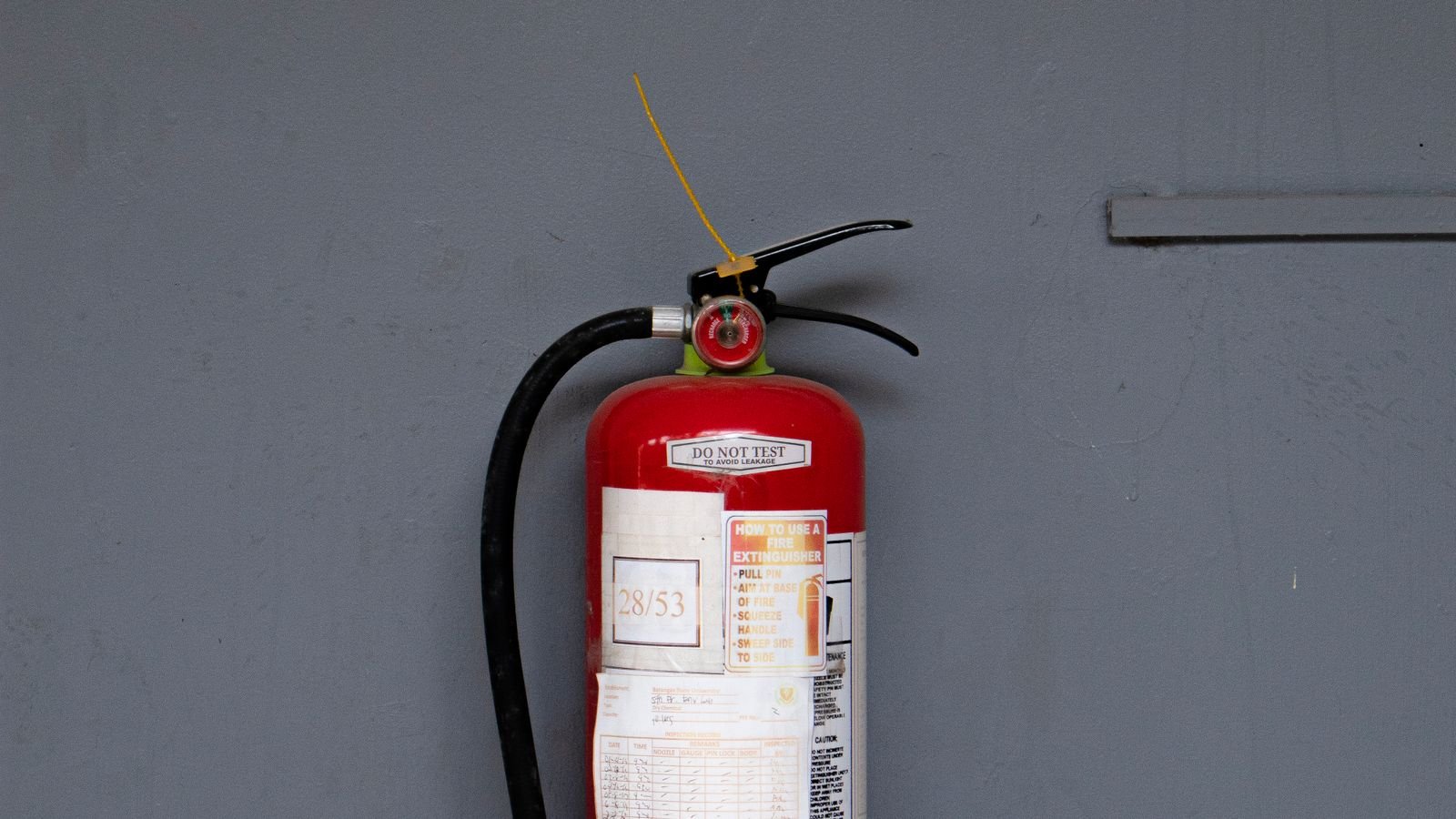
- Mount at the right height. Units under 40 lb should have their top no more than 5 feet above the floor, with the bottom at least 4 inches clear of the ground. That range keeps them reachable by most adults and out of reach of small children.
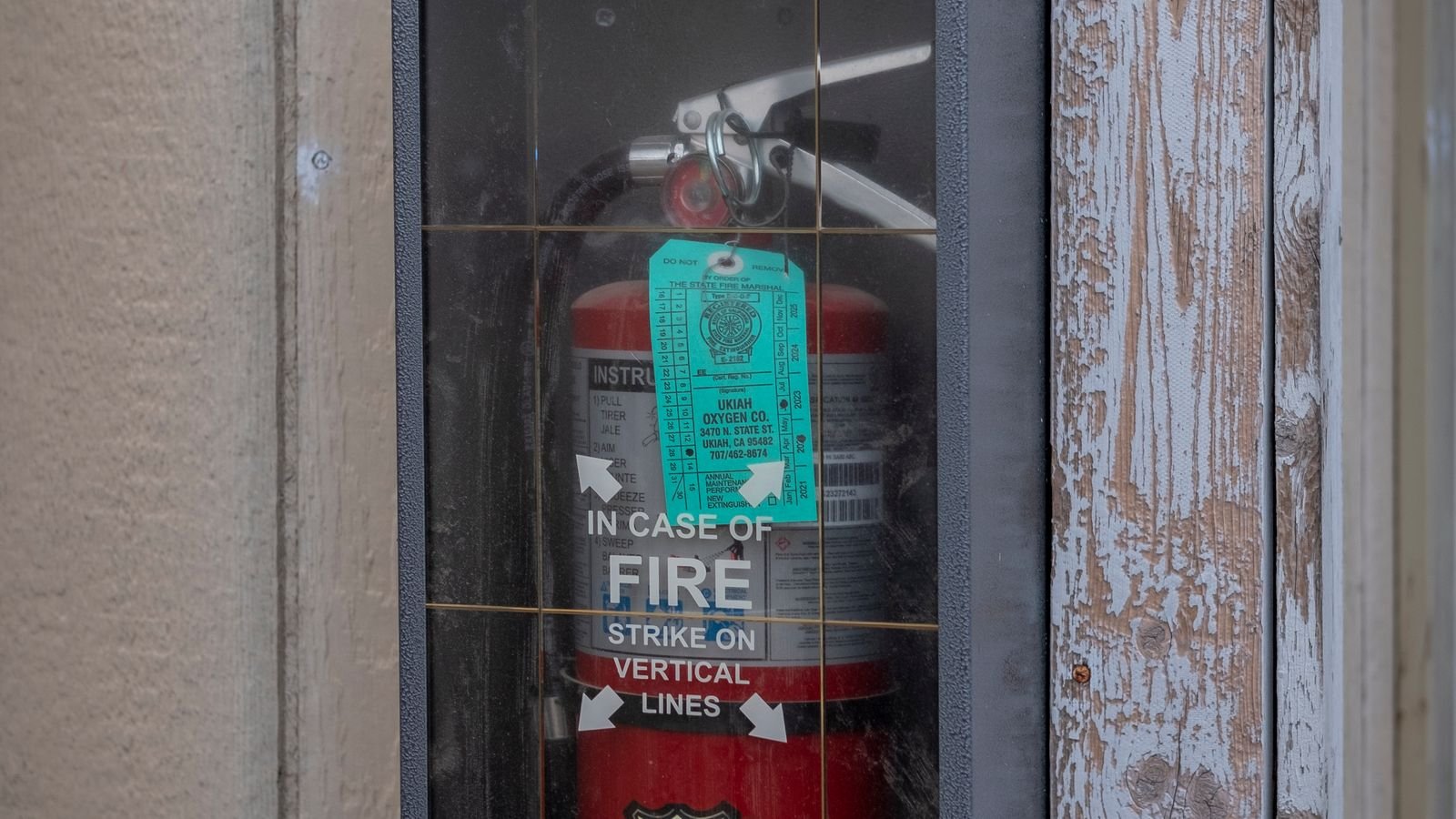
- Keep them visible. Wall-mounted and unobstructed, not buried in a cupboard behind the vacuum. Visibility during a stressful moment matters more than tidiness.
- Use the proper bracket. The mounting bracket supplied with the unit, screwed into a stud or a suitable anchor. An extinguisher standing loose on the floor tips over and rolls away.
- Never store above a stove or a heat source. Heat degrades the charge and you cannot reach past flames to grab it.
Room-by-Room Placement
Kitchen
The kitchen produces the largest share of home fires, and it is also the room where people most often mount the extinguisher in the worst possible spot. Do not put it beside the range. Mount it near the kitchen doorway, at least 8 to 10 feet from the cooktop, so you can grab it while standing on the escape side of a stovetop fire. A Class K unit is the correct choice if you deep fry regularly; otherwise a 5 lb ABC is adequate. Keep a fire blanket in a drawer near the door as well, since smothering a pan fire with a lid or a blanket is safer and cleaner than discharging powder.
Garage and Workshop
The garage carries the highest fuel load in most homes: gasoline, propane cylinders, paint, solvents, oily rags, a car, and often the electrical panel. This deserves the largest unit, a 10 lb ABC with a strong Class B rating, mounted beside the door into the house or beside the main garage door, at a height that stays clear of shelving and vehicles.
Bedrooms and Hallways
Place one 2.5 lb to 5 lb ABC unit in the upstairs hallway near the top of the stairs, which serves all the bedrooms and sits on the primary escape route. In a large house or one with a long hall, add a second at the far end. Individual bedroom units are worth considering for anyone who cannot easily reach the hallway, or in bedrooms with space heaters or heavy electronics.
Basement and Utility Room
Furnace, water heater, electrical panel, laundry, and stored combustibles all cluster here. Mount a 5 lb ABC at the base of the basement stairs so you approach any equipment fire from the exit side. If there is a workshop area, treat it like the garage and add a second, larger unit.
Living Areas
Fireplaces, wood stoves, candles, and dense upholstery justify a 5 lb ABC unit near the main living room doorway. Mount it on the wall by the entrance rather than tucked behind a sofa.
Vehicles and Outdoors
A compact 2.5 lb ABC secured in the trunk or under a seat handles roadside emergencies, and a unit near the grill or fire pit, kept in a shaded spot rather than in direct sun, covers outdoor cooking. When you are choosing sizes and classes for a full-house set, comparing the range of best household fire extinguishers makes it easier to match ratings to each of these locations rather than buying identical units everywhere.
How Many Does a House Need?
A practical minimum is one extinguisher per floor, plus one in the kitchen and one in the garage. For a typical two-storey home with a basement and an attached garage, that means four to five units: kitchen, upstairs hall, living area, basement, and garage. A larger or spread-out home needs more, guided by the travel-distance rule rather than by floor count.
It is far better to have five modest units correctly placed than two large ones in the wrong rooms. Reach time is the variable that decides whether an extinguisher gets used at all.
Using One: The PASS Method
Placement only matters if everyone in the house knows how to operate the unit. The standard technique is PASS: Pull the pin, Aim at the base of the fire rather than the flames, Squeeze the handle, and Sweep side to side across the base. A typical home extinguisher discharges completely in roughly ten seconds, so there is no time to read instructions during a fire.
Only attempt a fire that is small, contained, and not growing. Call the fire service first or have someone else do it, make sure you have a clear exit behind you, and if the fire is not out within the first few seconds, leave immediately and close the door behind you.
Common Mistakes to Avoid
- Mounting the kitchen unit right next to the stove, where you cannot reach it during a cooktop fire.
- Storing extinguishers in cupboards, under sinks, or behind doors where they are invisible and slow to reach.
- Buying one large unit for a whole house instead of several placed by travel distance.
- Using water or an ABC extinguisher on a grease fire, which can spatter burning oil violently.
- Leaving units on the floor without a bracket.
- Never checking the pressure gauge, then discovering a discharged unit during an emergency.
- Fighting a fire without first calling for help and confirming an escape route.
Inspection and Maintenance
Check every extinguisher monthly, which takes under a minute each. Confirm the pressure gauge needle sits in the green zone, the pin and tamper seal are intact, the hose and nozzle are clear of obstruction, and the body shows no dents, rust, or corrosion. Verify it is still on its bracket and still visible.
Once a year, invert and shake dry chemical units to loosen powder that has settled and compacted at the bottom. Rechargeable units should be professionally serviced roughly every six years and hydrostatically tested every twelve. Disposable units carry a manufacturer’s lifespan, commonly ten to twelve years, after which they should be replaced regardless of gauge reading. Any unit that has been discharged even briefly must be recharged or replaced, because a partially used extinguisher will lose its remaining pressure.
Frequently Asked Questions
What type of extinguisher should be in the kitchen?
A Class K wet chemical unit is ideal for cooking oil fires. If you use a multipurpose ABC instead, mount it near the doorway, well away from the range, and use a lid or fire blanket for pan fires where possible.
How high should an extinguisher be mounted?
For units under 40 lb, the top should sit no higher than 5 feet from the floor with the bottom at least 4 inches clear.
How long does a fire extinguisher last?
Disposable units typically last ten to twelve years. Rechargeable units can last much longer with servicing every six years and hydrostatic testing every twelve.
Should I keep one in every bedroom?
Not necessarily. One in the hallway serving the bedrooms is usually sufficient, though a bedroom unit makes sense for anyone with limited mobility or a room with heavy electrical load.
Can I use an ABC extinguisher on an electrical fire?
Yes. ABC dry chemical is rated for Class C energized electrical fires. Cut power at the breaker first if you can do so safely.
Final Thoughts
Fire extinguisher placement comes down to one principle repeated in every room: mount it between you and the exit, at eye level, where you can see it and reach it in seconds. Pair a Class K or well-placed ABC in the kitchen with a large ABC in the garage and 5 lb units on each floor and escape route, check the gauges monthly, and make sure everyone in the house knows PASS. That combination is what turns a set of red cylinders into a plan that actually works.