Owen Bradley
 A fire extinguisher is the rare purchase where the wrong choice is worse than no choice at all, because using the wrong agent on the wrong fire can spread it violently. Water on a grease fire produces a fireball; a cheap kitchen canister aimed at an electrical panel puts you in the path of a shock. Yet extinguishers are usually bought in thirty seconds off a shelf with no attention paid to the letters and numbers stamped on the label. Those markings are the entire specification. This guide explains class ratings, agent types, sizing and placement so you can equip your home properly and know, in the moment, whether to fight the fire or to leave.
Fire Classes Explained
Fires are classified by what is burning, and extinguishing agents are rated for the classes they can safely handle.
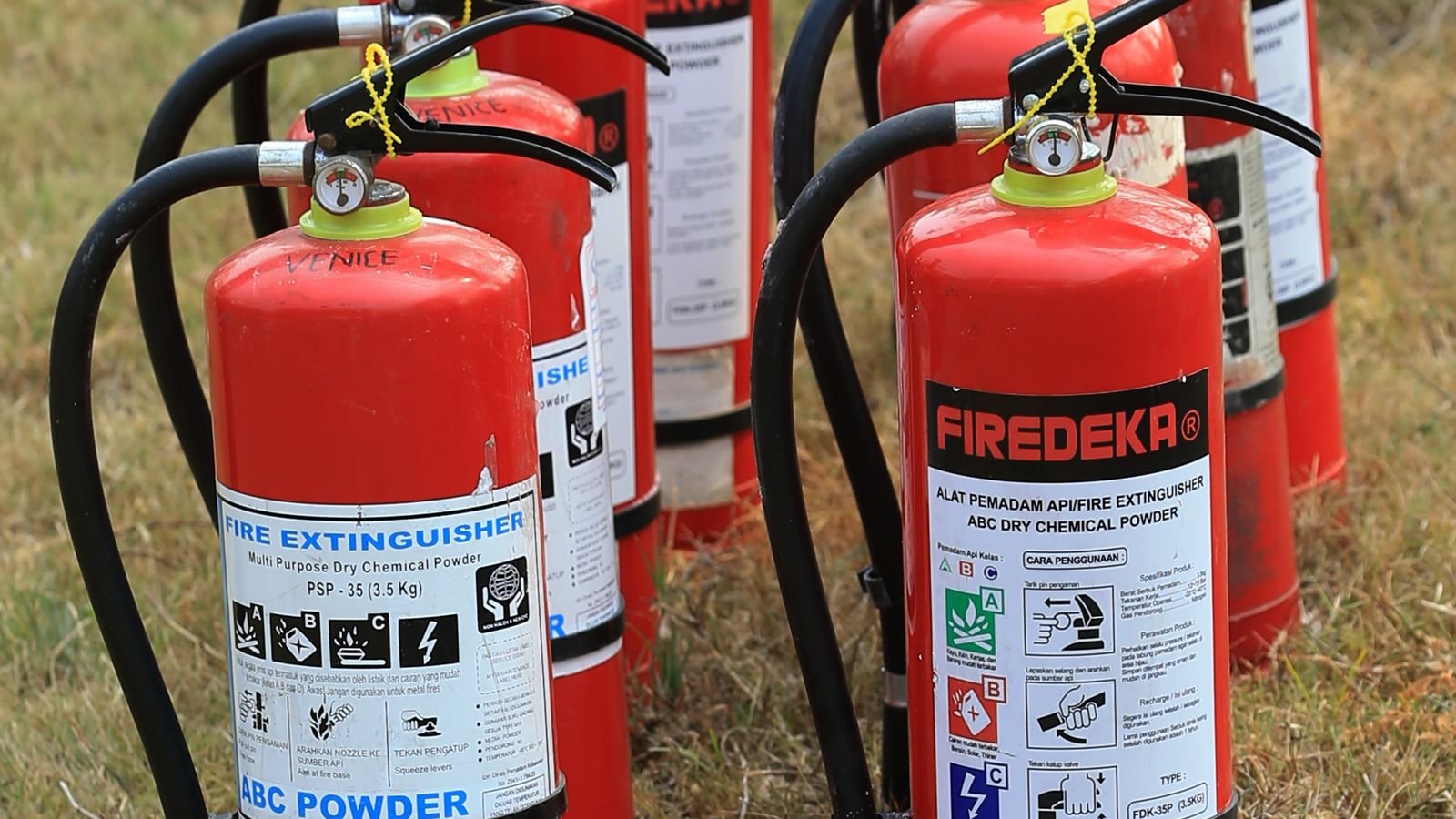
- Class A: ordinary combustibles such as wood, paper, cloth, rubber and most plastics. The everyday house fire.
- Class B: flammable liquids and gases including petrol, paint thinner, solvents and propane.
- Class C: fires involving energised electrical equipment. The rating means the agent is non-conductive, which protects you rather than the equipment.
- Class D: combustible metals such as magnesium and lithium. Requires specialist dry powder agents and is essentially never relevant in a home.
- Class K: cooking oils and fats in commercial kitchens. Domestic versions exist as wet chemical extinguishers for deep-fat frying.
For general home use you want an extinguisher rated for all three of A, B and C. Anything less leaves a gap exactly where an emergency is likely to occur.
Reading the Numbers on the Label
The rating is written as something like 3-A:40-B:C. The letter tells you the fire class; the number in front of it tells you the relative capacity.
For Class A the number reflects water equivalence, where each unit corresponds to roughly 1.25 gallons of water. A 3-A rating therefore has about the same knockdown capability as just under 4 gallons of water. For Class B the number indicates the approximate square footage of burning liquid an experienced user could extinguish, so 40-B suggests about 40 square feet. Class C carries no number at all; it simply confirms the agent is non-conductive.
Higher numbers mean more capability but also more weight and more recoil when discharged. A rating that you cannot physically control is not a bigger safety margin, it is a hazard.
Agent Types and Where Each Belongs
- Multipurpose dry chemical (monoammonium phosphate): rated A:B:C and the standard home extinguisher. Highly effective and inexpensive. The residue is corrosive and difficult to clean, and it damages electronics, but that is a trivial cost against a fire.
- Regular dry chemical (sodium bicarbonate): rated B:C only. Cleans up more easily and works well on grease, but does nothing for smouldering Class A materials.
- Carbon dioxide: rated B:C. Leaves no residue at all, which makes it ideal near computers, home theatre gear and workshops. Short discharge range, no cooling of Class A embers, and the horn becomes dangerously cold in use.
- Wet chemical: rated K and often A. The correct choice for a kitchen where deep frying happens, since it saponifies burning oil and forms a sealing layer.
- Water mist: rated A:C on some models. Clean and safe around people and electronics, but limited capacity and unsuitable for flammable liquids.
- Clean agent (halon replacements): rated B:C or A:B:C. Leaves no residue and is superb for server closets and studios, at a considerably higher price.
Our comparison of the best home fire extinguishers covers which agent types suit which rooms and how the ratings translate into real-world capability.
Sizing: Bigger Is Not Automatically Better
Home extinguishers are sold by the weight of agent they contain, typically 2, 5 or 10 pounds.
- 2 to 2.5 pounds: around 8 to 10 seconds of discharge. Suits a car, a boat or a bedside location. Too small for a room fire.
- 5 pounds: roughly 15 to 20 seconds of discharge, manageable by most adults, and the right size for a kitchen, a hallway or a garage. This is the workhorse size for a house.
- 10 pounds: more agent and longer discharge, but heavy and awkward. Sensible in a garage or workshop where flammable liquids are stored and where you can brace properly.
Discharge times are shorter than people expect. Even a 10 pound unit empties in well under half a minute, which is why aiming correctly from the first second matters more than capacity. Our roundup of the best household fire extinguishers lists discharge times alongside weights so the trade-off is visible.
Where to Place Extinguishers
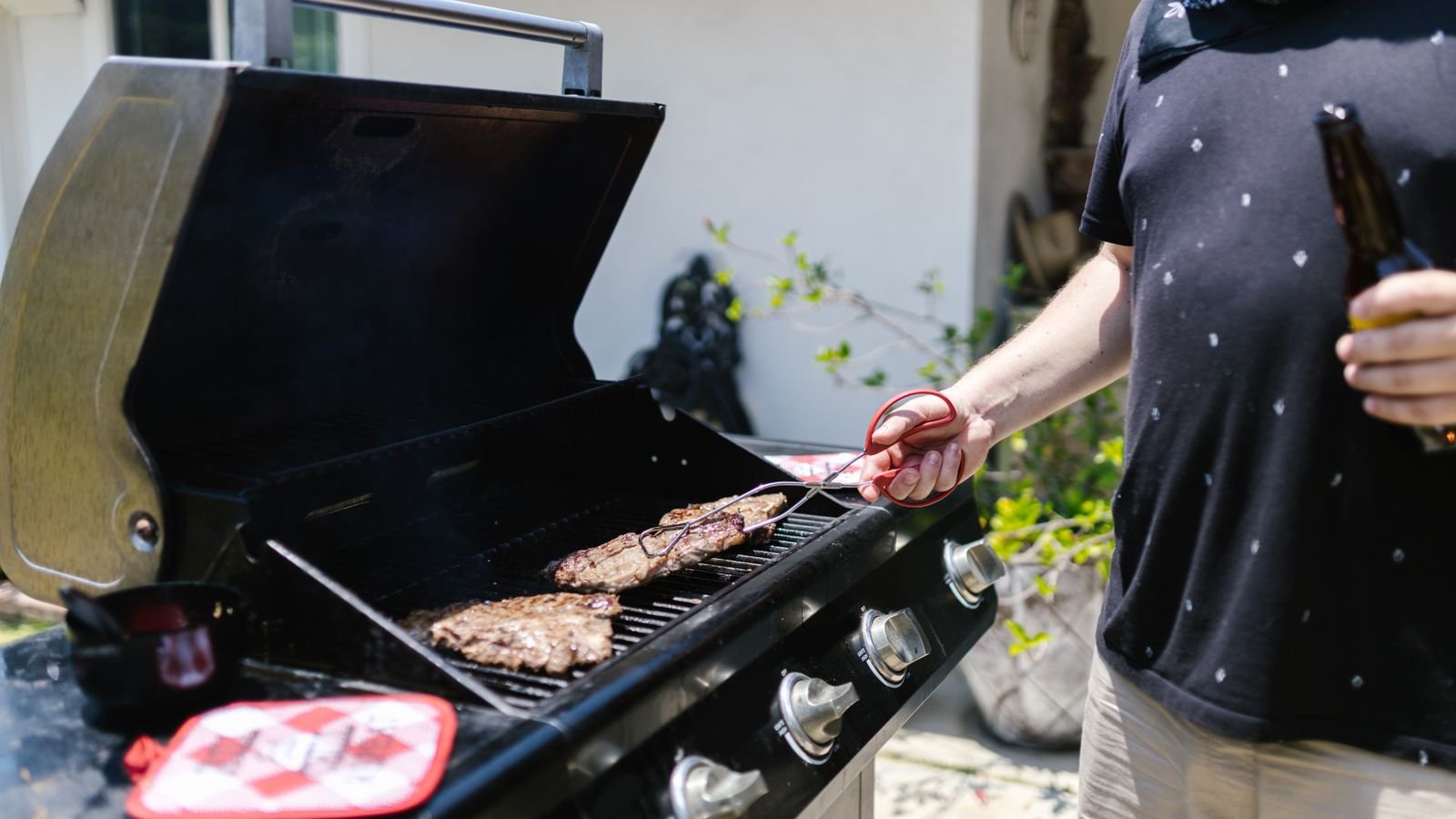
- Kitchen: the most likely location of a home fire. Mount it near an exit, not directly beside the cooker, so you are never reaching through flames to get it.
- Garage or workshop: flammable liquids, power tools and vehicles justify a larger unit here.
- Each floor: at least one accessible unit per level, ideally near the stairs on the escape route.
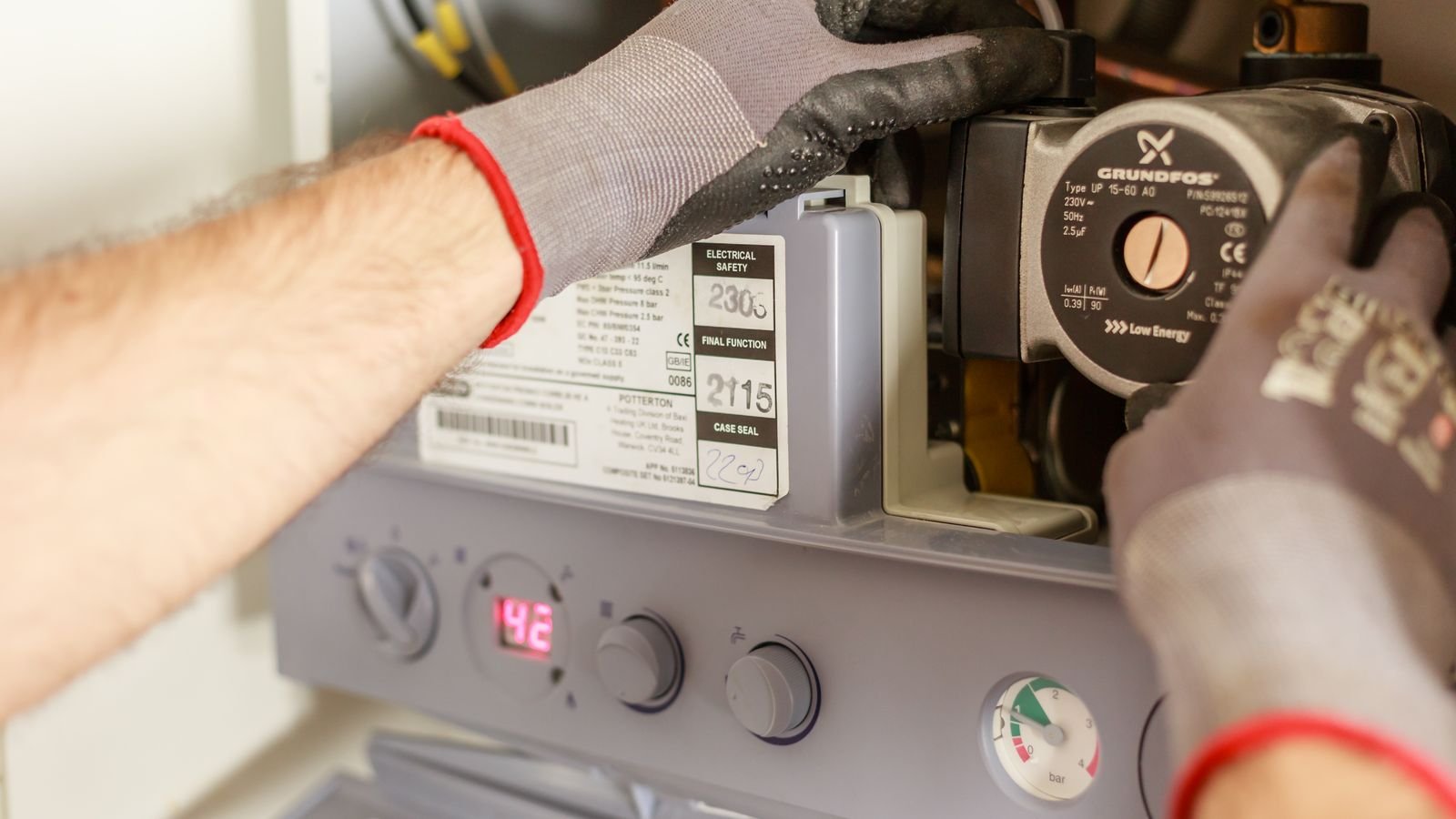
- Near heating equipment: boilers, wood stoves and fireplaces warrant a nearby unit.
- Bedrooms: a small unit in the primary bedroom gives you an option if a fire blocks the door at night.
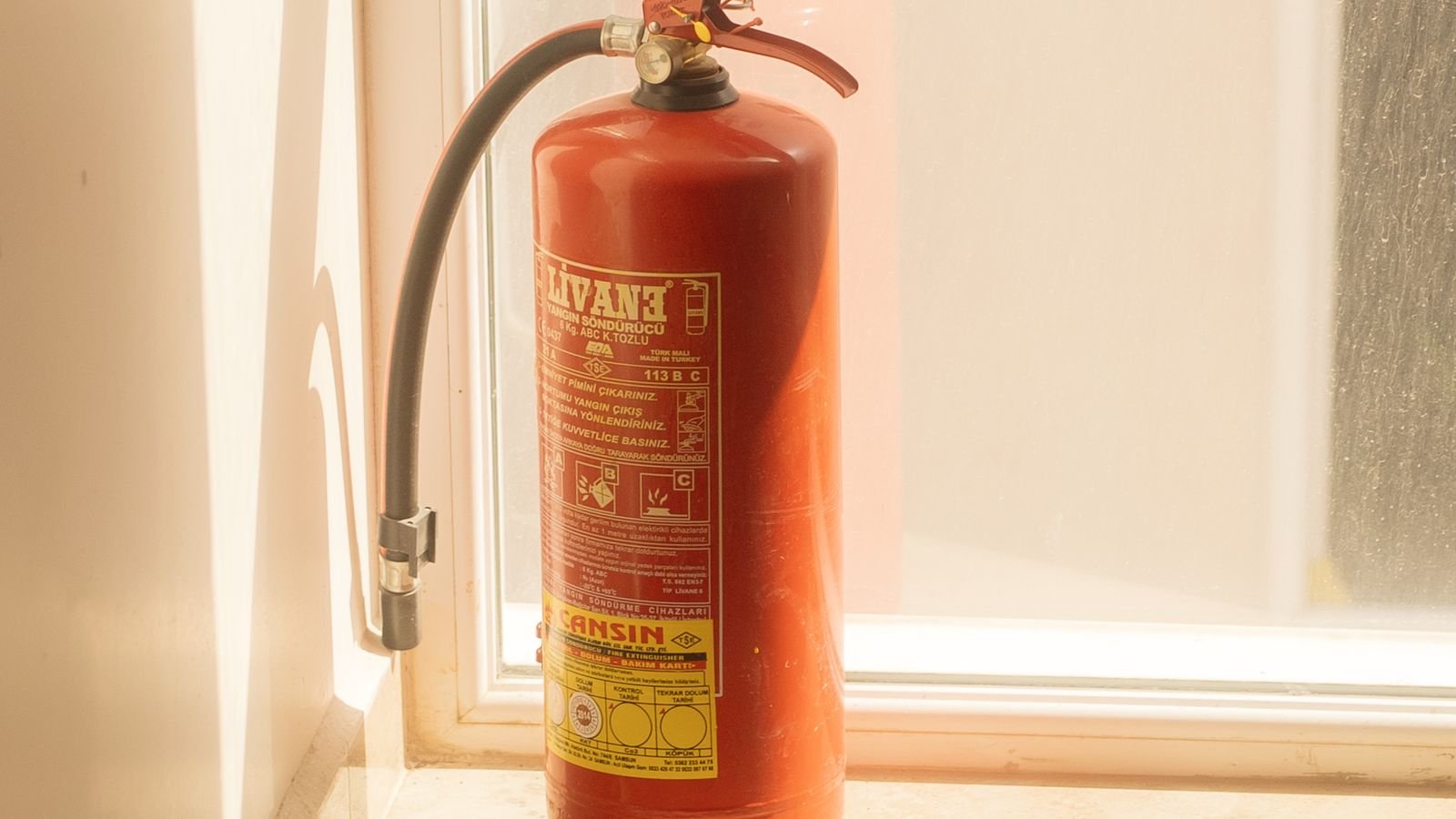
Mount extinguishers on brackets between roughly 3.5 and 5 feet from the floor, visible and unobstructed. An extinguisher in the back of a cupboard behind the vacuum is not an extinguisher, it is a decoration. Never place one where reaching it means moving towards the likely source of a fire.
How to Actually Use One
The standard technique is remembered as PASS: Pull the pin, Aim at the base of the flames, Squeeze the handle, Sweep side to side. The most common error is aiming at the flames themselves rather than at the burning fuel underneath them.
Equally important is knowing when not to fight a fire. Only attempt it if the fire is small and contained, the room is not filling with smoke, you have a clear escape route at your back, and the alarm has already been raised. Position yourself 6 to 8 feet from the fire and keep your back to the exit throughout. If the extinguisher empties and the fire is not out, leave immediately. Working smoke and carbon monoxide alarms are what buy you the seconds needed to make that judgement, which is why the units in our guide to the best smoke and CO detectors belong in the same safety plan as the extinguisher.
Rechargeable Versus Disposable
Disposable extinguishers have a plastic valve assembly and cannot be refilled; once used, even partially, they are replaced. They are cheap and adequate for a car or a secondary location.
Rechargeable units have a metal valve and a service port. They cost more initially but can be professionally recharged after use or when pressure drops, and they are typically better made throughout. For the primary kitchen and garage units, rechargeable is the better long-term choice, and it means a small discharge on a minor incident does not force a complete replacement.
Certification, Inspection and Lifespan
Buy only extinguishers carrying independent laboratory certification, marked clearly on the label alongside the class ratings. Uncertified imports have failed pressure and discharge tests often enough that the saving is never worth it.
Inspection is quick and should be monthly. Check that the pressure gauge needle sits in the green band, the pin and tamper seal are intact, the hose and nozzle are clear of obstruction and cracks, and the body shows no dents or corrosion. Invert and shake dry chemical extinguishers a couple of times a year so the powder does not cake at the bottom.
Disposable units generally carry a service life of about 12 years from manufacture; rechargeable units should be professionally inspected periodically and hydrostatically tested at the interval stamped on the cylinder. Replace any unit whose gauge has drifted out of the green regardless of age.
Building a Complete Home Fire Plan
Extinguishers are one layer. A serious plan also includes interconnected smoke alarms on every level, at least two escape routes from each bedroom, a meeting point outside, and a practised drill so children know what to do. Fire blankets belong in the kitchen for pan fires and for wrapping a person whose clothing has ignited.
Consider what you cannot replace. Documents, passports and drives holding irreplaceable photographs should live in a rated container; our overview of the best fire resistant safes explains the ratings that actually correspond to survivable interior temperatures. Add a dedicated alarm near any sleeping area from our list of the best fire alarms so detection is never the weak link.
Common Mistakes
Buying a B:C-only unit for general household use leaves you unable to fight the most common type of fire. Storing the extinguisher beside the cooker rather than near the exit is a genuinely dangerous habit. Neglecting the monthly gauge check means discovering a depressurised unit at the worst possible moment. Attempting to fight a fire that has already reached the ceiling costs precious escape time. And using water or flour on a pan fire, rather than covering it or using the correct agent, causes some of the most severe kitchen burn injuries recorded.
Frequently Asked Questions
What rating should a general home extinguisher have?
Look for an A:B:C rated multipurpose dry chemical unit of about 5 pounds, with a Class A number of at least 2-A and a Class B number of at least 10-B for a kitchen.
Can I use a fire extinguisher on a chip pan?
A wet chemical or Class K extinguisher, yes. A standard dry chemical unit can work but risks splashing burning oil if used at close range. Covering the pan and turning off the heat is safer where possible.
Do extinguishers expire?
Effectively yes. Disposable units are replaced around 12 years from manufacture, and any unit with a gauge outside the green band or visible corrosion should be replaced or serviced immediately.
How many do I need?
At minimum one per floor plus one in the kitchen and one in the garage. A typical two-storey house is well served by three or four correctly placed units.
Should I recharge after a small discharge?
Always. A partially used extinguisher will lose pressure over time and cannot be relied on. Recharge rechargeable units and replace disposable ones outright.
Final Thoughts
The letters and numbers on an extinguisher label are not fine print, they are the whole product. Choose A:B:C multipurpose units for general coverage, add a wet chemical unit where deep frying happens and a clean agent or carbon dioxide unit near sensitive electronics, size them so you can actually lift and control them, and mount them on the escape side of the room. Then check the gauges monthly and rehearse the technique before you need it. Fires are decided in the first ninety seconds, and having the right extinguisher within reach is what puts that window in your favour.