Owen Bradley
 Portable air conditioners solve a specific problem: cooling a room where a window unit cannot be installed, where a landlord forbids one, or where central air simply does not reach. They roll in, vent through a hose, and start working the same afternoon. But they are also the most commonly mis-bought cooling appliance in the home, because almost everyone shops by BTU number alone and almost nobody understands what that number means or which of the two BTU ratings on the box they are looking at. Get it wrong and you end up with a unit that runs constantly without cooling, or one so oversized it short-cycles and leaves the room clammy. This guide explains BTUs properly, walks through sizing and venting, and covers everything else that determines whether a portable unit will actually make your room comfortable.

What a BTU Actually Measures
A BTU, or British Thermal Unit, is a measure of heat energy. In air conditioning it is quoted per hour: a 10,000 BTU unit can remove 10,000 BTU of heat from a room every hour. More BTU means more cooling capacity, and more capacity means a larger room can be brought down to a comfortable temperature.
The complication is that portable air conditioners are now labeled with two different BTU figures, and they are not interchangeable. The older ASHRAE rating is measured under laboratory conditions that do not account for the heat the unit’s own exhaust hose radiates back into the room, or for the air it pulls out of the space. The newer SACC rating (Seasonally Adjusted Cooling Capacity), also called DOE rating, does account for these losses and is a much more honest reflection of real-world performance.
The practical consequence is that the SACC number is typically around 20 to 40 percent lower than the ASHRAE number for the same machine. A unit advertised as 14,000 BTU ASHRAE might be 9,500 BTU SACC. Always size using the SACC figure. If a listing quotes only a large ASHRAE number and buries or omits SACC, treat that as a warning sign about the seller rather than a bargain.
Sizing: How Many BTU Do You Need?
The rough industry starting point is 20 BTU of SACC capacity per square foot of floor area. For a 300 square foot room that suggests roughly 6,000 BTU SACC. That baseline then needs adjusting for the realities of your space:
- Sun exposure. A room with large south or west-facing windows gains substantial solar heat. Add roughly 10 percent capacity.
- Heavy shade. A north-facing or well-shaded room needs roughly 10 percent less.
- Ceiling height. The square-foot rule assumes about 8 foot ceilings. Vaulted or 10 foot ceilings mean substantially more air volume, so scale up accordingly.
- Occupancy. Each person beyond the first two adds around 600 BTU of load.
- Kitchens. Cooking appliances add a large heat load; add roughly 4,000 BTU for a kitchen space.
- Electronics. A home office with a desktop computer, monitors and networking gear can add a surprising amount of continuous heat.
- Insulation and air sealing. A poorly insulated older room with drafty windows may need 20 percent more capacity than the calculation suggests.
Bigger is not better. An oversized unit cools the air quickly and then shuts off before it has run long enough to remove humidity. The result is a room that is cold but damp and clammy, with frequent noisy start-stop cycling that wears the compressor. Aim for a unit sized close to your calculated load, erring slightly high rather than dramatically so.
Single Hose vs Dual Hose Designs
This distinction affects real efficiency more than most buyers realize.
Single Hose
The unit draws air from inside the room, uses it to cool the condenser, and expels it outside through one hose. Because that air leaves the room, the room ends up at slightly negative pressure and pulls warm outside air in through every gap, door and window frame. Single hose units are cheaper, simpler and lighter, and they work perfectly well in small to medium rooms. They are simply working against themselves to a degree.
Dual Hose
One hose draws outside air in to cool the condenser, the second expels it. The room’s own air is never used for condenser cooling, so no negative pressure develops and no infiltration is induced. Dual hose units cool larger rooms more effectively and more efficiently, at the cost of higher price, more bulk and a slightly more involved window installation.
For a bedroom or small office, single hose is fine. For an open living space or a room above roughly 350 square feet, dual hose is worth the premium. Our comparison of the best portable air conditioner units covers both configurations and the venting kits they ship with.
Venting: The Step That Determines Success
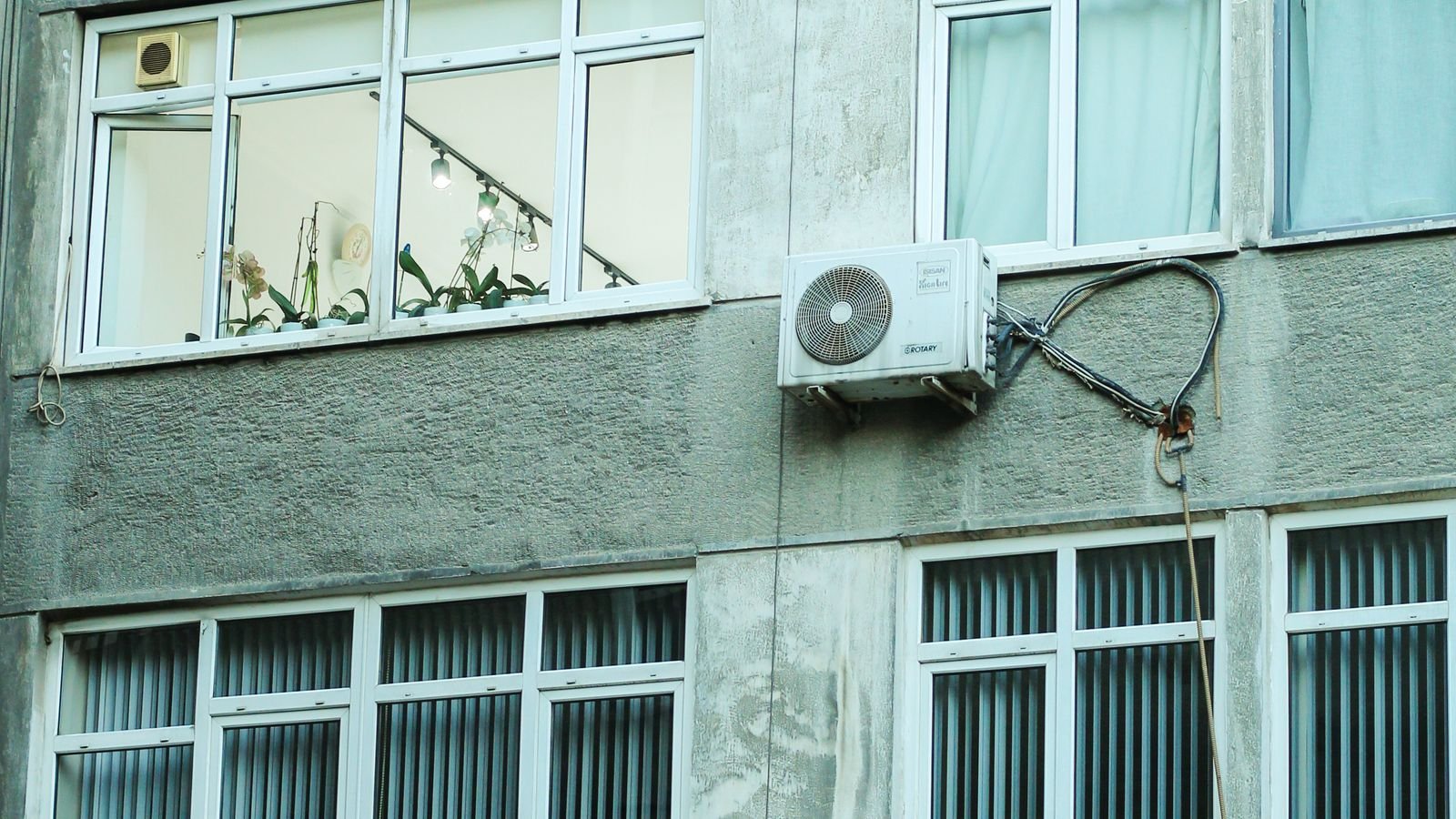
Every portable air conditioner must exhaust hot air outside. There is no exception to this — a unit venting into the same room it is cooling is a net heater. The included window kit uses an adjustable panel that fits a sash window, but real installations often need thought:
- Measure your window opening before buying and check the kit’s adjustment range covers it. Casement and awning windows usually need a custom acrylic or plexiglass panel cut to fit.
- Keep the hose short and straight. Every bend and every extra foot of hose radiates heat back into the room and reduces effective capacity. Do not extend the hose beyond the supplied length.
- Insulate the hose with a purpose-made sleeve or foil wrap. The hose surface gets genuinely hot and is a significant source of heat gain in small rooms.
- Seal around the panel with foam tape or a window seal kit. Gaps let hot air straight back in and undo much of the cooling.
- Check the exhaust route outside is not blowing into an enclosed light well or straight back at an intake.
Moisture Management and Drainage
Cooling air condenses water out of it, and that water has to go somewhere. There are three approaches. Self-evaporating units reintroduce the condensate into the exhaust airstream so it leaves as vapor — the most convenient design and the one to prefer. Gravity drain models let you attach a hose to a floor drain or run it out the window, which works well if you have somewhere for it to go. Bucket models simply collect water and shut off when full, which in humid climates can mean emptying a tank daily. Check which type you are buying; in a humid region a bucket model becomes a genuine chore.
Other Specifications Worth Checking
- Noise. Portable units place the compressor inside the room, so they are inherently louder than window or split systems. Anything under about 52 dB on low is reasonably tolerable for a bedroom; above about 58 dB is disruptive.
- Energy efficiency. Look at the CEER or SACC-based efficiency rating rather than power draw alone. Running costs over a season can exceed the difference in purchase price between an efficient and an inefficient model.
- Dehumidify mode. Useful in shoulder seasons when you need moisture removal without much cooling. Note that most units still require venting in this mode.
- Heat mode. Some units reverse the cycle to provide supplemental heating, which extends usefulness across the year.
- Smart controls. App or voice control and scheduling are genuinely useful for pre-cooling a bedroom before you get home.
- Casters and weight. “Portable” units commonly weigh 60 to 80 pounds. Good casters and a sensible handle matter if you plan to move it between rooms.
- Filter access. The filter needs cleaning every few weeks in use. A design that makes this a two-minute job will actually get maintained.
Portable vs the Alternatives
Be clear about why you are choosing portable. A window air conditioner of the same nominal capacity will cool better, run quieter in the room and cost less, because the compressor and condenser sit outside. If a window unit is permitted and physically possible, it is usually the better appliance — our best small window air conditioners guide covers compact options for single rooms. Portable units win where installation is restricted, where the window shape rules out a mounted unit, or where you need to move cooling between rooms.
For very small spaces, personal or compact coolers may be enough — the best mini air conditioners roundup covers that category. If venting is genuinely impossible, understand what evaporative and ventless options can and cannot do before buying; the best ventless air conditioners guide explains the limitations honestly. And in dry-heat climates, a good tower fan combined with shading can deliver more comfort per dollar than any compressor unit.
Common Mistakes to Avoid
- Sizing from the ASHRAE number. The most frequent error. Use SACC.
- Buying deliberately oversized “for safety”. You get short cycling, poor dehumidification and a clammy room.
- Extending the exhaust hose. Manufacturers specify hose length for a reason; longer hoses cost you capacity and can trip thermal protection.
- Leaving the hose uninsulated. A hot hose coiled across a small bedroom can undo a meaningful share of the cooling.
- Ignoring drainage type in a humid climate. A bucket model in a humid region means daily emptying.
- Neglecting the filter. A clogged filter cuts airflow, reduces capacity and can freeze the evaporator coil.
- Sharing a circuit with other heavy appliances. Compressor startup draws a surge; a dedicated outlet avoids nuisance breaker trips.
Frequently Asked Questions
Can I use a portable air conditioner without venting it?
No. A compressor-based unit moves heat rather than destroying it, so venting the hot side outside is essential. Running it unvented adds net heat to the room. Only evaporative coolers work without a vent, and they only cool effectively in dry climates.
How much does a portable air conditioner cost to run?
Multiply the rated power draw in kilowatts by your electricity rate and by the hours it actually runs. A mid-size unit is comparable to running several desktop computers continuously. Correct sizing and good sealing reduce running hours more than any efficiency rating difference.
Why is my portable unit running constantly but not cooling?
Usual causes are undersizing for the room, a poorly sealed window panel letting hot air back in, a dirty filter restricting airflow, or an exhaust hose that is too long or badly kinked. Work through those four before assuming a fault.
Are dual hose units really worth the extra money?
In rooms above roughly 350 square feet, or in very hot conditions, yes — the efficiency gain is measurable and you avoid pulling hot outside air in through every gap. In a small, well-sealed bedroom the advantage is modest.
Can one portable unit cool a whole apartment?
Realistically no. These units cool the room they are in. Airflow between rooms is limited, and doorways do not move enough air to equalize temperature. Size for the single room you most need comfortable.
Final Thoughts
Buying a portable air conditioner well comes down to three disciplines: size from the SACC rating rather than the marketing number, choose single or dual hose based on room size, and treat venting as a real installation job rather than an afterthought. Those three decisions determine most of your comfort. After that, weigh noise, drainage type and efficiency against your budget and how many hours per day the unit will run. Take fifteen minutes to measure your room and your window before you shop for 2026, and you will avoid the mismatch that leaves so many of these units running all summer without ever making the room feel cool.