Owen Bradley
 Starting seedlings indoors gives you a head start on the growing season, but a sunny windowsill almost never provides enough light to do it well. Seedlings raised on inadequate light stretch toward whatever source they can find, producing long, pale, floppy stems that never recover — a condition growers call legginess. The fix is supplemental lighting, and choosing the right bulbs is more straightforward than the marketing around grow lights suggests. This guide explains which specifications actually matter for seedlings, how to position and schedule your lights, and how to avoid the common errors that leave trays of weak, spindly plants.
Why a Windowsill Is Not Enough
Sunlight outdoors on a clear day delivers enormous light intensity. Even a south-facing window transmits only a fraction of that, and the intensity falls off sharply with distance from the glass. Seedlings a foot back from the pane may be receiving a small percentage of what they need.
Plants respond to insufficient light by elongating their stems, searching for a stronger source. That elongated growth is structurally weak, prone to damping-off disease and to collapsing under its own weight. Once a seedling has gone leggy you cannot reverse it — you can only prevent it by providing adequate light from germination onward.
The Specifications That Actually Matter
Grow light packaging is full of numbers, many of which are marketing noise. Four things genuinely matter for seedlings.
- Intensity (PPFD). Photosynthetic photon flux density measures the usable light actually reaching the leaf surface. Seedlings want roughly 200 to 400 µmol/m²/s. Anything much below this produces stretching; much above it is wasted on young plants.
- Spectrum. Plants primarily use blue and red wavelengths. Blue light around 450nm promotes compact, sturdy vegetative growth — exactly what seedlings need. Red around 660nm drives flowering and fruiting and matters later. A full-spectrum white bulb in the 5000K to 6500K range contains ample blue and works very well.
- Coverage area. A bulb concentrates light in a cone. Check the manufacturer’s stated coverage at a given hanging height and match it to your tray size, rather than assuming one bulb will light a whole shelf.
- Efficiency. Measured in µmol per joule. Higher efficiency means more usable light per watt of electricity, which matters when lights run 14 to 16 hours a day for weeks.
Notice what is absent from that list: wattage. Wattage tells you power consumption, not light output, and comparing LEDs by wattage alone is misleading. Similarly, “equivalent to a 300W HPS” claims are unregulated and unreliable.
Bulb Types Compared
- LED grow bulbs. The best all-round choice for home seedling starting. Efficient, cool-running, long-lived, and available in dedicated full-spectrum versions. They fit standard sockets, so a clamp lamp or shop fixture works.
- Fluorescent T5. A long-standing favourite for seedlings. Cheap, low heat, and the tube form spreads light evenly across a tray. Less efficient than LED and the tubes degrade in output over time.
- CFL. Workable for a single small tray in a pinch, but coverage is limited and the intensity falls off very quickly with distance.
- HID (MH/HPS). Powerful but far too much for seedlings, with substantial heat output and higher running costs. Overkill for a home seed-starting setup.
For most people raising a few trays on a shelf, full-spectrum LED bulbs in simple fixtures are the sensible answer. Reviewing a range of the best grow light bulbs for indoor plants will show how spectrum, coverage and socket type differ across the category so you can match bulbs to the fixtures you already own.
Choosing Colour Temperature
If you are using standard white LED bulbs rather than purple-tinted dedicated grow bulbs, colour temperature is your proxy for spectrum.
- 5000K to 6500K — cool, daylight-toned white with a high proportion of blue. This is the correct range for seedlings and promotes compact, sturdy growth.
- 4000K — acceptable, a reasonable compromise if the same lights serve a living space.
- 2700K to 3000K — warm white, red-dominant. Useful for flowering and fruiting stages, but poor for seedlings, which will tend to stretch.
Full-spectrum white bulbs have a practical advantage over the pink-purple dedicated grow lights: you can actually see your plants properly under them, making it far easier to spot pests, discolouration or damping-off early.
Setting Up Your Lights Step by Step
- Choose the fixture. A clamp lamp with a reflector, a shop light fixture, or an adjustable shelf-mounted bar all work. The reflector matters — it redirects light down onto the tray instead of scattering it across the room.
- Make the height adjustable. Chains, a pulley system or an adjustable stand are essential, because the correct height changes as seedlings grow.
- Set the initial height. Position LED bulbs roughly 6 to 12 inches above the soil surface; fluorescent tubes can sit closer, around 2 to 4 inches.
- Check for heat. Hold your hand at leaf height for thirty seconds. If it feels warm, raise the light.
- Fit a timer. Consistency matters more than you might expect, and a cheap mechanical or smart timer removes all guesswork.
- Set the photoperiod. Run lights 14 to 16 hours a day. Plants need a genuine dark period for respiration, so never run them continuously.
- Raise the lights as seedlings grow, maintaining the same gap between bulb and leaf tops. Check every few days.
- Rotate the trays every couple of days so plants at the edges receive comparable light to those in the centre.
Reading Your Seedlings
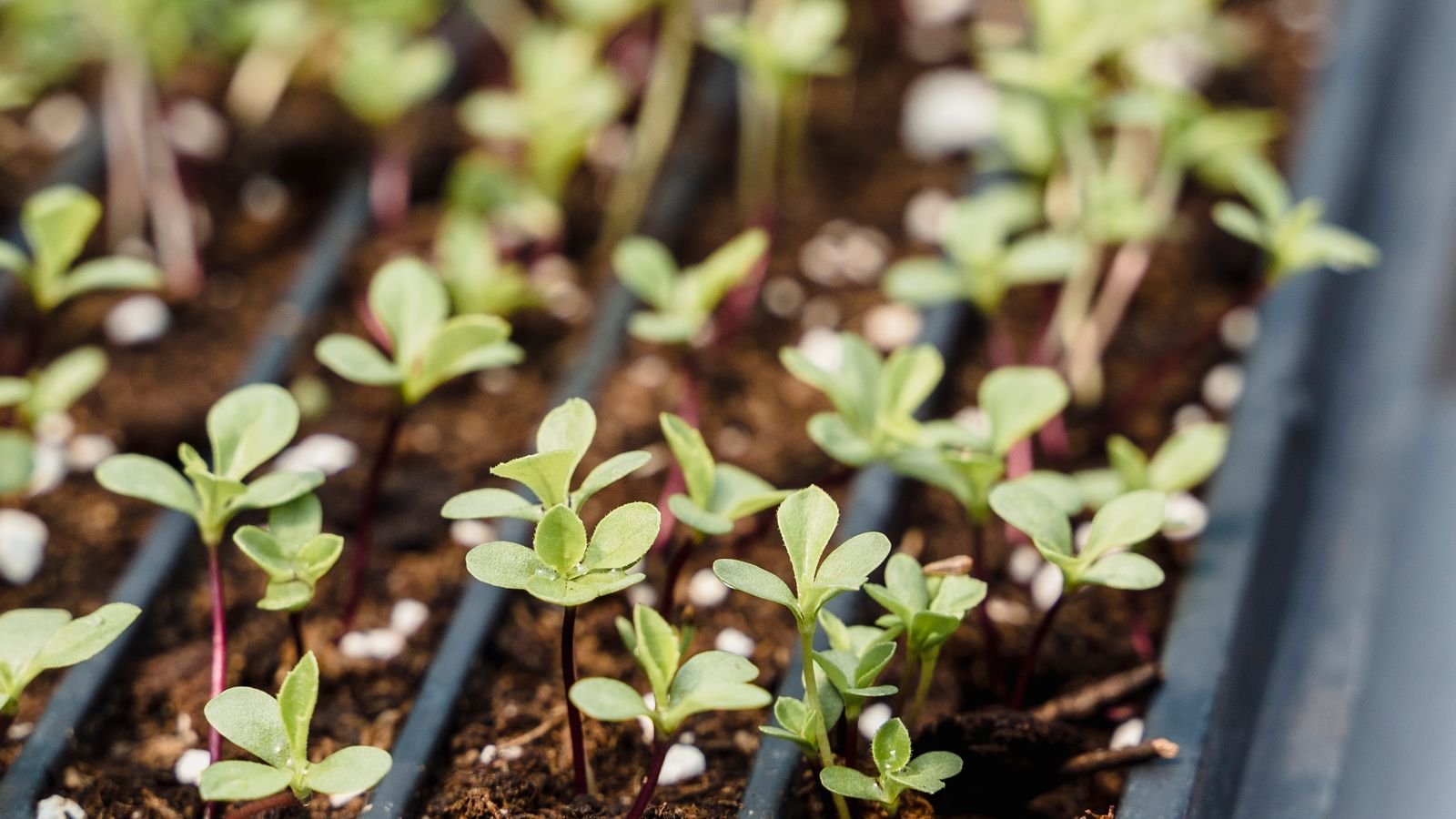
Your plants tell you whether the lighting is right. Learn to read them.
- Long, pale, stretched stems with wide gaps between leaves — not enough light, or the light is too far away. Lower it or add more.
- Seedlings leaning consistently in one direction — the light is off-centre or a window is dominating. Recentre the fixture and rotate the tray.
- Bleached, whitish or crisp leaf tips — too much intensity or too much heat. Raise the light.
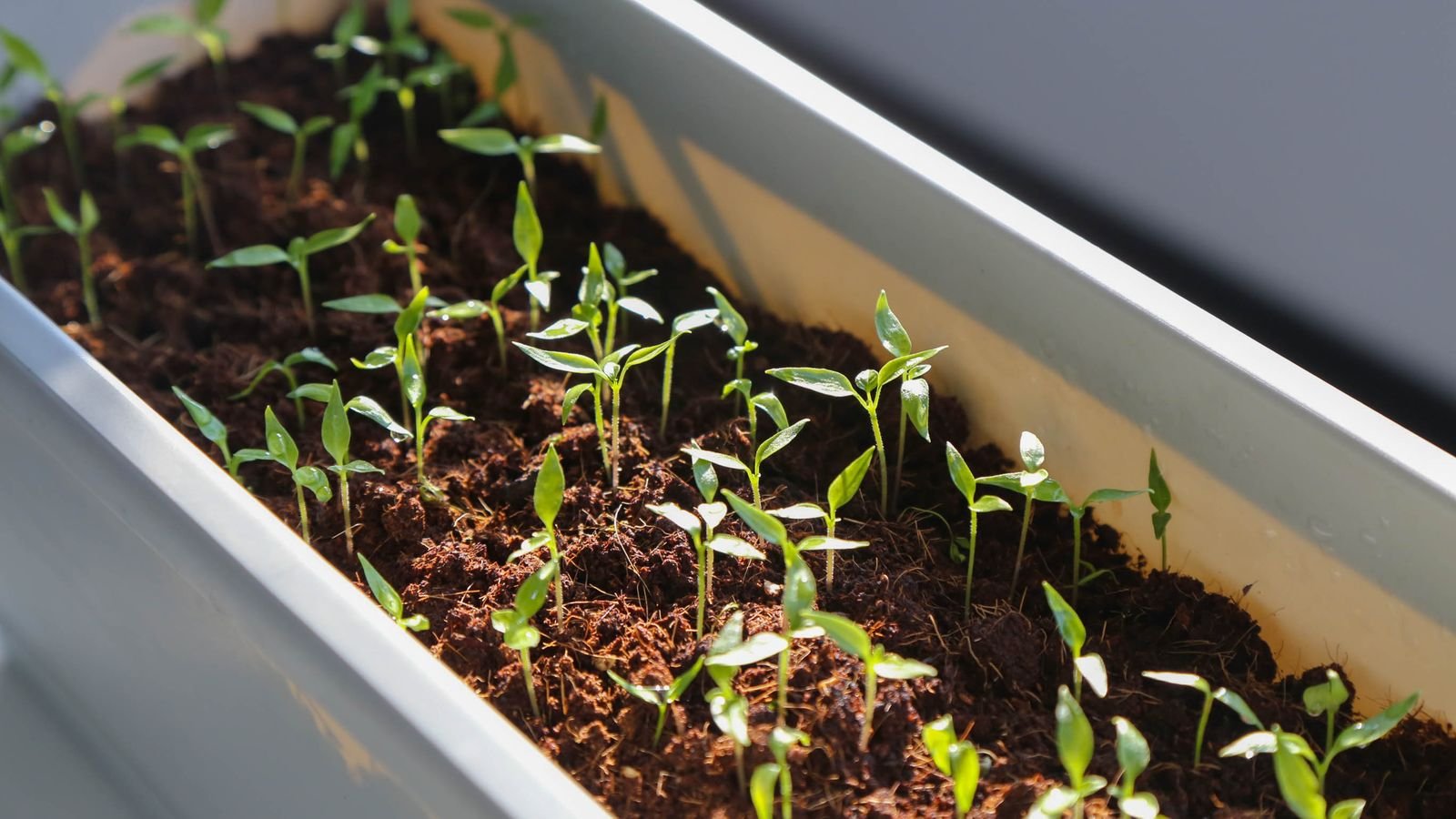
- Compact stems with closely spaced, deep green leaves — this is what correct lighting looks like.
- Purple or reddish tinting on leaves — usually a nutrient issue rather than a light issue, though very intense light can contribute.
Common Mistakes to Avoid
- Relying on a windowsill. Even a bright south-facing window rarely provides enough intensity for stocky seedlings.
- Hanging lights too high. Intensity drops off with the square of the distance, so a few extra inches makes a large difference.
- Running lights 24 hours a day. Plants need darkness for respiration and normal development.
- Choosing bulbs by wattage. Look at PPFD, spectrum and coverage instead.
- Using warm white bulbs for seedlings. The red-heavy spectrum encourages stretching at this stage.
- Forgetting to raise the light as plants grow, leading to scorched leaf tips.
- Neglecting airflow. A small fan strengthens stems and greatly reduces damping-off disease.
Frequently Asked Questions
How many hours a day should grow lights run for seedlings?
14 to 16 hours, followed by a genuine dark period. A timer is the easiest way to keep this consistent, and consistency matters more than the exact figure within that range.
Can I use ordinary LED bulbs instead of grow lights?
Yes, provided they are bright enough and in the 5000K to 6500K range. Standard white LEDs contain plenty of usable blue and red. You will typically need more of them, or need them closer, than a dedicated grow bulb.
How close should the light be to my seedlings?
Around 6 to 12 inches for LED bulbs and 2 to 4 inches for fluorescent tubes, adjusted as the plants grow. If it feels warm at leaf height, it is too close.
Do seedlings need red light or blue light?
Blue is the priority at the seedling stage because it promotes compact, sturdy growth. Red becomes more important later for flowering and fruiting. A full-spectrum bulb covers both without you needing to think about it.
Why are my seedlings still leggy under lights?
Almost always intensity or distance. Lower the fixture, add a second bulb, or move to a higher-output light. Excessive warmth and insufficient airflow can also contribute to weak, stretched growth.
Final Thoughts
Choosing bulbs for growing seedlings indoors comes down to a few practical decisions: pick full-spectrum light in the 5000K to 6500K range, aim for intensity in the 200 to 400 µmol/m²/s band, match the fixture’s coverage to your tray, and put the whole thing on a timer running 14 to 16 hours a day. Keep the light close and raise it as the plants grow, add a small fan for airflow, and rotate the trays regularly. Get those basics right and you will raise short, thick-stemmed, deep green seedlings that transplant successfully — which is far more than a windowsill will ever give you.