Owen Bradley
 Lighting is one of the most overlooked decisions in a nursery, and one of the few that affects a child every single night. Parents agonize over crib mattresses and blackout curtains, then screw in whatever bulb happens to be in the drawer — usually a cool, bright, unshielded one that floods the room with exactly the wrong kind of light at exactly the wrong time. Children’s sleep is more sensitive to light than adults’ is, and the eyes of a young child transmit far more short-wavelength blue light to the retina than an adult’s do. Getting the bulbs right supports better sleep, calmer bedtimes, and safer night-time feeds. This guide covers everything you need to choose lighting for a nursery or kids’ room in 2026, from color temperature and dimming to safety, night lights, and the mistakes that keep everyone awake.
Why Color Temperature Matters More for Children
Color temperature, measured in Kelvin, describes whether light appears warm and yellow or cool and blue. It is the most important single specification for a child’s room, because blue-enriched light suppresses melatonin — the hormone that signals the body it is time to sleep.
Children are more susceptible than adults for a physiological reason: the lens of a young eye is exceptionally clear. An adult lens yellows with age and naturally filters some blue light, but a toddler’s lens transmits far more of it to the retina. The same bulb that mildly delays an adult’s sleep can meaningfully disrupt a child’s.
- 2000K–2200K — deep amber. Ideal for night lights and late-evening feeds.
- 2700K — classic warm white. The right default for nursery ambient lighting.
- 3000K — soft white, slightly crisper. Acceptable for a play area or an older child’s room.
- 4000K and above — neutral to cool. Reserve for daytime task lighting only, and ideally avoid entirely in a sleeping space.
- 5000K–6500K — daylight. Genuinely counterproductive in a bedroom for a child.
If you buy nothing else deliberately, buy 2700K. Comparison roundups of the best warm light bulbs are a straightforward way to find well-made options at that temperature.
Brightness: Less Than You Think
Adults consistently over-light nurseries. A room that feels comfortably bright to you at 9 p.m. is often far brighter than a child needs, and the light level itself becomes a cue that it is time to be awake.
As a rough guide, a nursery ceiling fixture in the 450 to 800 lumen range is sufficient for general use — roughly the output of an old 40 to 60 watt incandescent. A bedside or nursing lamp only needs 100 to 300 lumens. A night light should be under 20 lumens; anything brighter casts shadows that a child can find unsettling and is more than enough to disturb light sleep.
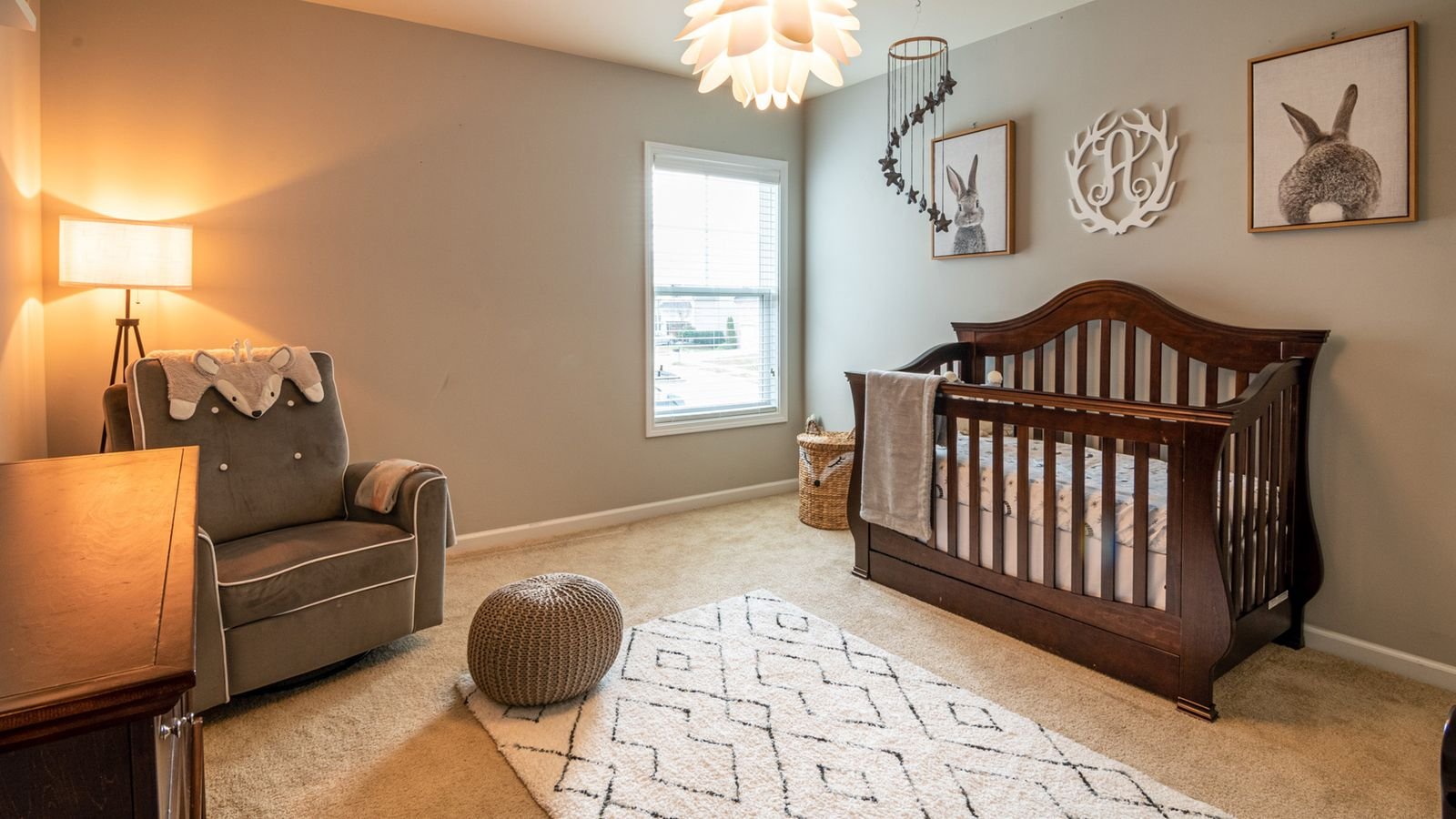
The practical answer is layering rather than a single setting. One dimmable ceiling source, one warm lamp near the changing table or nursing chair, and one very low night light gives you the right amount of light for every situation without ever needing to flood the room.
Dimming Is the Single Best Feature
A dimmable bulb turns one fixture into an entire lighting scheme: bright for playtime and diaper changes, mid-level for stories and winding down, barely-there for a 3 a.m. feed. Nothing else you can buy for a nursery delivers as much practical value per dollar.
Two caveats matter. First, not every LED dims well — cheap ones flicker, buzz, or cut out abruptly at the low end, and flicker is particularly worth avoiding around children. Second, dimmer compatibility is real: an older leading-edge dimmer designed for incandescent loads often behaves badly with LEDs, so either buy a bulb explicitly rated for your dimmer or install an LED-compatible trailing-edge dimmer.
Look for bulbs that advertise smooth dimming down to 10% or lower, and ideally ones that warm in color as they dim, mimicking the way firelight and sunset behave. Shortlists of the best dimmable LED light bulbs make it easy to filter for flicker-free performance.
Safety Considerations Specific to Children’s Rooms
A nursery has requirements no other room has, because a child will eventually reach, throw, climb, and chew.
- Heat — LEDs run far cooler than incandescent or halogen bulbs. A halogen lamp within reach is a genuine burn risk; an LED at the same brightness is barely warm.
- Shatter resistance — choose bulbs with plastic or coated envelopes rather than bare glass, especially in floor lamps and anything a toddler can reach.
- No mercury — this rules out compact fluorescent bulbs, which release mercury vapor if broken.
- Cord management — every lamp cord in a child’s room is a strangulation and tipping hazard. Secure cords behind furniture and keep lamps well away from the crib.
- Enclosed fixture rating — many nursery ceiling fixtures are fully enclosed domes, and not all LEDs tolerate the trapped heat. Check for an “enclosed fixture rated” label or the bulb will fail early.
- Secure mounting — wall sconces and shelf lamps should be anchored so a climbing toddler cannot pull them down.
Flicker, CRI, and Light Quality
Two quality specifications get almost no attention on packaging but matter in a room where a child spends thousands of hours.
Flicker is rapid fluctuation in output driven by the bulb’s power circuitry. Even when invisible, it has been associated with headaches, eye strain, and discomfort, and children rarely have the vocabulary to report it. Better-quality bulbs use driver designs that minimize flicker; a quick test is to wave your hand rapidly under the light or view it through a phone camera, where obvious banding indicates a problem.
CRI (Color Rendering Index) describes how accurately a light source shows colors compared to natural daylight, on a scale to 100. For a nursery, aim for CRI 90 or above. Accurate color rendering matters more than parents expect — it is how you spot a rash, judge skin tone, or check whether something is clean during a night-time change. It also makes a room full of soft pastels look the way the designer intended instead of muddy and grey.
Night Lights and the 3 a.m. Problem
The middle-of-the-night feed or check-in is where nursery lighting either helps or ruins the rest of the night. Switching on a normal light wakes both of you fully and can cost an hour of sleep.
The solution is a dedicated ultra-low, ultra-warm light source. Amber or red-shifted light at 1800K to 2200K is by far the least disruptive to melatonin, which is why red-toned night lights have become the default recommendation. Keep it under 20 lumens, position it low and indirect so it never shines toward the crib, and if it is plug-in, make sure it is out of reach.
Options designed specifically around sleep, such as the best red light bulbs for sleep, work well in a nursing-chair lamp — bright enough to see by, dim and warm enough that neither of you fully wakes.
Smart Bulbs in a Nursery: Worth It?
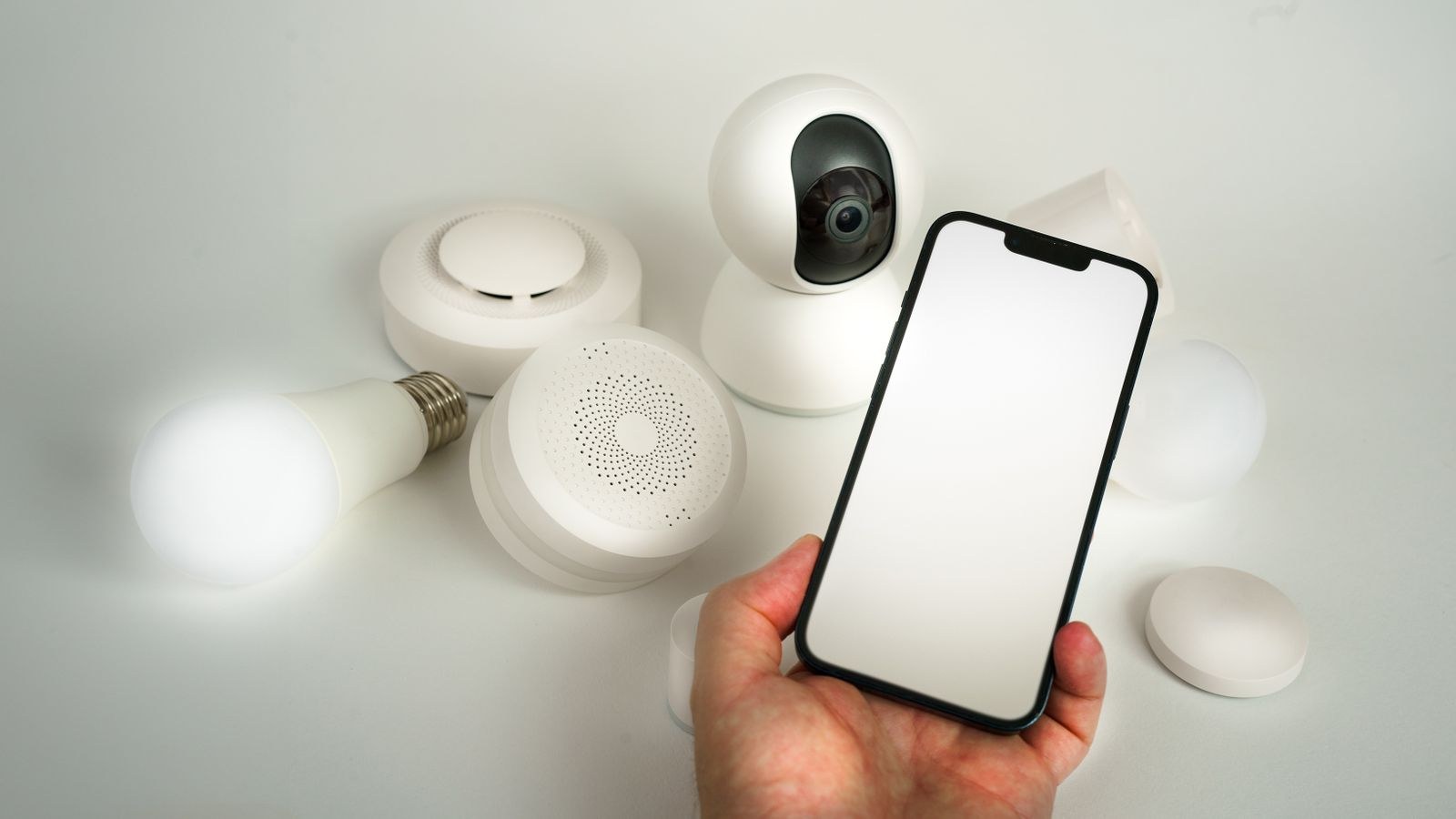
Smart bulbs solve several nursery-specific problems elegantly. You can dim from your phone without walking into the room and waking a sleeping child. You can schedule a gentle sunset fade that becomes part of the bedtime routine. You can set a colored “okay to get up” cue for a toddler who cannot yet read a clock. And you can turn everything off from another room when you finally sit down.
The downsides are modest but real: they cost more, they depend on your Wi-Fi, and a smart bulb needs constant power at the wall switch, which means anyone flipping that switch breaks the system. Choose a model that remembers its last state after a power cut, and prefer local control over cloud-only operation so a service outage does not leave you in the dark. Guides to the best smart LED light bulbs cover which ecosystems handle scheduling and dimming most reliably.
Room-by-Room Recommendations by Age
- Newborn nursery — 2700K dimmable ceiling bulb around 600 lumens, a 2200K nursing lamp, and a sub-20-lumen amber night light. Prioritize dimming above everything.
- Toddler room — same warm ambient base, plus a slightly brighter play-area lamp. Add a smart bulb if you want a wake-up cue. Shatter resistance becomes critical at this age.
- School-age room — keep 2700K for ambient and bedside, but add a dedicated desk lamp at 3500K to 4000K for homework, on a separate switch so it is never on at bedtime.
- Shared room — layer aggressively so one child can read while another sleeps: individual bedside lamps rather than a bright shared ceiling light.
Budget Guidance
- $3–$6 per bulb — basic non-dimmable warm white LED. Fine for a hallway or closet, not ideal for the main nursery fixture.
- $8–$15 per bulb — the value tier: dimmable, high CRI, low flicker, enclosed-fixture rated. This is where most parents should shop.
- $15–$30 per bulb — smart bulbs with scheduling, color tuning, and app control. Worth it for the ceiling fixture and the nursing lamp specifically.
You typically need only three or four bulbs for a whole nursery, so buying quality here costs very little in absolute terms. General shortlists of the best light bulbs for bedroom use overlap heavily with nursery needs, since the priorities — warmth, dimming, low flicker — are the same.
Mistakes to Avoid
- Using 5000K daylight bulbs in a sleeping room because they seemed “brighter and better.”
- Choosing a non-dimmable bulb for the main fixture and having only two settings: blinding or dark.
- Putting an ordinary LED in a sealed dome fixture and wondering why it dies in six months.
- Placing a night light where it shines directly into the crib.
- Ignoring flicker because the bulb was inexpensive.
- Positioning a lamp with a trailing cord within reach of the crib rail.
Frequently Asked Questions
What color temperature is best for a nursery?
2700K for general lighting and 1800K to 2200K for night lights and late feeds. Anything at 4000K or above is too blue-enriched for a sleeping space and will make settling harder, especially in the hour before bedtime.
Are LED bulbs safe for babies?
Yes, and they are safer than the alternatives. They run cool, contain no mercury, and are widely available in shatter-resistant plastic-coated versions. The only caution is choosing warm color temperatures and low-flicker models rather than the cheapest cool-white option.
How bright should a night light be?
Under 20 lumens is plenty — enough to navigate the room and see your child’s face without triggering full wakefulness in either of you. Warm amber or red tones at this brightness are the least disruptive to sleep hormones.
Should I use a smart bulb in my child’s room?
It is genuinely useful if you want scheduled dimming, remote control, and a visual wake-up cue. Make sure it defaults to its previous state after a power interruption, and put a switch guard on the wall switch so it never gets cut off accidentally.
Final Thoughts
Nursery lighting rewards a small amount of deliberate thought. Go warm at 2700K, insist on smooth dimming, prioritize CRI 90 and low flicker, keep night lights amber and under 20 lumens, and layer your sources so you never have to choose between blinding and pitch black. Check that any enclosed ceiling fixture gets a bulb rated for it, keep cords secured and lamps away from the crib, and let the room’s light get gradually warmer and dimmer as bedtime approaches. To narrow the field quickly, start with a shortlist of the best light bulbs for nursery use and match them to the fixtures you already own — it is a small upgrade that pays back in better sleep every night of 2026.