Owen Bradley
 Indoor plants fail for one reason more than any other: not enough light. A windowsill that looks bright to your eyes may deliver a small fraction of what a plant needs, because human vision adapts to low light while photosynthesis does not. Grow light bulbs solve that, but the category is full of marketing numbers that do not mean what they appear to mean. Wattage tells you almost nothing. Lumens tell you about human perception, not plant response. This guide explains the specifications that genuinely matter, how to match a bulb to what you are growing, and how to set it up so plants actually thrive.
The Specifications That Actually Matter
Plants respond to a different band of light than eyes do, so the familiar bulb specifications mislead. Here is what to read instead.
- PAR (photosynthetically active radiation): the range of wavelengths, roughly 400 to 700 nanometres, that plants use for photosynthesis. A qualitative concept rather than a number you buy.
- PPF (photosynthetic photon flux): the total quantity of usable photons a light produces per second, measured in micromoles per second. This is the closest equivalent to a lumen rating for plants.
- PPFD (photosynthetic photon flux density): how many of those photons actually land on a given area at a given distance. The most useful figure, and the one that changes drastically as you move the light.
- DLI (daily light integral): total light delivered over a full day, combining intensity and duration. Ultimately the number the plant responds to.
Wattage now only describes electricity consumed, and efficiency varies enormously between products. A well-designed bulb can outperform one drawing twice the power. Where a manufacturer publishes PPF or PPFD at a stated distance, that is a good sign; where they lead with wattage equivalents alone, be sceptical.
How Much Light Different Plants Need
Matching light level to plant type prevents both under-lighting and leaf burn.
- Low light foliage such as pothos, snake plants, ZZ plants and philodendrons: a PPFD around 50 to 150 is plenty. These plants tolerate low light but grow noticeably better with a modest boost.
- Medium light houseplants such as monstera, calathea, ferns and most tropicals: roughly 150 to 300 PPFD.
- Herbs and leafy greens such as basil, lettuce and spinach: 250 to 400 PPFD, with longer daily duration.
- Succulents and cacti: 400 to 600 PPFD. These are high-light desert plants and are the ones most often starved indoors.
- Fruiting crops such as tomatoes, peppers and chillies: 600 or more, which usually needs a dedicated panel rather than a screw-in bulb.
Seedlings are a special case: they need strong light immediately or they stretch into weak, leggy stems. That stretching is irreversible, so start seedlings under adequate light rather than trying to correct later. Options across these categories are compared in the best grow light bulbs guide.
Full Spectrum vs Red and Blue
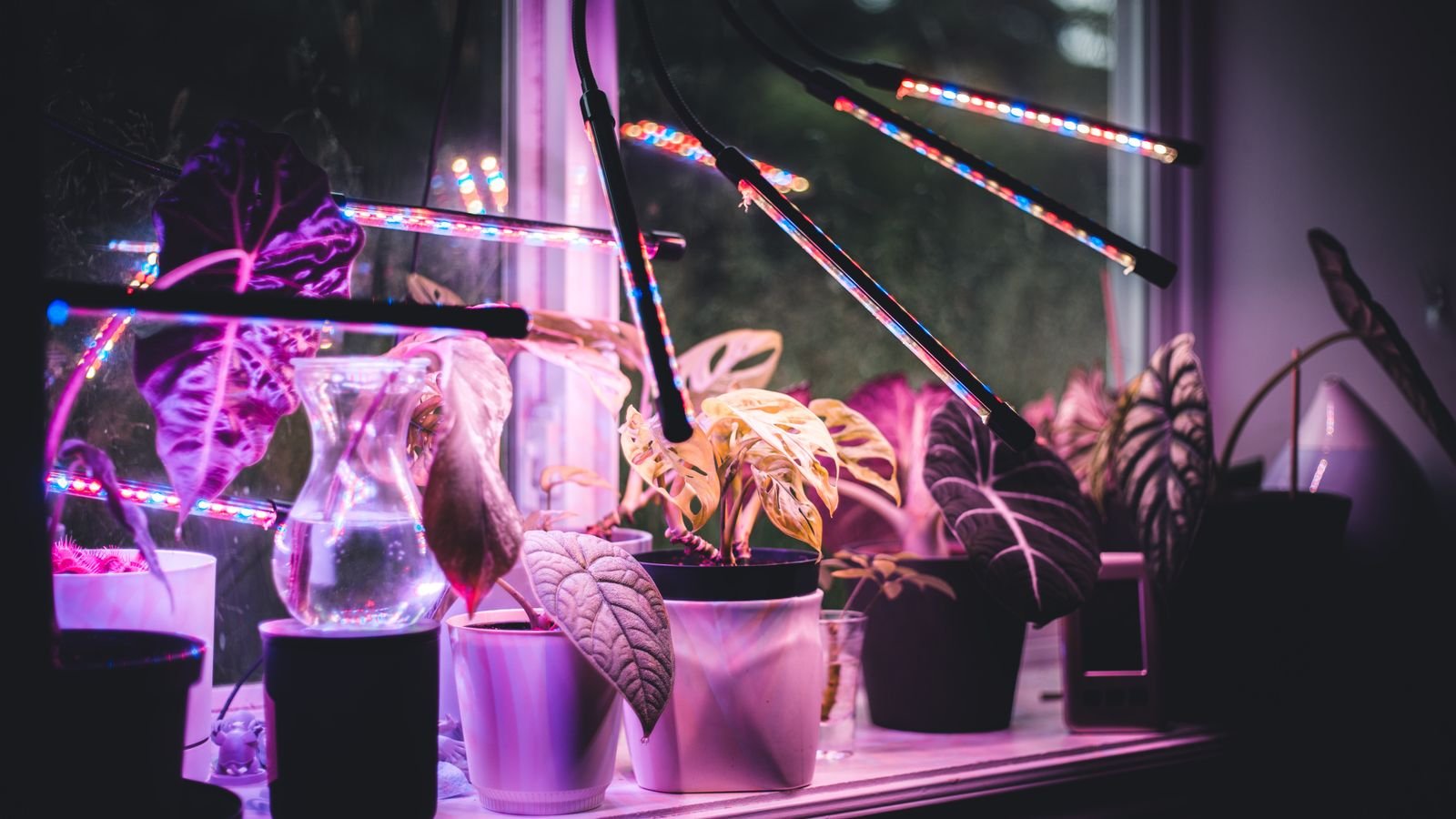
Two visual styles dominate the market. Blurple lights emit mostly deep red and blue, the wavelengths chlorophyll absorbs most strongly, which makes them efficient on paper. Full spectrum white lights emit across the visible range, including the green and yellow that blurple fixtures skip.
For home growing, full spectrum white wins on practical grounds. The efficiency advantage of narrow-band red and blue has largely evaporated as white LEDs improved, and the drawbacks are significant: magenta light is unpleasant to live with, it makes plants look sickly, and it hides the leaf discolouration that tells you something is wrong. Green light is also not wasted, as it penetrates deeper into the canopy than red or blue.
Look for a full spectrum bulb around 3500K to 5000K for general growing. Warmer spectra with more red encourage flowering and fruiting; cooler spectra with more blue promote compact leafy growth. If a bulb is going in a living room, choose white every time. The best light bulbs for growing plants comparison covers spectrum choices in detail.
Bulb Formats and Where Each Fits
- Standard A-shape screw-in: fits any normal lamp or fixture. Convenient and discreet, best for a single plant or a small group.
- BR and PAR reflector bulbs: a built-in reflector directs light downward instead of sideways, delivering much more usable intensity onto the plant. The best screw-in choice for a specific plant.
- Corn-style high output bulbs: a cylinder of diodes producing far more output than a standard bulb. They emit in all directions, so they suit a hanging fixture over a cluster of plants and often need active cooling.
- Clip-on gooseneck lamps: bulb and fixture combined, aimable, ideal for a shelf or a windowsill group.
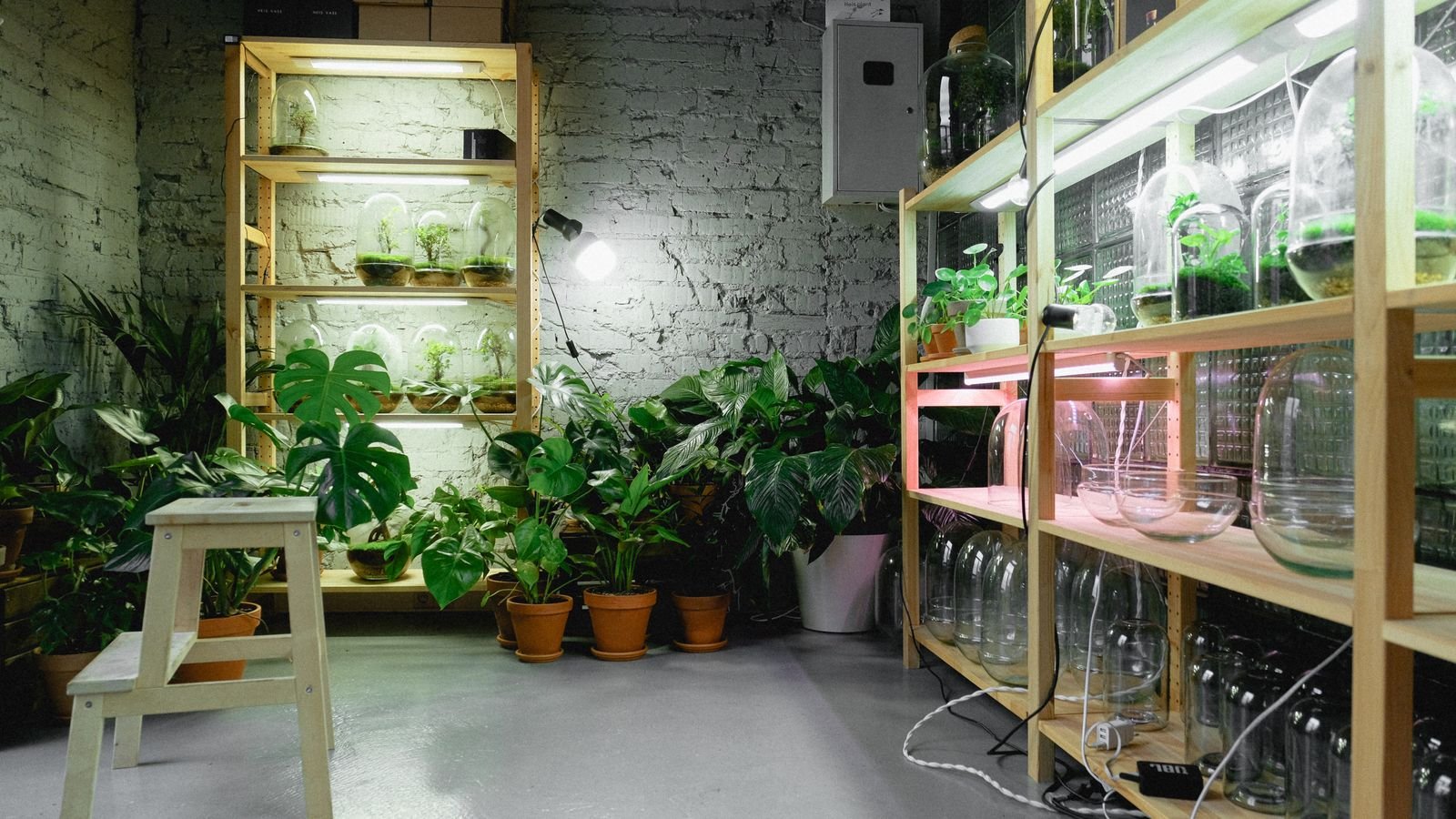
- Linear bars and panels: not bulbs, but the right answer for seed trays and shelving units where even coverage across a rectangle matters more than intensity at one point.
Screw-in bulbs suit a handful of plants in ordinary rooms. Once you are growing a whole shelf, a bar fixture delivers more even light per pound spent. Options built specifically for houseplant use are covered in the best grow light bulbs for indoor plants roundup.
Distance and Placement: The Inverse Square Problem
Light intensity falls off with the square of distance. Double the gap between bulb and plant and you deliver roughly a quarter of the light. This single fact explains most grow light disappointment.
Practical starting distances for a typical screw-in LED grow bulb:
- Low light foliage: 24 to 36 inches above the canopy.
- Medium light houseplants: 18 to 24 inches.
- Herbs, greens and succulents: 12 to 18 inches.
- Seedlings under a bar fixture: 6 to 12 inches, adjusted as they grow.
Watch the plant rather than the tape measure. Stretching stems and wide leaf spacing mean the light is too far away or too weak. Bleached, pale or crispy patches on the upper leaves mean it is too close. Adjust a few inches at a time and give the plant a week to respond before judging.
Duration, Timers and Dark Periods
Plants need darkness as well as light. Continuous illumination stresses most species and disrupts the metabolic processes that happen at night. Use a timer rather than relying on memory.
- Foliage houseplants: 10 to 12 hours per day.
- Herbs and leafy greens: 12 to 16 hours.
- Seedlings: 14 to 16 hours.
- Flowering and fruiting plants: often 12 hours precisely, since day length triggers flowering in many species.
Consistency matters more than the exact figure. A plant on a reliable 12 hour schedule outperforms one that gets 16 hours some days and 6 on others.
Heat, Efficiency and Running Cost
Modern LED grow bulbs run far cooler than the fluorescent and metal halide setups they replaced, which is why they can sit close to foliage without scorching it. They are not heat-free, though. High output corn-style bulbs get genuinely hot and need airflow around the heatsink; enclosing one in a sealed shade shortens its life considerably.
Running cost is modest for a home setup. A typical screw-in grow bulb draws somewhere between 9 and 30 watts, so even at 16 hours a day the annual cost per bulb is small. Efficiency still varies widely between products, so where two bulbs claim the same output, the one drawing fewer watts is the better engineered. General efficiency comparisons are in the best energy efficient light bulbs guide.
Budget Tiers
- Entry level: a single full spectrum A-shape bulb in an existing lamp. Enough to keep a low light plant healthy through a dark winter, not enough for succulents or fruiting.
- Mid range: a reflector-style bulb in an aimable clip lamp, on a timer. Delivers real intensity where it is needed and suits most houseplant collections.
- Premium: high output bar fixtures with published PPFD figures, dimming, and coverage across a whole shelving unit. The right answer for seed starting and food crops.
If a grow bulb also has to light the room, ordinary high-CRI white bulbs at high output can support low light plants adequately, and the best LED light bulbs comparison covers what that looks like.
Frequently Asked Questions
Can a regular LED bulb grow plants?
A bright white bulb close to the plant can sustain low light foliage. It will not provide enough intensity for succulents, herbs or anything you intend to harvest.
Do purple grow lights work better than white?
Not meaningfully for home growing. Modern full spectrum white bulbs match them on efficiency and are far more pleasant to live with while making plant health easier to assess.
How long should grow lights stay on?
Usually 12 to 16 hours depending on the plant, always with a dark period. Use a timer so the schedule is consistent.
Will a grow light burn my plants?
LEDs rarely burn by heat, but very high intensity at close range causes light bleaching, which shows as pale patches on the top leaves. Raise the light if you see it.
Do I still need a window?
No. A properly specified grow light can supply everything a plant needs. Natural light simply reduces how much the fixture has to deliver.
Final Thoughts
Buying a grow light well comes down to ignoring wattage claims, matching intensity to what you are growing, and paying close attention to distance. A reflector bulb 18 inches above a monstera on a 12 hour timer will transform it; the same bulb across the room will do almost nothing. Start with full spectrum white, put it on a timer, watch the plant for stretching or bleaching, and adjust height rather than buying something bigger. That approach will keep an indoor collection healthy right through the darkest months of 2026.