Owen Bradley
 A ceiling fan is one of the few home upgrades that improves comfort and running costs at the same time. Moving air makes a room feel several degrees cooler without changing the actual temperature, which means the air conditioning can be set higher for the same comfort. But fan specifications are unusually easy to misread. Blade span, airflow, motor type, blade count and mounting height all interact, and a fan that is perfect in one room will be useless in another. This guide explains what each specification actually means, how to size a fan to a room, and how to read the numbers so the fan you choose in 2026 moves the air you need without noise or wobble.

Sizing: Blade Span Versus Room Area
Blade span is the diameter of the circle the blades sweep, and it is the first number to get right. A fan too small for a room simply cannot move enough air regardless of how fast it spins; a fan too large in a small room creates an uncomfortable draught and looks overwhelming.
- Up to 75 sq ft such as a bathroom or small study: 29 to 36 inches.
- 75 to 175 sq ft such as a bedroom or home office: 42 to 48 inches.
- 175 to 350 sq ft such as a living room or master bedroom: 52 to 56 inches.
- 350 sq ft and above such as an open-plan area: 60 inches or larger, or two fans spaced across the space.
The 52-inch class is by far the most common because it suits the majority of main living rooms, and the best 52 inch ceiling fans cover that mainstream size in detail. In very large or long rooms, two smaller fans distribute air far more evenly than one oversized unit, because airflow drops off quickly beyond the blade circle.
Clearance matters alongside span. Keep at least 18 inches between the blade tips and the nearest wall, and ideally 24 inches or more, so the fan can draw air freely from all sides.
Understanding CFM: The Number That Really Matters
CFM stands for cubic feet per minute and measures how much air the fan actually moves at its highest speed. It is the closest thing to a performance figure in this category, and it is far more informative than blade span alone. Two fans of identical diameter can differ by thousands of CFM depending on motor, blade pitch and blade shape.
As a rough guide, small bedroom fans deliver around 2000 to 3000 CFM, general-purpose living room fans land between 4000 and 6000, and high-output fans exceed 7000. Large covered patios and rooms with high ceilings benefit most from the upper end. The best cfm ceiling fans comparison focuses specifically on high-airflow models.
Look also at CFM per watt, which describes efficiency. A fan delivering 6000 CFM at 35 watts is doing considerably better work than one delivering the same airflow at 75 watts, and over years of summer running that difference is real money. Efficiency figures also correlate with motor quality, so a high CFM per watt rating often signals a better-built fan overall.
Blade Count, Pitch and Shape
Blade count is the most misunderstood specification in the category. More blades do not mean more air. Each additional blade adds drag, so a five-blade fan and a three-blade fan of the same diameter often move similar volumes, with the five-blade version running a little slower and a little quieter.
Three-blade designs tend to be more efficient and are common on high-output and modern-styled fans. Four and five-blade designs are the traditional domestic choice, generally quieter with a smoother airflow feel. If you like the contemporary look, the best 3 blade ceiling fans show how well a minimal blade count performs when the pitch is right.
Blade pitch, the angle at which the blades are set, matters more than count. Below about 10 degrees a fan barely stirs the air; 12 to 15 degrees is the productive range for most domestic fans. A steeper pitch demands a stronger motor, which is why cheap fans with aggressive-looking blades often underperform: the motor cannot drive them properly.
Motor Type: AC Versus DC
Traditional AC motors are proven, inexpensive and widely available. They typically offer three speeds and are perfectly adequate for most rooms.
DC motors use up to seventy percent less electricity for the same airflow, run noticeably quieter, start and stop more smoothly, and usually offer six or more speed steps plus reverse from a remote. They cost more up front and the electronics are more complex to repair. For bedrooms, where low-speed quietness matters most, and for fans that run many hours a day, the best dc ceiling fans repay the premium in both comfort and running cost.
Mounting and Ceiling Height
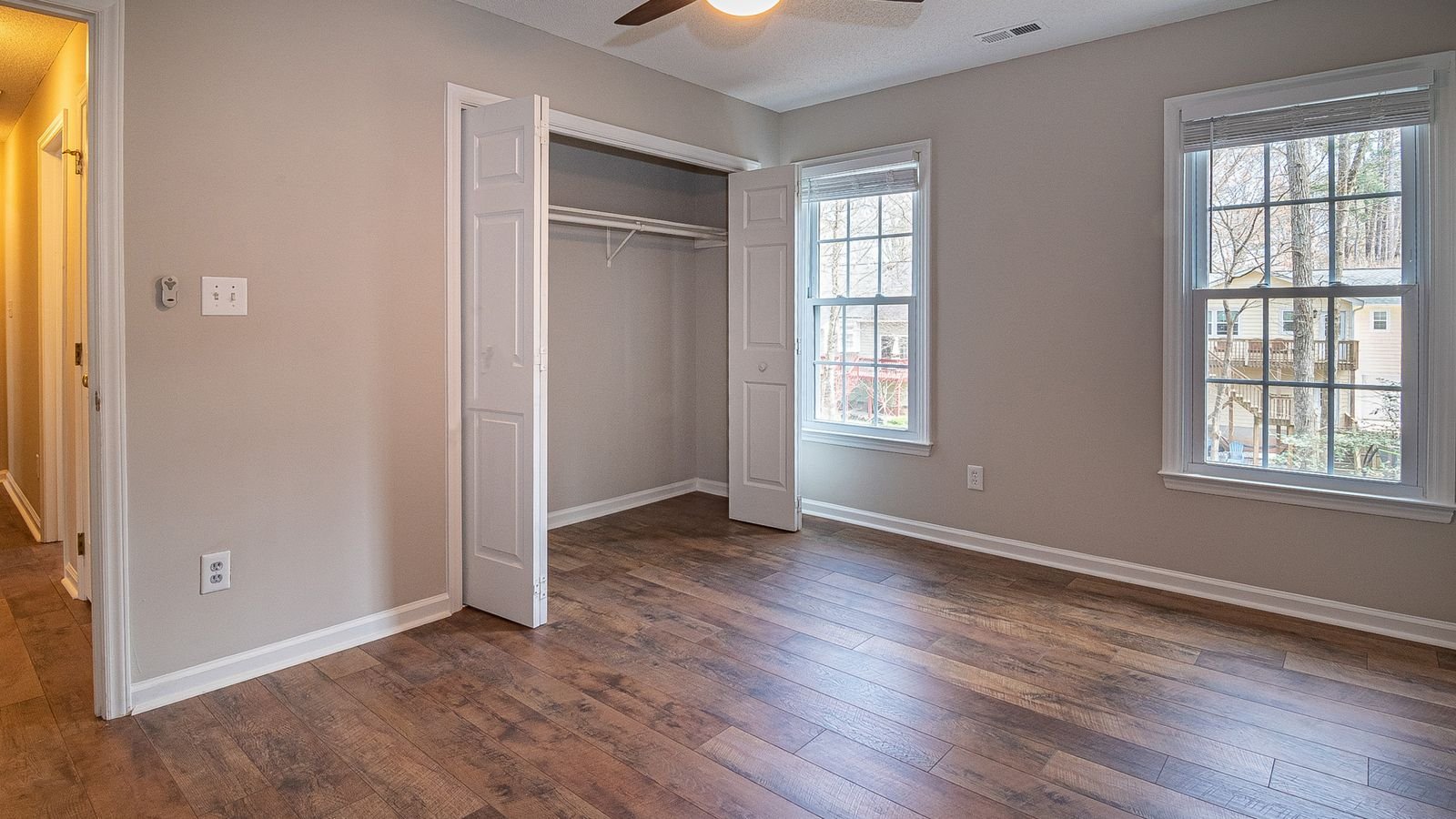
Blades should sit at least seven feet above the floor for safety and comfort, and eight to nine feet is the ideal height for airflow. The mounting method follows from your ceiling height.
- Flush or hugger mounts attach the fan directly to the ceiling and suit rooms under eight feet. Airflow is slightly reduced because the blades sit close to the ceiling. See the best low profile ceiling fans for rooms with limited headroom.
- Standard downrod mounts use a short rod and suit ceilings of eight to nine feet. This is the most common configuration.
- Extended downrods lower the fan into the occupied zone in rooms with tall ceilings. The best ceiling fans for high ceilings cover models supplied with, or rated for, longer rods.
- Angled or sloped ceiling mounts use a ball-and-socket canopy. Check the maximum slope the fan supports before buying for a vaulted room.
Whatever the mount, the electrical box must be rated for fan support. A standard lighting box is not designed to carry a swinging, vibrating load and is a genuine safety issue.
Noise, Balance and Wobble
Noise comes from three sources: the motor, air turbulence over the blades, and mechanical rattle from loose components. DC motors are quietest, followed by well-made AC motors with rubber isolation mounts. Cheap fans often hum audibly at low speed, which is exactly the speed a bedroom fan runs at all night.
Wobble is almost never dangerous but is always distracting. It usually comes from blades of slightly unequal weight, a bent blade iron, an unsecured downrod pin or a loose mounting bracket. A balancing kit, supplied with most quality fans, corrects the majority of cases in a few minutes. If quiet operation is your main criterion, the best quiet ceiling fans for bedroom use motors and blade profiles chosen for low-speed silence.
Lights, Controls and Extra Features
- Integrated LED light kits are now standard. Check whether the module is replaceable, since a sealed LED array that fails means replacing the whole fixture.
- Reverse function pushes warm air down from the ceiling in winter and is genuinely useful in tall rooms. Look for a remote-accessible reverse rather than a switch on the motor housing you can only reach with a ladder.
- Remote and wall controls. Remotes get lost; wall controls stay put. Many fans support both.
- Smart control allows scheduling and voice operation. Note that most ceiling fans must not be run from an ordinary lighting dimmer, which damages the motor.
- Damp and wet ratings. Covered porches need a damp rating; exposed positions need a wet rating.
Common Mistakes to Avoid
Choosing a fan on looks and discovering it moves almost no air is the most frequent regret, and checking CFM prevents it entirely. Fitting an oversized fan in a small bedroom creates an unpleasant draught even on the lowest speed. Mounting to a non-rated electrical box risks the whole fixture. Using a light dimmer to control fan speed damages the motor. And installing a standard indoor fan on a covered patio, where humidity gets into the motor and the blades warp, shortens its life to a season or two.
One further mistake is ignoring room shape. A long, narrow room is not served by a single central fan the way a square room is; two smaller fans, or a fan plus better positioning, distributes air far more evenly. For a general survey of models across sizes and price points, the best ceiling fans roundup is a good place to compare.
Frequently Asked Questions
Do more blades mean more airflow?
No. Additional blades add drag as well as surface area, so airflow stays roughly similar while noise usually drops slightly. Blade pitch and motor strength determine airflow far more than blade count does.
What size ceiling fan do I need for a standard bedroom?
Most bedrooms between 75 and 175 sq ft suit a 42 to 48 inch fan. Larger master bedrooms move into the 52 inch class. Keep at least 18 inches of clearance between blade tips and any wall.
Is a DC motor worth the extra cost?
In bedrooms and in any fan that runs for many hours a day, yes. The quieter low speeds, finer speed control and much lower power draw justify the premium. For an occasional-use guest room, an AC fan is fine.
Can a ceiling fan really lower my cooling costs?
Indirectly. A fan does not cool air, it cools people through moving air over skin, which lets you raise the thermostat by a few degrees for the same comfort. That setpoint change is where the saving comes from, so turn fans off in empty rooms.
Why does my ceiling fan wobble?
Usually slight blade weight differences, a loose mounting bracket, or a downrod pin that is not fully seated. Tighten every fixing first, then use the balancing kit supplied with the fan. Persistent wobble after balancing suggests a bent blade iron.
Final Thoughts
Buying a ceiling fan well comes down to reading three numbers together. Match blade span to room area, check CFM to confirm the fan actually moves air rather than merely looking capable, and check CFM per watt to see how efficiently it does so. Then choose the mount that puts the blades eight to nine feet from the floor, favour a DC motor anywhere quiet operation matters, and confirm the electrical box is rated for fan support. Get those right and a fan will keep a room comfortable for a fraction of the cost of cooling it, quietly, for many years.