Owen Bradley
 A smoke alarm going off because you seared a steak is genuinely maddening, and the instinct to yank the battery is powerful. It is also the single most dangerous thing you can do in your home. Disabled alarms are a factor in a large share of fatal residential fires, and the battery that comes out during a dinner party very often never goes back in. The good news is that every modern alarm has a built-in way to silence a false trigger without disabling the device, and there are several techniques for clearing the smoke faster so the alarm resets on its own. This guide covers how to hush an alarm properly, how to clear the air, what to do when the hush button does not work, and how to stop the false alarms from happening in the first place.
First: Confirm It Actually Is a False Alarm
Before silencing anything, take ten seconds to rule out a real emergency. Check whether anyone smells smoke that is not from cooking. Feel doors for heat before opening them. Look for visible smoke in rooms you have not been in.
Pay attention to the alarm pattern too. On a combination unit, three long beeps mean smoke, while four quick beeps mean carbon monoxide — and a CO alarm is never something to hush and ignore. Carbon monoxide is invisible and odorless, so there is nothing obvious to see. If you hear the CO pattern, get everyone outside into fresh air and call emergency services from outside before doing anything else.
Only once you have confirmed the trigger was steam, cooking smoke, dust, or an aerosol should you proceed to silence it.
The Hush Button: Your Primary Tool
Essentially every alarm made in the last two decades has a hush or silence function, and on most units it is the same physical button used for testing.
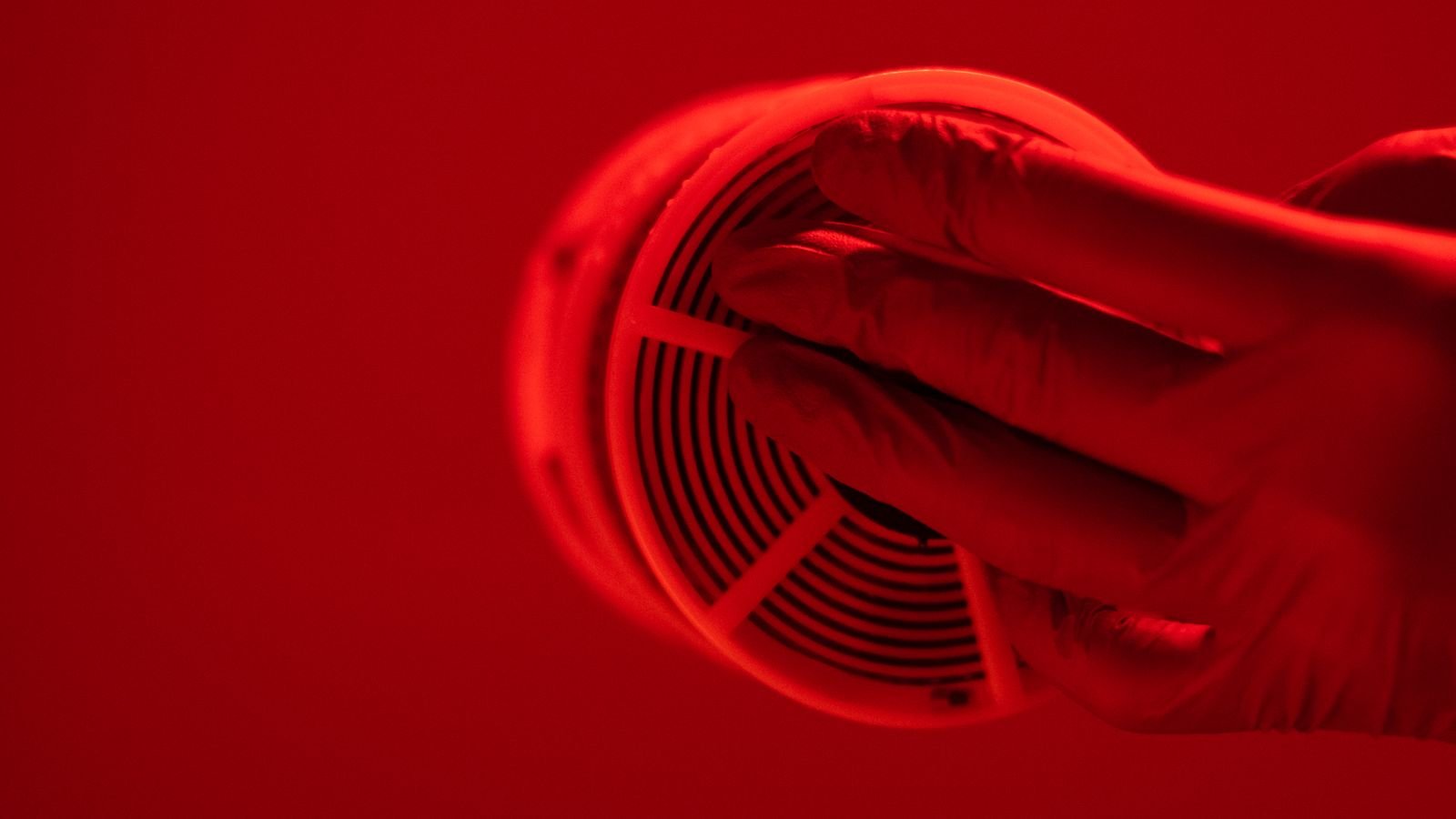
- Locate the test or hush button on the face of the alarm. It is usually the large central button, sometimes marked with a bell icon.
- Press and hold it for about five seconds. A quick tap often triggers a test instead, which makes the noise worse — hold it deliberately.
- Listen for the acknowledgment. Most units respond with a short chirp or a change in the LED, confirming hush mode is active.
- Wait. The alarm now stays quiet for a set period, typically 8 to 15 minutes depending on the model, while the sensor desensitizes.
- Use that window to clear the air. Hush mode is a reprieve, not a fix. If smoke is still present when it expires, the alarm sounds again.
Two important notes. Hush mode does not disable the alarm — if smoke density increases significantly during the hush period, the unit will override and sound anyway. That is by design. And on interconnected systems, pressing hush on the triggering unit usually silences the entire network, while pressing hush on a non-triggering unit may only quiet that one device.
Clear the Air Fast
Silencing buys time; ventilation solves the problem. Work through these in order:
- Turn on the range hood at its highest setting, provided it vents outdoors rather than recirculating.
- Open windows on opposite sides of the room to create cross-flow rather than just one window, which does little.
- Run a box fan in a window facing outward to actively pull smoke out of the house.
- Fan the alarm directly with a towel or magazine. Moving air across the sensing chamber clears it much faster than ambient ventilation.
- Close doors to other rooms so smoke does not migrate and set off additional alarms.
- Turn off the heat source and remove the pan from the burner. Smoke keeps generating until you do.
- Run the bathroom exhaust fan if steam is the culprit, and leave the door closed until the mirror clears.
When the Hush Button Does Not Work
If holding the button produces no response, work through these possibilities:
You are pressing the wrong unit. On an interconnected system, every alarm sounds but only one detected something. Look for a red LED that is blinking rapidly or staying solid — that identifies the originating unit. Hush that one.
Smoke levels are too high. Hush mode refuses to engage above a certain smoke density. Ventilate first, then try again.
The alarm is at end of life. Units past their service life sometimes alarm continuously and ignore the hush command. Check the manufacture date printed on the back.
The battery is nearly dead. A failing battery can cause both erratic alarms and an unresponsive button. Replace it.
The sensor is contaminated. Dust, cobwebs, insects, or grease film inside the chamber cause persistent false triggering that ventilation will not fix.
Cleaning a Contaminated Sensor
A dirty sensing chamber is the leading cause of repeated false alarms in an otherwise healthy unit, and cleaning it takes five minutes.
- Cut power at the breaker if the unit is hardwired.
- Twist the alarm off its mounting bracket and disconnect the harness.
- Vacuum the exterior vents thoroughly using a soft brush attachment. Work around the entire perimeter.
- Wipe the outside housing with a barely damp cloth and let it dry completely.
- Reinstall, restore power, and press the test button to confirm normal operation.
Do not use compressed air, and never spray cleaner or aerosol anywhere near a smoke alarm — both can drive contaminants deeper into the chamber or coat the optical sensor permanently.

Why Removing the Battery Is the Wrong Answer
It is worth being blunt about this. Pulling the battery leaves you with a decorative plastic disc on the ceiling. The intention is always to put it back, and it frequently does not happen — the battery ends up in a drawer, the alarm chirps are gone, and months pass.
On a hardwired alarm, removing the backup battery does not even stop the noise, since the unit runs on mains power. People then flip the breaker, which kills the alarm and often the lighting circuit too, and the same forgetting problem applies.
If an alarm is so prone to false triggering that you are tempted to disable it, that is a signal to relocate it, clean it, or replace it with a more appropriate sensor type — not to switch it off.
Preventing False Alarms Long Term
- Relocate alarms that are too close to the kitchen. Keep at least 10 feet between an alarm and cooking appliances where the layout allows.
- Move alarms away from bathroom doors. Steam is a frequent trigger; a 3-foot buffer helps considerably.
- Choose photoelectric sensors near kitchens. They respond to smoldering smoke and are far less reactive to cooking particles than ionization sensors.
- Keep alarms clear of HVAC vents and ceiling fans, where airflow carries dust across the sensor.
- Clean every six months. Add it to the same routine as changing filters.
- Replace on schedule. Smoke alarms expire after 10 years and false alarms increase sharply near end of life.
- Use the range hood every time you cook, not just when something is burning.
If your alarms are old, mismatched, or scattered across incompatible brands, replacing the set is often simpler than chasing individual faults. Reviewing the best hardwired smoke alarms is a sensible starting point, since interconnect compatibility and sensor type both matter for reducing nuisance trips.
Frequently Asked Questions
How long does hush mode last?
Typically 8 to 15 minutes depending on the model. The alarm automatically returns to normal sensitivity when the period ends, and will sound again if smoke is still present.
Does hush mode make my home unprotected?
No. The alarm remains active at reduced sensitivity and will override the hush and sound if smoke levels rise significantly. It is a temporary desensitization, not a shutdown.
My alarm chirps once a minute instead of sounding. What is that?
That is a low-battery warning, not a fire alarm. Replace the battery. If chirping continues with a fresh battery, the unit has likely reached end of life.
Why does my alarm go off at night for no reason?
Battery voltage drops slightly as a house cools overnight, which can push a marginal battery below the low-voltage threshold. It is the classic 3 a.m. chirp. Replace the battery.
Can I hush all interconnected alarms at once?
Usually yes, if you press hush on the alarm that actually detected smoke. Identify it by the blinking indicator light. Pressing hush elsewhere may silence only that unit.
Final Thoughts
Silencing a false alarm the right way takes about the same effort as disabling one, and it leaves your home protected. Confirm the trigger is not real, hold the hush button for five seconds, ventilate aggressively while the timer runs, and clean or relocate the unit if it keeps happening. Keep the battery in the alarm and the alarm on the ceiling. That habit costs you nothing on the nights when nothing goes wrong, and it is the only thing that matters on the night something does.