Owen Bradley
 Audio is the most under-examined feature on a security camera. Buyers compare resolution, night vision, and storage in exhaustive detail, then discover after installation that the microphone picks up traffic noise but not a voice at the gate, or that the speaker is too quiet to be heard from six feet away. Sound changes what a camera is actually useful for — it turns a passive recorder into a two-way intercom, adds context that video alone cannot supply, and in some cases provides the evidence that matters most. This guide explains every audio feature you will see on a spec sheet, what each one really delivers, and the legal considerations that come attached.
One-Way Versus Two-Way Audio
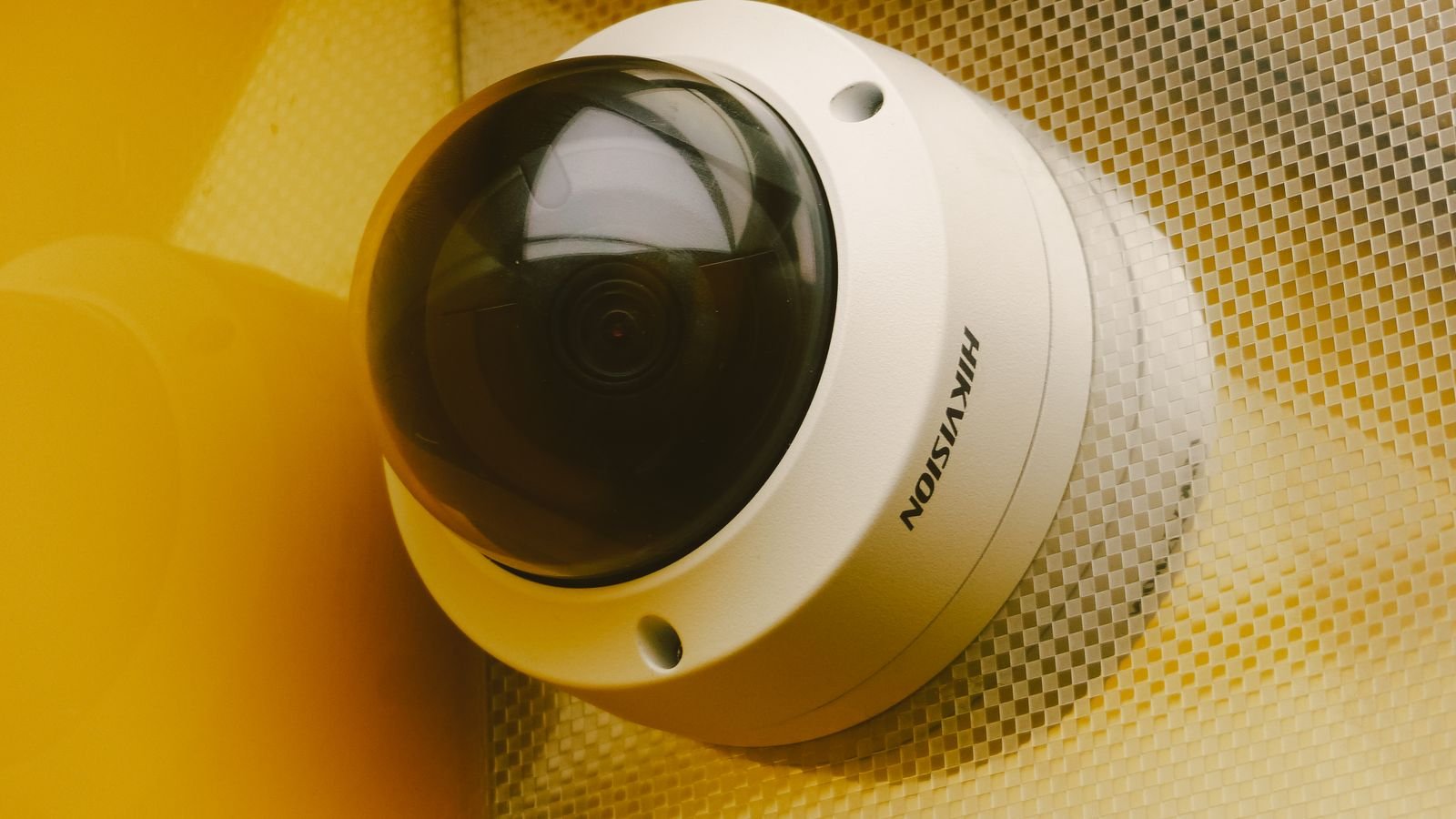
The first distinction is simple but often blurred by marketing. One-way audio means the camera has a microphone and records sound alongside video. You hear what happened; you cannot respond. Two-way audio adds a speaker, letting you talk through the camera from your phone.
Two-way is not automatically better for every position. A camera watching a driveway benefits from being able to say “I can see you” to someone lingering. A camera in a nursery benefits from being able to soothe a child. A camera in a storeroom gains nothing from a speaker and may simply cost more. Decide per location rather than buying the same model everywhere. Comparison roundups of the best security cameras with audio are useful precisely because they separate models by how well each direction of the conversation actually performs.
Half-Duplex Versus Full-Duplex
This specification rarely appears on the box, but it defines the experience of using two-way audio. Half-duplex works like a walkie-talkie: only one side can speak at a time, and the app usually requires you to hold a button. Conversations become stilted, and you frequently talk over the person on the other end. Full-duplex lets both sides speak simultaneously, like a phone call.
Most budget cameras are half-duplex. Full-duplex requires acoustic echo cancellation good enough to stop the speaker’s output feeding back into the microphone, which costs money to implement well. If you plan to actually hold conversations — with delivery drivers, family members, or contractors — full-duplex is worth prioritising over an extra megapixel of resolution.
Microphone Quality and Pickup Range
Manufacturers seldom publish microphone specifications, which makes this hard to compare. A few things are reliably true. Sealed outdoor cameras have to place the microphone behind a weatherproof membrane, which cuts sensitivity and muffles high frequencies. Indoor cameras with an open port sound dramatically better. Typical usable pickup range for a clear voice is around 10 to 15 feet indoors and considerably less outdoors, where wind noise dominates.
Look for mention of noise suppression or wind reduction on outdoor models. Without it, a camera on an exposed wall records a constant roar that renders every clip useless. Dual-microphone arrays, which allow the camera to subtract ambient noise, are a meaningful upgrade and increasingly common on mid-range outdoor cameras.
Speaker Output and Where It Matters
A camera’s speaker has two jobs: carrying your voice and, on many models, sounding a siren. Both are limited by physical size. A compact indoor camera has a driver roughly the size of a coin, which produces a thin, quiet voice that people outside a quiet room struggle to hear.
If deterrence matters, check whether the model quotes a decibel figure for its siren. Anything under 90 dB is a nuisance rather than a deterrent. Some outdoor units offer an external speaker connection or pair with a separate chime, which is a far better solution than relying on the built-in driver.
Audio Detection and Sound-Triggered Alerts
Beyond recording, microphones enable a category of detection that video cannot provide. Basic implementations trigger on any sound above a threshold, which produces endless false alerts. Better implementations classify specific sounds — glass breaking, a smoke alarm sounding, a dog barking, a baby crying — and alert only on those.
Smoke alarm detection is genuinely valuable, since it can warn you of a fire while you are away even if you have no connected alarm system. Glass-break detection is more variable in accuracy and should complement, not replace, a proper sensor. Treat audio classification as a helpful supplement to motion detection rather than a primary trigger.
Latency, Compression, and Why Talking Feels Awkward
Two-way audio travels from your phone, through a cloud relay, to the camera, and back. Every step adds delay. A well-implemented system runs at roughly half a second round trip; a poor one exceeds two seconds, which makes natural conversation impossible because both parties keep interrupting.
Latency depends heavily on whether the connection is peer-to-peer or routed through a distant server, and on how congested your upload bandwidth is. Cameras that record locally often achieve lower latency on the same network. If two-way responsiveness is important, favour systems that support direct local connections, which is a common strength among local storage security cameras.
Storage, Codecs, and Whether Audio Is Even Saved
Not every camera that has a microphone actually stores the audio track. Some record it only during live viewing. Others strip audio from cloud clips on lower subscription tiers, or from motion-triggered events but not continuous recordings. This is worth verifying explicitly, because audio that exists only in a live stream has no evidential value at all.
Check also whether audio survives export. A clip downloaded from an app sometimes arrives muted because the export pipeline drops the track. If you may ever need footage for an insurance claim or a police report, test the full export path on day one rather than discovering the gap when it matters. Systems built around a recorder — covered in guides to home security camera systems — are generally more consistent here than app-only cameras.
Privacy and Legal Considerations
Audio recording is regulated far more tightly than video in most jurisdictions, and the rules are not intuitive. Recording video of your own property is broadly permitted. Recording conversations, however, may fall under wiretapping or eavesdropping statutes, which in some places require the consent of every participant rather than just one.
Practical implications: be cautious about a camera whose microphone reaches a neighbour’s garden, a shared hallway, or a public sidewalk where people hold private conversations. If you have staff, cleaners, or lodgers, disclosure obligations may apply. Many cameras let you disable the microphone independently of the video feed, and using that setting on outward-facing units is often the sensible default. This guide is general information, not legal advice — check the rules that apply where you live before enabling continuous audio capture.
Matching Audio Features to Each Location
- Front door: Full-duplex two-way, strong noise suppression, loud speaker. This is the position where conversation actually happens.
- Living areas: Good microphone sensitivity and sound classification. A quiet speaker is acceptable. Indoor models covered in indoor security camera roundups usually excel here.
- Garden and driveway: Wind noise reduction is the priority; two-way is often unusable at distance.
- Garage or workshop: Audio detection for alarms and glass, plus reliable local recording.
- Rented or shared spaces: Consider disabling audio entirely to avoid legal complications.
Budget Tiers
- Entry level: Mono microphone, half-duplex talk, no noise suppression, audio sometimes absent from saved clips. Adequate for indoor monitoring where you mainly want context.
- Mid range: Full-duplex or near-full-duplex talk, basic wind and noise filtering, audio reliably stored with events, threshold-based sound alerts.
- Premium: Microphone arrays with beamforming, proper echo cancellation, classified sound detection, low-latency local streaming, and configurable audio privacy controls per camera.
Common Mistakes to Avoid
- Assuming “two-way audio” on the box means a usable conversation — check duplex mode.
- Mounting an outdoor camera in a wind-exposed corner with no noise filtering.
- Never testing whether audio survives clip export until you need the footage.
- Leaving microphones enabled on cameras that overhear neighbours or public spaces.
- Relying on the built-in siren as a deterrent when its output is barely louder than a phone.
- Placing the camera behind glass, which reflects sound and blocks the microphone almost entirely.
Frequently Asked Questions
Can security cameras record sound without a subscription?
Models with local storage generally record audio to the card or recorder with no fee. Cloud-based cameras vary widely — some include audio on all tiers, others restrict recorded clips entirely without a plan. Verify this before purchase rather than assuming.
Why is the person on my camera so hard to hear?
Usually a combination of a weatherproofed microphone, ambient noise, and aggressive compression. Moving the camera out of direct wind, choosing a model with a microphone array, and reducing the distance between the camera and where people stand all help considerably.
Should I turn audio off on outdoor cameras?
It depends on your location’s laws and what the microphone can hear. If the camera picks up conversations on a public path or a neighbour’s property, disabling audio is the cautious choice. If it covers only your own enclosed garden, recording is usually less contentious.
Does audio use much bandwidth or storage?
Very little compared with video. An audio track typically adds a small single-digit percentage to file size. Bandwidth for two-way talk is similarly modest, though it does require reliable upload capacity in both directions.
Can I use a camera as an intercom?
A full-duplex camera with a decent speaker works acceptably as a casual intercom for short exchanges. It is not a replacement for a dedicated intercom system, because latency, app wake-up time, and speaker volume all fall short of purpose-built hardware.
Final Thoughts
Treat audio as a feature you specify per camera rather than a checkbox you tick once. Decide where you genuinely need to speak, where you only need to listen, and where you should not be recording sound at all. Then check duplex mode, noise handling, and whether the audio track is actually saved and exportable. Getting those details right costs nothing extra at purchase time and makes the difference between a camera you rely on and one you mute permanently. Whatever you install in 2026, test the audio path end to end before you consider the job finished, and revisit the settings whenever you move a camera to a new position.