Owen Bradley
 Wingback, club, and barrel chairs get grouped together as “armchairs” in most catalogs, which hides how differently they behave in a real room. One is tall and formal and works as a visual anchor. One is low and deep and asks you to sink in. One is curved and compact and disappears into an open floor plan. Choose the wrong silhouette and no amount of good fabric will rescue it. This comparison breaks down how each of the three sits, how much space it genuinely consumes, and which sofa styles it pairs with, so you can pick by function rather than by whichever photo caught your eye in 2026.
The Three Silhouettes at a Glance
Before the details, here is the shorthand. A wingback has a tall back with panels, the “wings,” projecting forward at head height. A club chair is low-backed, deep, and heavily padded, with rolled arms at roughly the same height as the back. A barrel chair has a continuous curved back that sweeps around into the arms without a break, forming a rounded shell.
Those shapes came from different needs. Wingbacks were designed to trap heat from a fireplace and block drafts, which is why the wings enclose the head. Club chairs came from gentlemen’s clubs, built for long, relaxed sitting with a drink at hand. Barrel chairs are the most modern of the three, engineered for conversation and compact footprints. Each still carries the ergonomics of its original purpose.
Wingback Chairs: Height, Formality and Support
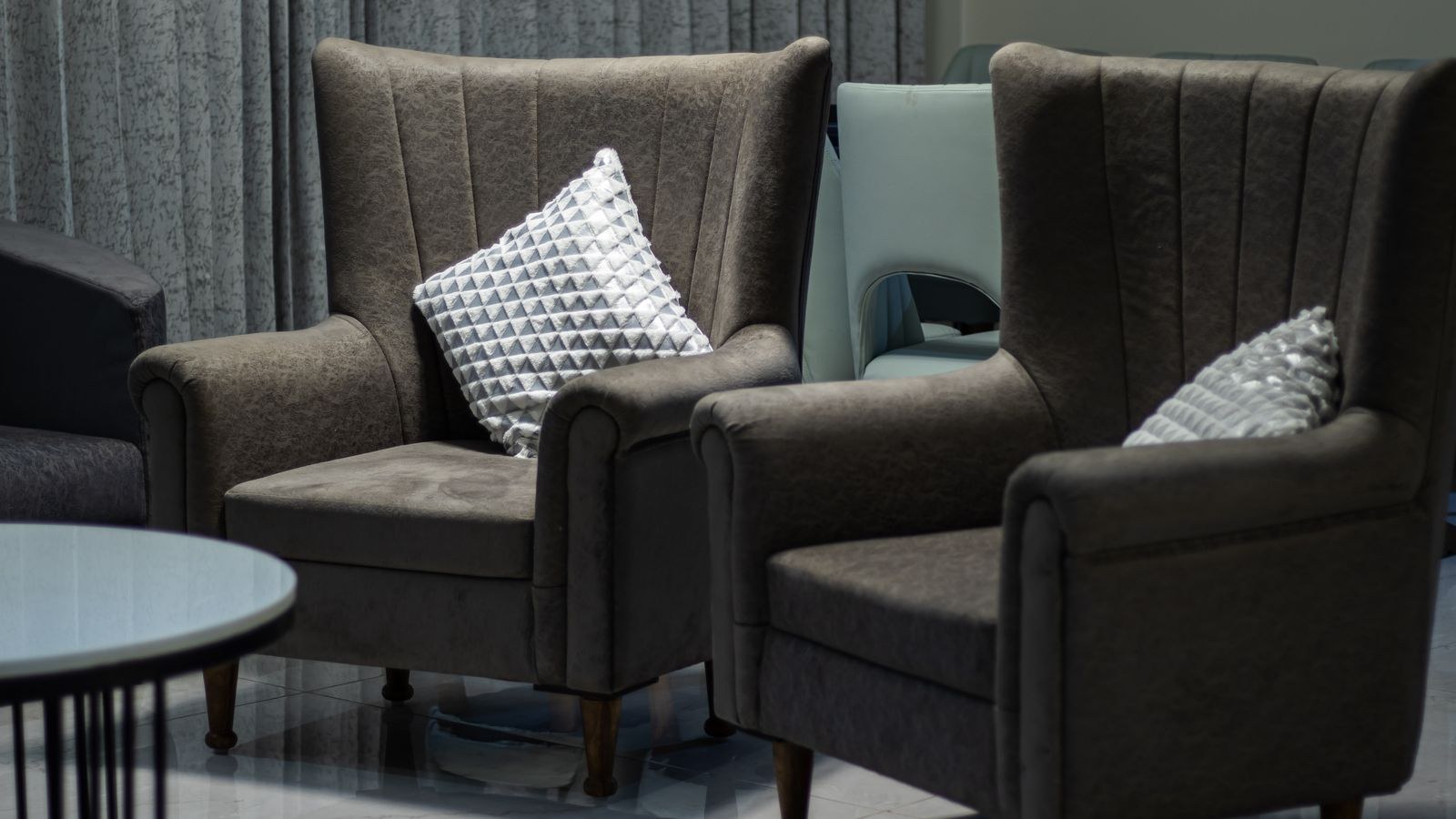
A wingback stands out because it is tall, typically 40 to 48 inches to the top of the back. That height does real work in a room: it draws the eye upward, balances tall ceilings or high windows, and gives a seating group a vertical anchor. In a room where everything else is low and horizontal, one wingback stops the arrangement from feeling flat.
To sit in, it is the most upright and supportive of the three. The high back supports the head and neck, which makes it the natural choice for reading, and the wings create a semi-enclosed pocket that many people find genuinely calming. Seat height is usually 18 to 20 inches, which is comfortable for most adults and easy to rise from. The trade-off is that upright posture: it is a chair for sitting in, not sprawling in.
Space and Placement
Footprint is moderate, generally 30 to 34 inches wide, but visual weight is high. A wingback dominates whatever corner it occupies, so it works best against a wall, flanking a fireplace, or in a pair with a console between them. It is a poor choice for the middle of an open plan, because the tall back blocks sightlines. If a traditional, structured look is what you want, exploring the best wingback chairs shows how far the shape has been modernized with slimmer wings and cleaner legs.
Club Chairs: Low, Deep and Built for Lounging
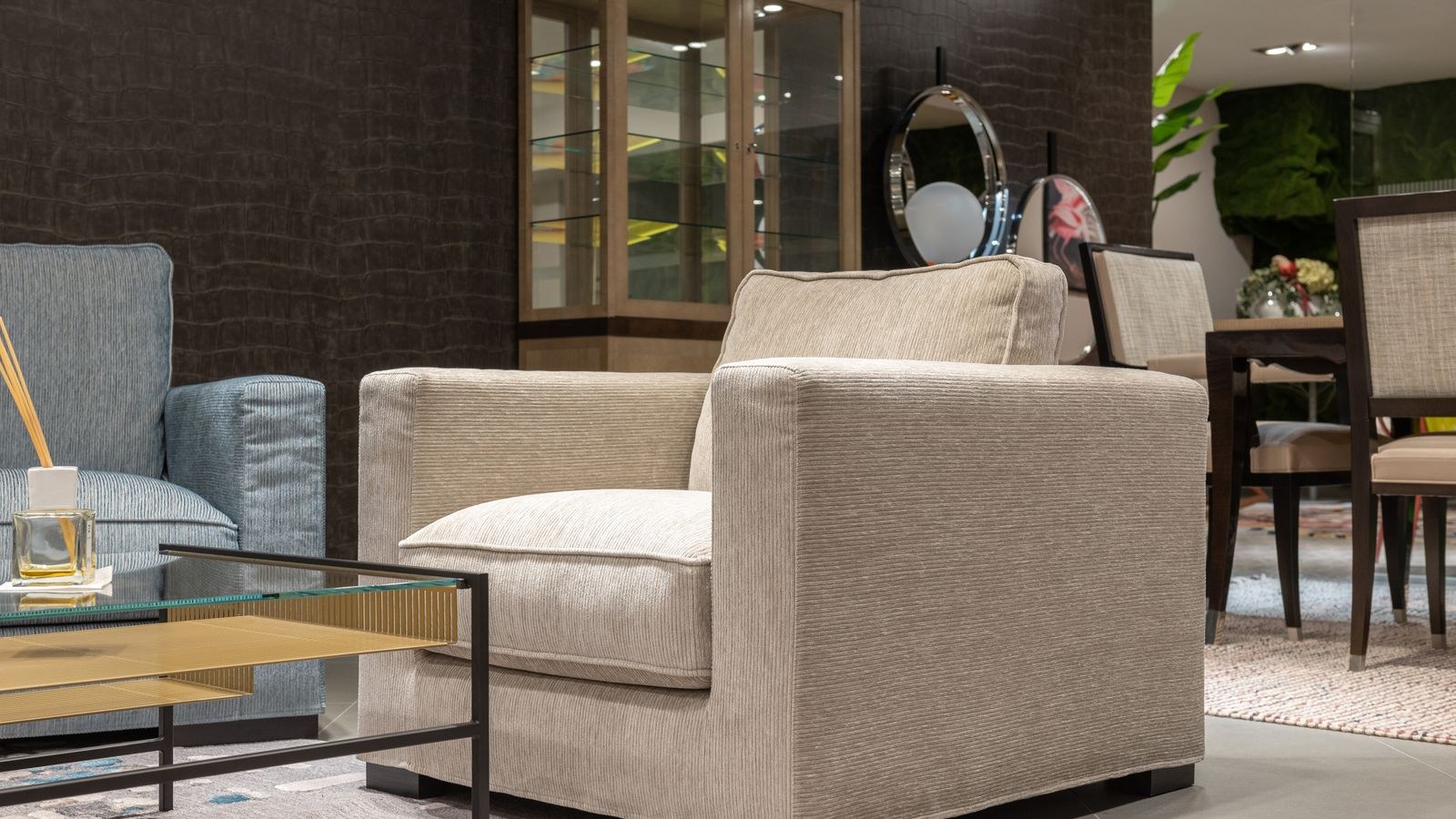
A club chair is the opposite proposition. Backs run low, around 30 to 34 inches, arms are wide and rolled, and seat depth is generous, often 22 inches or more. You do not perch in a club chair, you settle. Cushioning tends to be thick, and the classic version is upholstered in leather that softens and patinas with years of use.
That comfort has consequences. The low back offers no head support, so it suits watching, talking, and relaxing more than long reading sessions. The deep seat is wonderful if you are tall and awkward if you are short, because a shorter sitter may not reach the backrest without cushions. Getting out of one takes more effort than a wingback, worth considering for older family members.
Space and Placement
Club chairs are the widest of the three, commonly 33 to 38 inches, and the padded arms mean much of that width is not usable seat. They need genuine floor space and read best in dens, libraries, and larger living rooms. Because the back is low, a club chair can float in the middle of a room without blocking a view, which is a real advantage over a wingback. Many of the best club chairs come in leather, and if that finish appeals across your whole seating plan, the broader category of leather chairs is worth comparing before you commit to one hide and color.
Barrel Chairs: Curved, Compact and Conversational
Barrel chairs solve the problem the other two create. The curved back wraps around the sitter, so the chair supports the mid back and elbows without needing wide separate arms. That efficiency means a barrel chair usually occupies 28 to 33 inches of width while feeling roomier inside than the number suggests.
The curve also softens a room. Rectangular sofas, square coffee tables, and straight walls create a lot of hard lines, and a rounded shell breaks that up instantly. Because the back is continuous and often finished as carefully as the front, a barrel chair looks good from every angle, which matters enormously in an open plan where you see the back of the chair from the kitchen.
Sitting is a middle ground: more upright than a club chair, more relaxed than a wingback, with the wrap encouraging you to turn slightly toward whoever you are talking to. That is why barrel chairs are so often bought in pairs facing a sofa. Many come on swivel bases, which makes them the most flexible of the three in rooms with two focal points. If this shape suits your layout, the best barrel chairs range from tight modern shells to plush oversized versions.
Direct Comparison: Space, Comfort and Style
Footprint
Barrel chairs are the most space-efficient, followed by wingbacks, with club chairs consuming the most floor. But visual weight ranks differently: wingbacks feel largest because of their height, club chairs feel heaviest because of their mass, and barrel chairs feel lightest because curves read as smaller than corners.
Comfort by Use
For reading with head support, the wingback wins. For long relaxed lounging, the club chair wins. For conversation and everyday flexible seating, the barrel chair wins. For getting in and out easily, the wingback is best and the club chair is worst. For accommodating both a tall and a short user, the barrel chair is the most forgiving because its seat depth is moderate.
Pairing With Your Sofa
A wingback pairs naturally with traditional roll-arm or Chesterfield sofas, and can work as a deliberate contrast against a clean-lined modern sofa if the legs and fabric are simplified. Club chairs suit track-arm and low modern sofas because the heights are compatible; pairing one with a very tall sofa back looks unbalanced. Barrel chairs are the most universally compatible, sitting comfortably beside almost any sofa because the curve neither competes with straight lines nor mimics them.
How to Decide: Five Questions
- How will you sit in it most? Reading points to a wingback, lounging to a club chair, talking to a barrel chair.
- Where will it go? Against a wall favors a wingback; floating in a room favors a low back or a barrel shell.
- Who sits in it? Shorter users and anyone with mobility concerns are better served by a moderate seat depth and an 18-inch seat height.
- Is the back visible? In open plans, choose a shape finished on all sides.
- How much floor can you actually give up? Tape out the footprint plus 18 inches of legroom before ordering.
Materials and Construction Across All Three
Shape aside, the same quality rules apply. Look for a kiln-dried hardwood frame with corner blocks rather than stapled particleboard. Sinuous serpentine springs are the practical mainstream suspension; eight-way hand-tied is the traditional premium option. High-resilience foam cushions hold shape best, while down blends feel softer but need regular fluffing.
Upholstery choice differs by silhouette. Wingbacks show off patterns well because they present a large flat back panel, so they suit florals, stripes, and textured weaves. Club chairs are the natural home for leather, which needs a simple shape with few seams to look right. Barrel chairs favor solid colors and plain textures, because a curved surface distorts patterns. Whatever the fabric, a durability rating above 15,000 double rubs is sensible for residential use and above 30,000 for a chair used daily.
Common Mistakes When Choosing a Silhouette
- Buying a wingback for a low-ceilinged room. The height that looks stately under nine feet looks looming under seven.
- Putting a club chair in a small space. Its width and depth need room to breathe or the whole area feels blocked.
- Assuming a barrel chair is small. Oversized versions exist and can exceed a club chair in footprint.
- Matching the sofa exactly. Contrast in shape or texture keeps a room from looking like a showroom set.
- Ignoring seat height differences. Keep the chair within about two inches of your sofa seat height.
- Choosing patterns for curved chairs. Prints warp across a barrel back and rarely look intentional.
Frequently Asked Questions
Which is the most comfortable of the three?
It depends on the activity. Wingbacks are best for upright reading with neck support, club chairs for relaxed lounging, and barrel chairs for conversation and general use. There is no universal winner, only a better match to how you sit.
Can I mix two different silhouettes in one room?
Yes, and it usually looks better than two identical chairs when the room is asymmetric. Keep seat heights close and share one common element, such as leg finish or fabric family, so the mix reads as deliberate.
Which works best in a small apartment?
A barrel chair, in most cases. It has the smallest footprint relative to seat comfort and its curved back is less visually blocking than a tall wingback or a bulky club chair.
Are these chairs suitable as everyday seating?
All three can be, provided the frame and suspension are properly built. If you want something more relaxed for extended evenings, comparing against dedicated lounge chairs is worthwhile, since those prioritize recline and leg support over the upright posture of an accent chair.
How much should I budget?
Entry pieces with lightweight frames start low but rarely last. A well-built armchair with a hardwood frame and quality suspension is a decade-long purchase, so it justifies spending more than you would on purely decorative furniture.
Final Thoughts
The wingback, the club chair, and the barrel chair are not three versions of the same thing. They are three different answers to three different questions about how you want to sit and how much room you can give up. Decide the activity first, check the ceiling height and sightlines of the space, then measure the footprint honestly before falling for a fabric. Once you consider a broader mix of accent chairs with that framework in hand, the choice usually makes itself, and the chair you bring home in 2026 will feel right on the first evening rather than after months of rearranging.