 Claire Whitmore
Sunlight, overhead fixtures, and big windows are the enemy of a washed-out picture, which is exactly why the best projectors for light rooms lean hard on raw brightness. If your space rarely gets dark, a dim 2,000-lumen unit will look gray and flat by mid-afternoon. You need high ANSI or color brightness, a screen that rejects ambient light, and smart placement. This guide skips the model-by-model reviews and instead shows you how to choose, then points you to specific Amazon picks by use-case. By the end, you will know which specs actually matter and which marketing numbers you can safely ignore.
Quick answer: For most bright living rooms and family spaces in 2026, our top pick among the best projectors for light rooms is the Epson Home Cinema 980 — our #1 rated choice. It pairs 4000 lumens of equal color and white brightness with sharp 1080p, so daytime viewing stays punchy. See the full ranked comparison, alternatives, and buying advice below.

Pros
- BRIGHT, CLEAR IMAGES (4,200 ANSI LUMENS) – High brightness for
- WXGA FOR TEXT + SLIDES – Native WXGA (1280×800) 16:10 format ideal
- SIMPLE SETUP + – 1.1x zoom and vertical keystone (±40°) help you
- EASY FOR WORK + SCHOOL – HDMI and VGA inputs make it easy to

Pros
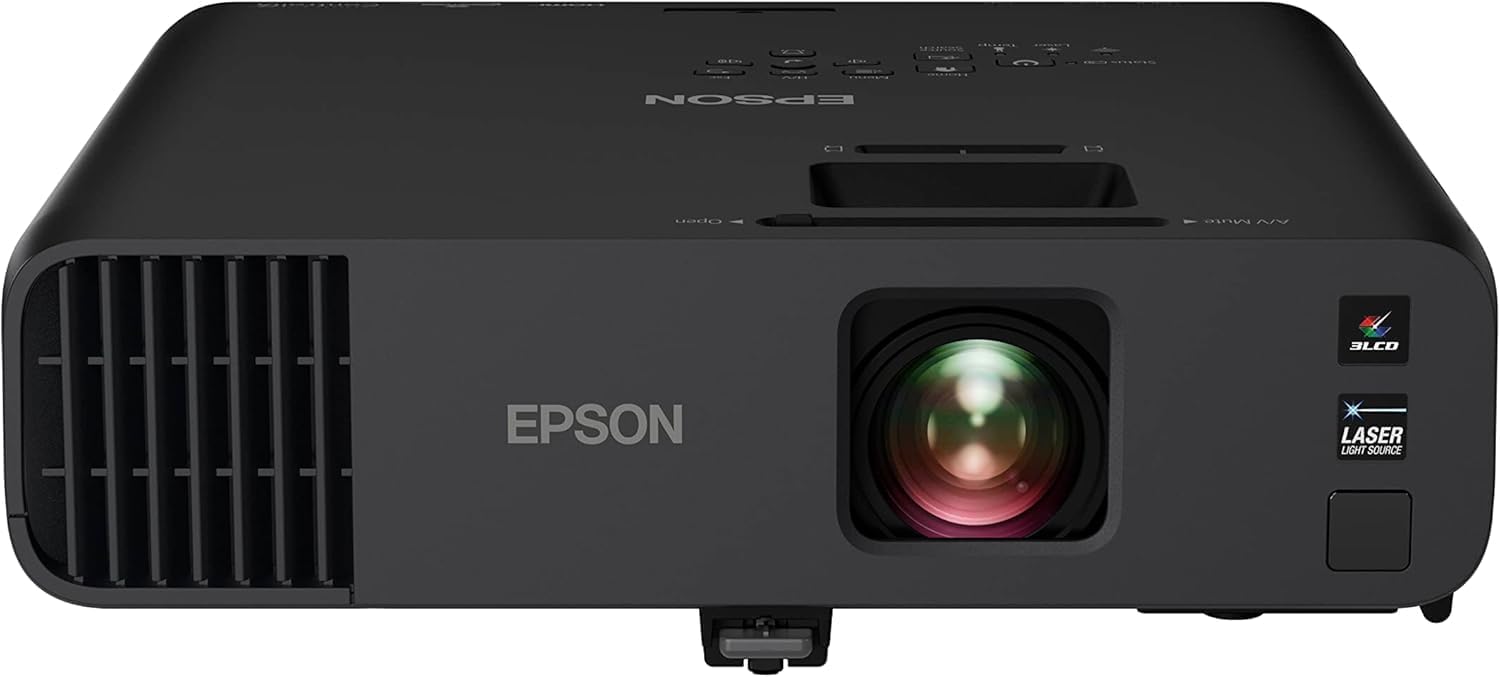
- Exceptional Brightness (1) — 4,600 lumens of color and white
- High-performance laser light source — 20,000 hours virtually
- Display stunning life-sized images up to 300" — featuring a 1080p

Pros
- HOME THEATER — Bring your entertainment experience to the next
- ULTRA BRIGHT IMAGES — 4,000 Lumens of Color Brightness (IDMS rated)
- VIVID AND PRECISE COLOR — Advanced 3LCD technology displays 100% of
- — Streaming projector features two HDMI ports and a USB port that

Pros
- Delivers 4,000 ANSI lumens of brightness for use in rooms with ambient light
- SVGA 800x600 resolution paired with SuperColor technology for a wide color gamut
- 120Hz refresh rate and 16ms input latency suit fast-motion content with minimal lag
- Projects screen sizes from 80" to 150" at a 10.5 to 19.6 ft throw distance
- HDMI, dual VGA, and composite video/audio inputs cover a range of source devices
Cons
- SVGA 800x600 resolution is lower than HD or 4K projectors, limiting fine text and detail clarity
- Optical zoom is limited to 1.1x, offering less installation flexibility than long-zoom-range models
- Lamp-based projection requires eventual bulb replacement, unlike laser light source projectors
The projector covers screen sizes from 80 inches to 150 inches, with a throw distance of 10.5 to 19.6 feet, and displays a 100 inch image from roughly 13 feet away.
- Suited to small classrooms, meeting rooms, and living room setups
- Vertical keystone adjustment helps square the image without perfectly level mounting
- Lamp-based light source will need eventual bulb replacement over years of use
For spaces without room for a long throw distance, the fixed zoom range and throw ratio should be checked against the room's dimensions before mounting, since achieving a specific screen size requires positioning the projector at a corresponding distance rather than relying on zoom alone.

Cons
- Verifying dimensional clearance for ViewSonic 3700 Lumens prior to setup is recommended
- Routine care preserves surface finish appearance for ViewSonic 3700 Lumens over time

Pros
- Display Stunning Images up to 300" — Widescreen picture four times
- Compact Design — Sleek, lightweight design easily fits in backpacks
- Ultra Bright Images — 3,000 lumens of color and white brightness
- Best-in-Class Color Brightness (2) — Advanced 3-chip 3LCD

Pros
- 5500 ANSI lumens produce bright, legible images in daylit auditoriums and high-ambient-light spaces
- 1.3x optical zoom and 360-degree projection capability enable flexible mounting behind or beside screens
- 20-year laser phosphor technology eliminates lamp replacement cycles and maintenance windows
- Golf Mode supports major simulators (PGA Tour, TOP Golf) for immersive virtual play
Cons
- Full HD (1920×1080) resolution lags 4K and 2K projectors for detail-heavy presentations
- Compact laser engine limits brightness at extreme throw distances beyond 12 feet
The LS740HD delivers 5500 ANSI lumens using laser phosphor technology, ensuring crisp, visible images even in auditoriums with skylights, windows, or ambient stage lighting. Unlike traditional lamps that dim and require replacement, the laser engine maintains consistent brightness across a 20-year lifespan, eliminating service interruptions.
- Laser phosphor technology produces 20% brighter images than first-generation laser models
- 5500 lumens saturate even 150-inch screens with bold, readable content
- 0.65" DMD chip from Texas Instruments ensures high contrast and sharp text rendering
- No scheduled lamp replacement, reducing total cost of ownership over time
Perfect for lecture halls, corporate training facilities, and community centers where brightness consistency matters.
This projector's modular lens and 360-degree projection architecture enable mounting almost anywhere—suspended from ceilings, mounted behind translucent screens, or positioned on side tables. The 1.3x optical zoom and extensive keystone correction (H/V and 4-corner) adapt to non-traditional installation geometry.
- Throw ratio 1.1–1.5 projects 100" images from 8.2 feet, suiting most auditorium sightlines
- 360-degree projection rotates imagery for sidewall or rear-projection installations
- Portrait mode orients slides vertically, useful for signage and wayfinding displays
- Up to 150" screen size supported without resolution compromise or brightness loss
Compact 32% smaller design than prior laser models simplifies positioning in constrained ceilings and light booths.

Pros
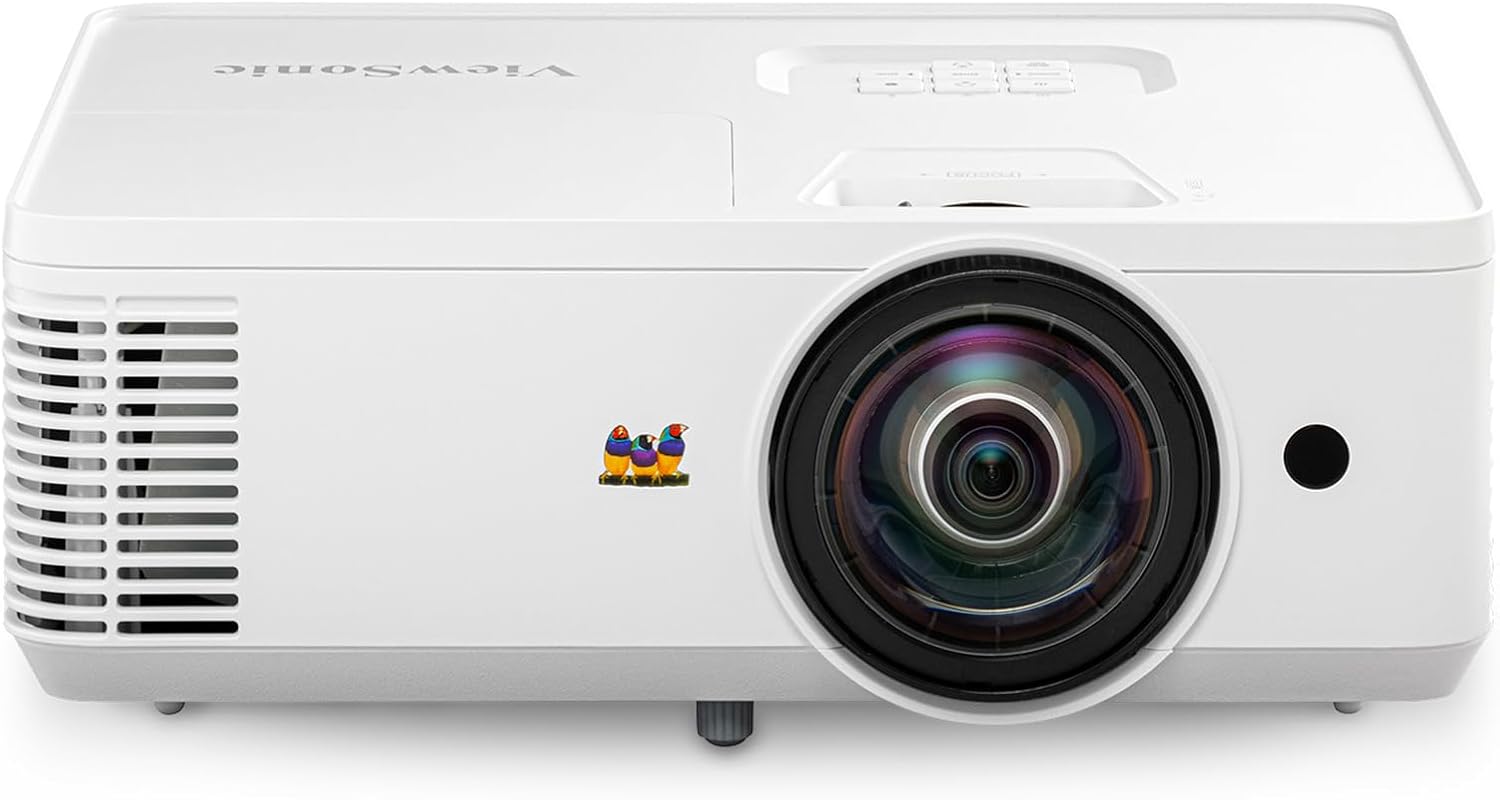
- EXTRA-LARGE SCREEN DISPLAY — Image size reaches up to 300 in, 4x
- ULTRA — 4,000 Lumens of Color Brightness (IDMS rated) and 4,000
- CRISP IMAGE QUALITY — Advanced 3-Chip 3LCD technology displays 100%
- — Epson video projector features two HDMI ports so you can easily
What “light room” really means for a projector
A light room is any space with meaningful ambient light during viewing hours. Think east or west-facing windows, glass doors, or ceiling lights you cannot fully dim. Ambient light lowers on-screen contrast, so blacks turn charcoal and colors lose their pop.
Standard home projectors are built for near-total darkness. In a bright den, they simply cannot compete with stray light hitting the screen. That is why brightness, measured in lumens, becomes your single most important spec here.
The fix is a combination of three things. You raise output, you control reflections with the right screen, and you steer as much stray light off the wall as possible. Get those aligned and a projector can genuinely replace a TV, even at noon.
Lumens: color brightness vs white brightness
Many projectors quote a big white-brightness number but a much lower color-brightness figure. That gap makes real content look dull. 3LCD models like the Epson line publish equal color and white brightness, which is a real advantage in lit rooms.
For a light room, target at least 3,000 lumens, and 4,000 or more if you face direct sun. The Epson Home Cinema 980 delivers 4000 lumens of both color and white brightness, so skin tones and daylight scenes stay believable.
How to choose the best projectors for light rooms
Brightness gets you in the door, but a few other criteria decide whether you are happy a year later. Work through these in order of impact for a lit space.
Resolution and picture sharpness
Native 1080p is the sweet spot for movies and TV. WXGA and SVGA panels are fine for slides, sports scores, or gaming in a bright room, but text and film detail suffer. If you watch a lot of cinematic content, prioritize a true 1080p chip.
For crisp home viewing on a budget, the ViewSonic PX700HDH gives you 1080p and 3700 lumens with a 1.1x optical zoom for flexible placement. Its SuperColor processing helps saturation hold up when the blinds are open.
Throw distance and zoom
Measure your room before you buy. Optical zoom lets you fill a screen from varied distances without moving furniture. A short-throw lens is the answer when the projector must sit close to the wall.
For tight rooms or classrooms where you cannot back the unit up, the ViewSonic PS502W short-throw model fills a wide screen from just a few feet away. That short-throw geometry also keeps people from casting shadows as they walk past.
Keystone, skew, and setup ease
Vertical keystone and auto picture skew straighten a tilted image fast. Auto keystone, found on business models, squares things up the moment you power on. These features matter more if you move the projector between rooms.
Inputs and streaming
Dual HDMI ports let you keep a streaming stick and a console connected at once. A USB port that powers a Fire TV or Roku streaming stick keeps cables tidy. Built-in speakers help for casual use, but plan on external audio for movie nights.
Our top picks by use-case
Rather than crown one winner for everyone, match the projector to how and where you will use it. Here is how the roundup breaks down across common scenarios.
Best overall for bright living rooms
The Epson Home Cinema 980 is our default recommendation. Its 4000 lumens of equal color and white brightness, native 1080p, dual HDMI, and auto picture skew make it a genuine daytime performer. With a 4.6 rating, it hits the value-to-brightness balance most families want. It is not for anyone chasing true home-theater black levels in a blackout room; a dedicated cinema projector does that better.
Best premium laser for large, sunlit spaces
If your room is huge or floods with light, step up to the ViewSonic LS740HD laser projector. Its 5500 lumens overpower stubborn ambient light, and 1.3x optical zoom plus H/V keystone simplify big installs. The laser light source also skips lamp replacements over its life. It is an investment, so it is overkill for a small den.
For a bright media room that doubles as a workspace, the Epson Pro EX11000 laser model offers 4,600 lumens, wireless Miracast, and dual HDMI. It streams cleanly and stays sharp with the lights on, though its price targets serious buyers.
Best budget pick for lit rooms
Shopping under $400? The ViewSonic PA503S pushes 4000 lumens and carries a massive 1270-review track record at 4.5 stars. Its SVGA resolution is the trade-off, so it shines for sports, presentations, and casual streaming rather than detail-critical film. It is the safe, proven choice for a first projector.
Best portable for flexible, bright setups
Need to move between the patio, the bedroom, and the office? The Epson EpiqVision Flex CO-W01 weighs little, throws up to 300 inches, and is streaming-ready with 3000 lumens. That is the entry point for brightness in a light room, so pull the shades partway for the best result. With 853 reviews at 4.4 stars, it is a popular grab-and-go option.
Best for business and classrooms
Bright meeting rooms and lecture halls have their own needs. The BenQ MW560C brings 4000 lumens, a 20,000:1 contrast ratio, auto keystone, and a 3-year warranty for reliable daily use. For sharp WXGA presentations with generous 4200 ANSI lumens and USB power for a streaming stick, the Optoma W405LVe is a tidy classroom and boardroom pick.
Practical buying guide: sizes, specs, and compatibility
Numbers on a spec sheet only help if you translate them to your room. Use these rules of thumb before checking out.
Match screen size to brightness
Bigger images spread the same lumens over more area, dimming the picture. In a light room, a 100-inch screen from a 4000-lumen unit looks better than a 150-inch one. If you crave a huge image, buy extra brightness to compensate.
Use an ambient-light-rejecting screen
An ALR screen bounces the projector’s light back to you while absorbing overhead and side light. Pairing any bright projector with an ALR surface is the single biggest upgrade for daytime contrast. A plain white wall is the worst case; a matte-white screen is a decent middle ground.
Control the room’s own lighting
Even in a “light room,” you can steer stray light. Positioning lamps behind the seating rather than beside the screen keeps glare off the image. If you are rethinking fixtures anyway, our guide to the best lights for living rooms covers placement that will not wash out your screen. Readers troubleshooting the opposite problem may also want ideas from our best lighting for dark rooms roundup for balanced whole-home setups.
Confirm inputs and audio
Check that your streaming device, console, and cable box all connect. Two HDMI ports cover most homes; add an HDMI switch if you run more sources. Route sound to a soundbar for anything beyond casual viewing.
Common mistakes to avoid
Most disappointment in bright rooms traces back to a handful of avoidable errors.
- Chasing white brightness only. A big white-lumen number with weak color brightness looks dull. Compare both figures.
- Going too big. Oversizing the screen dilutes brightness and kills daytime contrast. Right-size it.
- Skipping the screen. Projecting onto bare drywall wastes even a premium unit’s output. An ALR screen pays for itself.
- Ignoring throw math. Buying before measuring leads to blurry, off-center images. Confirm distance and zoom range first.
- Forgetting audio. Built-in speakers, even the 16W one on some models, rarely satisfy for movies.
If ambient-light control is a whole-room project, decorative options like a star projector serve a different mood-lighting purpose and pair nicely once your main screen is dialed in. Keep the two jobs separate so your primary viewing stays bright and sharp.
A quick word on brightness and eye comfort
More lumens fight ambient light, but you can overdo it in a small, semi-lit room. If nighttime viewing feels harsh, use the projector’s eco or SmartEco mode to dial output down. Many models, including the BenQ, adjust brightness automatically based on content to protect your eyes and the lamp. Flexibility across day and night is what separates a great light-room projector from a merely bright one.
Frequently asked questions
How many lumens do I need for a room with lots of light?
Aim for at least 3,000 lumens, and 4,000 or more if sunlight hits the screen directly. Color brightness matters as much as white brightness, so favor 3LCD models that publish equal figures. Pairing that output with an ALR screen makes the biggest difference.
Can a projector really replace a TV in a bright living room?
Yes, if you combine a high-brightness unit like the Epson Home Cinema 980 with an ambient-light-rejecting screen. You will not match an OLED’s black levels at noon, but daytime picture quality can be very watchable. For sports and casual streaming, most people are thrilled with the tradeoff.
Is 1080p worth it over WXGA or SVGA for a light room?
For movies and detailed content, native 1080p is clearly sharper and worth the premium. WXGA and SVGA units like the ViewSonic PA503S are fine for presentations, sports, and gaming where absolute detail matters less. Match resolution to your primary use, not just to the lumen count.
Do I need a special screen, or will a white wall work?
A white wall works in a dark room but disappoints when ambient light is present. An ambient-light-rejecting screen reflects the projector’s light toward you while absorbing room light, dramatically boosting contrast. It is the highest-value accessory you can add for a light room.
Laser or lamp projector for a sunlit space?
Laser models like the ViewSonic LS740HD reach higher brightness and skip lamp replacements, ideal for large, sunlit rooms. Lamp-based projectors cost less upfront and suit smaller spaces just fine. If you run the projector for many hours weekly, laser’s longevity often justifies the price.
The bottom line
Winning in a bright room comes down to brightness, the right screen, and sensible sizing. For most homes, the Epson Home Cinema 980 balances 4000 lumens, sharp 1080p, and a fair price. Step up to a ViewSonic laser for large, sun-drenched spaces, or save with the ViewSonic PA503S for casual use. Measure your throw distance, add an ALR screen, and you will enjoy a bold, clear picture even with the blinds wide open.