Owen Bradley
 Buying a window air conditioner looks simple until you are standing in the aisle holding a tape measure, wondering whether 8,000 BTU is enough, what SEER2 means, and why one model costs twice as much as another that claims the same capacity. Most of the disappointment people feel with these units traces back to two decisions made in about thirty seconds: the wrong capacity, and a unit that does not properly fit the window. This window air conditioner buying guide walks through sizing, measuring, efficiency ratings, noise, and features, so you buy once and cool the room properly for the next decade.
Start With BTU Sizing, Not Price
BTU per hour describes how much heat the unit removes from the room. Get this wrong and nothing else matters. The rough baseline is about 20 BTU per square foot of floor area, which gives you a starting point before adjustments.
That works out roughly as follows. A 150 sq ft bedroom needs around 5,000 BTU. A 250 sq ft room wants roughly 6,000. Around 350 sq ft calls for 8,000, and 450 sq ft for about 10,000. A large open living area of 700 sq ft is in 14,000 territory, and anything approaching 1,000 sq ft moves into the 18,000 class.
Then adjust. Add roughly ten percent if the room gets heavy afternoon sun, and subtract about ten percent if it is genuinely shaded all day. Add 600 BTU for each person beyond two who regularly occupies the space. Add around 4,000 BTU if the unit will cool a kitchen, because appliances dump a lot of heat. Ceilings above eight feet mean more air volume, so scale up proportionally.
Why Oversizing Backfires
The instinct to buy bigger for safety produces the worst results. An oversized unit cools the air to setpoint quickly, then shuts off before it has run long enough to pull meaningful moisture out. The room ends up cold and clammy, the compressor short-cycles, and both efficiency and component life suffer. A correctly sized unit runs longer, gentler cycles and dehumidifies properly, which is what actually makes a room feel comfortable.
Measure the Window Before Anything Else
Every window unit lists a minimum and maximum window width it can span, plus a minimum sash opening height. Measure the actual width between the side channels of the frame, not the outside of the trim, and measure the height the lower sash raises to. Compare those numbers against the specification, not against the box photo.
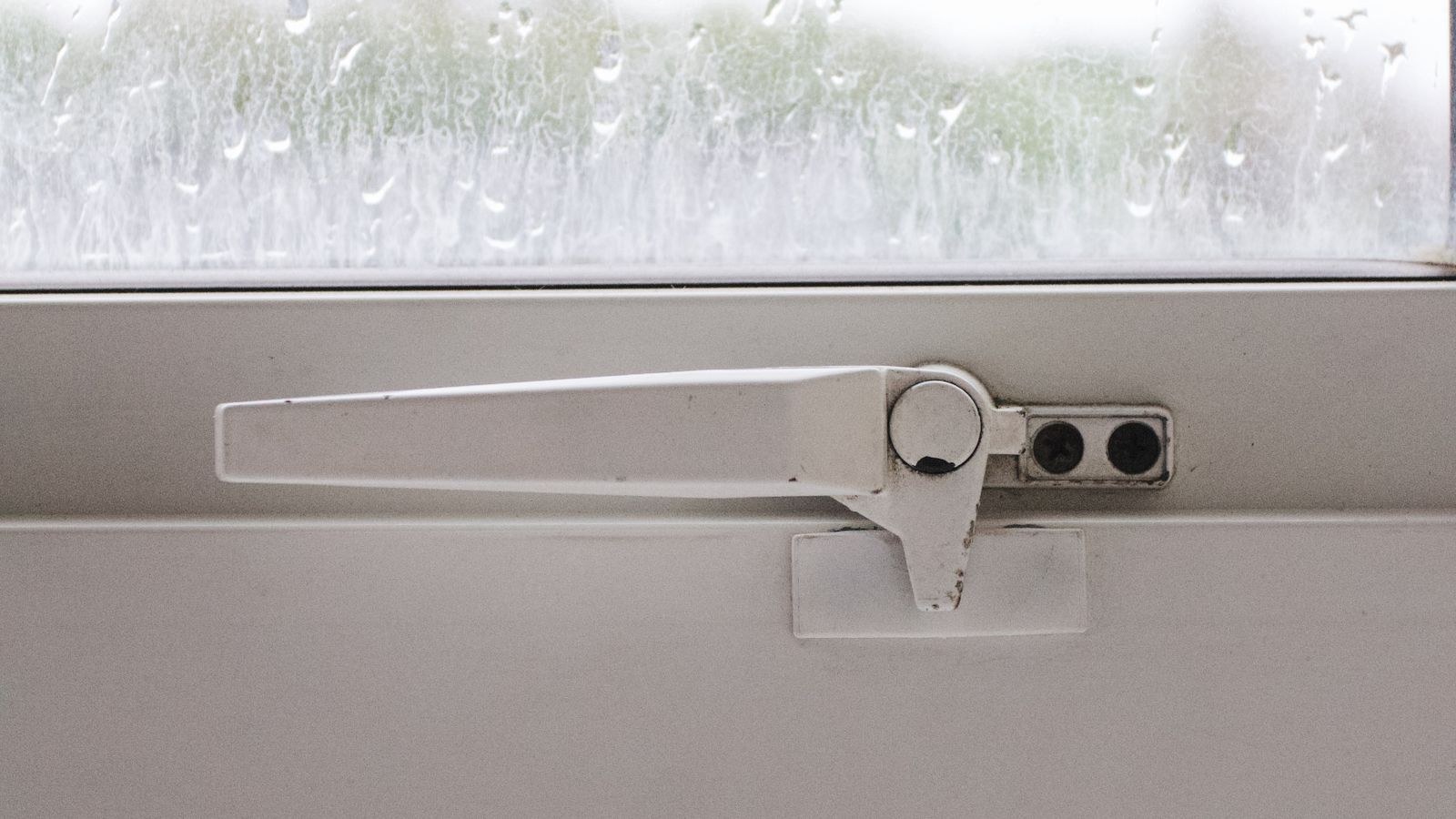
Check the window type as well. Standard double-hung and horizontal sliders accept these units. Casement and awning windows, which crank outward, generally cannot take one at all. Check what is directly below the window outside, since the unit must overhang and drain condensate away from the wall, and check that a nearby outlet exists on a circuit that can take the load.
Weight is the other measurement people skip. Small units around 5,000 BTU may weigh 40 to 50 lb; 12,000 BTU models often exceed 80 lb, and large units pass 100 lb. Anything above a ground-floor window at that weight is a two-person job with a proper support bracket.
Energy Ratings and What They Cost You
Efficiency is expressed as CEER or SEER2 depending on the class. Higher numbers mean more cooling per watt drawn. Two units with identical capacity can differ substantially in running cost, and over a hot summer of daily use that difference is visible on a bill.
The single largest efficiency variable now is the compressor type. Traditional units run a fixed-speed compressor that is either fully on or fully off. Inverter models vary compressor speed continuously, matching output to the room’s heat load. They hold temperature more precisely, use noticeably less power over a season, and are far quieter because they spend most of their time at low speed instead of repeatedly starting at full power.
The premium for an inverter unit is real but usually recovered within a few seasons of heavy use, and the comfort improvement arrives immediately. If lower bills are the priority, comparing the best energy efficient window air conditioners is a better use of time than chasing the lowest sticker price.
Noise: Read the Numbers, Not the Marketing
Every manufacturer calls their unit quiet. Look instead for a published decibel figure, ideally measured on low fan speed. Roughly 50 dB is genuinely quiet for a window unit, around 55 dB is normal, and anything approaching 60 dB will be intrusive in a bedroom.
Two design choices matter most. Inverter compressors avoid the loud start-up surge and the jolt of cycling. U-shaped units, which straddle the sash so the window closes through the middle of the chassis, put the compressor entirely outside the closed glass and cut indoor noise dramatically. They also let you still open and close the window, which conventional units do not.
That format has become the default recommendation for bedrooms and home offices. Buyers who care most about sleeping through a hot night should look at the best U-shaped air conditioners, which combine the quiet benefit with strong efficiency ratings.
Features Worth Paying For, and Ones That Are Not
Some features earn their premium. A programmable timer or scheduling stops the unit cooling an empty room and pre-cools before you get home. Multiple fan speeds plus a real dehumidify mode give you control over comfort rather than just temperature. A washable, easily removable filter is a small design detail that determines whether you actually maintain the unit. Auto-restart after a power cut matters more than it sounds if you leave pets at home.
Smart control has moved from gimmick to genuinely useful. Wi-Fi with a decent app lets you set schedules from anywhere, monitor energy use, and integrate with voice assistants or other home automation. Some models even respond to geofencing so the unit starts as you approach home. If that fits how you live, the best smart window air conditioners are worth the modest extra.
Less compelling are ionisers and air-purifying claims, which rarely replace a proper filter, and remote controls with dozens of buttons you will never press. Sleep modes that slowly raise the setpoint overnight are pleasant but easily replicated with a timer. Heat modes on window units exist but tend to be inefficient resistance heating rather than a true heat pump.
Directional Airflow and Louvres
An underrated detail: check how far the louvres swing and whether they move automatically. A unit installed in a corner needs to throw air across the room rather than straight into a wall. Four-way adjustable louvres with a motorised swing spread cooling far more evenly than fixed vanes, and even out the hot and cold pockets that make a room feel worse than the thermostat suggests.
Matching Capacity Classes to Real Rooms
For bedrooms, studies, nurseries, and small home offices, the 5,000 to 8,000 BTU class covers almost everything. These units are light enough to install alone, cheap to run, and quiet in inverter form. The best small window air conditioners cover this range and suit most apartment bedrooms comfortably.
Mid-size living rooms and combined spaces generally land between 10,000 and 14,000 BTU. At this level, mounting hardware and electrical capacity become real considerations, and the efficiency rating starts to matter a lot because run hours are longer.
Large open-plan areas, converted garages, and whole-floor cooling push you into the 18,000 BTU class and above. These need a dedicated 230V circuit in most cases and a genuinely robust window and bracket. Anyone shopping this end of the market should compare the best 18000 BTU window air conditioners and confirm electrical supply before ordering.
Electrical Requirements: Check Before You Buy
Most units up to roughly 12,000 BTU run on a standard 115V household outlet, though large ones draw enough that sharing a circuit with other heavy appliances will trip the breaker on the hottest days. Above that, many models require 230V, which usually means an electrician and a new outlet.
Never run a window air conditioner on a standard extension cord. The current draw and the start-up surge exceed what light cords handle safely, and this is a genuine fire risk rather than a cautious warning. If the unit cannot reach an outlet directly, have the outlet moved.
Installation and Sealing: Where Performance Is Won or Lost
A correctly installed unit tilts very slightly toward the outside so condensate drains away from the building rather than pooling inside the chassis or running down your wall. Most models build the required slope into the chassis; check the manual rather than assuming.
Sealing matters enormously. The accordion side panels supplied with most units are thin and leak both air and insects. Filling those panels with rigid foam board cut to size, then weather-stripping the gap where the sashes meet, typically produces a clear improvement in how fast the room cools and how little the unit runs. It costs very little and takes twenty minutes.
Support hardware is not optional on upper floors. A proper bracket carries the outboard weight, protects the sash from long-term damage, and prevents the worst-case outcome. Many jurisdictions require them for units above ground level.
Common Buying Mistakes
Buying purely on price is the most expensive habit, because a cheap low-efficiency unit costs more to own across a few summers than the better model would have. Skipping the window measurement leads to returns and wasted weekends. Choosing capacity by room label rather than actual square footage and sun exposure produces both undersizing and oversizing errors.
Ignoring maintenance access is another quiet mistake: a unit whose filter is awkward to reach will not be cleaned, and a clogged filter can cut cooling output noticeably while raising power draw. Finally, many buyers forget the room itself. Heavy curtains, closed blinds during peak sun, and sealed door gaps often deliver more comfort than an extra 2,000 BTU would.
Frequently Asked Questions
How long should a window air conditioner last?
Around eight to twelve years with regular filter cleaning and seasonal coil clearing. Units run constantly in harsh conditions land at the lower end.
Should I remove the unit in winter?
Removing it eliminates cold-air leakage and protects the unit from weather, but it is heavy work. A well-fitted insulated cover is a reasonable compromise if removal is impractical.
Can one window unit cool two rooms?
Only partially. Air does not move well through doorways without help. A fan positioned to push air between rooms improves it, but expect the second room to stay several degrees warmer.
What temperature should I set it to?
Around 76°F is a widely recommended balance of comfort and cost. Every degree lower increases run time and power use noticeably, so raising the setpoint slightly and adding a fan often feels the same for less.
Does a higher BTU rating cool faster?
It cools faster but not better. Faster cooling with poor dehumidification feels worse, and short cycling wears the compressor. Size correctly rather than generously.
Final Thoughts
A good window air conditioner purchase comes down to four decisions made carefully instead of quickly: correct BTU for the measured room and its sun exposure, a unit that genuinely fits your window type and dimensions, an efficiency rating and compressor type that suit how many hours you will run it, and a noise figure you can live with in that particular room. Everything else, from smart apps to fancy louvre patterns, is refinement on top of those four.
Take the measurements first, work out the adjusted BTU, then shortlist within the right capacity class and compare efficiency and decibels side by side. Do that and the unit you install this summer will still be quietly holding your room at a comfortable temperature well past 2026, without dominating your electricity bill or your sleep.