Owen Bradley
 Fabric swatches are deceptive. Under showroom lights every option feels wonderful, and the differences that actually matter over eight years of use are invisible to a two-second touch test. Velvet looks luxurious and photographs beautifully but crushes underfoot traffic. Linen is breathable and elegant but wrinkles the moment anyone sits down. Microfiber is the workhorse nobody photographs. Chenille splits the difference and pills if you buy the wrong grade. This sofa fabric comparison lays out how each of the four main upholstery families actually ages in a real living room, so you can pick by behaviour rather than by how the sample feels in your hand.
The Spec That Tells You More Than the Name
Before comparing fabric types, learn to read two numbers. The first is the double rub count, an abrasion rating from the Wyzenbeek test. Under 15,000 is decorative or light use. Between 15,000 and 30,000 handles ordinary family living. Above 30,000 is heavy-duty territory. The second is the cleaning code: W for water-based cleaners, S for solvent only, WS for either, and X for vacuum only. A velvet rated 40,000 double rubs with a WS code will outlast a linen rated 12,000 with an S code, regardless of what the fabric is called.
Fibre content is the third clue. Natural fibres like cotton and linen breathe well and take dye beautifully but abrade faster and wrinkle. Synthetics like polyester, nylon, and olefin resist abrasion, fading, and stains but can feel warmer against skin. Most modern performance fabrics are synthetic blends engineered to mimic natural texture, and this is where the market has improved most in the last decade.
Velvet: Beautiful, Surprisingly Tough, Genuinely Fussy
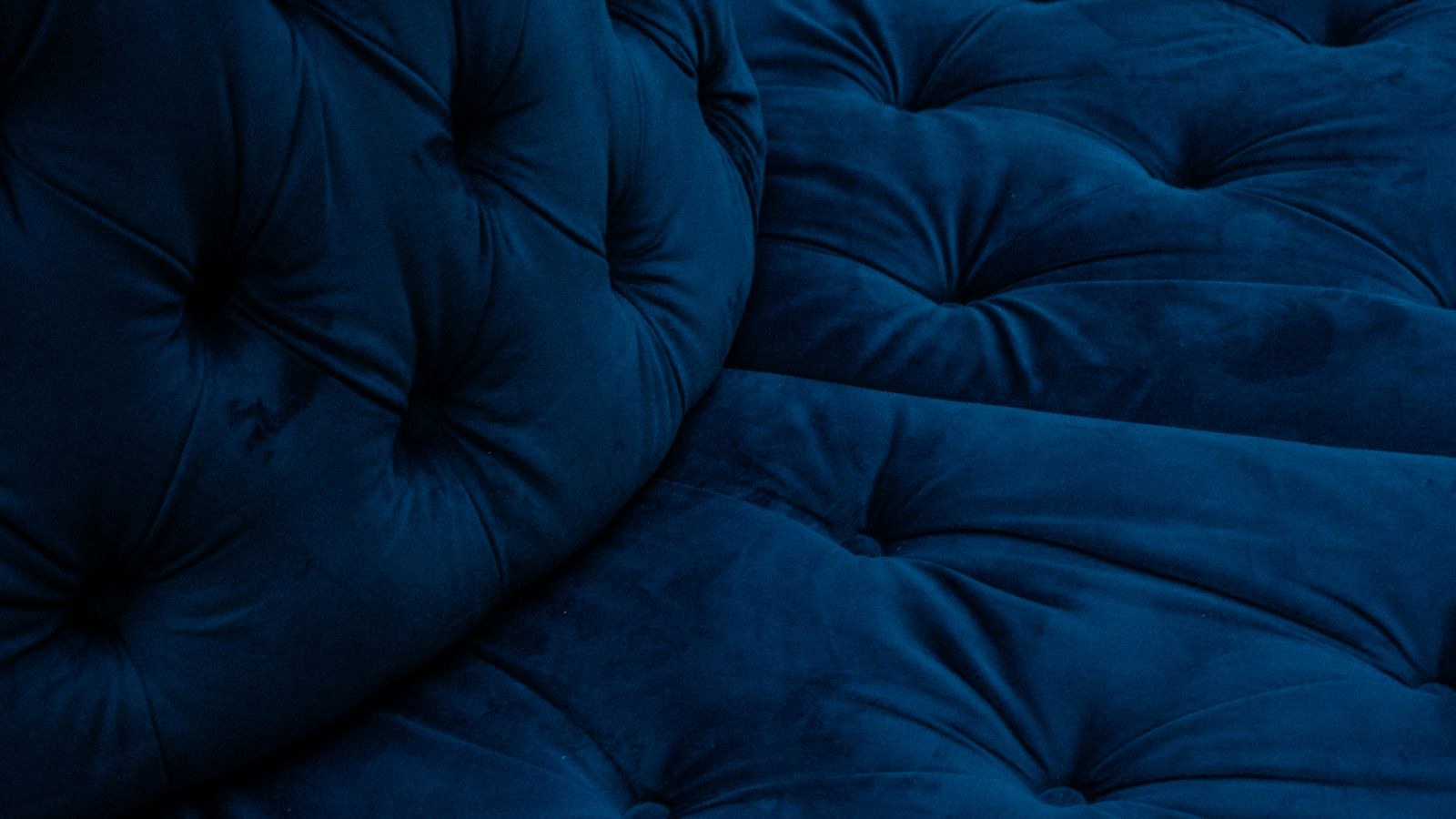
Velvet is a construction, not a fibre. It can be woven from silk, cotton, or polyester, and that base fibre determines almost everything. Polyester velvet is remarkably durable, frequently rating 40,000 double rubs or higher, and it resists stains far better than its reputation suggests because the dense pile keeps liquids sitting on the surface. Cotton velvet is softer and richer in colour but marks and crushes far more readily.
The genuine drawback is pile direction. Sitting, sliding, and vacuuming all push the nap in different directions, creating shading patches that look like stains until you brush them back. Some people read that as character, others find it maddening. Velvet also shows pet hair and lint clearly against dark colours, and it needs brushing with a soft upholstery brush rather than aggressive vacuuming.
Choose velvet if you want a statement piece in a room that sees moderate rather than punishing use, and buy polyester or a poly blend rather than cotton unless the sofa is genuinely decorative. The current field of the best velvet sofas is dominated by synthetic pile for exactly this reason.
Living With Crush Marks
Reduce visible shading by rotating and flipping loose cushions weekly, brushing the pile in one consistent direction after cleaning, and choosing a mid-tone rather than a very dark saturated colour, since shading contrast is highest on deep navy, emerald, and charcoal.
Linen: Breathable, Elegant, and Honest About Wrinkles
Pure linen is the most breathable upholstery fabric in common use, which makes it the natural pick for warm climates and rooms without air conditioning. It has a distinctive slubby texture, takes muted colours beautifully, and softens with age. It is also the least forgiving fabric in this comparison.
Linen wrinkles immediately and permanently unless blended. It absorbs liquids fast, so spills become stains within seconds rather than minutes. It is prone to watermarking, meaning even plain water can leave a ring. Many linen sofas carry an S cleaning code, and pure linen also stretches slightly under body weight, so seat cushions can look loose after a year.
The practical answer is a linen blend. Linen mixed with polyester or viscose keeps most of the texture and breathability while adding wrinkle recovery and stain resistance. If you want the relaxed coastal look without the maintenance anxiety, blended options in the best linen sofas category are far more livable than pure flax, and many now come with removable washable covers, which solves the stain problem outright.
Microfiber: The Unglamorous Winner for Busy Homes
Microfiber is finely woven polyester with fibres thinner than a strand of silk. That density is the whole story. Liquids struggle to penetrate, pet hair sits on top rather than weaving in, and the tight weave gives claws almost nothing to snag. Double rub ratings commonly exceed 50,000, and most microfiber carries a W or WS cleaning code, meaning a damp cloth and mild soap handle the majority of accidents.
The trade-offs are real but modest. Microfiber attracts lint and shows water spots on some finishes if you clean with too much moisture. It breathes less than linen, so it feels warmer in a hot room. And the texture, while soft, lacks the visual depth of velvet or the character of a natural weave, though modern versions have narrowed that gap considerably.
If you have toddlers, dogs, or a sofa that doubles as a dining table on film nights, this is the rational choice. The best microfiber sofas are consistently the ones people still recommend six years after buying, which is the only review that matters.
Chenille: Soft Texture With a Pilling Caveat
Chenille is another construction rather than a fibre, made by wrapping short yarn piles around a core to create a caterpillar-like strand with a soft, slightly fuzzy hand. It reads warmer and cosier than a flat weave and hides minor soiling well thanks to its varied surface.
Its weakness is loose fibres. Cheaper chenille pills and sheds, particularly at arms and seat fronts, and loops can be pulled by claws or zippers. Quality chenille made with synthetic cores and tight construction avoids most of this, so grade matters more here than in almost any other fabric family. Chenille also holds pet hair more than microfiber does.
Pick chenille when you want a soft, textural sofa for a moderately busy family room and you are willing to pay for a good grade rather than the cheapest example on the shelf. The best chenille sofas tend to be synthetic-core weaves rated above 30,000 double rubs.
Side-by-Side: How Each Fabric Behaves
- Best durability: Microfiber, then polyester velvet, then quality chenille, then linen blends.
- Best stain resistance: Microfiber and treated performance weaves; pure linen is the weakest.
- Best for pets: Microfiber by a wide margin, thanks to the tight weave and easy hair removal.
- Best breathability: Linen, then chenille, then velvet, then microfiber.
- Best appearance over time: Linen blends soften attractively; velvet shades; microfiber stays static.
- Best for hot climates: Linen or a linen blend, which stays cool against skin.
The Colour and Light Question
Fabric choice interacts with your room’s light more than most buyers expect. South-facing rooms with strong direct sun fade dyed fabrics, and the effect concentrates on one side of the sofa, creating an uneven look that no cleaning fixes. Solution-dyed synthetics, where the colour is added to the fibre before it is spun rather than applied to the finished cloth, resist this dramatically better and are worth specifying if your sofa sits in sunlight.
On colour itself, mid-tone neutrals hide everyday soiling best. Very pale fabrics show every mark, while very dark ones show lint, dust, and pet hair. If you want a bold colour, put it on a fabric that cleans easily rather than on pure linen. For a broader view of what holds up across all four families, the shortlist of best stain resistant sofas covers the treated and solution-dyed options specifically, and the wider best fabric sofas roundup compares construction quality across price tiers.
Mistakes to Avoid When Choosing Upholstery
The most common error is judging a fabric by a two-inch swatch. Order the largest sample available, drape it over your existing sofa, and look at it in morning light, afternoon light, and lamplight before committing. Texture and colour both shift dramatically. The second mistake is ignoring the cleaning code until after a spill; check it before you buy, not after. The third is assuming natural fibres are automatically better quality. In upholstery, engineered synthetics genuinely outperform naturals on almost every practical measure except breathability.
Finally, do not let fabric choice distract you from construction. A kiln-dried hardwood frame, quality springs, and high-resilience foam determine whether the sofa is comfortable in year seven. Fabric determines whether it still looks good. You need both, and no upholstery rescues a collapsing seat deck.
Frequently Asked Questions
Which sofa fabric is most durable?
Microfiber generally rates highest for abrasion resistance and everyday cleanability, with polyester velvet close behind. Both routinely exceed 30,000 double rubs, which covers heavy family use.
Does velvet stain easily?
Less than people assume. The dense pile keeps liquids on the surface, so prompt blotting usually works. The bigger issue is pile crushing and shading, which is cosmetic rather than damage.
Is linen a bad choice for families?
Pure linen is difficult with young children because it absorbs spills fast and wrinkles permanently. A linen-polyester blend with removable washable covers is far more practical and keeps most of the look.
Does chenille pill?
Cheap chenille does, especially at arms and seat fronts. Higher-grade chenille with synthetic cores and tight weaving resists it well, so buying quality matters more here than with other fabrics.
What does double rub count mean?
It measures how many abrasion cycles a fabric survives in testing. Aim for 15,000 or more for normal household use and 30,000 or more if you have kids, pets, or a heavily used main sofa.
Final Thoughts
There is no universally best sofa fabric, only a best fit for your room and your household. If durability and easy cleaning rank first, microfiber is the pragmatic answer and has been for years. If you want visual richness and can live with pile shading, polyester velvet delivers striking looks with genuinely good wear numbers. If breathability and relaxed texture matter most, a linen blend gets you the look without the maintenance penalty of pure flax. Chenille suits anyone wanting softness above all, provided you buy a good grade. Check the double rub rating and cleaning code before the colour, take a large sample home, and you will make a choice in 2026 that still looks right long after the swatch memory fades.