Owen Bradley
 Indoor humidity is the one comfort variable most people never measure, even though it explains condensation on the windows, musty smells in the closet, static shocks in winter and the mould creeping along a bathroom ceiling. Learning how to measure indoor humidity takes a five-dollar hygrometer and about ten minutes of setup, and it turns a vague feeling that the house is damp into a number you can act on. This guide covers what to buy, where to place it, how to read the results honestly across a day, and exactly what to do when the reading climbs above sixty percent.
What the Number Actually Means
Household hygrometers report relative humidity, which is the amount of water vapour in the air expressed as a percentage of the maximum that air can hold at its current temperature. The temperature dependence matters more than most people realise. Warm air holds far more moisture than cold air, so the same quantity of water vapour reads as a comfortable 45 percent in a 72F living room and an alarming 70 percent in a 55F basement below it.
That is why a single reading in one room tells you very little. What you want is a picture: several rooms, measured at different times of day, ideally across a week. The comfortable band for most homes is 40 to 50 percent, with 30 to 60 percent as the wider tolerable range. Below 30 percent you get dry skin, cracked woodwork and static. Above 60 percent dust mites, mould and musty odours thrive.
What You Need
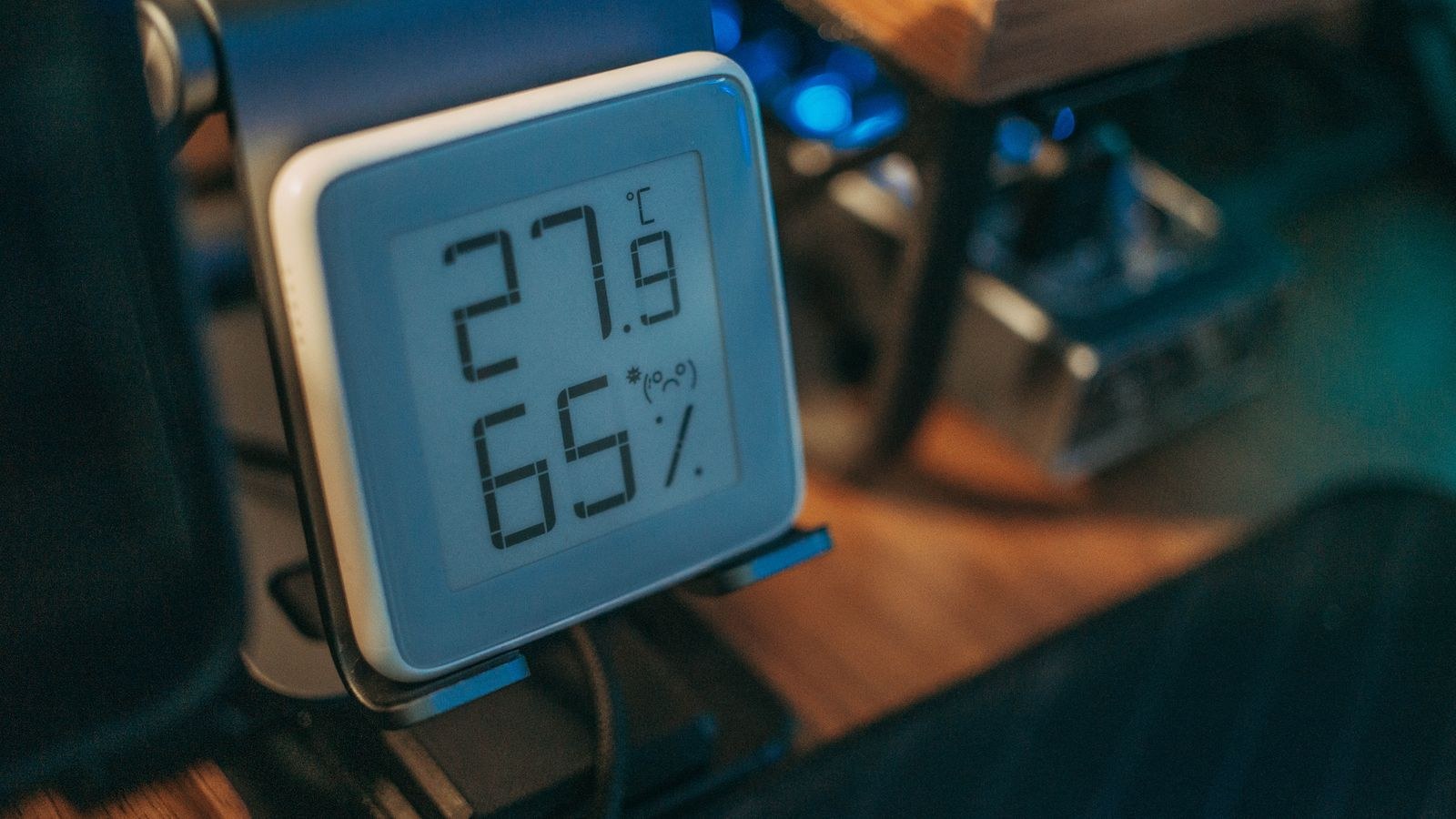
- A digital hygrometer with a temperature display. Basic models cost under $15 and are accurate enough for household decisions.
- Two or three additional units if you want to monitor several rooms at once, which is the fastest way to find the problem area.
- A resealable bag, a tablespoon of table salt and a bottle cap for the calibration check described below.
- A notebook or phone note to log readings by room and time.
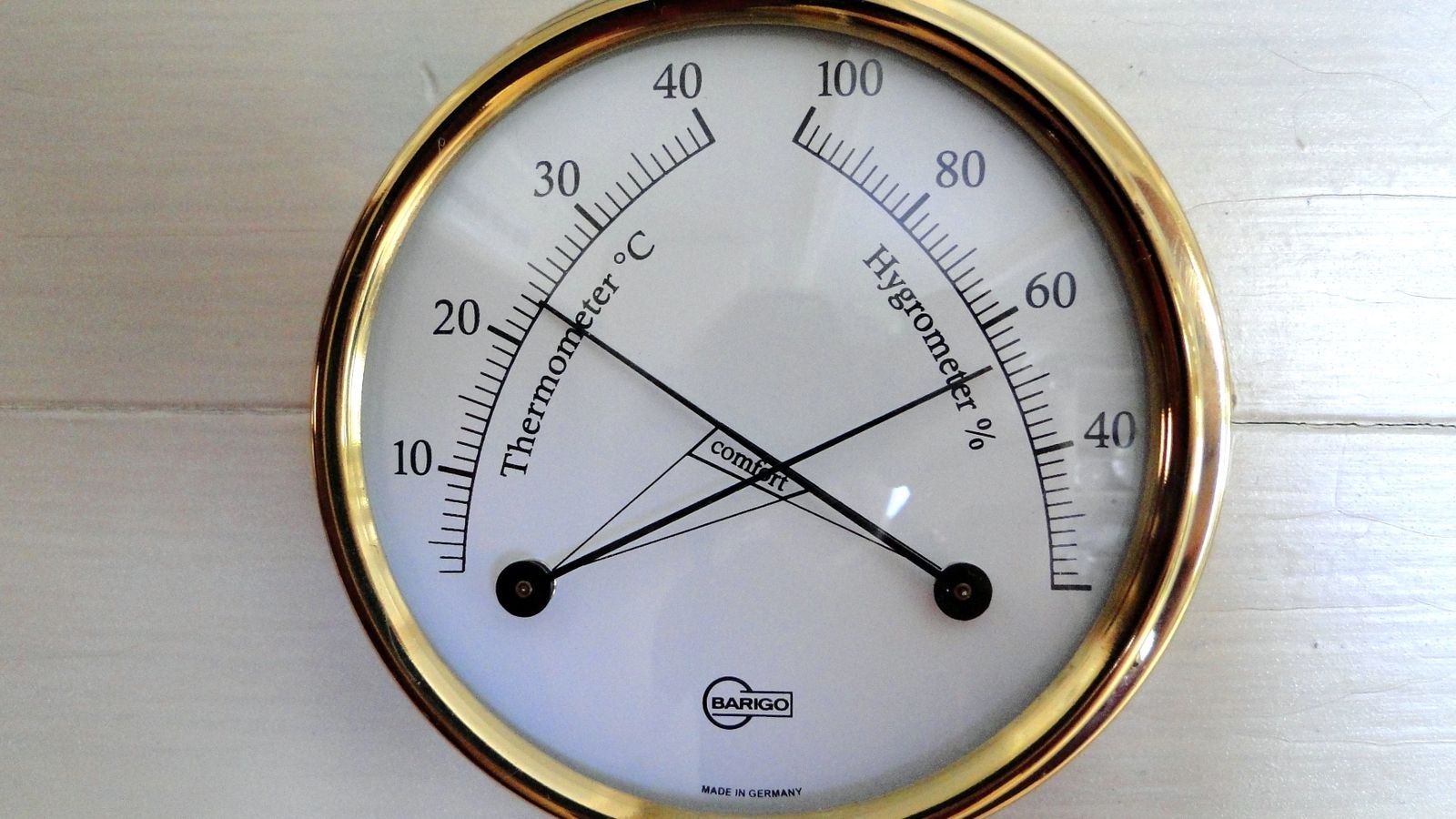
Analog dial hygrometers look attractive but drift badly and often need recalibration. Digital units with a capacitive sensor hold accuracy far better for the money. If you want long-term data rather than spot checks, a model that logs minimum and maximum readings is worth the small premium, because the overnight peak is usually where the trouble hides.
Step-by-Step: Measuring Indoor Humidity Correctly
- Check the hygrometer’s accuracy first. Put roughly a tablespoon of salt in a bottle cap, add a few drops of water to make a slush, and seal both cap and hygrometer inside a resealable bag. Leave it eight hours at room temperature. A correct sensor reads 75 percent. If yours reads 71, note the four-point offset and mentally add it to every future reading, or use the unit’s calibration adjustment if it has one.
- Place the sensor at breathing height. Roughly four to five feet from the floor, on an interior wall or a shelf away from the wall surface. Floor level reads damper and ceiling level reads drier, so consistency matters more than perfection.
- Avoid the obvious distortions. Keep it at least three feet from windows, exterior doors, radiators, vents, humidifiers, kettles and bathrooms. Direct sunlight on the casing will skew both temperature and humidity badly.
- Let it settle before believing it. Capacitive sensors need twenty to thirty minutes to equilibrate after being moved into a new room. The first reading after relocation is almost always wrong.
- Read at three points in the day. Early morning, mid-afternoon and late evening. Morning readings are usually the highest because the house has cooled overnight while bodies and breathing have added moisture.
- Measure every problem room. Bedrooms, the basement, the room with the condensation, and one dry reference room. Log the temperature alongside the humidity every time, because the pair together tells you whether you have a moisture problem or a cold-surface problem.
- Watch the surfaces, not only the air. Condensation on window glass, damp corners behind furniture and cold exterior walls indicate that a surface has dropped below the dew point even if the room average looks fine. Pull furniture a few inches off exterior walls and check behind it.
- Repeat across a full week. Weather, laundry, cooking and showering all swing the numbers. A week of logs shows you the true baseline and the peaks that matter.
Reading Your Results
Under 30 percent is genuinely dry. Expect static, splitting furniture joints, sore throats and dry sinuses, usually in winter when cold outdoor air is heated indoors. Between 30 and 40 percent is acceptable but on the dry side, common in heated homes during a cold snap.
Between 40 and 50 percent is the target. Between 50 and 60 percent is tolerable in summer but worth watching, especially at night. Above 60 percent you are in dust mite and mould territory, and above 70 percent condensation and visible growth follow within weeks. In basements, treat anything sustained above 55 percent as an action point, because the cool surfaces there condense far earlier than the air reading suggests.
What To Do When the Reading Is Too High
Start with the free fixes. Run the bathroom extractor for twenty minutes after every shower, use the kitchen hood while cooking, and confirm your tumble dryer vents outside rather than into the room. Drying laundry indoors can add several litres of water a day to the air and is one of the single biggest hidden sources.
If ventilation alone does not bring the number down, a dehumidifier is the direct answer. Sizing matters more than brand, so work out the square footage and how damp the space actually reads before shopping. Our sizing walkthrough on how to choose dehumidifier size converts room area and dampness level into a pint rating, and our notes on the best dehumidifier settings explain why 45 to 50 percent is a better target than the lowest number on the dial.
For whole-floor problems, larger capacity units handle the load without running flat out; the models in our roundup of the best dehumidifiers for home cover that range. For a single damp bedroom or study, a compact unit is quieter and cheaper to run, and our list of the best room dehumidifiers focuses on models sized for one space.
What To Do When the Reading Is Too Low
Dry air responds well to adding moisture at the point where you feel it, usually the bedroom overnight. A cool mist unit is the safest option around children and pets since there is no hot water reservoir, and it uses less electricity than a warm mist model. Our comparison of the best cool mist humidifiers covers tank sizes and runtimes for overnight use. Keep the output modest and re-measure after a night, because overshooting into the 60s creates the opposite problem.
Common Mistakes to Avoid
- Trusting one reading in one room. Humidity varies by ten points or more between a warm living room and a cool basement.
- Skipping the salt calibration. Cheap sensors frequently ship five to eight points off.
- Placing the unit near a window or vent. The reading then describes the draught, not the room.
- Reading immediately after moving it. Always allow thirty minutes to settle.
- Ignoring temperature. Warming a cold room lowers relative humidity without removing a drop of water, which can mask a real moisture source.
- Chasing 30 percent with a dehumidifier. Over-drying wastes power, cracks woodwork and irritates airways.
Frequently Asked Questions
What is the ideal indoor humidity level?
Aim for 40 to 50 percent year-round. In cold weather you may need to sit closer to 35 percent to stop condensation forming on single-glazed windows.
How accurate are cheap hygrometers?
Typically within three to five percentage points, which is fine for household decisions. Run the salt test once, note any offset, and the readings become reliable enough to act on.
Why is my basement always more humid than upstairs?
Cool surfaces and ground moisture combine there. The same absolute amount of water vapour reads much higher in cooler air, so basements routinely measure fifteen points above the floor above.
Can a smart thermostat measure humidity?
Many do, but they read only at one point on one wall, often near a hallway vent. Use that as a rough baseline and confirm problem rooms with a portable unit.
How often should I check the readings?
Daily during the first week, then weekly once you know your baseline. Recheck after any change in season, heating pattern or occupancy.
Final Thoughts
Measuring indoor humidity is the cheapest diagnostic in home comfort. Calibrate a basic digital hygrometer, place it at breathing height away from vents and windows, log three readings a day across a week, and you will know within days whether your house is genuinely damp, genuinely dry, or simply cold in one corner. From there the fix is straightforward: ventilate first, then dehumidify or humidify to hold the 40 to 50 percent band. Start logging now and you will spend 2026 reacting to numbers rather than guessing at smells and condensation.