Owen Bradley
 A portable air conditioner that runs, blows air, and still leaves the room warm is one of the more frustrating appliance failures, mostly because the unit gives no obvious sign of what is wrong. The compressor hums, the display shows a low setpoint, and nothing changes. The good news is that genuine refrigerant or compressor faults are the least common cause. Far more often the problem is a choked filter, a kinked exhaust hose, a full condensate reservoir, or a room that was always too big for the unit. This guide walks through the diagnostic order that professional technicians use, starting with the free checks and ending with the point where repair stops making sense.
First, Confirm What Kind of Failure You Have
Before opening anything, define the symptom precisely. There are three distinct situations and they lead to different fixes. In the first, the fan blows but the air is room temperature, which points to the compressor not running or a refrigerant problem. In the second, the air from the outlet is genuinely cold but the room never cools, which almost always means heat is leaking back in through the window kit or the unit is undersized. In the third, cooling starts strong and fades after twenty or thirty minutes, which suggests a restricted airflow or a drainage fault causing the unit to protect itself.
Test it directly. Hold a thermometer at the cold outlet with the unit running on maximum for ten minutes. A healthy single-hose portable typically delivers air noticeably cooler than the room, often in the range of 15 to 20 degrees Fahrenheit below intake temperature. If that split is present, your machine is cooling and the problem is in the room. If the split is small or absent, the fault is inside the unit.
Tools You Will Need
- A basic thermometer or an infrared temperature gun for the split test.
- Screwdrivers to open the filter housing and rear grille.
- A vacuum with a brush attachment and a soft cleaning brush.
- Mild detergent or a no-rinse coil cleaner.
- A shallow pan and a short length of hose for draining condensate.
- Foil tape and foam weatherstrip for resealing the window kit.
- A tape measure to calculate the room’s actual square footage.
Step-by-Step Diagnosis and Repair
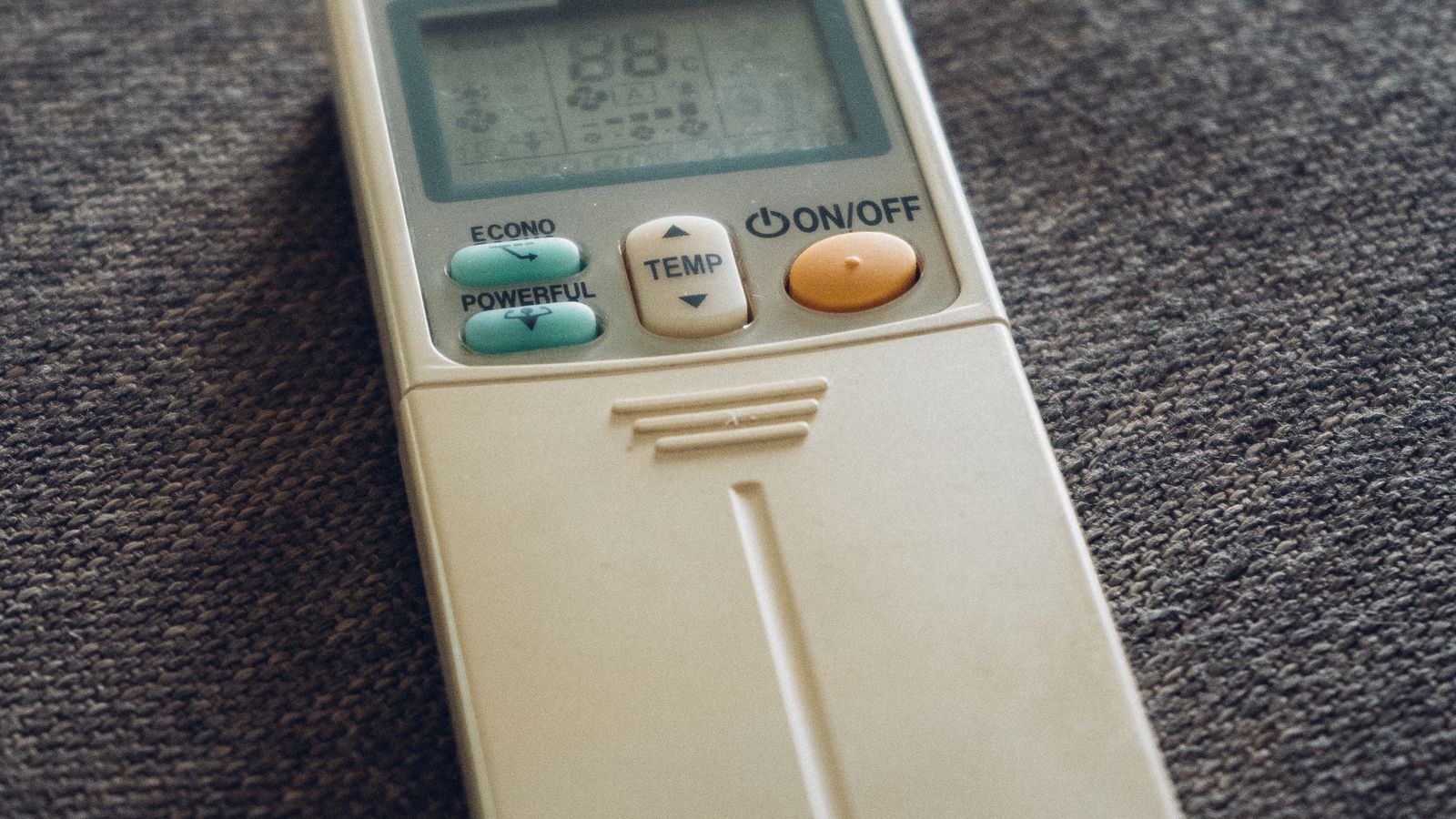
- Check the settings before anything else. Confirm the unit is in cool mode rather than fan, dry, or eco, that the setpoint is well below room temperature, and that no timer or sleep schedule is throttling the compressor. Many units default to fan-only after a power interruption.
- Verify power quality. Plug the AC directly into a dedicated wall outlet, never an extension cord or power strip. Voltage drop from a thin cord can prevent the compressor from starting while the fan runs happily. If the plug has a test and reset button, press reset.
- Clean or replace the air filter. Slide out the mesh filter and hold it to a light. If you cannot see through it, that alone explains poor cooling. Wash it in warm soapy water, dry it fully, and refit it. A blocked filter starves the evaporator and can freeze the coil solid.
- Look for a frozen evaporator coil. Switch to fan-only for an hour with the unit unplugged from cooling duty and check whether water pours out or ice is visible on the fins. Icing means restricted airflow, a dirty filter, or running the unit when the room is already cool. Let it thaw completely before restarting.
- Inspect and straighten the exhaust hose. Kinks, sharp bends, and a hose stretched to full length all raise back pressure and cripple heat rejection. Keep the run as short and straight as possible, and never route it through another room or a long duct.
- Empty the condensate reservoir. Most units stop cooling and flash a code when the internal tank fills. Drain the tank, or better, fit a continuous drain hose to the low port and run it to a floor drain so the problem cannot recur. A clogged drain line produces the same symptom.
- Clean the condenser coil. Remove the rear grille and vacuum the fins, then work a soft brush across them in the direction of the fins. A dust-caked condenser cannot dump heat, so the compressor runs hot and the cooling output collapses.
- Reseal the window kit. Feel around the panel with the unit running. Warm air moving inward means the exhaust is being pulled straight back into the room. Add closed-cell foam to the panel edges, tape the hose collar, and close the gap where a double-hung sash no longer overlaps.
- Reduce the heat load in the room. Close blinds on sun-facing windows, shut interior doors, switch off unnecessary electronics, and delay cooking or laundry. A single sunlit window can add more heat than a small portable can remove.
- Match the unit to the room honestly. Measure the floor area and compare it with the unit’s rated coverage, then adjust upward for high ceilings, strong sun, or an open floor plan. If the mismatch is large, no repair will fix it.
When the Room, Not the Unit, Is the Problem
Single-hose portables have a structural disadvantage. They exhaust indoor air outside, which lowers pressure in the room and pulls replacement air in through every gap in the building envelope. In a leaky room that infiltration can cancel a meaningful share of the cooling produced. Sealing the window kit helps, and closing doors to reduce the volume being cooled helps more.
Capacity is the other half of the equation. Rated coverage figures assume a moderately insulated room with average sun exposure. A top-floor apartment with west-facing glass behaves like a much larger space. If you are consistently asking a small unit to cool an open living area, the fix is a bigger machine rather than another repair attempt. Our comparison of the best portable air conditioners for large rooms shows the capacity classes that handle open layouts, and the best 14000 BTU portable air conditioners roundup covers the upper end that most homes ever need.
Settings That Quietly Undermine Cooling
Eco and energy-saver modes cycle the fan and compressor to save power, which feels like weak cooling on a hot day. Dry mode prioritizes dehumidification and runs the compressor at reduced output. Sleep mode gradually raises the setpoint overnight by design. Auto fan speed can also settle on a low speed that limits airflow across the coil. For a genuine capacity test, use cool mode, maximum fan, and the lowest setpoint, and give the unit a solid twenty minutes. Reviewing how modes interact in our guide to the best air conditioner settings often resolves complaints without any repair at all.
Safety Notes Before You Open Anything
Always unplug the unit before removing a panel, and wait several minutes for capacitors to discharge. Portable ACs contain a start capacitor that can hold a dangerous charge after power is removed, so do not probe internal wiring unless you know how to discharge it safely.
Never attempt to add refrigerant yourself. These are sealed systems, refrigerant handling requires certification in most regions, and a system that has lost charge has a leak that must be found first. Keep water away from the control board and the fan motor when cleaning coils, and never operate a unit with the cabinet open.
Common Mistakes That Waste an Afternoon
- Setting the thermostat far lower than needed. A portable AC removes heat at a fixed rate; a lower setpoint does not speed it up.
- Running an extension cord. Voltage drop causes hard-start failures that mimic a dead compressor.
- Extending the exhaust hose with add-on ducting. Longer runs and extra bends reliably reduce cooling capacity.
- Restarting immediately after a shutdown. Compressors need a few minutes for pressures to equalize; rapid cycling can trip protection or damage the motor.
- Cleaning only the filter. The condenser coil at the back collects just as much dust and matters just as much.
- Blaming the unit for a sunlit room. Shade and door closure often change more than any internal repair.
When to Repair and When to Replace
If cleaning, sealing, and drainage checks have not restored performance, and the outlet air is still close to room temperature, the likely causes are a failed capacitor, a failed compressor, or a refrigerant leak. A capacitor is inexpensive and a reasonable service call. A compressor or refrigerant repair on a consumer portable usually costs a large fraction of a new unit, especially once labor is included.
Age matters too. A unit past roughly eight years with a major fault is rarely worth repairing, since newer designs are meaningfully more efficient and quieter. If you reach that point, build quality is what separates units that last from units that fail early, and our list of the best quality portable air conditioners focuses on durable compressors and serviceable filters. If you would rather understand the specifications first, the portable air conditioner buying guide explains capacity ratings and hose configurations in plain terms.
Frequently Asked Questions
Why does my portable AC blow cold air but the room stays hot?
Cold outlet air with no room effect means the cooling is being cancelled by heat coming back in. Check the window kit seal, close blinds on sunny windows, shut interior doors, and confirm the unit is rated for the room’s actual size.
How long should it take to cool a room?
A correctly sized unit in a sealed room typically drops the temperature a few degrees within the first half hour and reaches setpoint within one to two hours on a hot day. Longer than that with no progress suggests undersizing or a leak.
Does the exhaust hose really matter that much?
Yes. It carries all the rejected heat. A kinked, stretched, or uninsulated hose reduces heat rejection and radiates warmth back into the room, and it is one of the most common causes of disappointing performance.
Can I run the unit without venting the hose outside?
No. Without an outdoor exhaust the unit simply moves heat around inside the room and adds the compressor’s own waste heat, leaving the space warmer than before. Vent-free operation only works in dehumidify mode.
Why does it cool well for a while and then stop?
The usual culprits are a coil icing up from restricted airflow, a full condensate tank triggering shutdown, or a compressor overheating because the condenser is dirty. Work through the filter, drainage, and coil steps in that order.
Final Thoughts
A portable AC that is not cooling almost always fails one of a handful of simple tests. Measure the temperature split at the outlet to decide whether the fault is in the machine or the room, then clean the filter, thaw and inspect the coil, straighten the hose, drain the condensate, and clear the condenser. Seal the window kit and cut the heat load before you conclude the unit is broken. Work through the list in order and most units return to full output the same afternoon, and you will know quickly whether a service call or a replacement is the right move for 2026.