Owen Bradley
 A throw blanket is one of the cheapest ways to change how a room feels, and one of the easiest things to get wrong. Tossed on without thought it reads as clutter; folded too neatly it looks like a showroom nobody lives in. The trick is a small amount of deliberate structure: a fold that holds its shape, a placement that echoes the furniture underneath, and a fabric heavy enough to stay put. This guide walks through how to drape a throw blanket over a sofa, an armchair and a bed, with the folding methods stylists use and the practical fixes that stop it sliding onto the floor every evening.
What You Need Before You Start
You do not need much, but the right throw makes the difference between a drape that holds and one that collapses within an hour.
- A throw with some weight. Chunky knits, wool, cotton waffle weave and boucle hold a fold. Thin fleece and slippery polyester satin do not.
- The right size. Roughly 50 by 60 inches suits a chair or a sofa arm; 60 by 80 inches or larger is better for a bed or a full sofa back.
- A colour that relates to the room. Either echo an existing accent (a cushion, a rug border, artwork) or pick a deliberate contrast against a neutral sofa.
- A few minutes of tidying first. Fluff the cushions and straighten the seat before you drape anything. A throw cannot rescue a sagging cushion.
If the throw is brand new, wash and dry it once before styling. Factory folds and packaging creases fight every arrangement you attempt, and a single wash relaxes the fibres so the fabric falls naturally instead of standing in stiff panels.
The Four Drapes Worth Learning
Almost every magazine-worthy throw arrangement is a variation on four basic methods. Learn these and you can style any seat in the house.
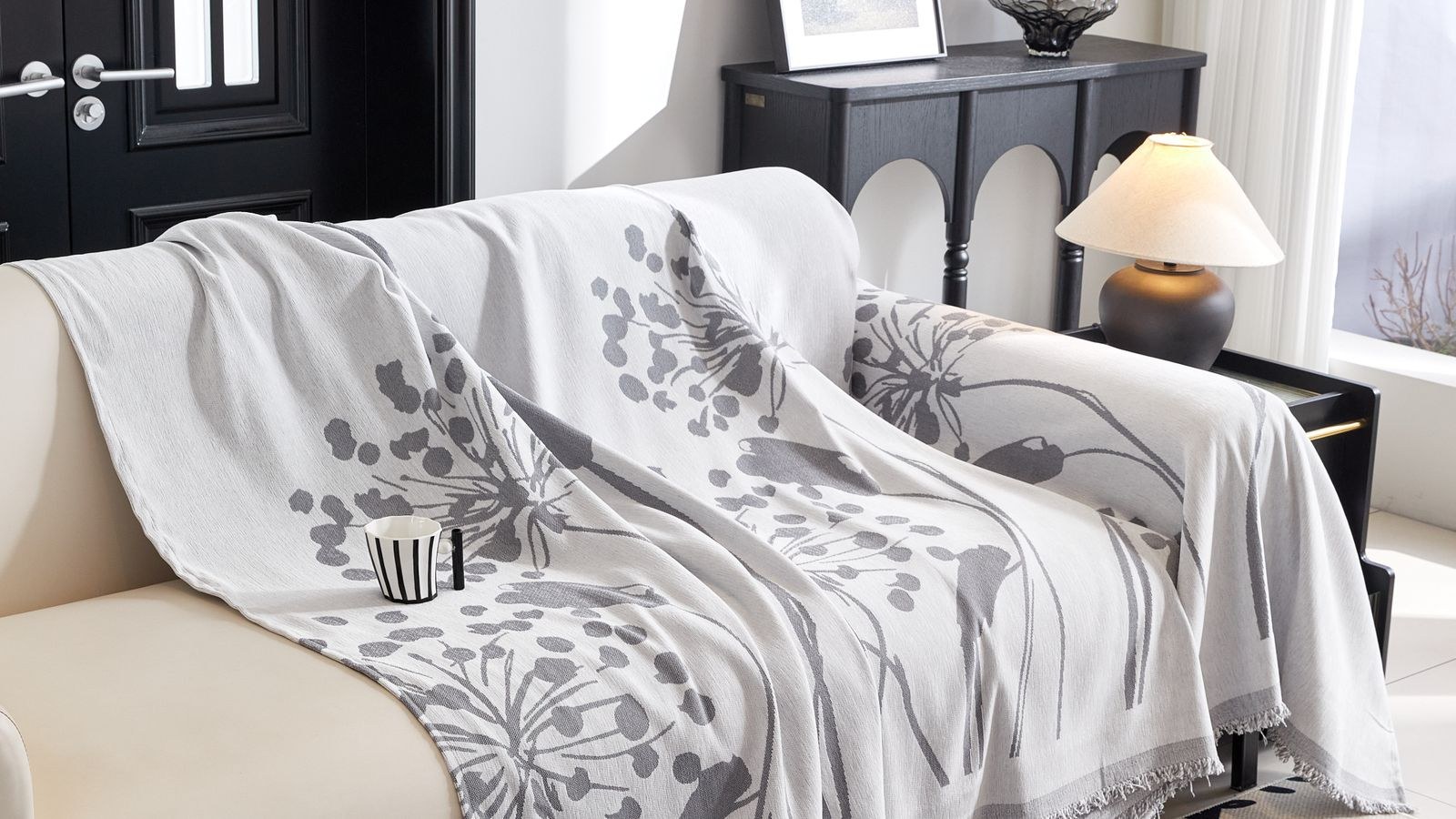
- The corner drape. Fold the throw in half lengthwise, then lay it diagonally across one corner of the sofa so it covers part of the back and part of the seat. Let roughly 10 to 12 inches spill over the front edge. This is the most forgiving option and works on almost any sofa.
- The arm drape. Fold the throw into a long rectangle about a third of its open width, then lay it over one arm so equal lengths hang inside and outside. Nudge one side an inch or two longer so it looks used rather than measured.
- The back drape. Fold lengthwise, then hang the throw over the top of the sofa back at one end, letting it fall down the back rather than the seat. Best on sofas that float in a room where the back is visible.
- The casual toss. Hold the throw at the centre, lift, and let it fall onto the seat, then adjust only two or three folds. The illusion of spontaneity needs about thirty seconds of correction, no more.
Folding So the Drape Holds Its Shape
Every one of those drapes starts with a fold, and the fold is what creates structure. Lay the throw flat, fold it in half, then in half again lengthwise until you have a band roughly 12 to 18 inches wide. Smooth each fold with your palm as you go so the layers stack rather than bunch. When you place the folded band, do not flatten it against the upholstery: let one edge break slightly so you get a soft ripple instead of a rigid stripe. That single relaxed edge is the difference between styled and stiff.
Draping a Sofa Step by Step
- Choose your side. Pick the end of the sofa furthest from the main traffic path so the throw is not brushed off every time someone walks past.
- Fold to a band. Fold lengthwise until the throw is about a third of its open width and roughly as long as the sofa is deep plus a foot.
- Anchor the top. Tuck one to two inches of the throw into the gap between the seat cushion and the sofa back. This hidden anchor is what stops the slide.
- Set the diagonal. Run the band across the corner at roughly 45 degrees, over the seat cushion and toward the front corner.
- Release the fall. Let 10 to 12 inches hang over the front edge, then lift and drop that hanging section once so it settles in soft folds rather than a flat sheet.
- Break the symmetry. Pull one corner slightly out of line. Perfect symmetry reads as staged; a single asymmetric corner reads as lived in.
- Step back and check. View it from the doorway, which is how the room is actually seen. Adjust from that distance, not from arm’s length.
Sectionals need a variation: use the chaise end, draping over the return so the fabric follows the L-shape rather than fighting it. Deep-seated designs among the best sofas for living rooms take a longer throw than a standard three-seater, so measure the seat depth before you buy.
Draping Chairs and Beds
Armchairs are the easiest win in a room. Fold the throw to a band and hang it over one back corner so it falls down the outside of the chair, or drape it over the back at full width for a deep, enveloping look. On a wing chair or a high-backed reading chair, the diagonal over one shoulder of the back frame is the classic arrangement and it reads instantly as an invitation to sit. If you are choosing seating with styling in mind, the wide, sculptural silhouettes among the best accent chairs for living rooms and the more traditional shapes in our roundup of the best living room chairs handle a draped throw very differently: sculptural frames want a narrow band, while a generous club chair can carry a full-width throw.
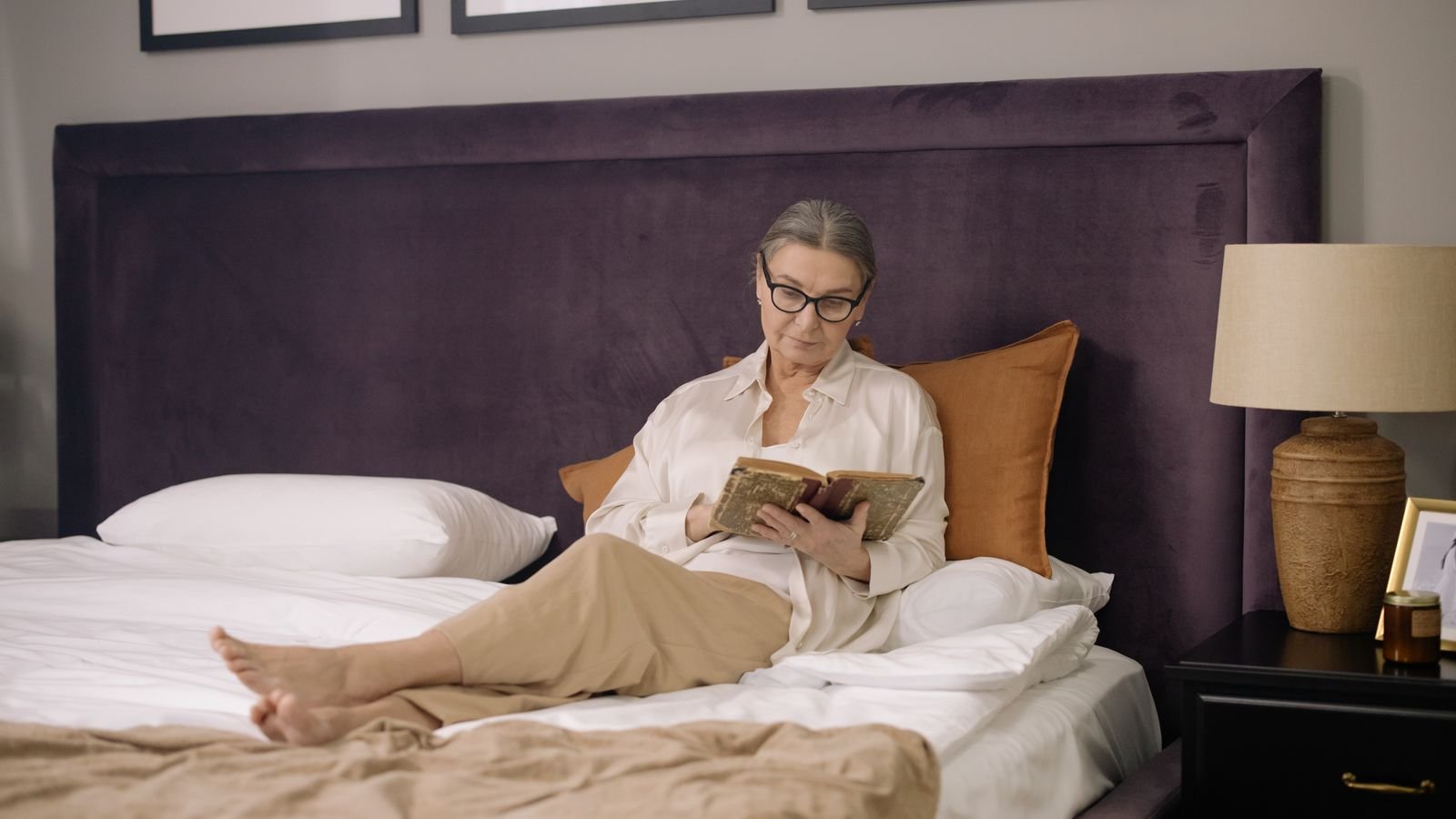
On a bed, the throw plays a different role. It sits across the foot, covering the bottom third of the bedding, and its job is to break up a large expanse of duvet. Fold it to roughly a third of the bed’s length, centre it, and let equal amounts hang off each side. For a softer look, run it diagonally from one bottom corner instead. Coordinating that with the wood tones and finishes in the rest of your bedroom furniture keeps the layers from looking like an afterthought.
How to Stop the Throw Sliding Off
The most common complaint is not about looks at all: the throw ends up on the floor by nine every night. Slippage is almost always a fabric problem or an anchoring problem, and both are fixable.
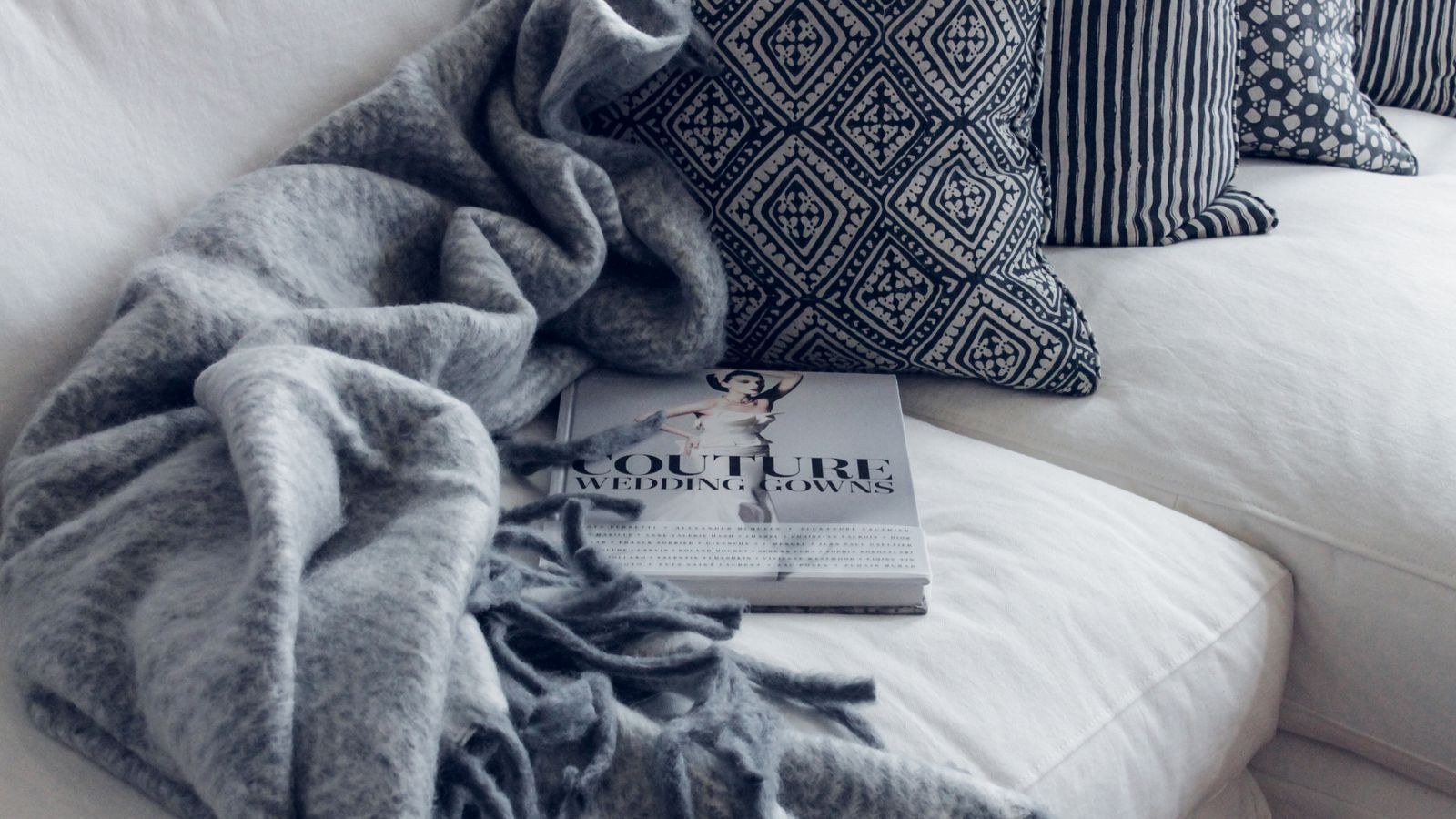
- Tuck the top edge. Two inches pushed into the cushion seam does more than any styling trick.
- Match texture to texture. Slippery fabrics on leather or performance microfibre will always migrate. Knits, wool and cotton grip far better.
- Weight the hanging end. A longer fall over the front edge acts as ballast and holds the rest in place.
- Use the arm as a hook. A throw folded over an arm with equal weight on both sides is mechanically stable in a way a seat drape is not.
- Add a discreet gripper. A small piece of rug tape or a non-slip pad under the tucked edge is invisible and permanent.
Colour, Texture and Scale
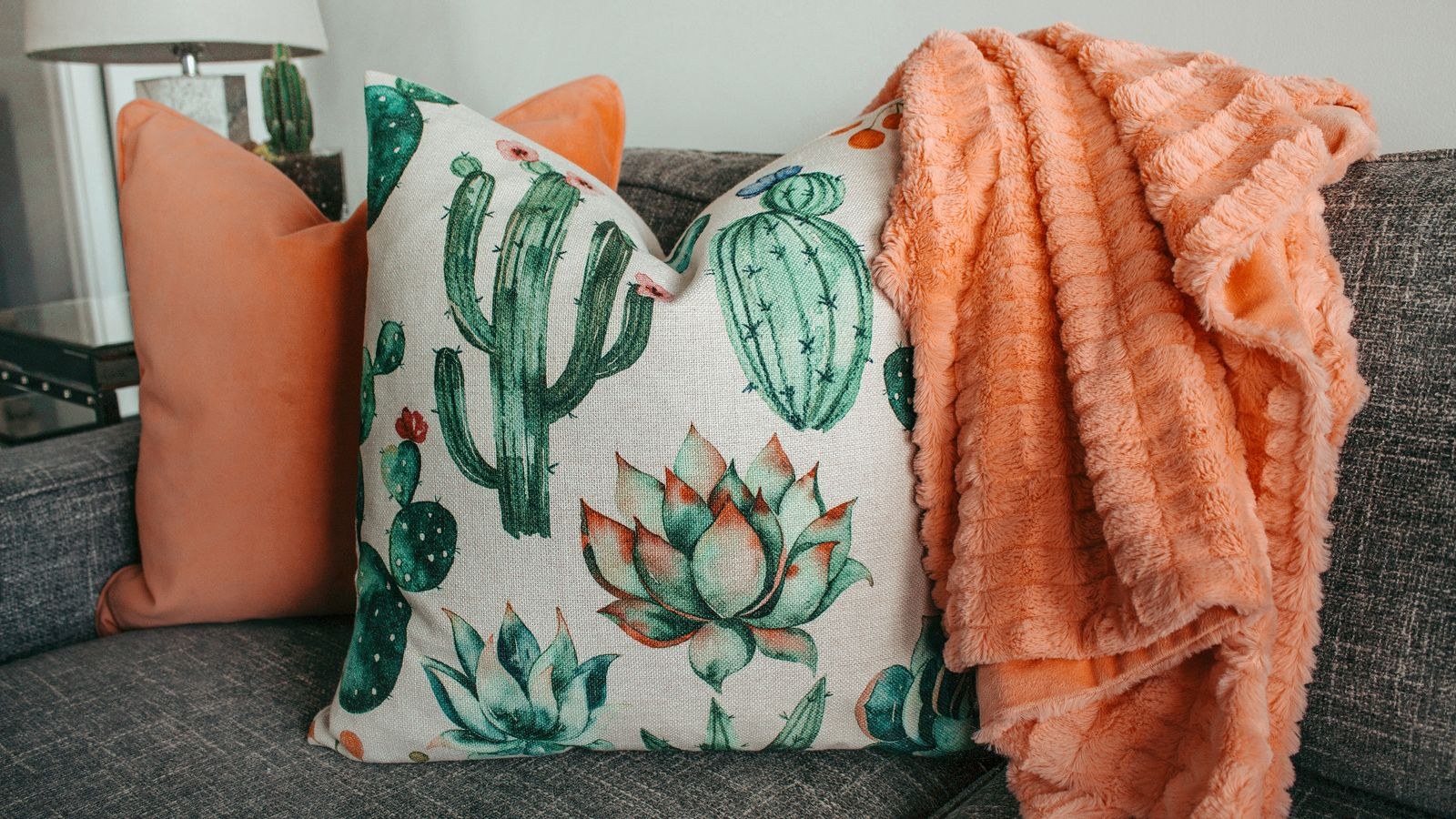
A throw works visually when it does one of two jobs: adding a texture the room lacks, or repeating a colour already present. Choose one. A chunky knit on a smooth linen sofa adds contrast in texture while staying neutral in colour. A rust throw on a grey sofa adds colour while staying flat in texture. Doing both at once, a loud pattern in a loud colour, usually pulls too much attention for a piece that is meant to be a finishing touch.
Scale matters as much as colour. A small throw on a large sectional looks like a napkin, and an oversized blanket on a compact armchair swallows the frame. As a rough rule, the folded band should be no wider than a third of the surface it sits on and should hang by roughly a fifth of the height of the piece. If you want a shortcut, our comparison of the best throw blankets for sofas groups options by weight, fibre and drape quality, which are the three factors that actually determine how well a blanket holds a fold.
Common Mistakes to Avoid
- Folding it into a perfect rectangle. A crisp folded square on the seat looks like laundry waiting to be put away, not styling.
- Using more than one throw per seat. Two throws on one sofa competes for attention. Spread them across separate pieces instead.
- Matching the sofa exactly. A throw the same colour as the upholstery disappears and does nothing for the room.
- Ignoring creases. Deep packaging folds show badly under lamplight. Wash or steam before styling.
- Draping over a stained or sagging cushion. A throw hides a problem for a day and draws attention to it for a month.
Keeping It Looking Good
Give the throw ten seconds each evening: refold the band, re-tuck the anchor edge, and shake out the hanging section. Wash cool and air dry flat for wool and knits so the fibres do not felt. Store spares in a basket near the seating, and rotate a light cotton weave in summer against something heavier in winter to keep the room current through 2026.
Frequently Asked Questions
Should a throw blanket match the cushions?
It should relate to them, not match them. Pick up one colour from a cushion or the rug and repeat it in the throw, but vary the texture or the depth of the shade so the two pieces read as a considered pair rather than a matching set.
Which side of the sofa should the throw go on?
The side furthest from the main walkway, and ideally the side opposite the largest piece of decor in the room. That balances the visual weight so one corner of the seating area is not doing all the work.
Why does my throw always end up on the floor?
Almost always fabric or anchoring. Slippery synthetics on leather or microfibre will slide no matter how you fold them. Switch to a knit or wool throw and tuck two inches into the cushion seam and the problem usually disappears.
How many throws should one room have?
One per seating piece at most, and often fewer. A sofa and one armchair with throws is plenty for a standard living room. Beyond that the room starts to look like a linen sale rather than a styled space.
Final Thoughts
Draping a throw blanket well comes down to three decisions: fold it into a band rather than a square, anchor the top edge into a seam so it cannot travel, and break the symmetry with one deliberately imperfect corner. Everything else, the colour choice, the texture, the length of the fall, is a refinement on top of those basics. Pick a throw with enough weight to hold a fold, size it to the furniture rather than the room, and give it ten seconds of attention each evening. Do that and a single inexpensive blanket will make a sofa look finished, an armchair look inviting and a bed look layered, without ever looking like it was arranged on purpose.