Owen Bradley
 Tossing a dead bulb in the kitchen bin feels like the obvious move, and for some bulb types it genuinely is. For others it is illegal in many areas, releases mercury into landfill, and wastes recoverable glass and metal. The confusion is understandable: five common bulb technologies sit in the average home, and each one has a different disposal rule. This guide sorts light bulb disposal by type, explains why the rules differ, shows you exactly how to package each kind, and points you to the drop-off options that already exist near most homes. Ten minutes of sorting keeps mercury out of the ground and stops broken glass from cutting whoever handles your rubbish.
Why Bulb Disposal Rules Differ
Three factors decide how a bulb must be handled. The first is hazardous content. Compact fluorescent lamps and linear fluorescent tubes contain a few milligrams of mercury, a neurotoxin that vaporises when the glass breaks. That single fact moves them out of household waste and into regulated recycling almost everywhere.
The second is electronic content. LED bulbs contain a small driver circuit board, which classifies them as electronic waste under many regional rules even though they carry no mercury. The third is physical hazard. Every bulb is thin glass under vacuum or pressure, and loose broken glass in a bin bag injures collection workers. Even bulbs that are legal to bin still need to be wrapped.
Bulb Type Cheat Sheet
- Incandescent — no hazardous material. Household waste is acceptable in most areas, but wrap it first.
- Halogen — treated like incandescent. No mercury, but the quartz glass is under pressure and shatters sharply. Household waste, wrapped.
- LED — no mercury but contains electronics and recoverable metals. Household waste is legal in many places, though e-waste recycling is the better choice.
- CFL (spiral) — contains mercury. Recycle at a designated drop-off. Do not bin.
- Linear fluorescent tubes — contain mercury. Recycle at a drop-off or a hardware store take-back point. Do not bin.
- HID and metal halide — contain mercury and other metals. Hazardous waste facility only.
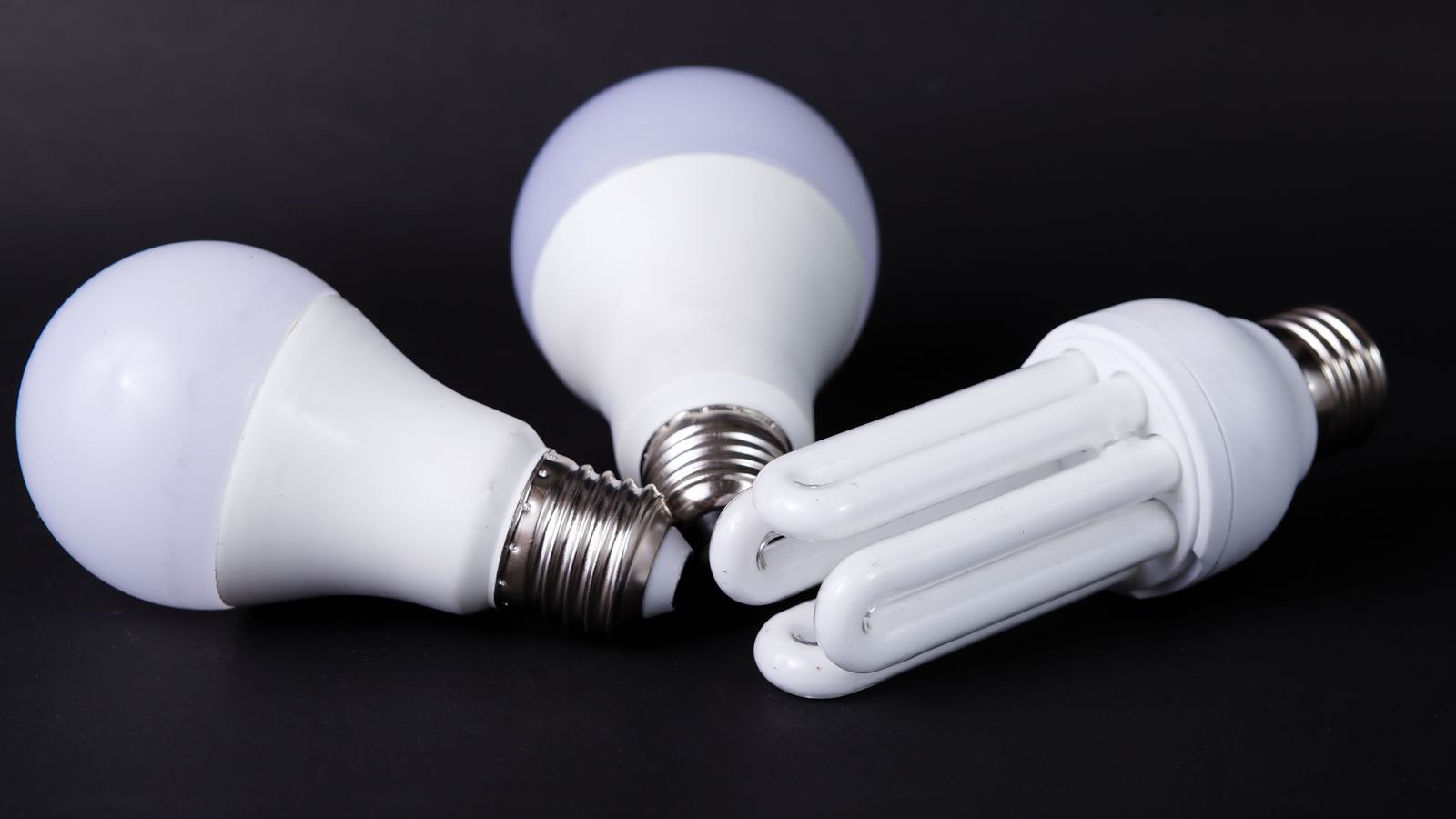
If you are not sure which type you are holding, look at the shape and the printing on the base. Spirals are CFLs, thin glass envelopes with a visible filament are incandescent, small quartz capsules are halogen, and anything with a plastic-and-aluminium body plus a wattage under 15W for normal brightness is an LED.
How to Dispose of Light Bulbs Step by Step
- Wait until the bulb is completely cool. Halogen and incandescent bulbs hold heat for several minutes and can burn you or melt a plastic bag.
- Identify the type before anything else. Sorting first prevents the single most common mistake, which is putting a CFL into the general bin because it looked like an ordinary bulb.
- Separate the mercury-containing bulbs. Put CFLs, tubes, and HID lamps in one box, clearly kept apart from the rest. Keep them upright and unbroken; a cracked CFL becomes a hazardous cleanup instead of a simple drop-off.
- Package intact bulbs for transport. The ideal container is the box the replacement bulb arrived in. Otherwise wrap each bulb in newspaper or bubble wrap and place it in a rigid box. Fluorescent tubes should go back in their sleeve or be taped inside a length of cardboard.
- Wrap bin-safe bulbs before binning. For incandescent and halogen, wrap in paper, seal in a bag, and place the bundle inside a rigid container such as an empty cereal box so the glass cannot pierce the bin liner.
- Find your nearest drop-off point. Most home improvement and hardware chains run free take-back bins for CFLs and tubes near the entrance or the returns desk. Municipal recycling centres and household hazardous waste days accept all types. Search your council or county website for “household hazardous waste” plus your postcode.
- Check for retailer and mail-back programmes. Some lighting brands include a prepaid recycling envelope, and several online services sell prepaid boxes you fill with tubes and post back. These are practical if you have no local facility within reasonable driving distance.
- Take LEDs to e-waste where possible. Bring them alongside old chargers and small appliances on your next e-waste run. The aluminium heat sink and circuit board are genuinely recoverable, while the plastic and glass are not worth much.
- Log the replacement. Note the base type and lumen output of what you removed so the replacement fits first time. When you replace in bulk, choosing long-life models cuts how often you repeat this whole process; the best LED light bulbs typically last many times longer than what they replace.
What to Do If a Bulb Breaks
A broken incandescent, halogen, or LED bulb is a cutting hazard only. Wear gloves, pick up the large pieces, lift fine slivers with folded packing tape, then vacuum the area. Seal everything in a rigid container before it goes in the bin.
A broken CFL or fluorescent tube needs a different routine because of the mercury vapour. Get people and pets out of the room and open a window for at least fifteen minutes before cleaning. Do not vacuum, as that disperses vapour and contaminates the machine. Scoop debris with stiff card, dab the remaining dust with sticky tape or a damp paper towel, and seal every scrap plus the cleaning materials into a screw-top glass jar or a sealed plastic tub. Take the jar to hazardous waste rather than the kerbside bin, and air the room out for a few more hours. If the breakage was on carpet, ventilate the room during the next several vacuuming sessions.
Disposing of Fluorescent Tubes and Ballasts
Linear tubes are the most-overlooked category because garages, basements, and workshops full of them get cleared out all at once. Never snap tubes to fit them in a bin: that is exactly how a whole workshop of mercury ends up airborne. Keep tubes in their cardboard sleeves, or tape several together inside a long box, and take the bundle to a recycling centre in one trip.
Older fixtures may also have a magnetic ballast. Units made decades ago can contain PCBs and must go to hazardous waste, not scrap metal. If you are decommissioning a whole fluorescent fixture, it is often a good moment to switch technology entirely; comparing the best fluorescent light bulbs against LED tube retrofits shows whether a straight replacement or a full changeover makes more sense for your space.
Common Disposal Mistakes
- Putting CFLs in the kerbside glass recycling. Bulb glass is a different composition from bottle glass and contaminates the batch, and CFLs add mercury on top.
- Breaking bulbs deliberately to save bin space. This converts a safe item into a hazard for you and for collection staff.
- Storing dead bulbs loose in a box for years. They knock together and break. Wrap them or box them the day they come out.
- Assuming all bulbs go one way. Households often have four or five technologies at once, and the rules genuinely differ.
- Ignoring the bin bag risk. Even legal-to-bin bulbs must be wrapped so a bag handler is not cut.
Reducing How Often You Dispose of Bulbs
The greenest bulb is the one you never have to throw away. Modern LEDs are rated for tens of thousands of hours, which for a typical living room means years between changes rather than months. Beyond the runtime, check the fixture rating so you are not over-lamping and cooking the bulb early, and avoid enclosed fixtures unless the bulb is explicitly rated for them, because trapped heat destroys drivers.
Dimmers matter too. Pairing a non-dimmable bulb with a dimmer switch causes flicker and premature failure, so match the two deliberately. Where a room is on for many hours a day, the running cost dominates the purchase price, and the best energy efficient light bulbs pay for themselves several times over before they need replacing. If you still keep a few warm-glow fixtures on legacy technology, our look at the best incandescent light bulbs explains where that trade-off still makes sense and what you will be disposing of more often as a result.
Frequently Asked Questions
Can I put LED bulbs in the bin?
In most areas yes, since they contain no mercury. However they hold a small circuit board and recoverable aluminium, so e-waste recycling is preferable where it is available.
Are CFL bulbs really dangerous?
An intact CFL is completely safe to handle. The risk only appears when the tube breaks and mercury vapour escapes, which is why the cleanup routine and the recycling requirement exist.
Where can I recycle bulbs for free?
Large hardware and home improvement retailers commonly host free take-back bins for CFLs and tubes, and municipal recycling centres accept all types. Check your local authority website for the nearest site and its opening times.
Do I need to remove the bulb from a lamp before disposing of the lamp?
Yes. Remove and sort the bulb separately, then handle the lamp body as metal or e-waste depending on its construction.
Final Thoughts
Light bulb disposal comes down to one question: does this bulb contain mercury? If it is a spiral CFL, a fluorescent tube, or an HID lamp, it goes to a drop-off intact and wrapped. Everything else can be binned safely provided you wrap it so nothing gets cut, with e-waste recycling as the better path for LEDs. Keep a small labelled box in the garage or utility cupboard for bulbs awaiting a recycling run, and the whole routine becomes a habit rather than a decision you have to make in the dark under a dead fixture.