Owen Bradley
 A mantel is the one surface in a living room that everyone looks at whether or not you have done anything to it. That makes it the highest-leverage spot in the house for decorating — and the easiest place to end up with a row of objects lined up like a shelf in a shop. The fix is to stop decorating it as a holiday project and start treating it as a permanent arrangement with seasonal layers added on top. Build a solid year-round base once, and dressing it for December becomes a fifteen-minute swap rather than an annual redesign. This walkthrough covers the formula, the exact steps, the fire safety rules that matter, and how to transition the mantel out of the holidays without stripping it bare.
The Formula That Works Every Time
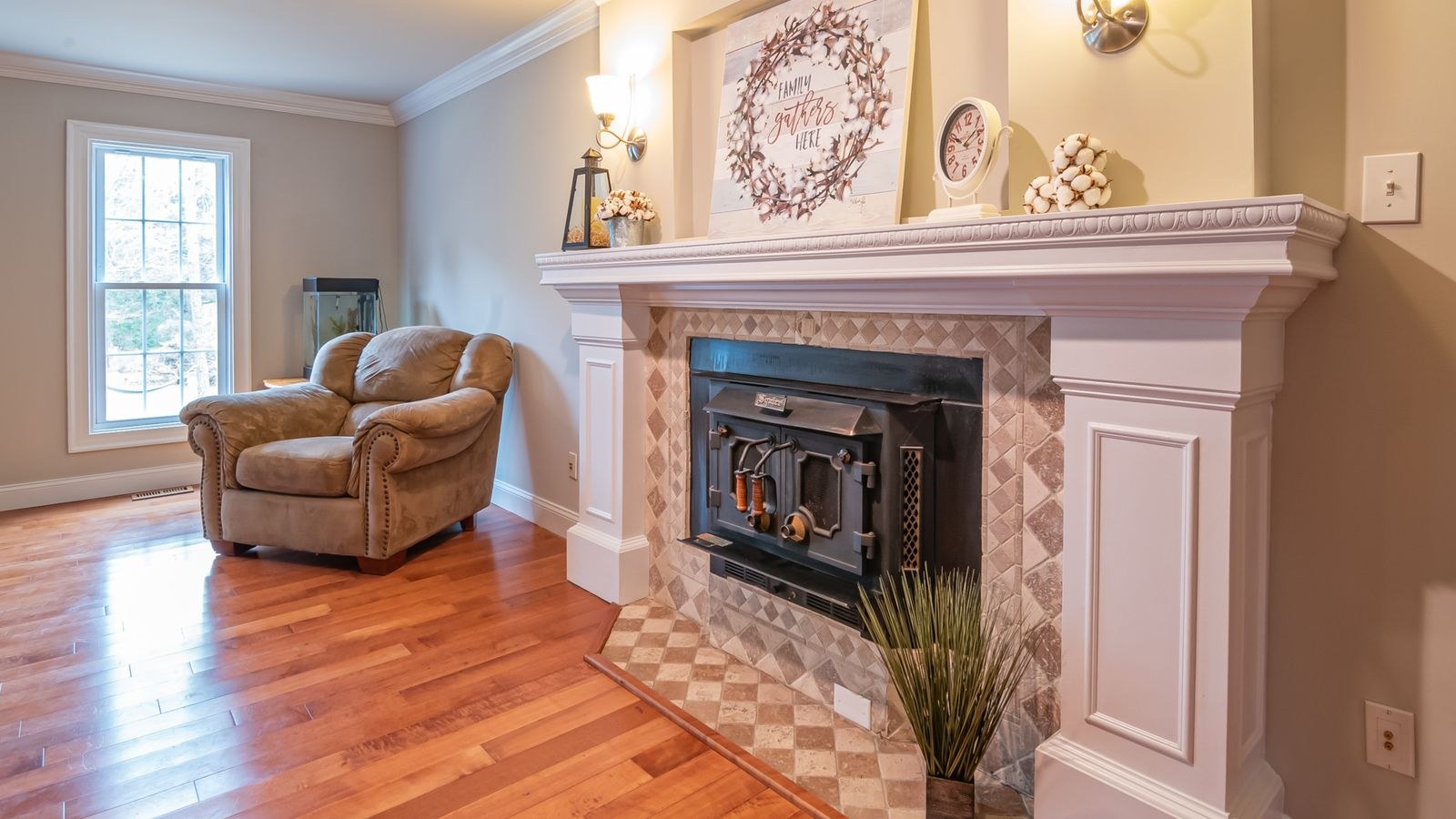
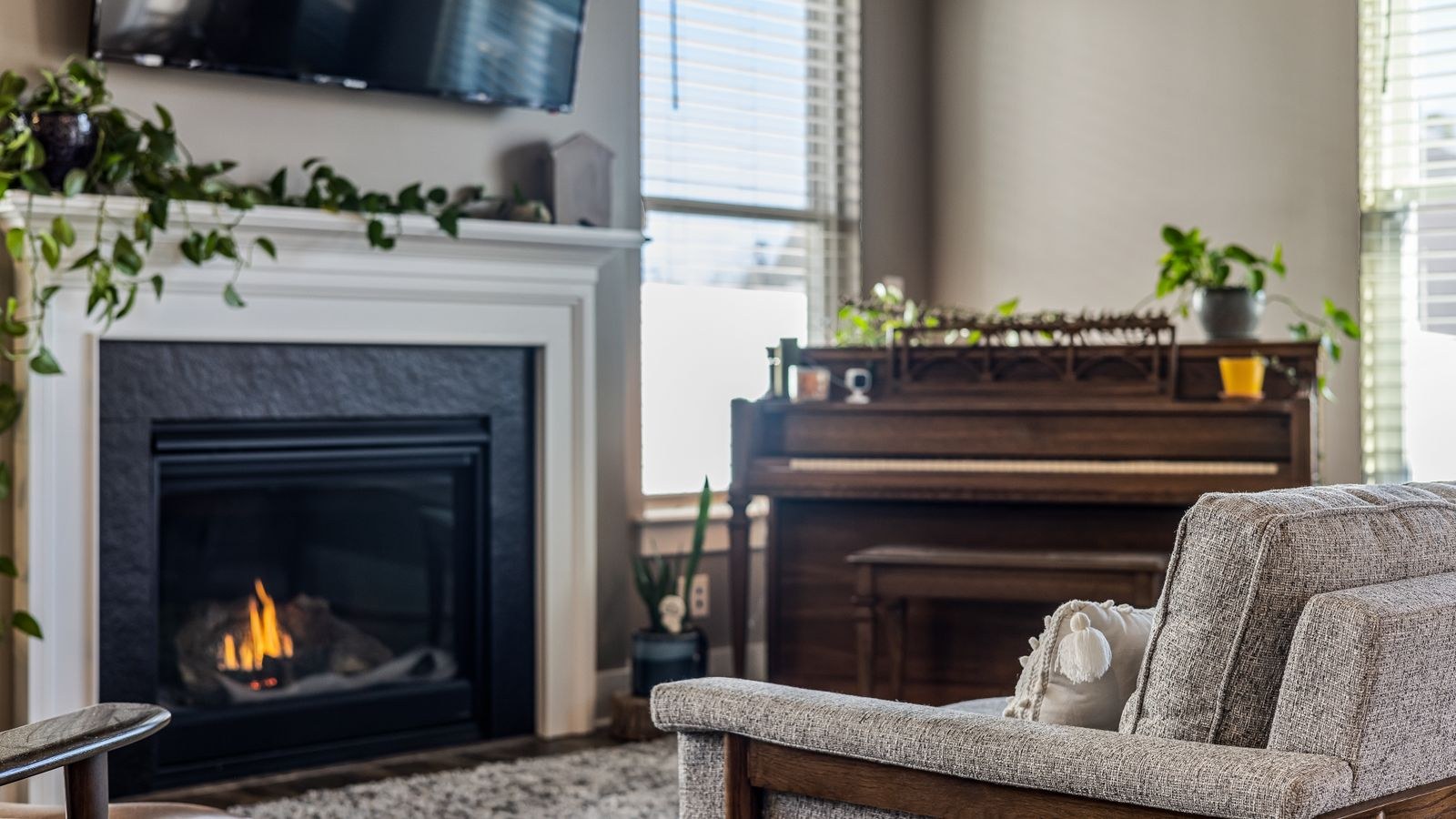
Good mantels follow the same underlying structure regardless of style. There is one anchor — a large piece of art, a mirror, or a television — that occupies the center and establishes the vertical scale. Around it sit two or three height groups at different levels, so the eye moves rather than scanning a flat line. Then there is horizontal flow, something that runs across the surface and connects the groups, usually greenery, a garland, or a run of trailing foliage. Finally, negative space keeps the whole thing from reading as clutter.
The most common failure is symmetry. Perfectly mirrored arrangements look static and slightly formal, and they are surprisingly hard to keep balanced once you add seasonal pieces. Aim instead for asymmetric balance: a taller cluster weighted toward one side, offset by a lower, wider grouping on the other. Visually the two sides carry equal weight without being identical.
Scale the Anchor Correctly
The anchor should be roughly two-thirds to three-quarters of the mantel’s width. Anything smaller floats and makes the mantel look wide and empty; anything wider crowds the ends. If your anchor is a mirror, angle it slightly downward when hanging so it reflects the room rather than the ceiling. If it is a television, plan the arrangement around it rather than pretending it is not there — flanking it with taller objects at each end integrates it far better than trying to hide it.
What You Will Need
- An anchor piece — framed art, a mirror, or an existing wall-mounted screen.
- Three to five height objects: candlesticks, vases, small sculptures, stacked books.
- Greenery, real or high-quality faux, as a garland or loose sprigs.
- String lights rated for indoor use, ideally battery or plug-in LED.
- Command strips or small hooks rated above the weight of anything you hang.
- Stockings and holders if you use them, with weighted bases or clamp-style hangers.
- Felt pads or a runner to protect a stone or painted mantel surface from scratching.
Step-by-Step: Building the Mantel
- Clear it completely. Take everything off, including the anchor if it is easy to move, and wipe the surface down. Decorating around existing objects is how you inherit last year’s mistakes.
- Place the anchor first. Hang or lean the art or mirror and step back to check the scale from across the room, not from arm’s length. Leaning is a legitimate choice on a deep mantel and makes future changes trivial.
- Lay the horizontal layer. Drape greenery across the surface before adding anything else. Let it run unevenly — heavier at one end, trailing over the edge in one or two spots. Perfectly even garland looks like packaging.
- Build the tall group. On one side, place your tallest items — a pair of candlesticks at different heights, or a tall vase with branches. This becomes the visual weight of the arrangement.
- Balance with a low group. On the opposite side, place a wider, shorter cluster: stacked books with a small object on top, a bowl, a lantern. Equal weight, different shape.
- Add depth front to back. Pull one or two items forward toward the mantel’s front edge and push others back toward the wall. A single-file line along the back edge is what makes a mantel look flat.
- Work in odd numbers. Group objects in threes and fives. Even-numbered groups pull the eye into pairs and read as more static.
- Weave in the lights. Tuck string lights into the greenery from the back so the wire disappears and only the points of light show. Run the cord down the least visible side of the fireplace.
- Hang stockings last. Their weight and length change the proportions, so add them once everything else is settled, and use holders or hooks rated well above the loaded weight.
- Edit ruthlessly. Step back, then remove two things. Almost every mantel improves. Leave clear surface between groups so each one reads.
- Photograph it. A phone photo flattens the arrangement into two dimensions and instantly reveals imbalance your eye compensated for in the room.
Lighting the Mantel Well
Light is what makes a mantel read at night, and it is the layer most people underdo. You want small points of warm light distributed through the arrangement rather than one bright source washing over it. Warm white LEDs in the 2200K to 2700K range give the glow people associate with the season; cool white reads harsh against wood and greenery.
For a holiday mantel, a run of miniature lights woven into the garland is the workhorse. Look for something with a fine, dark or copper wire that vanishes into foliage, and ideally a timer function so it comes on at dusk without you thinking about it. Our roundup of the best Christmas lights for indoor trees covers the warm-white options that work equally well on a mantel, and the best LED string lights guide is the place to look for year-round sets you can leave in place after the greenery comes down. If you also style the room’s tree, the best Christmas tree toppers comparison helps keep the scale and finish consistent between the tree and the mantel.
Fire Safety Rules You Should Not Bend
A mantel over a working fireplace is directly above a heat source, and decorations are the most common cause of holiday fires in living rooms. Keep anything flammable — greenery, stockings, ribbon, paper — at least three feet from the firebox opening, and never let a stocking hang low enough to swing in front of it. Dried natural greenery becomes genuinely dangerous within a couple of weeks; check it weekly and replace it when it starts shedding.
Use only lights rated for indoor use and check the wire for cracks or worn insulation before hanging. Do not connect more strings end to end than the manufacturer specifies. Never run a cord under a rug, and never leave lights or candles burning when you leave the room or go to bed. Real candles on a mantel should be in enclosed holders, well clear of greenery, and battery-operated candles are a reasonable substitute in a dense arrangement. Finally, confirm your smoke alarm is working before the season starts.
Transitioning After the Holidays
The reason January mantels look bleak is that people remove everything at once, leaving the bare base that was never styled properly. Instead, take away only the explicitly seasonal items — stockings, red ribbon, ornaments — and keep the anchor, the height groups, and the greenery. Swap evergreen for eucalyptus or dried branches, and the same arrangement carries into late winter without looking like a leftover.
From there, seasonal rotation is a swap of the horizontal layer and one or two accent objects. Spring gets branches and lighter ceramics, summer gets minimal styling and more negative space, autumn gets warmer tones and denser texture. The anchor and the structure never move, which is what makes the whole thing sustainable. Because the mantel sits above the main seating area, check that the arrangement still reads well from the sofa — our roundups of the best sofas and best living room chairs are worth a look if the seating layout is fighting the focal point rather than framing it.
Common Mistakes
- Perfect symmetry. It reads static and is hard to maintain once seasonal pieces arrive.
- An undersized anchor. Small art above a wide mantel makes the whole wall look empty.
- Everything at the same height. Vary levels or the arrangement flattens into a row.
- Objects pushed to the back edge. Depth front to back is what creates dimension.
- Visible cords. Tuck wires into greenery and run the lead down the least-seen side.
- Overfilling. Negative space is part of the composition, not wasted room.
Frequently Asked Questions
How do I decorate a mantel with a TV above it?
Treat the screen as the anchor. Flank it with taller objects at each end to balance its rectangular mass, keep the arrangement low and horizontal so it does not intrude on the picture, and skip anything that reflects glare.
Should mantel decor be symmetrical?
Asymmetric balance usually looks better and is more forgiving. Weight one side with height and the other with width so the two read as equal without mirroring each other.
How far should decorations be from the fireplace?
Keep flammable items at least three feet from the firebox opening, and never let stockings or ribbon hang in front of it while a fire is burning.
Can I leave string lights on the mantel year-round?
Yes, if they are warm white with a discreet wire and woven into non-seasonal greenery. Swap the evergreen for eucalyptus and the lights stop reading as holiday decor.
How many objects should a mantel hold?
Fewer than you expect. An anchor plus two or three groups is usually plenty. If it looks busy in a phone photo, remove something.
Final Thoughts
A mantel is worth getting right because it works all year, not just in December. Set a properly scaled anchor, build asymmetric height groups on either side, run a horizontal layer to tie them together, add depth front to back, and leave breathing room between the clusters. Layer holiday pieces on top of that structure rather than starting over each winter, keep everything flammable well clear of the firebox, and when the season ends remove only the explicitly festive items. What you are left with is a mantel that looks composed in January, not abandoned.