 Owen Bradley
 A wet-dry shop vac is the appliance you are most grateful for and least likely to clean. You suck up a flooded basement, a burst washing machine hose or the runoff from a tile job, roll the machine back into the corner, and forget about it. Two weeks later the garage smells like a pond. Water left in the tank grows bacteria and mold within days, and a foam sleeve that dried folded against itself turns into a permanent source of that musty odor. Cleaning a shop vac after a water job takes twenty minutes if you do it the same day and an hour of scrubbing if you leave it. This guide walks through the whole process, from dumping the tank to drying the float, plus what to do if the smell has already set in.
Why Wet Jobs Need Different Treatment
Dry vacuuming leaves dust, which is inert and patient. Wet vacuuming leaves standing water mixed with whatever you picked up — soil, drywall slurry, detergent, grease, sewage in the worst cases. That mixture is a nutrient soup, and the inside of a sealed plastic drum sitting in a warm garage is close to ideal growing conditions. Bacteria colonise it within 24 to 48 hours, and mold follows on any damp porous surface, which in a shop vac means the foam filter sleeve and the underside of the lid gasket.
The second reason is mechanical. Most wet-dry vacs use a float mechanism: a plastic ball or cage in a housing under the lid that rises with the water level and seals the motor inlet when the tank fills. Grit that dries around that float jams it, and a float that cannot rise lets water reach the motor. That single failure ends more shop vacs than anything else.
What You Need
- A drain, utility sink, or somewhere outdoors you can legally dump dirty water.
- A garden hose or shower head for rinsing the drum.
- Dish soap and a soft brush or sponge.
- White vinegar or a dilute bleach solution for deodorising.
- Old towels and a spot with good airflow.
- Gloves and eye protection if the water contained anything unpleasant.
Step-by-Step: Cleaning the Shop Vac
- Unplug the vacuum before you touch anything. Coil the cord and keep the plug end away from the work area. Never open, tip or rinse a machine that is still connected to power.
- Drain the tank the same day. Use the drain port at the base if your model has one, which is far easier than lifting a heavy drum. If not, unclip the lid, set it upside down on a towel so the motor housing stays dry, and tip the tank into a drain. Do not empty water containing solvents, paint or chemicals into a storm drain.
- Remove and set aside the lid assembly. Place it motor-side up so nothing runs into the intake. The lid holds the motor, the float and usually the filter, so it needs to stay dry through the parts of the job that involve hosing.
- Take out the filter and identify what you have. Wet jobs should be run with a foam sleeve, not a pleated paper or cartridge filter. If you accidentally left a paper cartridge in place and it got soaked, it is finished — a wet paper filter loses its structure and will never filter properly again.
- Wash the foam sleeve. Rinse it under warm running water from the inside outward so debris exits the way it came in. Work in a little dish soap, squeeze rather than wring so you do not tear it, and rinse until the water runs clear. Squeeze out the excess and hang it to dry.
- Scrub the drum. Rinse it out with a hose, then wash the inside walls and base with warm soapy water and a sponge. Pay attention to the seam at the bottom where sludge collects and to the hose inlet port, which traps grit you cannot see from above.
- Deodorise before the smell sets in. Fill the drum with a few inches of water plus a cup of white vinegar, or a very dilute bleach solution if the job involved sewage or standing floodwater. Swirl it around the walls, let it stand fifteen minutes, then dump and rinse thoroughly. Never mix bleach and vinegar.
- Clean and free the float mechanism. Look under the lid for the plastic cage or ball. Rinse away grit with a gentle stream of water, keeping the spray away from the motor vents, and check by hand that the float rises and falls freely. A stuck float is the most common cause of a shop vac drowning its own motor.
- Wipe the lid gasket and the rim. Run a damp cloth around the rubber seal on the lid and the matching rim on the drum, then dry both. Grit on that seal breaks the airtight fit and costs you a surprising amount of suction.
- Flush the hose and accessories. Run water through the hose from both ends until it comes out clear, then hang it in a loop so it drains rather than holding a puddle in the low point. Rinse the wands and nozzles too — they hold more sludge than you expect.
- Dry everything completely, then store it open. Leave the drum upside down or tilted, the foam sleeve hanging, and the hose draped over a hook. Give all of it at least 24 hours in a ventilated spot. Once dry, store the vacuum with the lid resting loosely on the drum rather than clamped shut, so air keeps moving through it.
Filters: Which One for Which Job
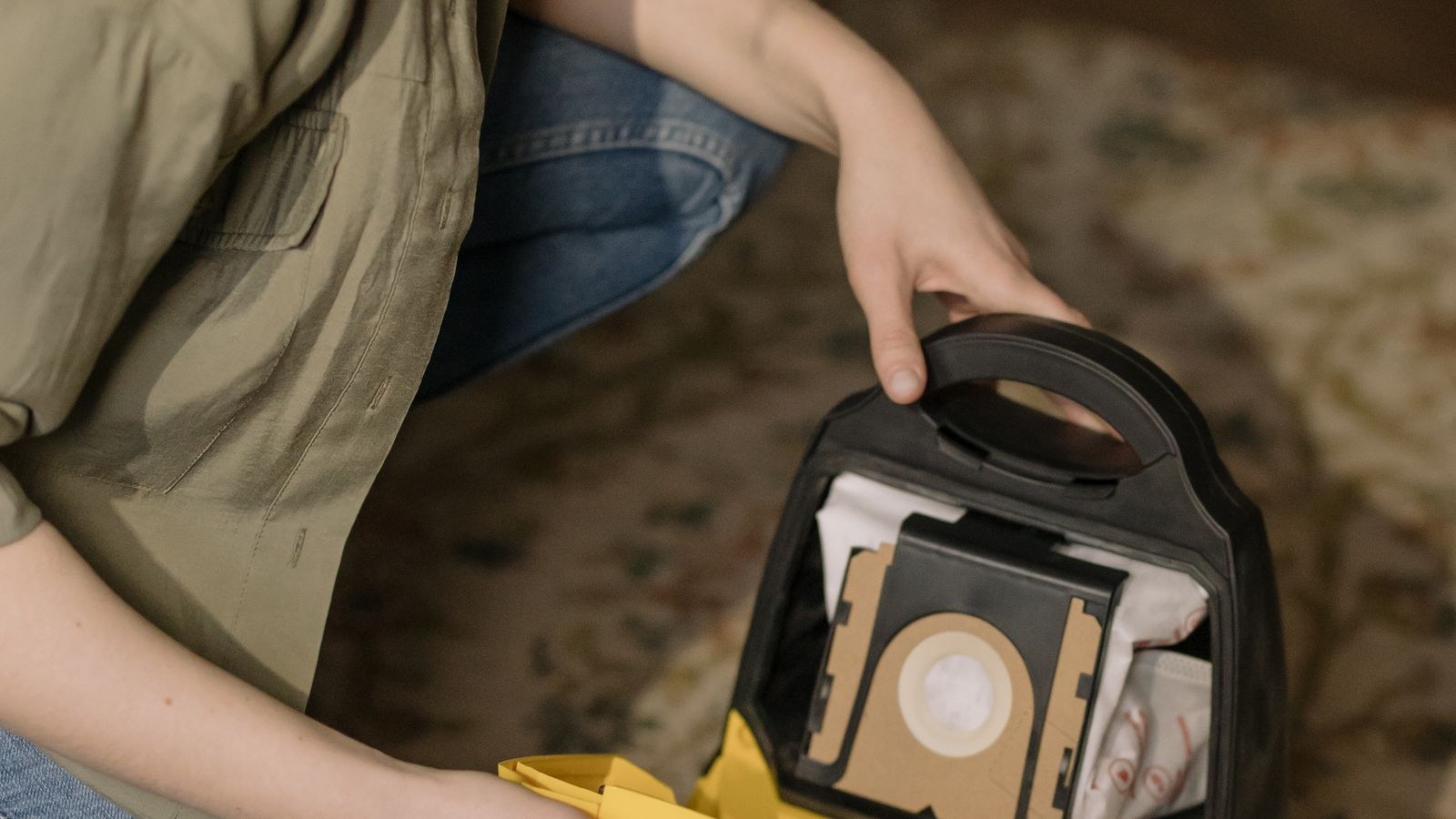
Shop vacs use different filters for wet and dry work, and mixing them up causes most of the performance complaints people blame on the motor. The foam sleeve is the wet-pickup filter; it slides over the cage and stops splash reaching the motor while letting water pass. The pleated cartridge is the dry filter; it traps fine dust and must be completely dry to work. Some machines add a disposable collection bag for dry debris, which should always be removed before a wet job.
The rule is simple: foam for water, cartridge for dust, and never both at once. After every wet job, make sure the cartridge is fully dry before you reinstall it for dry work, because even slightly damp pleats clog instantly and choke airflow. Cartridge filters are also the part people neglect longest — the same principles that apply to household units are covered in our walkthrough on how to clean a vacuum HEPA filter, including which media survive washing and which must be replaced outright.
Killing a Smell That Has Already Set In
If the machine already smells, a rinse will not fix it, because the odor lives in biofilm on the drum walls and inside the foam. Wash the drum with hot soapy water and a stiff brush, then treat it with a dilute bleach solution and leave it to stand for thirty minutes before rinsing. Replace the foam sleeve rather than trying to salvage it; foam is cheap and once mold is established in the cell structure you will never fully wash it out.
Check the hose too. A hose stored with water sitting in its low point develops its own colony, and because you cannot see inside it, it often turns out to be the real source. Flush it with hot soapy water, then a vinegar rinse, then hang it fully open to dry. Finally, if the odor persists after all that, moisture may have reached the motor housing insulation, which is a sign the float failed at some point and the machine needs checking before further use.
Common Mistakes
- Leaving water in the tank overnight. Everything else on this list is downstream of that one habit.
- Running a paper cartridge on a wet pickup. It disintegrates and passes debris straight toward the motor.
- Storing the vacuum sealed shut. A closed drum traps residual moisture and guarantees a smell.
- Ignoring the float. Grit around the float housing is what turns a small overfill into a dead motor.
- Reinstalling a damp foam sleeve. It restricts airflow, and damp foam is where mold starts.
- Hosing the motor housing. Water in the motor vents does immediate, unrepairable damage.
When to Repair and When to Replace
A shop vac is mostly a drum, a motor and a fan, so most faults are cheap to fix. Filters, foam sleeves, hoses, gaskets and float assemblies are all inexpensive replacement parts and worth buying rather than improvising. What is not worth fixing is a motor that has taken water, a cracked drum that no longer seals, or a machine that trips a breaker or smells of burning.
If you are replacing the unit, match it to the work you actually do. Our roundup of the best wet and dry vacuum cleaners covers drum capacity, drain port design and how easy each model is to clean out afterwards, which matters far more day to day than peak horsepower claims. For water extraction from carpet and upholstery rather than hard floors, the machines in our best vacuum carpet cleaners comparison are a better tool for the job. For general household dust, a shop vac is overkill — see the best vacuum cleaners list, or the best bagged vacuums if you want the cleanest possible emptying process for fine debris.
Frequently Asked Questions
Can I put bleach in the tank?
Yes, heavily diluted — roughly a quarter cup per gallon of water — for jobs that involved floodwater or sewage. Swirl it, let it sit, then rinse thoroughly. Never combine it with vinegar or any ammonia-based cleaner, and never run the motor with bleach solution in the drum.
How soon after a wet job should I clean it?
The same day, ideally within a few hours. Bacteria establish within 24 to 48 hours in standing water, and once biofilm forms on the drum walls a simple rinse no longer removes the smell.
Do I need a filter at all for wet pickup?
Many models allow filterless wet pickup, but a foam sleeve is still worth using because it stops splash and debris reaching the motor inlet. Check your manual, and never run a paper cartridge for wet work under any circumstances.
Why has suction dropped since the wet job?
Usually a damp or clogged filter, a stuck float partially blocking the inlet, grit on the lid gasket breaking the seal, or water still sitting in the hose. Work through those four in order before suspecting the motor.
Final Thoughts
A shop vac will outlast almost every other tool in the garage if you give it twenty minutes after each wet job. Drain the tank the same day, wash and dry the foam sleeve, scrub and deodorise the drum, free the float, flush the hose, and store everything open so air keeps moving. Keep the wet and dry filters strictly separate and never leave standing water in the drum overnight. Do that consistently and the musty smell never arrives, the float never jams, and the machine is ready the next time something floods — which, going by experience, will be sooner in 2026 than you would like.