
 Hannah Lindqvist
A workstation deserves a router that keeps pace with heavy uploads, video calls, and several devices pulling bandwidth at once — not a bargain box built for casual browsing. The best workstation routers combine business-grade firmware, real VPN support, and ports fast enough to move large files without choking your network. This guide breaks down what actually separates a workstation-ready router from a consumer model, then walks through 10 options for 2026 grouped by budget, throughput needs, and whether you want wired-only reliability or built-in Wi-Fi. By the end, you’ll know exactly which spec to prioritize for your own setup instead of guessing from a spec sheet.
Quick answer: If you only have time to pick one, our top pick among the best workstation routers is the Ubiquiti EdgeRouter 4 — our #1 rated choice for 2026, thanks to prosumer-grade routing, four Gigabit ports, and a track record in home offices and small studios that few budget routers can match. See the full ranked comparison, alternatives, and buying advice below.

Pros
- Routes up to 3.4 million packets per second with a 4Gbps line rate, driven by a 4-core 1GHz MIPS64 processor
- Combines 3 Gigabit Ethernet ports with a dedicated SFP port, so a fiber uplink does not have to share a copper port
- Fanless internal power supply draws a maximum of 13 watts, keeping heat and noise low in a closet or rack
- Desk, wall, and rack mount options let it fit small-office and home-lab setups without extra hardware
Cons
- Only 3 Gigabit Ethernet LAN/WAN ports plus 1 SFP, fewer ports than switch-style routers offering 5 or 8
- EdgeOS configuration is command-line and enterprise-oriented, a steeper learning curve than consumer mesh routers
- No built-in Wi-Fi radio, so wireless coverage requires pairing with a separate access point

Pros
- 12 x 10G SFP+ ports plus 2 x 25G SFP28 ports cover both current and higher-throughput links
- Single tunnel processing reaches up to 3.4 Gbps for demanding VPN or BGP workloads
- Dual redundant power supplies keep the router running if one PSU fails
- 4 GB of onboard RAM supports RouterOS v6, expanding to 4GB ECC under RouterOS v7
- Dual cooling fans plus CPU, PCB temperature, and voltage monitoring built into the hardware
Cons
- No Wi-Fi radio onboard; this is a wired SFP+/SFP28 router only
- High port-count SFP+/SFP28 design targets networking professionals, not plug-and-play home use
- Dimensions (443 x 224 x 44 mm) and rack-style build need proper mounting hardware or shelving
Onboard memory is 4 GB of RAM under RouterOS v6, expandable to 4 GB ECC under RouterOS v7. Two AC power inputs provide redundancy, and two internal fans keep the unit cooled during sustained high-throughput use.
- RAM: 4 GB (RouterOS v6) or 4 GB ECC (RouterOS v7)
- Power inputs: 2, for dual redundant PSU operation
- Cooling: 2 onboard fans
- Monitoring: built-in CPU, PCB temperature, and voltage sensors
Dual power inputs mean a single PSU or feed failure doesn't take the router offline, useful for always-on network cores.

Pros
- 4804 Mbps available on 5 GHz thanks to a four-stream HE160 radio, alongside 574 Mbps on 2.4 GHz
- Six external antennas driven by high-power front-end modules push usable signal into far bedrooms and kitchens
- OFDMA and MU-MIMO together quadruple average throughput when dozens of devices are active at once
- A USB 3.0 port turns an external drive into shared media storage or a private cloud without extra hardware
- OneMesh support lets a compatible extender join as one roaming network rather than appearing as a second name
Cons
- All WAN and LAN ports are Gigabit, so a 2 Gbps fibre plan cannot be used anywhere near its full speed
- The included security suite covers basic scanning and parental controls, with the advanced tier behind a subscription
- Rated for 0 to 40 degrees Celsius operation, so an unventilated cupboard in summer can push it beyond spec
The AX5400 figure breaks down as 4804 Mbps on 5 GHz plus 574 Mbps on 2.4 GHz. The 5 GHz side uses a four-transmit, four-receive arrangement with 160 MHz channel width, which is what produces the high number.
- Six antennas plus beamforming concentrate signal towards each connected device
- High-power front-end modules boost transmit strength within regulatory limits
- OFDMA lets one transmission carry data for several devices at once
- MU-MIMO serves multiple clients simultaneously rather than in sequence
- A large vented top surface, 167 square centimetres of it, keeps the radios from throttling
Real-world coverage in a three-bedroom house is typically strong throughout, with 2.4 GHz reaching a garage or garden. The 160 MHz channels that produce the headline speed are also the ones most likely to clash with radar detection outdoors, so speeds vary by location.

Pros
- RB4011 series - amazingly powerful routers with ten Gigabit ports, SFP+
- The RB4011 uses a quad core Cortex A15 CPU, same as in our carrier
- The RB4011iGS+5HacQ2HnD-IN is equipped with 1GB of RAM, can provide PoE
Cons
- Verifying dimensional clearance for MikroTik RB4011iGS5Hac prior to setup is recommended
- Routine care preserves surface finish appearance for MikroTik RB4011iGS5Hac over time

Pros
- Five gigabit ports split as 1 fixed WAN, 2 configurable WAN/LAN and 2 fixed LAN
- A USB port accepts a 4G or 3G modem as a backup uplink when the main line drops
- Handles up to 20 LAN-to-LAN IPsec tunnels plus 16 each of OpenVPN, L2TP and PPTP
- Omada SDN management through a hardware, software or cloud controller
- SPI firewall with DoS defence and filtering by IP, MAC and URL
Cons
- No wireless radio at all, so access points have to be bought and cabled separately
- OpenVPN configuration requires an Omada SDN controller rather than being available from the standalone interface
- Five ports with no power over Ethernet output, so anything beyond a handful of wired devices needs a separate switch

Pros
- Converts a corded Dremel rotary tool into a benchtop wood shaper and router table
- Compact 8" x 6" worktable stores easily when not mounted
- Depth adjustment screw lets you dial in a precise cut depth
- Compatible with Dremel models 100, 200, 3000, 4000, 8220, 8240, 8250 and 8260
- Backed by a 1-year limited warranty on the attachment
Cons
- Corded Dremel tools only; not built for the full cordless lineup
- 8" x 6" table suits light-duty detail work, not larger workpieces
- Requires a separate compatible Dremel rotary tool, which is not included
The attachment provides a compact 8" x 6" worktable and fits Dremel rotary tool models 100, 200, 3000, 4000, 8220, 8240, 8250 and 8260. It mounts to any tabletop or workbench and is compact enough to store away between projects.
- 8" x 6" worktable surface
- Fits Dremel models 100, 200, 3000, 4000, 8220, 8240, 8250, 8260
- Mounts to any flat tabletop or bench
Because the table is sized for light-duty detail work, it suits slotting, edge finishing and grooving on smaller pieces rather than standing in for a full-size stationary router table on larger boards.

Pros
- Combined throughput up to 2882 Mbps on 5GHz plus 688 Mbps on 2.4GHz across dual bands using Wi-Fi 7's Multi-Link Operation
- Two 2.5 Gbps ports (one WAN/LAN switchable) plus three 1 Gbps LAN ports break past the single-gigabit bottleneck of older routers
- 2.0GHz quad-core processor and 4 internal antennas with beamforming target coverage up to 2,000 sq. ft. for up to 60 connected devices
- EasyMesh compatibility lets it pair with additional routers or extenders to expand coverage without replacing the whole system
- USB 3.0 port adds local network storage or printer sharing that many entry routers skip entirely
Cons
- Dual-band only, so it does not include the 6GHz band found on tri-band Wi-Fi 7 routers, reducing available spectrum in congested networks
- 2,000 sq. ft. coverage figure is on the smaller end for whole-home Wi-Fi 7 systems, so larger homes may need an EasyMesh extender
- HomeShield's advanced security and parental control features typically require an ongoing subscription beyond the basic free tier
The Archer BE230 is a dual-band BE3600-class Wi-Fi 7 router with combined speeds up to 2882 Mbps on 5GHz and 688 Mbps on 2.4GHz, using 4-stream Multi-Link Operation to keep connections stable as devices roam between bands. Four internal antennas with beamforming push signal toward hard-to-reach corners, with coverage figures up to 2,000 sq. ft. and support for up to 60 connected devices at once.
- Combined throughput up to 2882 Mbps (5GHz) and 688 Mbps (2.4GHz)
- 4-stream Multi-Link Operation for Wi-Fi 7 devices
- Coverage figures up to 2,000 sq. ft. for up to 60 devices
- 4K-QAM modulation for added data capacity per stream
Because this is a dual-band model, it skips the 6GHz band found on tri-band Wi-Fi 7 routers, which matters most in dense apartment buildings with heavy 5GHz interference from neighboring networks.

Pros
- Total bandwidth of 6.5 Gbps across 2.4GHz and 5GHz bands with 6 spatial streams
- Two 2.5 Gbps ports (WAN/LAN and LAN) plus three 1 Gbps LAN ports
- Rated coverage up to 2,400 sq ft and 90 simultaneously connected devices
- USB 3.0 port for network-attached storage or printer sharing
- WPA3 encryption plus a separate managed network for IoT devices
Cons
- Dual-band design only, with no dedicated 6GHz band despite the Wi-Fi 7 label
- Full 5764 Mbps and 6.5 Gbps figures are only reached with Wi-Fi 7 client devices; older phones and laptops connect at lower legacy speeds
- Deeper security scanning and remote management run through the cloud-connected Tether app rather than working fully offline
This dual-band Wi-Fi 7 router combines a 5764 Mbps 5GHz band with a 688 Mbps 2.4GHz band for 6.5 Gbps of combined bandwidth across 6 spatial streams.
- Rated coverage of up to 2,400 sq ft with 6 external antennas and beamforming
- Supports up to 90 simultaneously connected devices
- Multi-Link Operation combines both bands for lower latency on supported clients
Because this is a dual-band design rather than tri-band, there is no dedicated 6GHz lane; devices without Wi-Fi 7 support fall back to standard 5GHz or 2.4GHz speeds rather than the peak combined figure. For a typical single-floor or small two-floor home, the antenna layout and beamforming keep signal consistent across rooms, though a very large multi-floor house may still benefit from a mesh add-on at the edges of the stated coverage area.

Pros
- 26 x 16 inch MDF surface gives enough room to guide long workpieces past the bit
- 24 inch fence with adjustable MDF face plates supports tall stock without tipping
- Dual-sided latch storage keeps router bits organized in one case instead of loose in a drawer
- Above-table height adjustment lets you set bit depth without reaching underneath the table
- Mounting plate fits SKIL, Bosch, Porter Cable, DeWalt, Ridgid and Ryobi routers, not just SKIL's own
Cons
- Router is sold separately, so this is only the table and fence, not a complete routing setup
- Table material is MDF rather than metal, so it needs care around moisture and heavy impact
- Benchtop format still needs a stable bench or stand underneath, none is included
The tabletop measures 26 x 16 inches of smooth MDF, large enough to support long workpieces as they pass the bit. A durable aluminum miter gauge slot and router mounting plate keep cuts aligned, while the 24 inch fence includes adjustable MDF face plates that support taller stock.
- 26 x 16 inch MDF surface provides a stable, flat routing area
- 24 inch fence with adjustable face plates guides longer or taller workpieces
- Two adjustable featherboards attach to the fence and table for extra control and kickback protection
Overall tool height is listed at 1 inch for the mounting plate assembly, keeping the router bit close to the table surface for precise depth control.
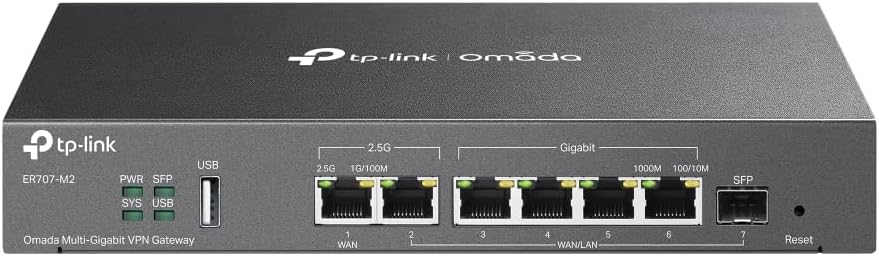
Pros
- Handles up to 500,000 concurrent sessions and 1,000+ clients, suited to small offices rather than a single household
- Two 2.5 Gbps WAN ports plus a Gigabit SFP port allow multi-gig internet and fiber uplinks on the same box
- Supports up to 100 site-to-site IPsec tunnels alongside OpenVPN, L2TP, and PPTP for remote access
- Backed by a 5-year warranty with technical support staffed 6am-6pm PST on weekdays
- USB 2.0 port adds LTE failover or attached storage without extra hardware
Cons
- No built-in Wi-Fi, so a separate access point is required for wireless coverage
- Omada SDN features work best alongside other Omada hardware, and the configuration depth may exceed a typical home setup
- Only one Gigabit SFP slot, so a single fiber uplink option remains once the multi-gig WAN ports are in use
What Makes the Best Workstation Routers Different From a Home Router
Most routers bundled with a cable plan are built to handle a handful of phones and a smart TV, not a workstation pushing large file transfers, cloud backups, and video calls at the same time. Before you compare specific models, it helps to know which specs actually matter for a demanding home office or small studio setup.
Throughput and Multi-Gig Ports
If you upload large project files or sync footage to the cloud daily, port speed changes how long you wait. A router with 2.5G or higher WAN ports moves data noticeably faster than older Gigabit-only hardware once you’re paying for a fiber plan above 500 Mbps. You don’t need multi-gig speeds for basic email and browsing, but it stops being optional once your workstation depends on fast uploads.
VPN and Firewall Features
A workstation router should run a real stateful firewall and support VPN tunnels without needing extra hardware bolted on. This matters even more if you connect to a company network remotely or handle client data that needs to stay encrypted in transit. If VPN support is your main priority, our guide to the best routers with VPN compares tunnel speeds and protocol support across more models.
Uptime and Build Quality
Business-grade routers are built to stay online for months at a stretch, with firmware that gets regular security patches rather than being abandoned after a year. That reliability is worth paying for once a dropped connection means a missed deadline instead of a paused video. Look at how long a manufacturer has been shipping updates for a given model before you commit.
Wired-Only vs Wi-Fi Built In
Some of the most capable workstation routers skip wireless entirely and expect you to pair them with a separate access point, which keeps the routing hardware focused on one job. Others bundle Wi-Fi directly into the router, which is simpler to set up if your workstation and a few other devices all share one room. Neither approach is wrong; it just depends on whether you’d rather manage one box or split routing and Wi-Fi across two.
Device Count and NAT Session Limits
A workstation rarely sits alone on a network. Between a desktop, a laptop, a phone, a printer, and maybe a smart speaker, you can easily have a dozen devices open at once, each holding multiple active connections. Cheaper routers cap out on NAT sessions faster than their marketing suggests, which shows up as random slowdowns during video calls or large downloads. Business-grade routers publish real session limits, so it’s worth checking that number instead of assuming “supports many devices” means your setup is covered.
Best Workstation Routers by Setup and Budget
Rather than reviewing every spec sheet line by line, here’s how these 10 picks split by the situation you’re actually shopping for.
Best Overall for a Home Office
The Ubiquiti EdgeRouter 4 earns the top spot because it balances price and capability better than almost anything else on this list. You get four Gigabit ports, advanced routing features usually reserved for enterprise gear, and a price backed by a 4.6 rating across 942 reviews. It’s not the easiest router to configure out of the box, so it suits buyers comfortable with a slightly steeper learning curve in exchange for real control.
Best for Heavy Multi-Gig Workloads
If your workstation regularly moves large files or you’re running a small server rack alongside it, the Mikrotik CCR2004 Ethernet Router is built for that load. Its multiple 10G SFP+ ports handle traffic that would bottleneck a standard Gigabit router, and it’s priced for people who already know they need the headroom rather than casual buyers.
Best Balanced Business Router
The MikroTik RB4011 pairs solid Gigabit routing with built-in dual-band Wi-Fi, so you’re not forced to buy a separate access point. It sits above entry-level routers but well under enterprise pricing, making it a fair middle ground if you want RouterOS flexibility without the CCR2004’s higher price tag. Shoppers weighing options closer to $200 should also compare our best routers under $200 roundup before deciding.
Best Budget VPN Router Under $50
Not every workstation needs enterprise horsepower. The TP-Link ER605 covers SPI firewall protection, VPN tunnels, and multiple WAN ports for load balancing at. It’s the most sensible pick if you’re setting up a first home office and don’t want to overspend on features you won’t use yet — check our best routers under $50 list for more options in the same price bracket.
Best Multi-Gig VPN Router
The TP-Link ER707-M2 steps up to dual 2.5 Gigabit WAN ports while keeping Omada SDN integration and VPN support intact. It’s a strong option if your internet plan already exceeds standard Gigabit speeds and you don’t want the router itself to become the bottleneck during heavy uploads.
Best Wireless Option for a Workstation That Needs Wi-Fi
If your setup includes a laptop, a tablet, and a phone alongside a wired desktop, the TP-Link Archer AX73 brings WiFi 6 speeds and long-range coverage without needing a separate wireless access point. With a 4.5 rating across thousands of reviews, it’s a dependable choice for a mixed wired-and-wireless office. For more options built primarily around wireless performance, see our best wireless routers guide.
Best Wi-Fi 7 Pick for Larger Office Coverage
Working from a larger house or a converted garage studio changes what you need from Wi-Fi. The TP-Link BE6500 covers up to 2,400 square feet and up to 90 devices, with dual 2.5Gbps ports so wireless speed doesn’t get capped by a slower wired connection behind it. It costs more upfront, but it saves you from needing a second access point in a larger space.
Best Wi-Fi 7 Router for Future-Proofing on a Budget
If you like the idea of newer Wi-Fi 7 standards but don’t need the bigger coverage numbers, the TP-Link Archer BE230 gets you there for less. It’s a 4-stream router with a 2.0 GHz quad-core processor, EasyMesh support for adding satellite units later, and a price that undercuts most Wi-Fi 7 routers by a wide margin. It’s a sensible pick if your workstation setup will grow over the next couple of years and you don’t want to replace the router again soon.
Mistakes to Avoid When Buying a Workstation Router
A few buying habits quietly undercut the router you just paid for. Watch for these before you check out.
- Confusing networking routers with rotary tool router tables. Searching “router” on Amazon also surfaces woodworking equipment; double-check the listing photos and specs before you compare prices.
- Buying based on WAN port count alone. A router can list several WAN ports and still bottleneck at Gigabit speeds if none of them support 2.5G or higher.
- Skipping the VPN throughput number. Some routers advertise VPN support but only push a fraction of your internet speed once encryption is running.
- Ignoring firmware update history. A router that hasn’t seen a security patch in over a year is a real risk for a workstation handling sensitive files.
- Assuming a pricier router is automatically more reliable. Reviews and reported uptime matter more than the price tag alone — compare specs before deciding.
- Forgetting about NAT session and device limits. A router marketed for “home use” may struggle once your workstation, smart devices, and guest network are all active together.
Frequently Asked Questions
Do I need a business-grade router for a home office?
Not always, but if your workstation depends on stable uploads, VPN access, or multiple devices competing for bandwidth, a business-grade router pays off in fewer dropped connections. A casual single-device setup can often get by with a simpler consumer router.
Is a wired-only router better than one with built-in Wi-Fi?
Wired-only routers dedicate all their processing power to routing traffic, which can mean better performance under heavy load. A router with built-in Wi-Fi is simpler to set up if you don’t want to manage a separate access point, so the right choice depends on how many wireless devices you actually have.
How much should I spend on a workstation router?
Around $50 to $90 covers a capable router with VPN support for most home offices, as several picks on this list show. Spend closer to $200 to $500 if you need multi-gig ports or enterprise routing features for a heavier workload. Going higher than that usually only makes sense once you’re supporting a small team rather than a single desk.
Can a wireless router handle VPN and multi-gig speeds?
Some can, but check the specific model’s VPN throughput rating rather than assuming Wi-Fi speed and VPN speed scale together. Many wireless routers slow down noticeably once encryption is turned on, even if their advertised Wi-Fi speed looks impressive.
What’s the difference between a router and a router table?
A networking router directs internet traffic between your devices and your provider. A router table is a woodworking accessory that holds a rotary cutting tool for shaping edges. They share a name but nothing else, so it’s worth double-checking a listing before you buy.


