 Hannah Lindqvist
Picking the best BE routers can feel confusing once you notice every box says “Wi-Fi 7” but the numbers (BE3600, BE9300, BE10000) look like a different language. “BE” is Wi-Fi’s newest standard, and it changes how fast your devices connect, how many can connect at once, and how well your network handles 4K streaming, gaming, and video calls at the same time. Below you’ll find our top 10 picks for 2026, a quick answer for people who just want a solid recommendation, and a buying guide that explains what actually matters before you spend your money.
Quick answer: For most people in 2026, the best BE routers choice is the TP-Link BE6500 (Archer BE400) — our #1 rated pick for balanced speed, ports, and price. See the full ranked comparison, alternatives, and buying advice below.

Pros
- Designed with Introducing the Archer BE230 your gateway to future-proof Wi-Fi7 for reliable daily operation
- Designed with With 4 high-gain antennas and dual-band speeds up to 3.6 for reliable daily operation
- Designed with Experience Wi-Fi 7 innovations like Multi-Link Operation MLO for unparalleled for reliable daily operation
Cons
- Positioning near central open spaces is recommended for optimal wireless coverage
- Requires pairing with compatible internet service provider modems or gateways
- Note placement considerations for batch 9272

Pros
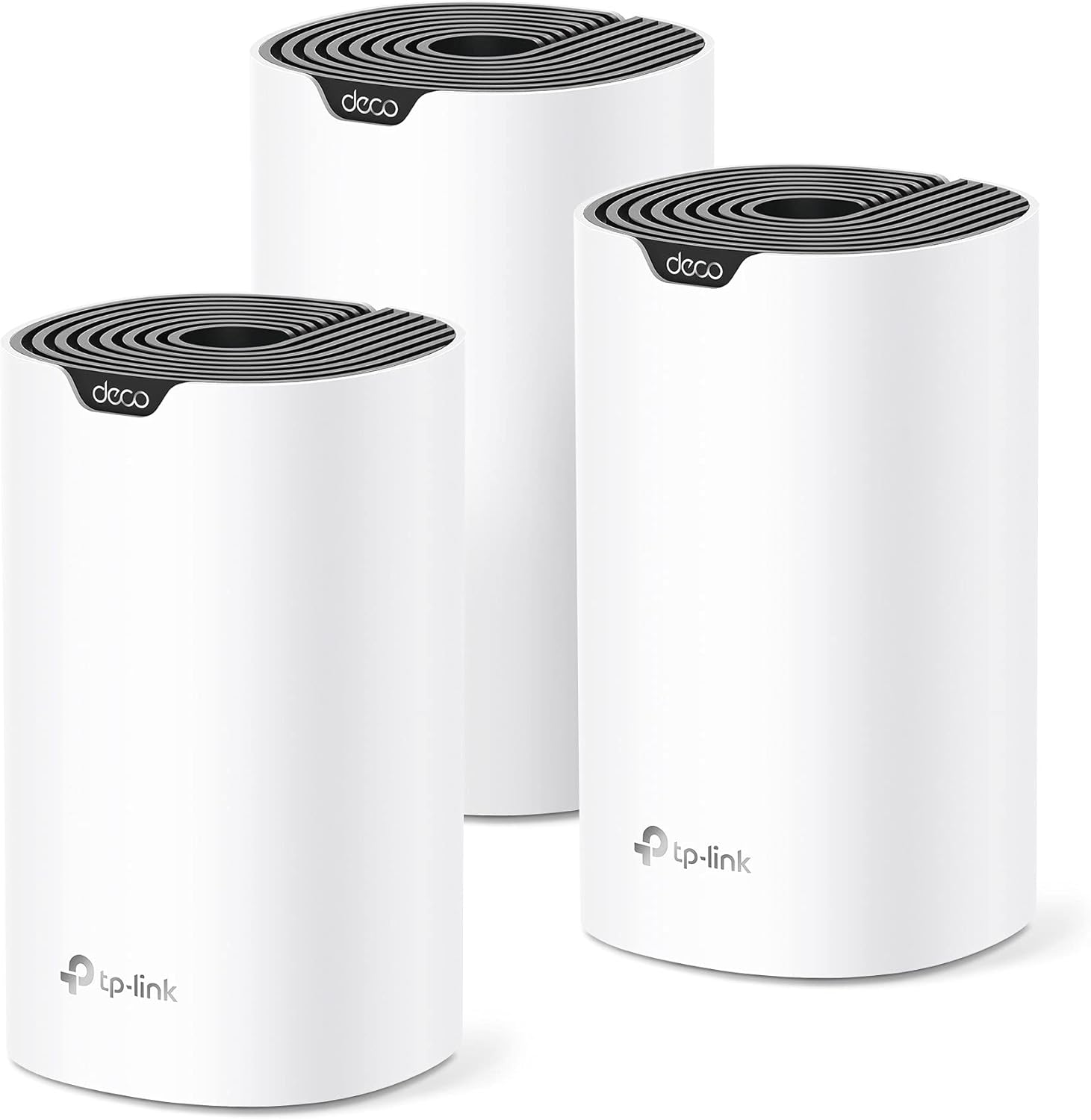
- ***Please update the firmware upon initial setup of the router, as

Pros
- Dual-band Wi-Fi 7 delivers up to 2882 Mbps on 5GHz and 688 Mbps on 2.4GHz across 4 streams with Multi-Link Operation
- Rated to cover up to 2,500 sq. ft and 150 connected devices from a single 1-pack unit
- Two 2.5 Gbps WAN/LAN ports per unit support multi-gig internet plans and high-throughput wired devices
- 4 high-gain antennas and 4 high-power front-end modules per node extend range for remote work and gaming setups
- 128MB of flash storage and 512MB of memory run the mesh system's firmware and connected-device management
Cons
- Full 3.6 Gbps combined speed and Wi-Fi 7 features require client devices that also support Wi-Fi 7, such as recent flagship phones
- 2,500 sq. ft of coverage is based on the single 1-pack unit; larger homes will need to add extra Deco units for full-house coverage
- Advanced HomeShield security features may require an ongoing subscription beyond the basic protections built into the router
A single 1-pack Deco 7 BE23 unit is rated to cover up to 2,500 sq. ft and connect up to 150 devices without a major drop in performance. Dual-band Wi-Fi 7 with 4-stream support delivers up to 2882 Mbps on the 5GHz band and 688 Mbps on 2.4GHz, aided by Multi-Link Operation and 4K-QAM.
- Coverage up to 2,500 sq. ft per 1-pack unit
- Supports up to 150 connected devices
- Combined throughput up to 3.6 Gbps across bands
4 high-gain antennas and 4 high-power front-end modules per node are built to extend signal reach into rooms further from the main unit, useful for remote workers and gamers needing a stable connection throughout the home.

Pros
- 𝐅𝐚𝐬𝐭, 𝐫𝐞𝐥𝐢𝐚𝐛𝐥𝐞, 𝐟𝐮𝐭𝐮𝐫𝐞-𝐫𝐞𝐚𝐝𝐲 𝐖𝐢-𝐅𝐢 - Enjoy strong connections
- 𝐁𝐄𝟏𝟐𝟎𝟎𝟎 𝐭𝐫𝐢-𝐛𝐚𝐧𝐝 𝟖-𝐬𝐭𝐫𝐞𝐚𝐦 𝐖𝐢-𝐅𝐢 𝟕 𝐫𝐨𝐮𝐭𝐞𝐫 - Delivers up to 5,765
- 𝟏𝟎 𝐆𝐛𝐩𝐬 𝐬𝐭𝐚𝐲𝐬 𝐚𝐡𝐞𝐚𝐝 𝐚𝐬 𝐲𝐨𝐮𝐫 𝐢𝐧𝐭𝐞𝐫𝐧𝐞𝐭 𝐠𝐫𝐨𝐰𝐬 - Features a 10 Gbps
- 𝐂𝐨𝐯𝐞𝐫𝐚𝐠𝐞 𝐟𝐨𝐫 𝐞𝐯𝐞𝐫𝐲 𝐜𝐨𝐫𝐧𝐞𝐫 - Covers up to 3,000 sq. ft. for up to

Pros
- Up to 1200 Mbps on 5 GHz plus 574 Mbps on 2.4 GHz for 1.8 Gbps of combined bandwidth
- Four high-gain external antennas with beamforming to focus signal toward distant devices
- OFDMA scheduling keeps dozens of smart-home devices from congesting the available airtime
- Joins an EasyMesh network, so a compatible extender shares one network name across a house
- Built-in OpenVPN and PPTP server plus a 2-year warranty on the hardware
Cons
- Dual-band only - there is no 6 GHz radio, so Wi-Fi 6E and 7 clients gain nothing extra
- WAN and LAN ports top out at gigabit, which bottlenecks any internet plan faster than 1 Gbps
- A separate modem is still required for most internet services, since none is built in
Bandwidth splits into up to 1200 Mbps on 5 GHz and up to 574 Mbps on 2.4 GHz, which is where the AX1800 label comes from. Those are link speeds shared across connected devices, not a guaranteed per-device figure.
- 5 GHz carries the fast traffic - 4K streaming, gaming, large downloads - over shorter distances.
- 2.4 GHz travels further through walls and is where most smart plugs, cameras and sensors live.
- Four high-gain antennas plus beamforming aim signal at devices rather than radiating evenly.
OFDMA lets the router talk to several devices within the same transmission slot, which is the practical Wi-Fi 6 gain in a busy household: fewer stalls when a dozen devices all want airtime at once.
Pros
- Combined throughput up to 2882 Mbps on 5GHz plus 688 Mbps on 2.4GHz across dual bands using Wi-Fi 7's Multi-Link Operation
- Two 2.5 Gbps ports (one WAN/LAN switchable) plus three 1 Gbps LAN ports break past the single-gigabit bottleneck of older routers
- 2.0GHz quad-core processor and 4 internal antennas with beamforming target coverage up to 2,000 sq. ft. for up to 60 connected devices
- EasyMesh compatibility lets it pair with additional routers or extenders to expand coverage without replacing the whole system
- USB 3.0 port adds local network storage or printer sharing that many entry routers skip entirely
Cons
- Dual-band only, so it does not include the 6GHz band found on tri-band Wi-Fi 7 routers, reducing available spectrum in congested networks
- 2,000 sq. ft. coverage figure is on the smaller end for whole-home Wi-Fi 7 systems, so larger homes may need an EasyMesh extender
- HomeShield's advanced security and parental control features typically require an ongoing subscription beyond the basic free tier
The Archer BE230 is a dual-band BE3600-class Wi-Fi 7 router with combined speeds up to 2882 Mbps on 5GHz and 688 Mbps on 2.4GHz, using 4-stream Multi-Link Operation to keep connections stable as devices roam between bands. Four internal antennas with beamforming push signal toward hard-to-reach corners, with coverage figures up to 2,000 sq. ft. and support for up to 60 connected devices at once.
- Combined throughput up to 2882 Mbps (5GHz) and 688 Mbps (2.4GHz)
- 4-stream Multi-Link Operation for Wi-Fi 7 devices
- Coverage figures up to 2,000 sq. ft. for up to 60 devices
- 4K-QAM modulation for added data capacity per stream
Because this is a dual-band model, it skips the 6GHz band found on tri-band Wi-Fi 7 routers, which matters most in dense apartment buildings with heavy 5GHz interference from neighboring networks.

Pros
- Total bandwidth of 6.5 Gbps across 2.4GHz and 5GHz bands with 6 spatial streams
- Two 2.5 Gbps ports (WAN/LAN and LAN) plus three 1 Gbps LAN ports
- Rated coverage up to 2,400 sq ft and 90 simultaneously connected devices
- USB 3.0 port for network-attached storage or printer sharing
- WPA3 encryption plus a separate managed network for IoT devices
Cons
- Dual-band design only, with no dedicated 6GHz band despite the Wi-Fi 7 label
- Full 5764 Mbps and 6.5 Gbps figures are only reached with Wi-Fi 7 client devices; older phones and laptops connect at lower legacy speeds
- Deeper security scanning and remote management run through the cloud-connected Tether app rather than working fully offline
This dual-band Wi-Fi 7 router combines a 5764 Mbps 5GHz band with a 688 Mbps 2.4GHz band for 6.5 Gbps of combined bandwidth across 6 spatial streams.
- Rated coverage of up to 2,400 sq ft with 6 external antennas and beamforming
- Supports up to 90 simultaneously connected devices
- Multi-Link Operation combines both bands for lower latency on supported clients
Because this is a dual-band design rather than tri-band, there is no dedicated 6GHz lane; devices without Wi-Fi 7 support fall back to standard 5GHz or 2.4GHz speeds rather than the peak combined figure. For a typical single-floor or small two-floor home, the antenna layout and beamforming keep signal consistent across rooms, though a very large multi-floor house may still benefit from a mesh add-on at the edges of the stated coverage area.
Pros
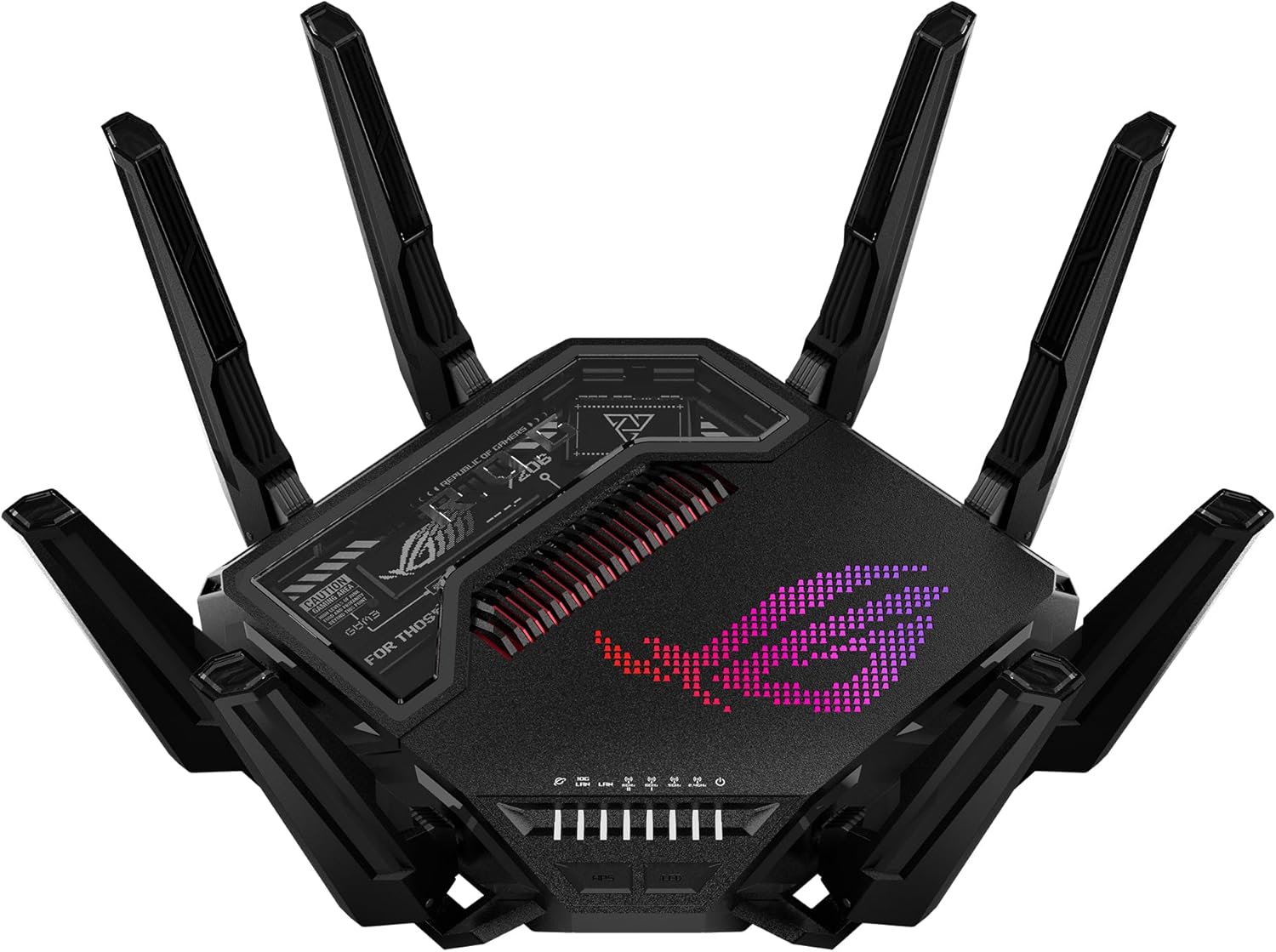
- Quad-band WiFi 7 setup with dual 6GHz bands delivers combined wireless speeds up to 30 Gbps across 16 simultaneous streams
- Dual 10G ports plus four 2.5G ports combine for up to 31G of wired WAN and LAN capacity
- 320MHz channel width on the 6GHz band plus 4096-QAM raises the per-device throughput ceiling versus WiFi 6 routers
- Multi-Link Operation connects a single device across multiple bands at once for steadier connections during heavy traffic
- Triple-Level Game Acceleration prioritizes gaming traffic from the PC's network port through to the game server
Cons
- Actual wireless throughput and range vary with building materials, interference, and network load, so the 30Gbps figure is a lab ceiling rather than a guaranteed real-world number
- Quad-band, 16-stream hardware calls for a WiFi 7-capable client device to see the full benefit; older WiFi 5/6 devices will not connect at these speeds
- No built-in cellular or 5G failover, so a wired WAN connection is required as the primary internet source
This quad-band router runs WiFi 7 (802.11be) with dual 6GHz bands, 320MHz channel width, and 4096-QAM modulation, rated for combined wireless speeds up to 30 Gbps across up to 16 simultaneous streams. Multi-Link Operation lets a single compatible device use more than one band at the same time for steadier throughput.
- Quad-band, 16-stream WiFi 7 (802.11be)
- 320MHz channels on the 6GHz bands
- 4096-QAM modulation for higher per-stream throughput
- Multi-Link Operation across bands simultaneously
Real-world throughput depends on the client device also supporting WiFi 7; a phone or laptop limited to WiFi 6 or WiFi 5 will connect at those older standards' speeds instead of the router's rated ceiling.

Pros
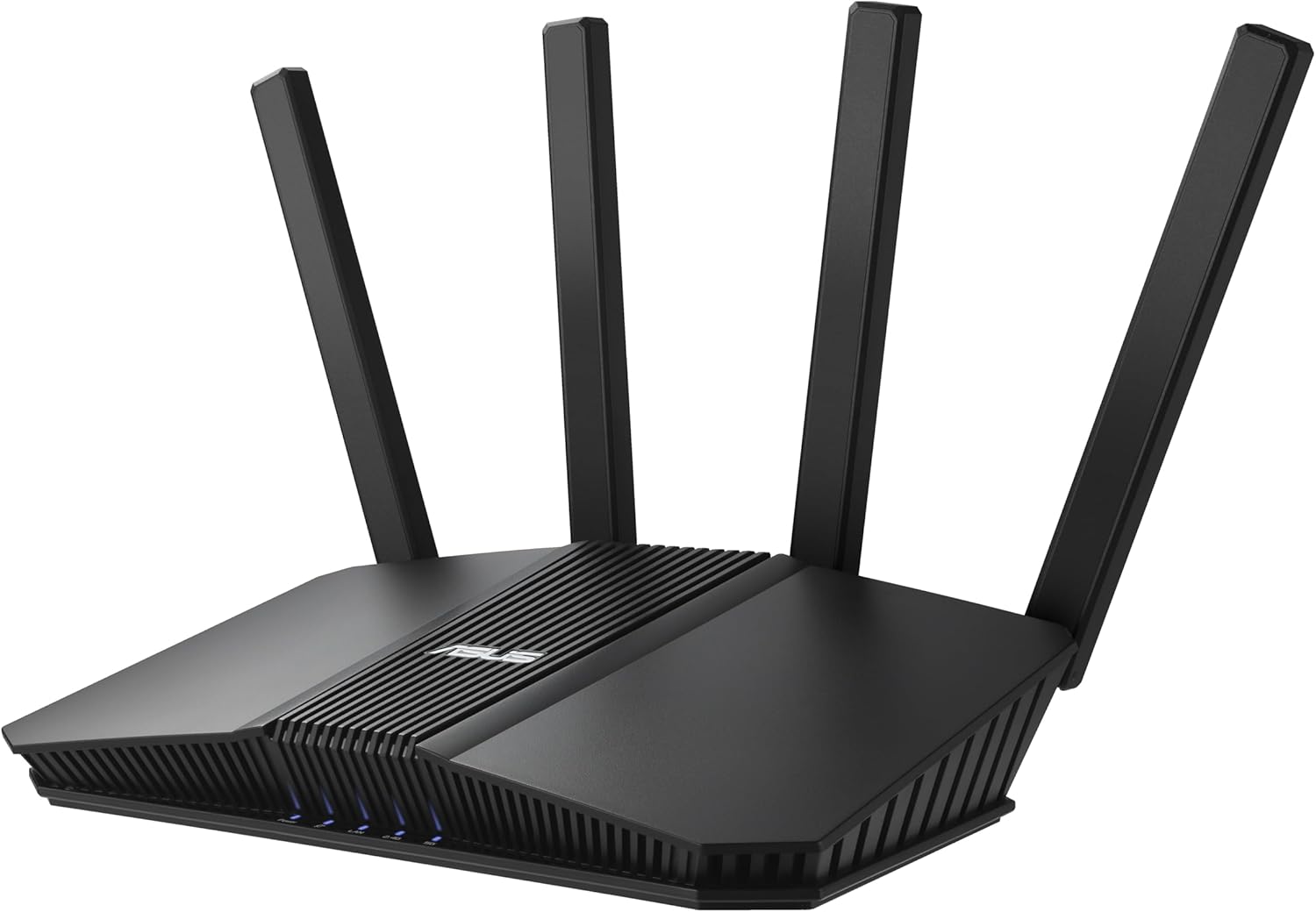
- Dual-band WiFi 7 (802.11be) reaches up to 6500 Mbps combined, using 4096-QAM to boost single-band throughput by roughly 1.2x over prior standards
- Five 2.5GbE ports handle WAN/LAN duties, over double the throughput of the 1GbE ports on older router generations
- AiMesh support lets the router extend into a mesh system by pairing with compatible ASUS units, without needing a matched mesh kit
- Four external antennas plus six high-power internal modules are built to reduce dead zones across multi-room layouts
- AiProtection Pro, powered by Trend Micro, adds network-level security scanning built into the router firmware
Cons
- WiFi 7's full throughput advantage only shows up with client devices that also support 802.11be; older WiFi 5/6 devices connect at their own lower ceiling
- Five 2.5GbE ports top out below the 10GbE speeds some higher-tier routers now offer for multi-gig fiber plans
- Dual-band only, with no dedicated third band, so heavily congested households may see more contention than with a tri-band design
What “BE” Means: Understanding Wi-Fi 7 Routers
“BE” is short for 802.11be, the Wi-Fi Alliance’s technical name for what most people call Wi-Fi 7. You’ll see it in model numbers like Archer BE230 or GT-BE98 Pro. The letters tell you the router uses the newest wireless chipset, not just a marketing refresh.
Wi-Fi 7 routers add Multi-Link Operation (MLO), which lets a single device use more than one band at once for lower lag and steadier speeds. They also support wider 320 MHz channels on the 6 GHz band, so there’s less congestion from neighboring networks. If you stream in 4K, game online, or have a house full of connected devices, these upgrades are noticeable, not just numbers on a spec sheet.
BE vs Wi-Fi 6 and Wi-Fi 6E
Wi-Fi 6 routers, labeled AX, still work well for basic browsing and standard-definition streaming. Wi-Fi 6E added the 6 GHz band but kept the older single-band-per-device design. BE routers combine bands through MLO and push higher theoretical speeds — useful if your internet plan runs 500 Mbps or faster, or if you have fifteen or more connected devices.
How to Choose the Best BE Routers for Your Home
Not every BE router fits every household. Before you compare prices, run through these factors so you don’t pay for capability you won’t use, or undersize your network instead.
- Band count: Dual-band BE routers cover small apartments; tri-band and quad-band models handle bigger homes and more devices without slowing down.
- Wired ports: Look for at least one 2.5 Gbps port if your internet plan exceeds 1 Gbps, or a 10G port for future-proofing.
- Coverage area: Match the router’s rated square footage to your home; single routers covering homes over 2,500 sq ft usually need a mesh add-on.
- Security features: Built-in VPN support and automatic threat protection matter more if you work from home or handle sensitive data.
- Device load: Smart homes with many IoT gadgets benefit from routers with dedicated IoT networks and stronger processors.
If you’re also weighing Wi-Fi 6 options against these newer picks, our best wireless routers guide covers a broader range of budgets and standards. Once you know which factors matter most for your setup, the rest of this guide sorts the best BE routers on our list by exactly those needs.
Best BE Routers by Use Case
Here’s how the 10 routers in our list stack up once you sort them by what you actually need, not just top-line specs.
Best Overall Value
The TP-Link BE6500 earns the top spot because it balances real-world speed with practical extras: dual 2.5 Gbps ports for a fast wired backbone, a quad-core processor that keeps up with many connected devices, and coverage rated up to 2,400 sq ft. It costs less than half of some flagship models while still running true Wi-Fi 7. It’s not the fastest router on this list, but it’s the one we’d recommend first if you want dependable performance without fiddling with settings.
Best Flagship Performance
If budget isn’t the deciding factor, the ASUS ROG Rapture GT-BE98 Pro is built for households that push their network hard: competitive gaming, multiple 4K streams, and large file transfers running at once. Its quad-band design and 30 Gbps combined throughput give it real headroom other routers don’t have. The trade-off is price. It’s overkill if you have a typical 300–500 Mbps plan and only a handful of devices.
Best Mesh System for Larger Homes
Single routers struggle once a home stretches past 2,500 sq ft or spans multiple floors. The TP-Link Deco BE63 two-pack solves that with wired backhaul between nodes, which keeps speeds steady instead of dropping off in far bedrooms or basements. If your current setup leaves dead zones, this is worth checking before you buy another single unit. For more mesh-specific comparisons, see our best mesh routers guide.
Best Budget Pick
The TP-Link Archer BE230 is the most affordable true BE router on this list. You get real Wi-Fi 7 features, including MLO, EasyMesh compatibility, and a 2.5G port, without flagship pricing. It suits apartments and smaller homes better than large houses, since its dual-band design has less headroom for dozens of devices.
Best for Gaming and Low-Latency Setups
Wi-Fi 7’s MLO feature reduces lag by letting a device use two bands at the same time, which matters for competitive online gaming. Among BE routers here, the flagship ASUS model above handles this best, but if you’d rather prioritize wired gaming rigs over wireless speed, a Wi-Fi 6 gaming router with strong QoS controls can work well as a budget-conscious alternative. Compare more options in our best routers for gaming roundup before deciding.
Best for VPN and Privacy
If you’d rather run a VPN at the router level instead of per-device, the ASUS RT-BE82U supports VPN client and server modes natively, so every connected device gets coverage without installing separate apps. It’s a dual-band design, which keeps the price reasonable while still delivering Wi-Fi 7 speeds. See our best routers with VPN guide for deeper comparisons.
Best Tri-Band for Power Users
The TP-Link Archer BE12000 adds a dedicated third band and 10G connectivity, which helps if you run a home server, a NAS, or several 4K streams at once. It sits in the middle of this list price-wise, aimed at people who outgrew a basic BE router but don’t need quad-band flagship power.
Common Mistakes to Avoid When Buying a Wi-Fi 7 Router
We see the same buying mistakes repeat across routers and most other tech purchases: people buy for a spec sheet instead of their actual home. Watch for these before you check out.
- Buying more bands than you need: Quad-band routers cost more and rarely help a small apartment with under ten devices.
- Ignoring your internet plan speed: A BE router won’t make a 300 Mbps plan faster; it only affects speeds within your home network.
- Skipping wired backhaul on mesh systems: Wireless-only mesh setups lose more speed between nodes than wired ones do.
- Overlooking firmware update history: Routers that go months without updates are more exposed to security issues.
Setup Tips to Get the Most from Your New Router
A new BE router still needs a few adjustments to perform at its rated speed. Start by placing it in a central, open location — closets and cabinets block signal more than most people expect.
Update the firmware right after setup; manufacturers often ship routers with an older build than what’s currently available. Then enable MLO and the 6 GHz band in the admin panel if they aren’t already on, since some routers ship with conservative default settings.
Finally, separate your IoT devices onto a guest or dedicated IoT network if your router supports it. This keeps a compromised smart plug or camera from having direct access to your main devices.
Best BE Routers FAQ
What does “BE” mean in a router name?
“BE” refers to 802.11be, the technical name for Wi-Fi 7. It tells you the router supports the newest wireless standard rather than Wi-Fi 6 or 6E.
Do I need a Wi-Fi 7 router if my internet plan is under 500 Mbps?
Not urgently. You’ll still get organizational benefits like MLO and better device handling, but you won’t see full speed gains until your internet plan and devices both support higher throughput.
Is a mesh system better than a single BE router?
It depends on your home’s size. Homes under 2,500 sq ft usually do fine with one router, while larger or multi-floor homes benefit from mesh nodes with wired backhaul.
Can I use a BE router with older Wi-Fi 5 or 6 devices?
Yes. BE routers are backward compatible, so older phones, laptops, and smart home gadgets connect normally — they just won’t use the newest Wi-Fi 7 features.
How much should I expect to pay for a good BE router?
Reliable dual-band BE routers start around $70 to $120, while tri-band and quad-band models with 10G ports or mesh coverage run from $200 up to $600 or more for flagship gaming setups.
Whichever pick fits your home best, check the current price on Amazon before deciding, since availability and pricing shift often on newer Wi-Fi 7 hardware.