 Daniel Okafor
A cramped surface kills a great setup, which is why the best long desks for gaming earn their keep the moment you spread out dual monitors, a wide mouse arc, and a mechanical keyboard without elbows colliding. A long desk gives you room for speakers, a stream deck, a drink, and cable slack that stays hidden. Whether you run a single ultrawide or a triple-panel rig, length is the spec that quietly makes everything else work. Below you will find 10 desks ranked by rating, review volume, price, and real-world fit, plus a buying guide that explains what actually matters before you commit.
Quick answer: For most multi-monitor and dual-player builds in 2026, our top pick among the best long desks for gaming is the SEDETA 94.5″ 2-Person Desk — our #1 rated choice. See the full ranked comparison, alternatives and buying advice below.
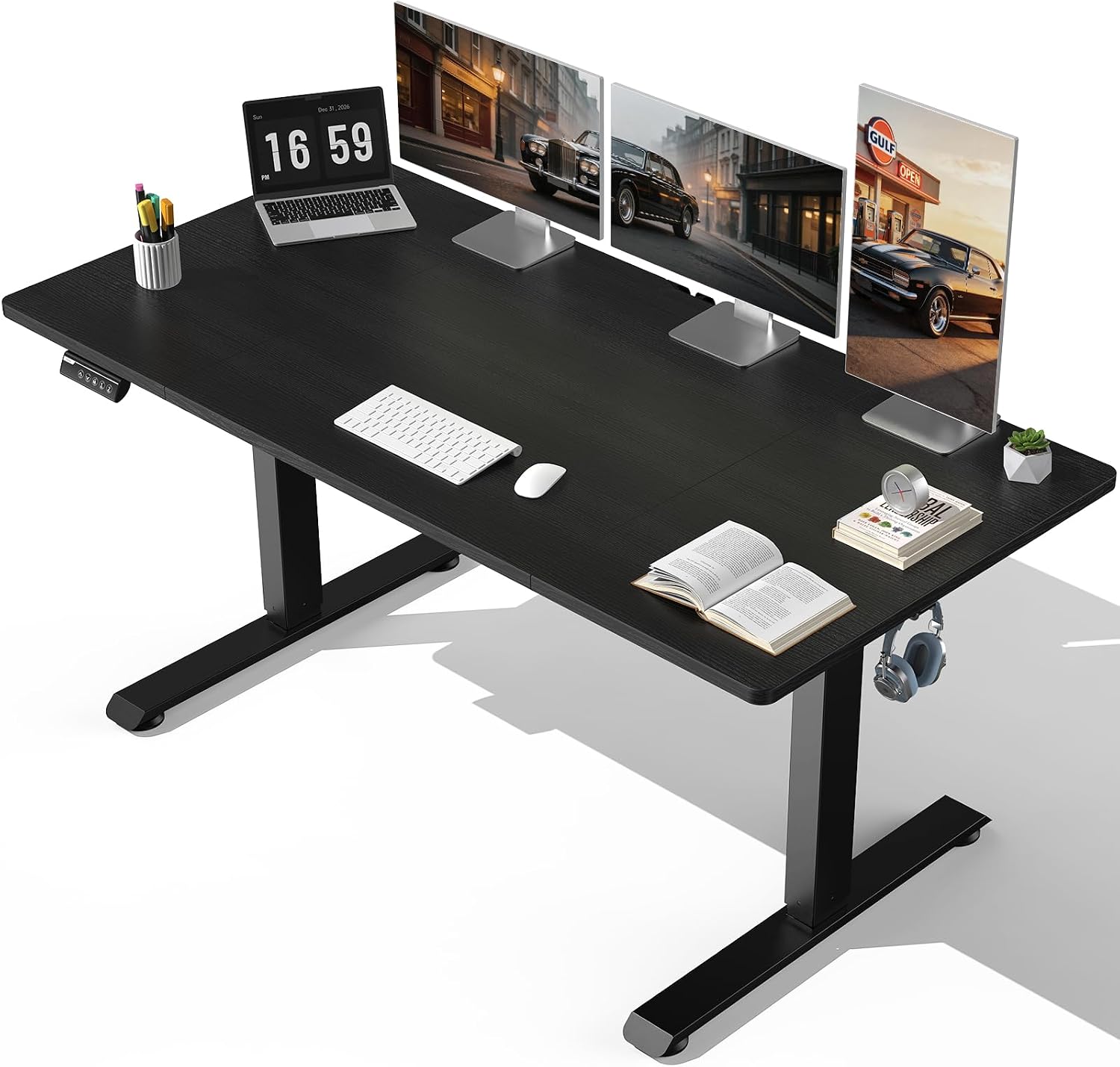
Pros
- Generous 63x28 inch desktop surface accommodates multi-monitor setups
- Motorized height adjustment transitions quietly between sit and stand modes
- Programmable memory settings save preferred standing heights for quick recall
- Heavy-duty steel T-legs provide physical stability under full load
- Integrated cable tray keeps power cords organized underneath desk
Cons
- Assembling the large steel frame requires space and two-person effort
- Motorized lift requires an accessible wall power socket nearby for operation

Pros
- Built-in Charging Station No more crawling under the desk for power.
- Extra Deep Desktop Measuring 63 x 29.5 , the spacious desktop of the
- Sturdy Structure Spacious Legroom Built with a reinforced steel frame,
- Easy Assembly Durable Designed with a simple structure, clearly labeled
Cons
- Requires checking room layout clearance for 63"D x 29.5"W x 29.5"H dimensions

Pros
- 60 LARGE GAMING DESKTOP Captain GIP-P60 gaming desk is a extraordinary
- STURDY AND STABLE STRUCTURE Captain GIP-P60 gaming desk s support
- EXCLUSIVELY AND FULLY COVERED MOUSE PAD FOR FREE Captain GIP-P60 gaming
- EUREKA GAMING OFFERS YOU FREE ACCESSORY OPTIONS All come together with
- CUSTOMER SERVICE We hold our products to a high standard and hope you
Cons
- Requires checking room layout clearance for 27.56"D x 60"W x 30.12"H dimensions
- Requires periodic vacuuming and fabric care for Carbon Fiber

Pros
- 325-pound weight capacity across the tabletop, generous for dual monitor arms and full desktop setups
- 2 AC outlets plus 2 PowerIQ USB ports power up to 4 devices without a separate power strip
- Monitor stand raises 2 displays at once, cutting neck strain versus flat-desk monitor placement
- Cable management grommets and a 2-layer storage shelf keep cords and gear off the 94.5-inch desktop
Cons
- LED light strip depends on a companion app for full color and music-sync control, adding a setup step beyond plug-and-play
- At 94.5 inches wide, it needs a dedicated wall or room length most single-person home offices do not have
- Keyboard tray is sized for 108-key or 87-key boards specifically, so oversized ergonomic keyboards may not fit cleanly
The desk spans 19.7"D x 94.5"W x 30"H and is rated to hold up to 325 pounds across its metal frame, enough for dual monitor arms, two full desktop setups, and shared accessories at once. A 2-layer storage shelf and printer stand add space beyond the main desktop.
- 325 lb weight capacity supported by a stable thick metal frame
- 94.5-inch width fits two people working side by side without crowding
- 2-layer middle storage shelf adds space separate from the desktop surface
Because the desk is built around a shared 94.5-inch surface rather than two separate desks pushed together, it needs a continuous wall run of that length to sit properly.

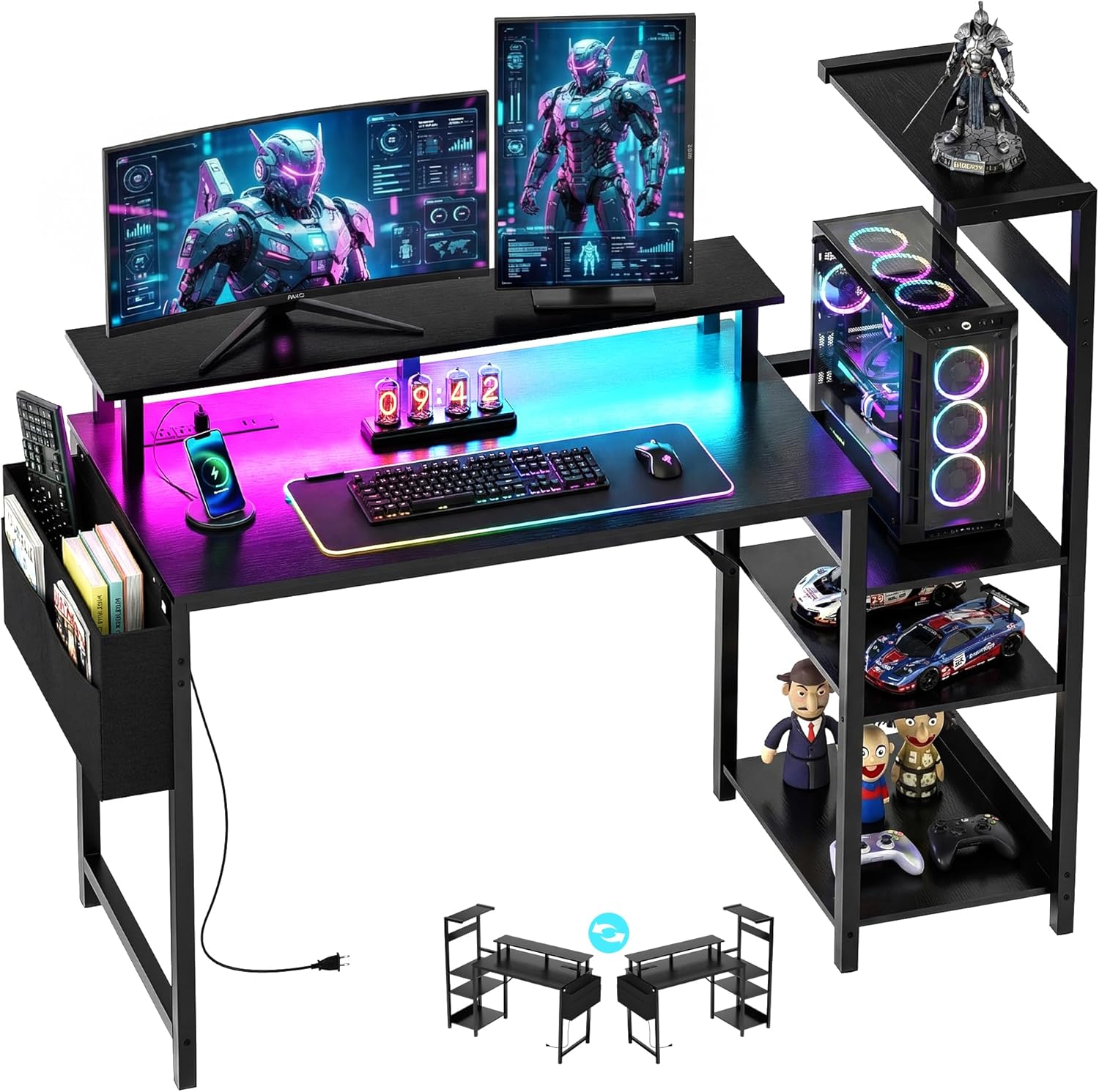
Pros
- 300 lb weight capacity metal frame handles dual towers and monitors
- 55" x 21.6" desktop, large enough for two full computer setups side by side
- Two open storage shelves plus a top hutch keep consoles and speakers off the desktop
- RGB LED strip syncs to music with an adjustable-sensitivity mic, over 60,000 colours via app
- Built-in CPU holder and monitor stand free up desk surface for keyboard and mouse
Cons
- 78.8" width needs a dedicated wall run, not suited to small bedrooms
- LED strip depends on a companion app and Bluetooth pairing, no physical remote mentioned
- Metal frame with hutch and shelves means a longer bolt-together assembly than a basic table
This desk measures 78.8"W x 21.6"D x 60"H, giving it enough footprint for a triple-monitor arrangement or two workstations sharing the surface. The metal frame is rated to hold 300 pounds, which covers a full tower PC, two monitors on stands, and typical desktop accessories without flexing.
- Desktop area: 55"L x 21.6"W for keyboard, mouse and paperwork
- Two lower storage shelves for CPU towers, consoles or speakers
- Top hutch shelf for books, figures or plants
- Built-in monitor stand raises screens above desk clutter
The dimensions suit a dedicated office or gaming room rather than a shared or compact bedroom corner.
This desk fits gamers and remote workers who want a single station that also stores hardware. The 300 lb capacity and dual shelving make it practical for anyone running two PCs, streaming equipment, or console peripherals that would otherwise clutter the floor.
- Suited to dedicated gaming rooms or home offices with wall space for a 78.8" run
- Good for users who want LED ambiance synced to games or music
- Storage shelves help households consolidating a PC and console setup on one desk
It is less practical for small apartments or shared bedrooms where a 78.8" wide footprint will not fit comfortably against available wall space.

Pros
- Workstation surface measures 53 inches wide by 18.9 inches deep at 29.8 inches tall, rated to hold up to 300 pounds
- Built-in power strip adds 3 AC outlets and 2 USB ports directly on the desk for centralized charging
- RGB LED strip offers 10 color presets, 8 brightness levels and 10 dynamic modes with a memory function
- X-shaped steel frame construction adds stability for dual-monitor or multi-display setups
- Reversible left/right side modules let the L-shape orientation match either side of a room
Cons
- Assembly takes an estimated 50 to 70 minutes even with included tools and labeled parts, and is easier with two people when flipping the desk upright
- Corner L-shape footprint needs more floor space than a straight desk, so it will not fit tight rooms as easily
The main workstation area measures 53 inches wide by 18.9 inches deep at a 29.8-inch working height, rated to support up to 300 pounds across the desktop. Built-in power comes from 3 AC outlets and 2 USB ports mounted on the desk itself, along with cable management channels to keep cords off the floor during long sessions.
- Dual open shelves, a CPU stand, an accessory hook and a tool bag are included for onboard storage
- RGB LED strip supports 10 color presets, 8 brightness grades and 10 dynamic lighting modes with a memory function
- X-shaped steel frame is designed to add stability under the weight of dual monitors and a desktop tower
The overall L-shape footprint spans 53.15 x 39.37 inches at the base, so it needs a corner or wall space to match.

Pros
- 70.8-inch width with a 55 x 21.6-inch desktop area holds two full computer setups side by side
- 3-tier storage shelves separate a CPU tower, speakers, and console gear instead of piling them on the desktop
- Built-in RGB LED strip offers over 60,000 colors and 29 modes, including music-reactive sync via a built-in microphone
- Integrated 2-outlet, 2-USB charging station powers up to 4 devices without a separate power strip
- Cup holder and headphone hook keep drinks and headsets off the desk surface during long sessions
Cons
- Weight capacity of 55 lbs on the desktop limits how much monitor and accessory weight can sit on top at once
- RGB lighting requires an app connection to access the full 29 modes, adding a setup step beyond plug-and-play
- 70.8-inch width needs a dedicated wall run, too large for narrow bedrooms or shared desk corners
The desktop spans 70.8 inches wide by 21.6 inches deep, with a listed weight capacity of 55 lbs across the main surface. Three tiered storage shelves sit to the side, sized to hold a CPU tower, speakers, or console hardware separately from the desktop workspace, and the layout is wide enough to fit two complete computer setups.
A built-in monitor shelf raises screens above the main desktop, following ergonomic eye-level positioning without requiring a separate monitor riser purchased on top of the desk itself.

Pros
- Dimensions of 19.7"D x 67"W x 57"H engineered for optimal spatial fitting
Cons
- Requires verifying placement clearance for 19.7"D x 67"W x 57"H prior to installation

Pros
- Alloy steel R-frame carries a stated 150 lb across the 47-inch top, enough for a mid-tower plus two 24-inch panels
- Four leg pads screw down individually, so the frame stops rocking on carpet or uneven floorboards
- Two grommet holes and a clip-on cable box drop power leads straight to the floor
- Cup holder and headphone hook hang off the frame edge, keeping the shallow 23.45-inch depth clear
- Carbon fibre textured laminate hides fingerprints far better than a gloss black surface
Cons
- Fixed 29.55-inch height with no sit-stand adjustment beyond the levelling pads
- 23.45-inch depth is shallow, so a deep monitor stand pushes the screen close to your face
- MDF core beneath the laminate swells permanently if a spill is left standing
The surface measures 47 inches wide by 23.45 inches deep and sits at a fixed 29.55 inches high, which lines up with standard task chairs rather than drafting stools. The steel frame is quoted at a 150 lb load, so a mid-tower, two 24-inch panels and a laptop dock stay comfortably inside the limit.
- The curved front edge pulls the keyboard zone closer to the body than a straight-edged slab
- 23.45 inches of depth suits a single monitor arm better than a wide twin-screen stand
- The levelling pads take up a few millimetres of floor variation each
Measure the alcove first. The frame is rigid, so nothing can be trimmed down to fit a tight recess.

Pros
- 78.7 x 23.6 in top swallows two 27-inch monitors plus a full-size keyboard and a large mouse mat
- Steel tube frame with a reinforcement strut under the rear edge to limit side-to-side sway
- Adjustable feet take up uneven floorboards without folded card under a leg
- No centre leg across the 78.7 in span, so a chair rolls the entire length uninterrupted
Cons
- Flat-packed despite the compact carton, so assembly with a screwdriver is required
- No cable tray, grommet or cable cover, so leads hang loose behind the desk
- Laminated particleboard edges chip if knocked, and the surface cannot be sanded back
Overall size is 78.7 in wide, 23.6 in deep and 29.7 in tall, which is close to two ordinary desks joined end to end.
- Fits two 27-inch monitors side by side with room for a laptop stand between them
- 23.6 in depth gives enough setback that a 27-inch screen sits at arm's length
- 29.7 in height clears the arms of most task chairs
- Open underside with no modesty panel or centre leg, so two people can share one long surface
That long unbroken span is the point of this desk: a dual-monitor work zone at one end and a separate reading, drawing or console area at the other, without buying two pieces of furniture.
What counts as a long gaming desk
Most standard desks stop near 47 to 55 inches. A “long” desk starts around 60 inches and stretches past 94 inches for two-person and triple-monitor layouts. That extra width changes how you play. You gain a proper zone for your monitor stand, a second zone for peripherals, and breathing room for airflow around your PC.
Length is not the only number that matters, though. Depth decides whether a 27-inch monitor sits at a comfortable arm’s length. A shallow 20-inch top forces you too close to the panel. Aim for 28 to 30 inches of depth so your eyes rest 20 inches or more from the screen.
Why length beats a bigger monitor mount
People often solve clutter by buying a monitor arm. That helps vertical space, but it does nothing for keyboard travel or mousepad width. A long top solves both at once. You get sweep room for low-sens aiming and a landing spot for the arm’s base.
How to choose the best long desks for gaming
Pick by the way you actually play, not by looks alone. A solo FPS player needs a wide, shallow surface for mouse sweep. A two-player household needs a shared 94-inch top. A creator streaming on the side needs cable ports and a monitor riser.
Surface size and depth
Match width to your monitor count. One ultrawide fits fine on 60 inches. Two 27-inch panels want 63 inches or more. A triple setup or a dual-player rig calls for 78 to 94 inches. Confirm depth before you buy, since a deep 30-inch top like the PRAISUN 63″ Deep Desk keeps large monitors at a safe viewing distance.
Frame and stability
Length amplifies wobble. A weak two-leg frame will shake during fast mouse flicks. Look for a steel frame with a center support bar or a cross brace. Adjustable leveling feet matter too, since long tops magnify uneven floors.
Weight capacity
Add up your monitors, speakers, and a full tower. Most quality long desks handle 100 to 300 pounds when spread evenly. Concentrated weight at one edge is riskier than the sticker rating suggests, so center heavy gear over a leg.
Cable management and extras
Grommets, hooks, and built-in power strips separate a good desk from a frustrating one. Onboard outlets and USB ports save you a trip under the desk. Headphone hooks and cup holders keep the surface clear for actual play.
Best long gaming desks by use-case
Every pick below scores 4.6 or higher, so the split comes down to fit, not quality.
Best for two players or triple monitors
The SEDETA 94.5″ 2-Person Desk is the standout for shared and multi-panel setups. At 94.5 inches it seats two players comfortably or hosts a full triple-monitor wall. It ships with LED lights, a keyboard tray, a monitor stand, and a power strip with USB. Rated 4.7 across 1868 reviews, it delivers rare value for its footprint. The trade-off is obvious: it needs a wide wall, so measure your room first.
Best premium build quality
The EUREKA Captain Series is the enthusiast pick. Its polygon leg design and 60-inch top feel noticeably more rigid than budget frames. With 2465 reviews at 4.7 stars, it has the deepest track record here. It costs more and runs shorter than the two-person desks, so it suits a solo player who values a solid, planted feel over sheer width.
Best budget standing option
If you want to alternate sitting and standing, the Veken 63″ Standing Desk is the value leader. Electric height adjustment is unusually cheap for a 63 x 28 top. It holds a 4.9 rating, the highest in this group, though its 79 reviews make that score younger than the others. Choose it if posture and flexibility rank above a proven review count.
Best mid-size with lighting and storage
The SEDETA 78.8″ Desk balances width and features. You get LED lights, a hutch, storage shelves, and a monitor stand on a 78.8-inch top. Rated 4.7 over 1043 reviews, it suits a bedroom or living-room rig that needs vertical storage without a second surface.
Best cheap starter desk
The BestOffice 47″ Gaming Desk is the entry pick, with a carbon-fiber-textured top, cup holder, and headphone hook. Its 4403 reviews and 4.6 rating make it the most-vetted option on this list. It is only 47 inches, so it is not for triple monitors, but it is a smart first desk for a single panel and a tight budget.
Practical buying guide: sizes, specs, and compatibility
Start with a tape measure, not a wish list. Measure the wall, then subtract clearance for a chair, a door swing, and airflow behind your tower. A 94.5-inch desk needs roughly 100 inches of clear wall to sit comfortably.
Match desk length to monitor count
- Single monitor or ultrawide: 47 to 60 inches works, like the BestOffice or EUREKA.
- Dual 27-inch monitors: 63 to 70 inches gives sweep room, like the PRAISUN or a SEDETA 70.8″ Desk with power outlets and a cup holder.
- Triple monitors or two players: 78 to 94 inches, like the SEDETA 78.8″ or the 94.5″ two-person top.
Corner and L-shaped alternatives
If your room favors a corner, an L-shaped desk buys you two surfaces without one giant straight run. The SEDETA L Shaped Desk spans 94.5 inches with a pegboard, LED light, keyboard tray, and headphone hook. A compact ODK 53″ L Shaped Desk with power outlets suits smaller rooms. To compare more corner layouts, browse our guide to the best L-shaped gaming desks for tight rooms before deciding on a straight top.
Standing versus fixed height
Fixed desks cost less and never wobble at full extension. Adjustable desks protect your back over long sessions. If posture is a priority, weigh the electric options in our roundup of the best adjustable gaming desks for sit-to-stand play. The Veken is a strong budget entry into that category.
Common mistakes to avoid
The biggest error is buying for length and ignoring depth. A 94-inch top that is only 20 inches deep still crowds your eyes. Confirm both numbers before you order.
Underestimating assembly and weight
Long desks arrive heavy and awkward. Clear a large floor space and expect 30 to 60 minutes of assembly. Have a second person help flip a 94-inch top so you do not stress the frame.
Overloading one side
A full tower plus two monitors on one end can bow a cheap surface over time. Spread weight across the frame and keep heavy items above a leg. If your gear is dense, favor a steel-frame model like the Huuger 80″ Desk, rated 4.6 over 2814 reviews.
Skipping cable planning
Buying a desk without grommets means zip-tie chaos later. Prioritize onboard outlets or a mounted power strip. The extra $10 for built-in power saves hours of routing.
Forgetting the room, not just the desk
A long desk changes the whole layout. Plan your chair path, outlet reach, and monitor cable length together. For broader layout ideas, our overview of the best gaming desks for any setup covers how surface size ties into the rest of your battlestation.
Frequently asked questions
How long should a gaming desk be for dual monitors?
Two 27-inch monitors sit comfortably on 60 to 70 inches of width. That leaves room for a keyboard, a wide mousepad, and speakers on the flanks. If you plan to add a third panel later, jump to 78 inches or more so you do not outgrow the desk.
Are long desks stable enough for fast gameplay?
They are, as long as the frame has a center brace and leveling feet. Length adds leverage, so a thin two-leg frame will shake during flick shots. Steel frames like those on the Huuger 80″ and EUREKA Captain Series stay planted under quick mouse movement.
Do I need a monitor stand if the desk is deep enough?
A deep 30-inch top gives correct viewing distance without a riser. A stand still helps by raising the screen to eye level and freeing space beneath it. Several picks here, including the SEDETA models, bundle a monitor stand so you skip a separate purchase.
What is the best long gaming desk on a tight budget?
For pure width per dollar, the SEDETA 94.5″ 2-Person Desk is hard to beat. If you only need a single-monitor surface, the BestOffice 47″ is the cheapest proven option. Both carry ratings of 4.6 or higher across thousands of reviews.
Can two people share one long desk?
Yes, a 94.5-inch top comfortably seats two players side by side. Each person gets roughly 47 inches of personal space, enough for a monitor and full peripheral kit. Confirm your wall is at least 100 inches wide before ordering a shared desk.
The bottom line
The right long desk turns a cramped corner into a real command center, with room to grow from one monitor to three. For the widest, best-value setup, the SEDETA 94.5″ 2-Person Desk leads the pack, while the EUREKA Captain Series rewards anyone chasing premium rigidity. Measure your wall, match depth to your monitor size, and pick the frame that fits how you play. Do that, and any option above will serve your rig for years.