 Ryan Delgado
If you spend hours mixing tracks, laying down vocals, or tuning a beat, your headphones shape every decision you make. The best headsets for music production reveal flaws a cheap pair hides, so your mixes translate well on club speakers, earbuds, and car stereos alike. Below, you’ll find picks for tracking, mixing, and budget setups, along with the specs that actually matter before you buy.
Quick answer: For most producers in 2026, our top pick among the best headsets for music production is the Audio-Technica ATH-M50X — our #1 rated choice thanks to its balanced sound, tough build, and detachable cables. See the full ranked comparison, alternatives, and buying advice below.
Pros
- Precision German Engineering – Decades of Sennheiser research deliver
- Closed‑Back Noise Control – Multi‑stage passive shielding and a
- All‑Day Comfort Fit – Precision‑fit design with angled earcups
Cons
- Verifying dimensional clearance for HD 480 PRO Professiona prior to setup is recommended
- Routine care preserves surface finish appearance for HD 480 PRO Professiona over time

Cons
- Spacious wall or desk clearance needed for EKSA Wired Over Ear He
- Careful cable routing recommended for EKSA Wired Over Ear He wall mounting

Pros
- 45mm drivers use rare earth magnets and copper-clad aluminum wire voice coils for extended frequency response
- Ships with 3 detachable cables plus a 6.3mm adapter, so a damaged cable does not retire the whole headphone
- Closed-back circumaural design wraps fully around the ear for passive sound isolation in loud rooms
- 90-degree swiveling earcups allow one-ear monitoring without removing the headphones
- Collapsible, foldable design and 38 ohm impedance make them practical for portable use with phones and laptops alike
Cons
- Closed-back design isolates outside noise but also traps heat around the ears during long sessions
- No active noise cancellation or wireless option, since this is a fully wired, passive monitoring headphone
- Earpads are not listed as machine washable, so cleaning is limited to spot wiping the pleather material

Pros
- 40mm neodymium drivers deliver a stated 10 Hz-20 kHz frequency response for studio-level detail
- Closed-ear design blocks outside noise without needing power or batteries
- Folds flat into the included soft case for storage or travel
- 9.8 ft cord terminates in a gold-plated plug with a bundled 1/4 in adapter for mixing consoles
Cons
- Cord is permanently attached at 9.8 ft, so a damaged cable means sending the whole unit for repair
- Wired only, with no Bluetooth or wireless option for phone or laptop use
- No stated noise-cancelling circuitry, so isolation comes only from the closed-ear seal
The MDR7506 pairs 40mm neodymium drivers with a stated frequency response of 10 Hz to 20 kHz, aimed at accurate monitoring rather than boosted bass. Because the design is fully wired, there is no pairing step, battery to manage, or Bluetooth range limit to work around.
- The 9.8 ft cord ends in a gold-plated plug, with a screw-on 1/4 in adapter included for mixing consoles and amplifiers
- The cord is permanently attached rather than detachable, so cable care matters over years of use
- Closed-ear cups seal out ambient sound instead of relying on active noise cancelling circuitry
This setup suits desks, studios, and stages where a direct cable connection is preferred over wireless.

Pros
- Detachable Kevlar-reinforced oxygen-free copper cable resists handling noise and can be replaced independently of the headphones
- 300 ohm impedance targets dedicated headphone amps and hi-fi setups rather than low-power portable devices
- Open metal mesh earpiece covers and an open dynamic design reduce standing waves for a more natural sound
- Lightweight aluminum voice coils are built for rapid transient response
- Compatible with the separately available HD 500 BAM microphone for gaming headset use
Cons
- 300 ohm impedance means a phone or laptop headphone jack alone will likely drive it at lower volume than a dedicated amplifier would
- Open-back design leaks sound outward and lets in ambient room noise, so it is not suited to shared or noisy spaces
- Wired only, with a cable-based connection and no wireless or Bluetooth option

Pros
- Uncolored frequency response spans 5 Hz to 36,000 Hz for full-spectrum studio reference listening
- Ships with 2 interchangeable ear pad sets, one tuned for mixing and one for producing, each with a distinct sound signature
- Detachable cable design with jacks at both ear cups, plus a patented cable coil structure that blocks cable-borne noise
- Washable, replaceable ear pads extend the usable life of the headphone beyond a fixed, non-serviceable pad
- Includes the dearVR MIX-SE plugin, simulating studio mixing room acoustics for translation checks across systems
Cons
- Open-back design leaks sound outward and lets in ambient room noise, so it is not suited to quiet offices or shared spaces
- Studio reference tuning favors accuracy over bass emphasis, which some listeners used to consumer headphones may find lean
- Detachable 1.8m cable is the only cable included, with no shorter or wireless option in the box
An open-back design paired with an uncolored 5 Hz to 36,000 Hz frequency response targets honest, dynamic sound reproduction for critical mixing decisions rather than an emphasized consumer sound profile. A low-frequency cylinder system aims for full, accurate low-end without muddying the rest of the spectrum, while the open-frame architecture works to reduce total harmonic distortion.
- 5 Hz to 36,000 Hz frequency response covers the full audible range and beyond
- Open-back construction widens the soundstage compared to closed-back designs
- Open-frame architecture targets lower distortion and resonance
Because the open-back design lets sound pass freely in both directions, it suits treated studio spaces more than shared offices or noisy environments.

Pros
- 50mm drivers deliver balanced bass, mids, and treble across the full 20Hz–20kHz frequency spectrum
- Foldable design collapses to palm size for transport in backpacks, camera bags, or cases
- 4D floating headband weighs just 270 grams and distributes pressure evenly across the crown
- Wired connection eliminates Bluetooth latency for real-time monitoring, mixing, and gaming
- Dual input ports (3.5mm and 6.35mm) suit studios, DJ booths, and portable recording rigs
Cons
- Wired design limits mobility; 3-meter cable restricts movement during recording or performances
- Ear cup padding is vinyl rather than memory foam, potentially causing fatigue past six hours
The M20 features dual 50mm drivers tuned for professional studio monitoring and DJing applications. Frequency response spans the complete audible spectrum from 20Hz to 20kHz, with neutral midrange presence that avoids the excessive bass coloration common in consumer gaming headphones. This balanced signature ensures you hear exactly what was recorded without tonal enhancements or distortions.
- Dynamic bass response extends to 20Hz for accurate sub-bass monitoring in electronic and hip-hop production.
- Midrange clarity preserves vocal nuance, vocal sibilants, and dialogue intelligibility during podcast monitoring.
- Extended treble to 20kHz reveals hi-hat detail, cymbal shimmer, and air frequencies essential for mixing precision.
- Impedance of approximately 32 ohms suits both portable amplifiers and professional mixer headphone outputs.
- Sensitivity around 100dB SPL means you needn't crank volume to dangerous levels for clear monitoring.
These headphones are engineered to reveal mixing imperfections, not polish them with artificial enhancement or frequency shaping.

Pros
- 40mm drivers use rare earth magnets and copper-clad aluminum wire voice coils, tuned for enhanced low-frequency output
- Circumaural, closed-back design provides sound isolation for tracking in loud environments
- Single-sided 9.8-foot cable avoids a tangled two-sided cord during studio or desk use
- Lightweight build designed for extended wear during long tracking or mixing sessions
Cons
- Wired-only connection with a fixed 9.8-foot cable, no Bluetooth or detachable cable option
- Closed-back circumaural design isolates sound but also traps heat, which can feel warm during long sessions
- Entry-level tier within the M Series line, so it does not include the higher-end drivers of the M40x or M50x models

Pros
- CHOOSING YOUR IMPEDANCE Pick 32 Ohm for mobile gear, 80 Ohm for
- MAXIMUM COMFORT VELOUR PADS Featuring the iconic black velour ear pads,
- EXCEPTIONAL SOUND ACCURACY The closed-back construction ensures minimal
- PROFESSIONAL LONG-REACH CABLE Equipped with a 3m (9.8 ft) straight

Pros
- 40mm drivers with rare earth magnets and copper-clad aluminum wire voice coils tuned flat for accurate monitoring
- Closed-back circumaural design seals around the ear for sound isolation in loud studio or live environments
- 90-degree swiveling earcups allow one-ear monitoring without removing the headphones
- Detachable cable system includes a 1.2m to 3.0m coiled cable and a separate 3.0m straight cable
- Collapsible earcup hinges fold the headphones down for storage in a bag or studio case
Cons
- Closed-back circumaural design and detachable cables mean this is a wired headphone with no wireless or Bluetooth mode
- No in-line microphone or call controls are included on either cable, since these are built for studio monitoring rather than calls
- Only sold in black, with no other colorway offered
What to Look for in Headphones for Music Production
Not every pair of headphones is built for production work. Gaming headsets often boost bass to sound exciting, which can trick you into mixing a track with too little low end. Studio-focused models aim for a flatter, more honest response so what you hear is closer to what’s actually in the recording.
Open-Back vs. Closed-Back
Open-back headphones, like the Sennheiser HD600, let air pass through the ear cups. This creates a wider, more natural soundstage that’s great for mixing and mastering in a quiet room. The tradeoff is sound leakage — they’re not suited to tracking vocals or drums, since a nearby mic will pick up bleed.
Closed-back models seal around your ear, blocking outside noise and keeping the mix contained. That isolation makes them the better choice for recording sessions, on-camera work, or a home studio that shares space with a noisy household.
Frequency Response and Driver Size
Look for a frequency response that covers roughly 20Hz to 20kHz without wild spikes in the bass or treble. A wider driver, typically 40mm to 50mm, usually delivers deeper low end, but driver size alone doesn’t guarantee accuracy — tuning matters more than raw specs.
Comfort for Long Sessions
You’ll likely wear these for hours at a time, so clamping force and ear cup padding matter as much as sound quality. Velour pads breathe better than pleather for long sessions, while a lighter headband reduces fatigue on your neck and ears over a full workday.
Best Headsets for Music Production: Our Top Picks for 2026
Every producer’s setup is different, so we’ve grouped these picks by the situation they solve best rather than ranking them head-to-head. Match the use case below to your own workflow before you decide.
Best Overall: Audio-Technica ATH-M50X
The Audio-Technica ATH-M50X earns its reputation as a go-to studio pair for a reason. Its 45mm drivers give you a punchy but controlled low end, and the closed-back design keeps sound isolated during recording. With detachable cables and a rating of 4.7 across nearly 34,000 reviews, it’s a safe pick whether you’re mixing at home or tracking a session.
It won’t flatter every genre equally — some producers find the bass slightly forward for critical mastering work. If you need a strictly neutral reference, pair it with an open-back option for a second opinion on your mix.
Best Open-Back for Mixing and Mastering: Sennheiser HD600
When you need the most honest picture of a mix, the Sennheiser HD600 is worth checking the current price on Amazon for. Its open-back design produces a natural, airy soundstage that makes panning and reverb decisions easier to judge accurately.
Because sound leaks in and out, this isn’t the headset for tracking vocals near a live mic. Save it for late-night mixing sessions in a quiet room where isolation isn’t a concern.
Best Budget Pick: Audio-Technica ATH-M20x
New to production and don’t want to overspend before you know your preferences? The Audio-Technica ATH-M20x delivers a surprisingly balanced sound for its price, with nearly 27,000 reviews backing its reliability. It’s a smart entry point if you’re building a bedroom studio on a tight budget.
The build feels less premium than pricier models, and the cable isn’t detachable, so handle it with a bit more care during long sessions.
Best for Home Recording and Podcasting: Sony MDR7506
The Sony MDR7506 has been a broadcast and studio staple for years, and it still holds up for vocal tracking, voiceover, and podcast recording. Its coiled cable and folding design make it easy to toss in a bag between sessions, and the closed-back seal keeps bleed out of sensitive mic recordings.
The treble can sound a little bright on some source material, so you may want to compare specs against a warmer pair if you primarily mix acoustic or orchestral work.
Best Splurge for Serious Studio Work: beyerdynamic DT 770 Pro
If your setup is more than a hobby, the beyerdynamic DT 770 Pro offers a level of detail and comfort that justifies the higher price for full-time producers. The velour ear pads stay comfortable through marathon sessions, and the closed-back design isolates well without feeling harsh.
At 80 ohms, it benefits from a dedicated headphone amp — plugging it straight into a laptop may leave the sound feeling underpowered.
Best for Detailed Mixing on a Mid Budget: Audio-Technica ATH-M40x
Sitting between the M20x and M50X in the same lineup, the Audio-Technica ATH-M40x is tuned flatter than its bigger sibling, which some mixing engineers actually prefer for critical work. Swiveling ear cups and detachable cables round out a solid mid-tier choice.
It’s less exciting to listen to casually since the tuning favors accuracy over fun, but that’s exactly the point for serious mix decisions.
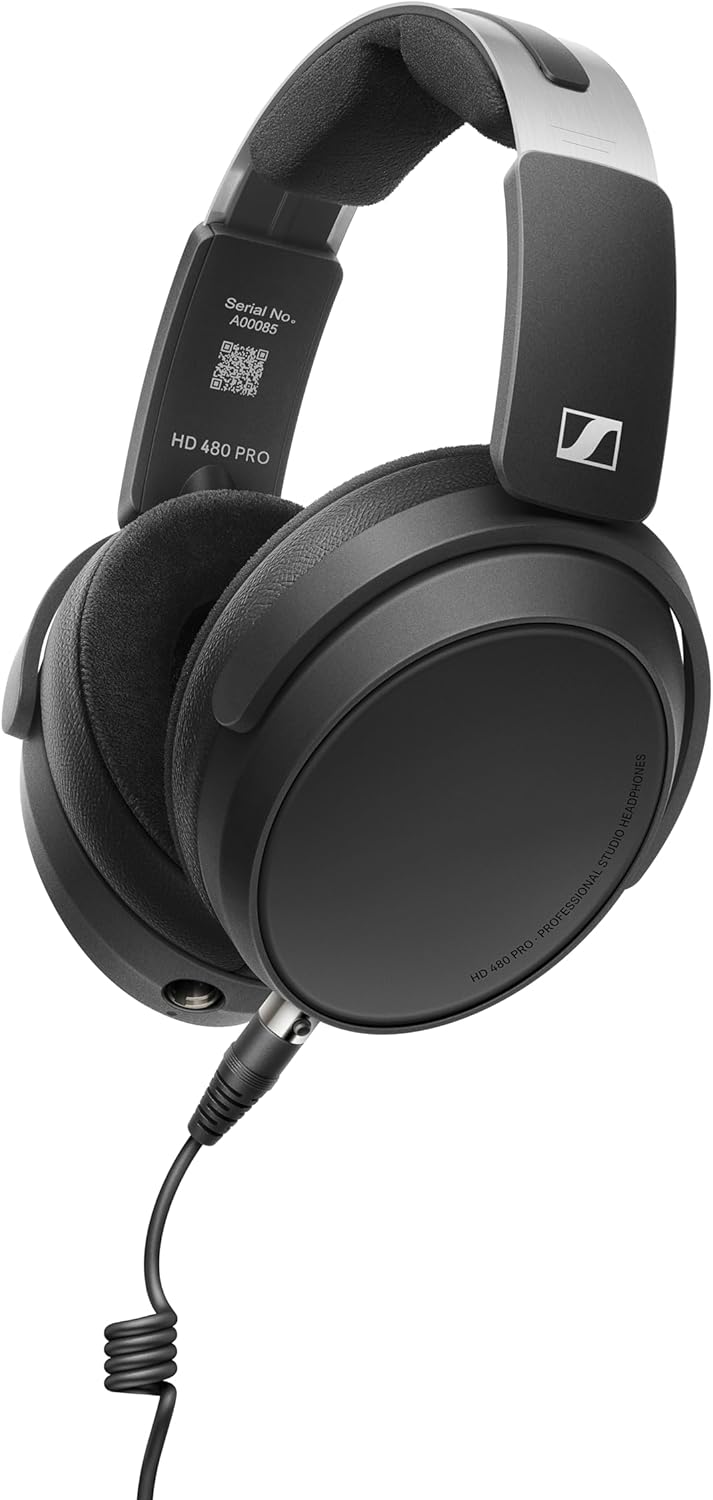
Best Premium Closed-Back Option: HD 480 PRO
The HD 480 PRO is a newer closed-back model built for producers who want studio-grade isolation without stepping up to an open-back design. It handles detailed low-mid work well, which makes it a solid second opinion alongside a brighter-tuned pair like the MDR7506.
It sits at a higher price point than most picks on this list, so it makes more sense once you’ve already confirmed production is a long-term commitment rather than a weekend hobby.
Cable Length, Adapters, and Interface Compatibility
Most studio headphones ship with a coiled or straight cable ending in a 3.5mm plug, plus a screw-on 6.3mm adapter for full-size studio equipment and audio interfaces. Before you buy, check that your interface or mixer has the right jack size, or budget for an adapter if it doesn’t.
Detachable cables, found on models like the ATH-M50X, ATH-M40x, and HD 490 PRO, are worth prioritizing if you tend to wear through cables quickly or want to swap in a longer cable for a desk setup versus a shorter one for travel. A frayed cable is one of the most common reasons studio headphones get replaced early, so this small detail can extend the life of your purchase by years.
Common Mistakes to Avoid When Buying Studio Headphones
A few missteps show up again and again when producers shop for their first serious pair of headphones. Knowing them ahead of time can save you from a return or a mix that never quite translates.
- Choosing bass-heavy consumer headphones. Extra bass sounds fun on the first listen but leads to mixes that are thin everywhere else.
- Ignoring impedance. Higher-impedance headphones like the DT 770 Pro need more power than a phone or basic laptop jack can provide.
- Skipping the comfort test. A headset that feels fine for ten minutes can become painful after a three-hour mixing marathon.
- Relying on headphones alone. Even great headphones benefit from an occasional check on studio monitors or a second pair for reference.
Wired vs. Wireless: Which Fits Your Workflow?
Nearly every option on this list is wired, and that’s intentional for production work. Wired connections avoid the latency and compression that wireless audio can introduce, which matters when you’re syncing audio to a beat in real time. If a fully cable-free setup fits your day-to-day more, our guide to the best wired headsets breaks down when a cable still makes sense for critical listening.
If you also record voice memos, take calls between sessions, or want built-in mic flexibility, it’s worth browsing our roundup of the best headsets with a built-in microphone before you commit to a studio-only pair.
Matching a Headset to Your Home Studio Setup
Your room, your genre, and your budget all influence which pair makes sense. A treated room with acoustic panels can lean on open-back headphones more heavily, while an untreated bedroom studio benefits from the isolation a closed-back pair provides.
If you’re just starting to build out your space beyond headphones, our broader guide to the best headsets for music covers picks aimed at casual listening and production alike, which can help you compare where your priorities should sit.
Frequently Asked Questions
Do I need open-back or closed-back headphones for music production?
Use closed-back headphones for recording and tracking, since they isolate sound and prevent mic bleed. Open-back headphones work better for mixing and mastering in a quiet space, where their wider soundstage helps you judge a mix accurately.
Can I use gaming headphones for music production?
You can, but most gaming headsets boost bass and treble to sound exciting rather than accurate, which can mislead your mixing decisions. A flatter-tuned studio headset gives you a more honest picture of your track.
Do studio headphones need an amplifier?
Higher-impedance models like the beyerdynamic DT 770 Pro (80 ohm) benefit from a dedicated headphone amp to reach their full volume and detail. Lower-impedance options, such as the ATH-M50X, work fine straight out of an interface or laptop.
What’s the difference between studio monitor headphones and regular headphones?
Studio monitor headphones aim for a flat, accurate frequency response so you hear the mix as it truly is. Regular consumer headphones often add extra bass or treble to sound more pleasing during casual listening, which can work against you during mixing.
How much should I spend on headphones for music production?
A solid starting point sits between $60 and $160, where models like the ATH-M20x or ATH-M50X offer dependable accuracy. You can always add a second, more specialized pair later once you know what your workflow actually needs.