Owen Bradley
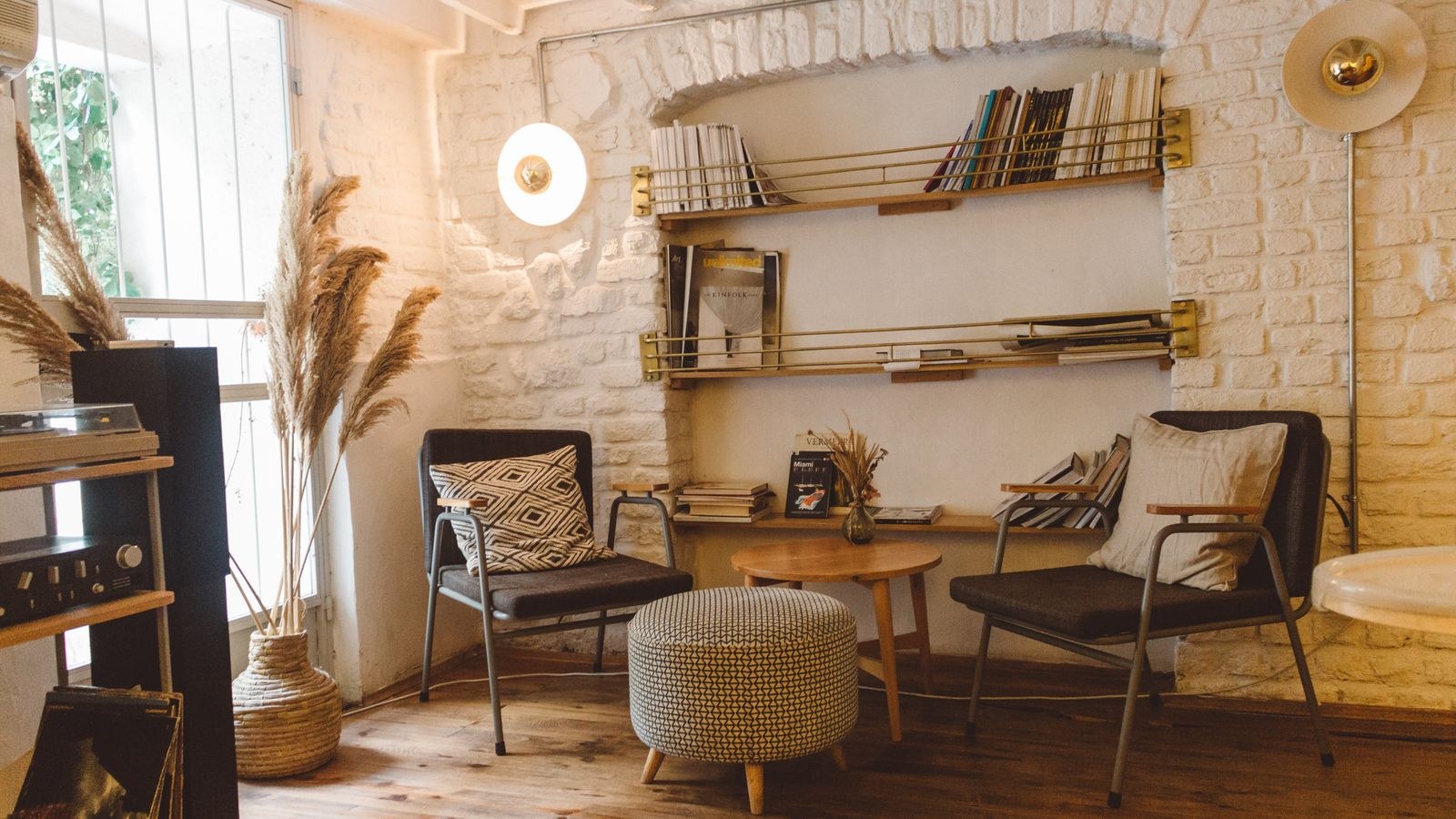
 A bookshelf is the hardest surface in a room to style, because it is the only one that has to be useful and beautiful at the same time. Fill it edge to edge and it reads as storage. Empty it out for looks and you lose the point of owning it. The shelves that work sit somewhere in between, and they get there through a handful of repeatable rules rather than good taste. This guide walks through how to style a bookshelf shelf by shelf, using horizontal and vertical stacks, deliberate negative space and the rule of thirds so the finished result looks curated instead of crammed.
What You Need Before You Start
- An empty shelf. Take everything off. Styling around existing clutter never works, and you cannot judge proportion with half the shelf occupied.
- Your books, sorted. Group loosely by size and spine colour so you can see what you are working with.
- Objects of three different heights. Something tall (vase, sculpture), something mid (a small frame, a box), something low and wide (a stacked pair of books, a bowl).
- One or two organic elements. A trailing plant, dried stems or a piece of natural wood. Every shelf needs one soft, irregular shape.
- A cloth and a level. Dust while it is empty, and confirm the unit sits plumb before you load it.
Do not skip the emptying step. Working with a blank shelf takes an extra fifteen minutes and saves an hour of pushing items around trying to make an existing arrangement work.
The Rules That Do the Work
Three principles carry almost all of shelf styling, and understanding them means you stop guessing.
- The rule of thirds. Divide each shelf mentally into three vertical zones. Aim to fill roughly two of the three and leave the remaining third open. Applied across a whole bookcase, this creates the breathing room that separates a styled shelf from a stuffed one.
- Vary the orientation. Mix upright rows of books with horizontal stacks. The horizontal stacks double as pedestals for small objects and break the relentless vertical rhythm of spines.
- Work in odd numbers. Groups of three and five read as arrangements. Pairs read as symmetry, which the eye processes and dismisses instantly.
- Build triangles. Within each shelf, place your tallest item on one side, your mid-height item on the other, and something low between them. The eye follows that implied triangle rather than scanning a flat line.
- Alternate the anchor side. If shelf one is heavy on the left, make shelf two heavy on the right. Zig-zagging weight down the unit keeps it dynamic.
How Much Negative Space Is Enough
Roughly one third of each shelf should be visibly empty, and that empty space should be contiguous rather than scattered as small gaps between objects. A single open block of eight inches does more visual work than four two-inch gaps. On very deep shelves, negative space also runs front to back: pushing everything to the front edge and leaving depth behind creates shadow, which reads as intentional. On narrow shelves you have less room to play with, so lean harder on horizontal stacking to buy back space.
Styling Shelf by Shelf
- Start with the eye-level shelf. This is the one people actually look at, so give it your best objects and the most generous negative space. Everything else supports it.
- Place the books first. Set an upright row of six to twelve books at one end, then a horizontal stack of three or four at the other. Leave the middle third open.
- Add the tall object. A vase, a lamp or a sculptural piece goes at the opposite end from your upright books, so the two tall masses balance.
- Cap the horizontal stack. A small bowl, a box or a stone on top of the flat stack of books turns storage into a display moment.
- Introduce the organic element. A trailing plant or dried stems on one shelf, ideally spilling over the edge to soften the hard horizontal line.
- Move down and repeat, alternating sides. Heavy left, then heavy right, then heavy left. Never let two consecutive shelves lean the same way.
- Load the bottom shelf with weight. Big books, baskets and closed boxes go low. This grounds the unit and hides the things you do not want on show.
- Step back to the doorway. Judge the whole unit from where the room is entered, then adjust. Nearly every correction you make at arm’s length is wrong from across the room.
Colour, Texture and Lighting
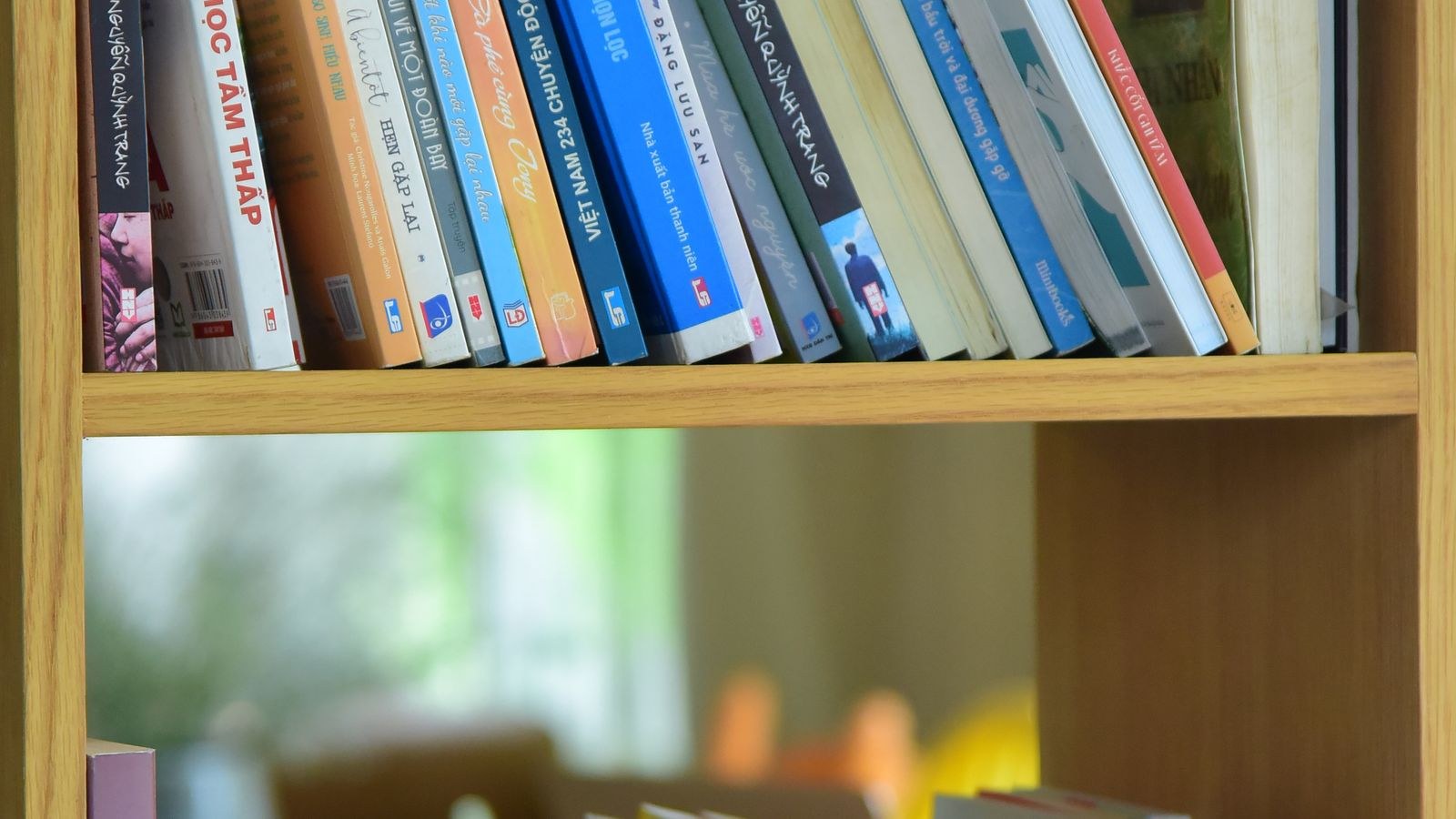
Book spines are the loudest thing on a shelf, and controlling them is most of the battle. You have three options: sort by colour for a graphic, calm result; remove or turn jackets on a few noisy titles; or lean into the mix and let objects provide the calm instead. Colour-sorting works best when the shelf is a feature wall. If the books are genuinely being read and reshelved constantly, it will not survive a month, so choose the approach that matches how you actually use the unit.
Texture is what keeps a colour-controlled shelf from going flat. Aim for at least three materials across the unit, such as ceramic, woven basket, metal and wood. Repeat each material at least twice on different shelves so the eye finds a rhythm rather than a collection of one-offs.
Lighting is the most overlooked element. Shelves are recessed by nature, so overhead room lighting leaves them in shadow and everything you arranged disappears after dark. A table lamp beside the unit, a slim picture light above it, or small battery puck lights tucked behind objects on two shelves all solve it. Our roundup of the best lamps for living rooms covers scale and light spread, which matter more than style here, since a lamp too small for the unit lights only its own shelf.
Working Around Speakers, Boxes and Real Life
Most shelves are not purely decorative. Speakers, routers, consoles and cables have to live somewhere, and pretending otherwise leads to a shelf that looks styled for a week and chaotic thereafter. Treat functional objects as design elements rather than problems. A pair of bookshelf speakers in a warm wood or matte black finish reads as sculptural mass, so place them as your tall element on two different shelves and build books around them rather than hiding them behind a row of spines, which ruins the sound anyway.
For genuinely ugly items, use closed storage. Fabric bins and lidded boxes on the lowest shelf absorb routers, chargers and paperwork. Keep the boxes in one or two finishes rather than five, and align them to the front edge so the row reads as a deliberate band.
Fitting the Shelf Into the Room
A styled bookshelf is part of a larger composition, and the pieces around it change what it needs. A bookcase directly behind seating competes with everything on the sofa, so it should be calmer than one on a bare wall. Check the sightline from the main seat: whatever sits at eye level from that position is the item people will stare at all evening. Sofas with high backs among the best sofas for living rooms can cut off the bottom two shelves entirely, which means anything precious placed low is simply wasted.
Repeat one material or colour from the shelf elsewhere in the room so the unit feels integrated. If the shelf holds a brass bowl, having brass on a lamp base or a side table pulls it together. The upholstery tones in the best accent chairs for living rooms and the frame finishes across the best living room chairs are the easiest places to find that repeat, since seating usually carries the room’s dominant colour.

Common Mistakes to Avoid
- Filling every inch. The most common error by far. If there is no empty space, there is no styling, only storage.
- Perfect symmetry on every shelf. Mirroring left and right on each level makes the unit static. Alternate instead.
- Objects that are all the same height. Without a tall, mid and low element, each shelf flatlines.
- Too many small items. A dozen tiny trinkets read as clutter from six feet away. Group them into one tray or replace with fewer, larger pieces.
- Pushing everything to the back. Aligning items to the front edge is what makes a shelf look professionally arranged.
- Ignoring the top of the unit. A bookcase that stops short of the ceiling needs one or two tall objects on top, or the gap reads as unfinished.
Frequently Asked Questions
Should I organise books by colour or by subject?
By colour if the shelf is primarily decorative and you rarely pull titles out; by subject if you use the books daily. A middle path works well: colour-block two or three shelves as a feature and keep the rest practical.
How full should a bookshelf be?
Aim for roughly two thirds full per shelf, with the remaining third as one continuous open space. That ratio holds whether the unit is four shelves or ten.
What do I put on a shelf if I do not own many books?
Lean on larger objects and closed storage. Baskets, framed art propped rather than hung, ceramics and plants fill volume without needing spines, and a few well-chosen coffee table books stacked flat go a long way.
How often should I restyle a bookshelf?
Twice a year is plenty. Swapping two or three objects and rotating a plant refreshes the whole unit, so there is no need to rebuild it from scratch during 2026.
Final Thoughts
Styling a bookshelf well is mostly restraint applied systematically. Empty the unit, mix upright rows with horizontal stacks, build a height triangle on each shelf, alternate which side carries the weight, and protect roughly a third of every shelf as open space. Treat speakers and boxes as part of the composition rather than obstacles, light the unit properly so the work still reads after dark, and pull one colour or material through to the seating nearby. Follow that order and a bookcase stops being the messiest wall in the room and becomes the one people comment on.