Owen Bradley
 A bathroom with no window is a mold machine unless you actively manage it. Every shower dumps a litre or more of water into the air, and with nowhere for that moisture to go it condenses on the coolest surfaces available: grout lines, silicone beads, the ceiling above the shower, and the back of the door. Black spots appear within weeks. The good news is that mold is entirely predictable, which means it is entirely preventable. Control humidity, shorten the time surfaces stay wet, and remove the soap film that feeds it, and the spots stop coming back. Here is the practical routine that does it.
Why Windowless Bathrooms Grow Mold So Fast
Mold spores are present in every home already; they are not something you import. What they need to actually colonise a surface is moisture, mild warmth, and something organic to eat. A windowless bathroom supplies all three generously. Soap scum, skin cells, and shampoo residue are the food. Shower heat provides the warmth. And with no window and often a weak or badly used fan, the moisture simply lingers.
The critical number is relative humidity. Below roughly 50 percent, mold struggles to establish. Above 60 percent for sustained periods, it thrives. A sealed bathroom after a hot shower can sit above 90 percent for an hour or more. Your entire strategy is about shortening that window, which is why timing matters as much as equipment.
What You Will Need
- A working exhaust fan sized for the room, ideally on a timer or humidity sensor switch.
- A small dehumidifier if the fan alone cannot keep up.
- A cheap hygrometer so you are managing measured humidity, not guesswork.
- A squeegee for the shower screen and tiles.
- A grout brush and cleaner, plus a mold-killing product for existing spots.
- Grout sealer and mold-resistant silicone for a periodic refresh.
- Microfibre cloths and a towel bar with real spacing.
Step-by-Step: Building a Mold-Proof Routine
- Measure your actual humidity first. Put a hygrometer on the vanity and note the reading before a shower, right after, and an hour later. If it is still above 60 percent an hour on, your ventilation is undersized or misused, and everything else follows from that.
- Check the fan is genuinely moving air. Hold a single sheet of tissue against the grille while the fan runs. It should stick firmly. If it flutters or falls, the fan is clogged, the duct is crushed, or the unit is failing. A fan that hums but does not pull is worse than useless because it creates false confidence.
- Run the fan long enough. This is the single biggest mistake. Switching the fan off with the light leaves the room saturated. Run it for at least twenty minutes after the shower ends, and thirty is better in a windowless room. A timer switch or humidity-sensing switch removes the human factor entirely.
- Give the fan make-up air. An extractor can only pull out as much air as it can draw in. Leave the door ajar, or undercut the door by around three quarters of an inch, so replacement air can enter. A sealed room starves the fan and cuts its real-world extraction dramatically.
- Squeegee the wet surfaces. Thirty seconds with a squeegee across the screen, tiles, and shower floor removes most of the standing water that would otherwise evaporate into the room and recondense on the ceiling. This is the highest-value habit on the list.
- Wipe the corners and silicone dry. Run a microfibre cloth along the silicone beads at the tray edge, the screen seal, and the internal corners. These stay wet longest and are always where mold appears first.
- Add a small dehumidifier if numbers stay high. In a truly airless bathroom, a compact unit running for an hour after showers pulls the room back under 50 percent reliably. Place it clear of splashing, on a level surface, and empty the tank regularly so it does not become a damp source itself.
- Deal with textiles. Hang towels spread out rather than folded on a hook, and do not leave damp bath mats flat on the floor. A shower curtain liner must be pulled fully closed after use so it can dry rather than staying folded and wet in the creases.
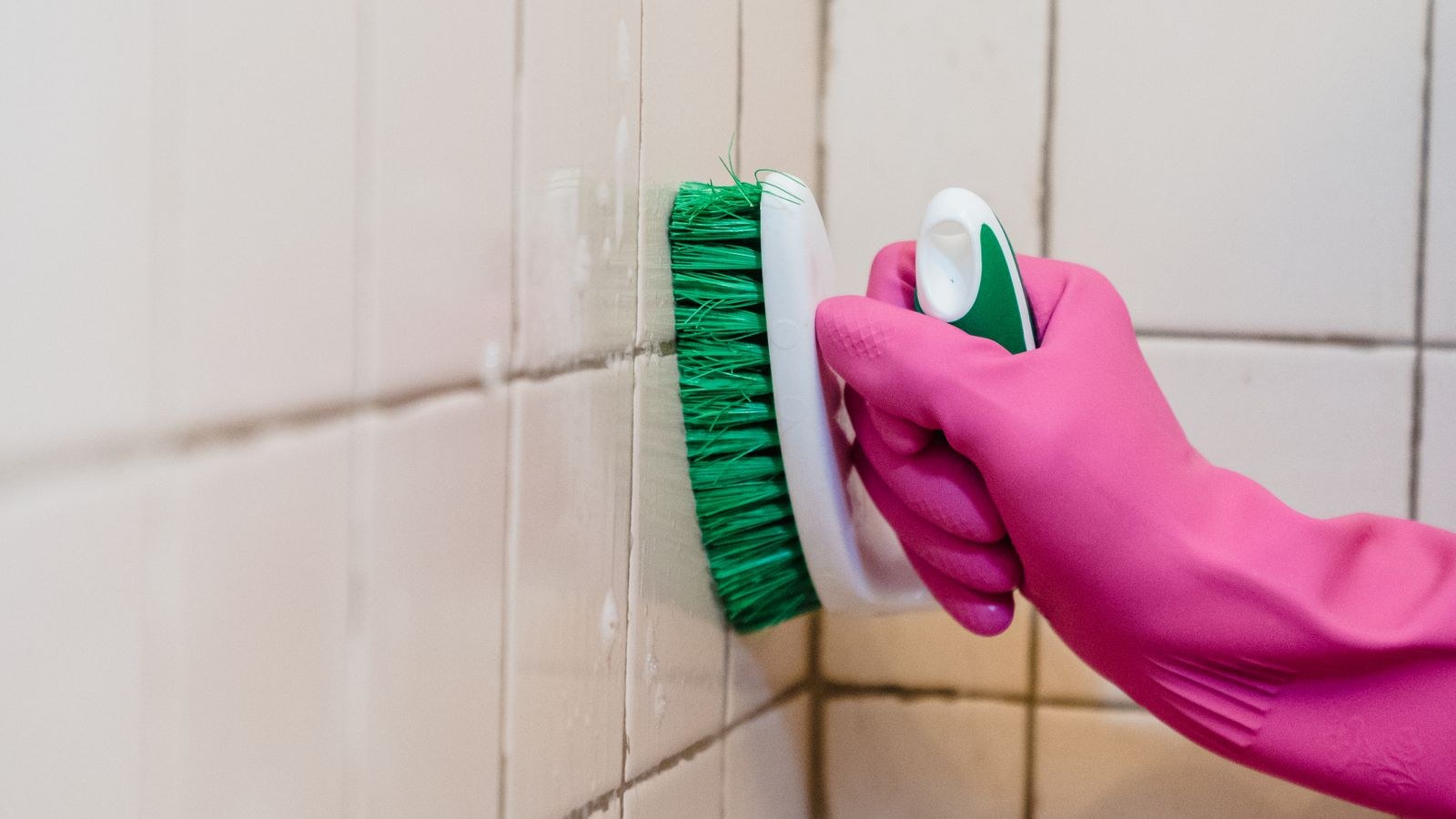
- Clean soap scum weekly. Remove the film mold feeds on with a bathroom cleaner and a grout brush, paying attention to the lower third of the walls and the tray perimeter. Rinse and then dry rather than leaving it wet.
- Treat and seal the grout. Kill existing spots with a mold-specific cleaner, let it dwell as directed, scrub, and rinse. Once the grout is thoroughly dry, apply a penetrating grout sealer. Sealed grout absorbs far less water and dries much faster.
- Replace failed silicone rather than cleaning it. Once mold has grown into the body of the sealant, it is under the surface and no cleaner reaches it. Cut it out, dry the joint completely, and rebed with a mold-resistant sanitary silicone.
- Service the fan twice a year. Pull the cover, vacuum the grille and blades, and check the duct run. A fan choked with lint can lose a large share of its rated airflow, which quietly undoes everything else you are doing.

Choosing the Right Equipment
Ventilation and dehumidification are the two levers that actually move the humidity number, so it is worth spending sensibly there rather than on cleaning products. For rooms where the fan cannot be upgraded, a compact unit sized for a small space handles the load well; our roundup of the best dehumidifiers for bathrooms covers moisture removal rates and which designs cope with a humid, splash-prone environment.
If the fan itself is the weak link, replacing it is the better investment. The best bathroom ceiling fans guide explains how to match airflow to room volume and why noise ratings determine whether people actually leave the fan running. In very small ensuites or cloakrooms, a plug-in unit from the best mini dehumidifiers list can be enough on its own. Whatever hardware you have, keeping it clean matters, so follow how to clean a bathroom exhaust fan as part of your seasonal routine. If your shower uses a curtain rather than a screen, how to clean shower curtain liners tackles what is often the single mildewiest object in the room.
Safety Notes
Never mix bleach-based mold cleaners with ammonia or acidic products such as vinegar or descalers. The combination releases toxic gas, and a small windowless bathroom is the worst possible place for it. Use one product, rinse thoroughly, and only then consider another.
Wear gloves and eye protection when scrubbing mold, and open the door with the fan running so you are not breathing disturbed spores in a sealed box. If mold covers a large area, keeps returning after correct treatment, or you find soft or bulging plasterboard, stop and get a professional assessment. That pattern suggests a plumbing leak or a failed waterproof membrane behind the tiles, and no amount of ventilation will fix a source of liquid water.
Troubleshooting Persistent Mold
Spots return within days of cleaning
Humidity is not actually coming down. Check the fan with the tissue test, confirm it runs long enough after showers, and verify make-up air can enter the room.
Mold on the ceiling only
The ceiling is the coldest surface and the first to hit dew point. This usually means poor extraction directly above the shower, or an uninsulated ceiling with a cold void above it.
Black growth in the silicone that will not scrub out
It has penetrated the sealant. Cutting out and rebedding the joint is the only real fix; surface cleaners will keep failing.
A musty smell with no visible spots
Look under the vanity, behind the toilet cistern, and along the tray edge. Hidden damp from a slow leak produces odour long before anything is visible on the wall.
Mistakes to Avoid
- Wiring the fan to the light switch so it stops the moment you leave.
- Shutting the door tight during and after showers, starving the extractor of make-up air.
- Painting over mold, which hides it for a few weeks and traps moisture behind the film.
- Leaving damp towels and mats bunched where they cannot dry.
- Sealing damp grout, locking moisture inside the joint permanently.
Frequently Asked Questions
What humidity should a bathroom sit at?
Aim to return below 50 percent within an hour of a shower. Sustained readings above 60 percent are the range where mold reliably establishes.
Is bleach the best mold cleaner?
It removes the stain effectively on non-porous surfaces but penetrates porous grout and silicone poorly. Dedicated mold treatments and, where needed, replacement of the sealant give longer-lasting results.
Can a dehumidifier replace an extractor fan?
It helps considerably, but a fan removes moist air from the building entirely while a dehumidifier only condenses it. Where a fan is impossible, a dehumidifier plus a diligent squeegee routine is a workable substitute.
Final Thoughts
Preventing mold in a windowless bathroom is a matter of shortening the wet window rather than fighting spores. Measure the humidity so you know what you are dealing with, run the fan well past the end of the shower, leave the door cracked so air can move, and spend thirty seconds with a squeegee every time. Seal the grout, replace tired silicone rather than scrubbing it, and clean the fan twice a year. Those habits cost almost nothing and will keep the room looking new for the whole of 2026 and well beyond.