Owen Bradley
 A pedestal fan that has started to squeak, whine or spin down slowly is rarely broken. In almost every case the motor uses plain sleeve bearings, sometimes called bushings, which rely on a thin film of oil held in a felt or sintered bronze sleeve around the shaft. That oil evaporates and migrates away over a few seasons of running. Once it thins out, metal starts rubbing metal, and the fan tells you about it with a rhythmic squeal, a dry whirring, or a blade that coasts to a stop in two seconds instead of ten. Adding the right lubricant to the right place takes about twenty minutes, costs a few dollars, and can add years to a fan that felt ready for the bin.
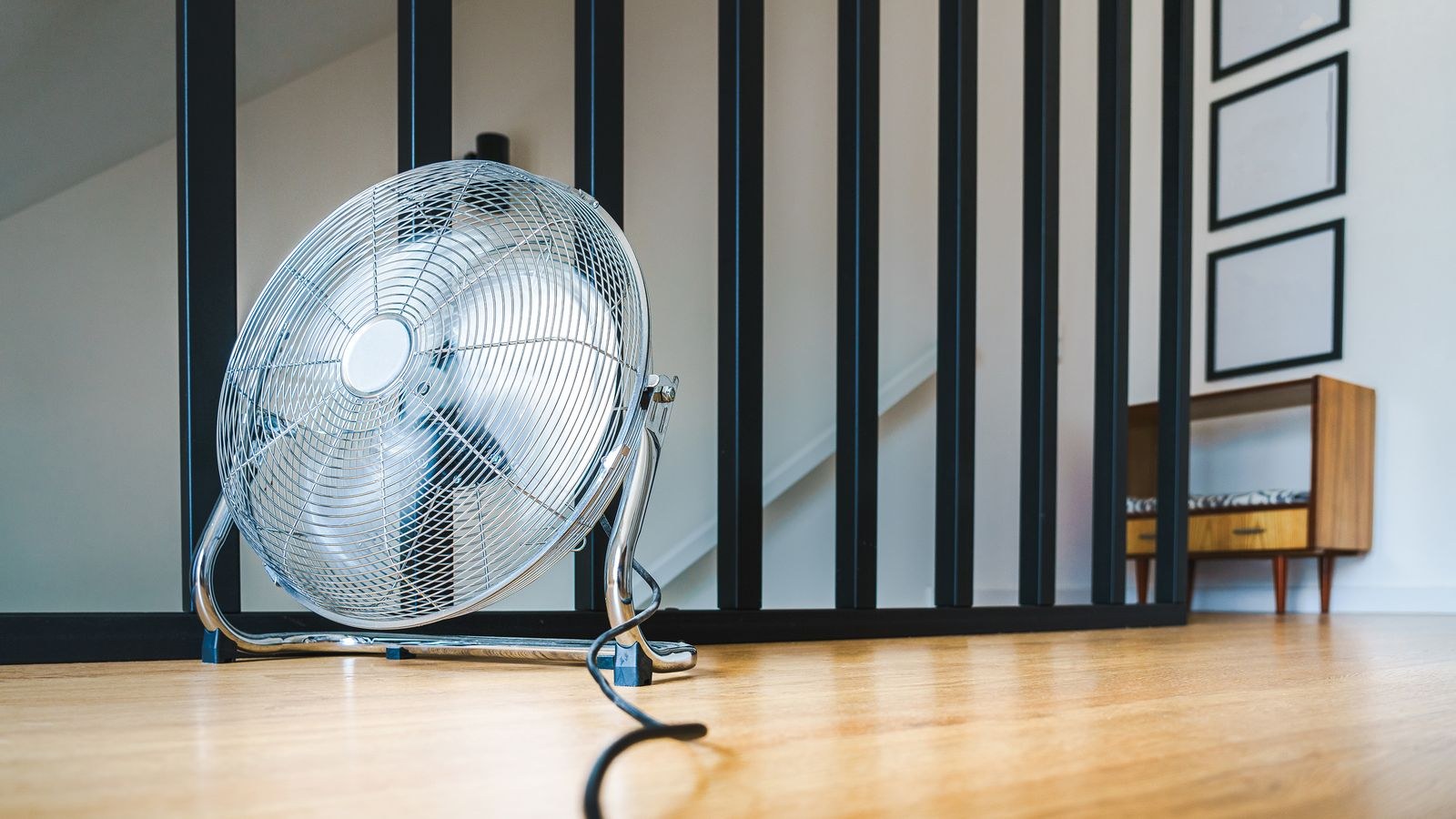
Signs Your Pedestal Fan Motor Needs Oil
The clearest symptom is a squeak or chirp that repeats in time with the blade rotation and gets faster as you raise the speed. A dry, sandy whirring is the same problem a stage further along. Watch the coast-down test as well: switch the fan off at full speed and count how long the blade freewheels. A healthy fan drifts for several seconds; a dry one stops almost immediately because friction in the bushing is dragging it to a halt.
Other clues include a fan that struggles to start on low and needs a nudge, a housing that runs hot, and a drop in top speed. What oiling will not fix is a constant electrical hum, a burning smell, a wobbling blade or a cracked hub.
Choosing the Right Lubricant
Use a lightweight, non-detergent machine oil. Sewing machine oil, electric motor oil, turbine oil or 3-in-1 in the blue can are all appropriate. These are thin enough to wick into a sintered bushing and stable enough to stay put.
Avoid WD-40 above everything else. It is a water-displacing solvent that dissolves whatever lubricant remains in the bearing, so a fan sprayed with it goes quiet for a fortnight then returns louder and drier. Also avoid heavy grease, which will not penetrate a sleeve bearing, cooking oils, which turn gummy, and car motor oil, which is too thick.
Tools and Preparation
- Lightweight machine oil with a precision applicator tip or a needle-nose oiler.
- Phillips and flat screwdrivers for the grille clips and rear housing screws.
- Cotton swabs, rags and a soft brush for cleaning the shaft area.
- Compressed air to clear dust from the motor vents before you add oil.
- A pin or paperclip for lifting the rubber plugs that cover the oil ports.
- Newspaper or a drop cloth, since some oil will inevitably run.
Work at a table rather than on the floor so you can lay the motor housing flat, which matters when you want gravity to carry oil down the shaft instead of straight out of it.
Step-by-Step: Oiling a Pedestal Fan Motor
- Unplug the fan completely. Not just switched off at the control knob. Pull the plug from the wall and set it where it cannot be knocked back in while your hands are near the blade.
- Remove the front grille, blade and rear grille. Most pedestal fans use a ring of clips or a plastic collar nut around the front cage. Undo the clips, lift the front grille away, then unscrew the blade retaining nut. Note carefully which way it turns, because many are reverse threaded and turn clockwise to loosen. Slide the blade off the shaft, then remove the rear grille nut and lift the rear grille clear.
- Clean the shaft and motor housing. Wipe the exposed shaft with a rag to remove old oil and grit, and blow compressed air through the motor cooling vents. Adding fresh oil on top of caked dust just makes an abrasive paste, so this step matters more than it seems.
- Locate the oil ports. Look at the front and rear faces of the motor housing where the shaft emerges. You are looking for small holes, sometimes covered by a rubber or plastic plug, sometimes by a strip of tape, and occasionally by a felt wick you can see through a slot. If you find no visible port, the bushing is usually still accessible by applying oil to the shaft itself right where it enters the housing and letting capillary action draw it in.
- Lay the fan on its back and apply the front bearing oil. With the motor horizontal and the port facing up, add three to five drops of lightweight machine oil. Add them one at a time and give each a few seconds to soak in. Resist the urge to flood it; excess oil simply runs down into the windings and collects dust for the rest of the fan’s life.
- Rotate the shaft by hand to distribute it. Turn the shaft slowly for a minute or two, in both directions if it turns freely. You should feel the resistance drop and any gritty sensation smooth out as the oil works into the bushing.
- Turn the fan over and repeat at the rear bearing. This is the step people skip. A pedestal fan has a bearing at each end of the motor, and the rear one, buried near the oscillation gearbox, is often the drier of the two because it sees less airflow. Flip the housing so the rear port faces up and add the same three to five drops.
- Oil the oscillation mechanism if it is stiff. The gearbox behind the motor drives the side-to-side sweep and has its own pivot points. A single drop on each exposed linkage pin and on the pivot post at the top of the pedestal quiets the clicking most owners assume is unfixable. Do not open a sealed gearbox.
- Wipe away every trace of excess. Run a clean rag around both bearing faces and the shaft. Any oil left on the outside will attract dust and form a black gum within weeks.
- Let it sit, then reassemble in reverse order. Give the oil ten to fifteen minutes to wick fully into the bushing. Refit the rear grille, slide the blade onto the shaft making sure the locating pin engages properly, tighten the blade nut in the correct direction, then clip the front grille back on and check that the blade spins freely without touching the cage.
- Test on low first. Plug in and run the low setting for a minute, then work up through the speeds. The squeak should be gone and the coast-down time noticeably longer. A faint smell of warm oil for the first ten minutes is normal.
Safety Rules That Matter
The fan must be unplugged for the entire job, and never run with the front grille removed to test whether the noise has gone. Exposed blades at operating speed are genuinely dangerous and can throw a loose blade.
Keep oil off the windings, capacitor, speed switch and cord. Oil traps dust, and a coating of oily dust on a winding is an insulation and heat problem. Never oil a motor that smells burnt, shows scorching or trips a breaker, because lubrication cannot fix an electrical fault.
How Often to Oil and General Maintenance
For a fan used heavily through a hot season, once a year before you bring it out of storage is sensible. Rather than working to a calendar, use the coast-down test: if the blade stops in under three seconds from full speed, it is time.
Oiling works best alongside basic cleaning. Wash the grilles and blades with warm soapy water each season and dry them fully, because dust unbalances the assembly and puts side load on the bearings you just lubricated. The routine in our ceiling fan maintenance guide covers the overhead equivalents of these checks.
Troubleshooting After Oiling
If the squeak persists, you probably only oiled the front bearing, so go back and do the rear. If both are done and the noise remains, the bushing may be worn oval, which shows up as a shaft you can wiggle sideways in the housing.
Oil dripping from the housing means you used too much. Wipe it out and run the fan to shed the excess. A fan that is quiet but still slow probably has a failing capacitor. A new rattle after reassembly almost always means the blade nut is loose or the locating pin missed its slot, so switch off immediately and check.
Common Mistakes
- Reaching for WD-40. It strips the remaining lubricant and leaves the bearing drier than it started.
- Over-oiling. More is not better. Excess runs into the windings and becomes a dust magnet.
- Oiling only one end of the motor. There are two bearings, and the rear one is usually the noisy one.
- Forcing a reverse-threaded blade nut. Many turn the opposite way to normal and snap if you lever them.
- Skipping the cleaning step. Fresh oil over old dust becomes grinding paste.
- Oiling a motor with an electrical fault. A burning smell or a tripped breaker means replacement, not maintenance.
When Replacement Beats Repair
Sleeve bearings eventually wear beyond the help of oil. If the shaft has play, the housing runs hot, or you are oiling every couple of months, replacement beats another round of maintenance. Modern brushless DC pedestal fans run far quieter, use sealed bearings that need no oiling, and draw less power at the same airflow.
If quiet operation is the priority, the shortlist of the best quiet pedestal fans compares measured sound levels rather than marketing claims. For overnight use the dedicated picks for the best pedestal fans for bedrooms focus on models that stay smooth at their lowest setting, while the best pedestal fans with remotes save you getting up to change speed in the middle of the night. For a wider view across formats and motor types, the roundup of best electric cooling fans is a useful starting point.
Frequently Asked Questions
Can I use WD-40 on a pedestal fan motor?
No. WD-40 is a solvent that dissolves the oil already in the bushing. Use sewing machine oil, turbine oil or another lightweight non-detergent machine oil instead.
What if my fan has no visible oil ports?
Apply a few drops directly to the shaft where it enters the housing at each end and rotate it by hand. Capillary action draws the oil into the bushing. Some sealed motors genuinely cannot be serviced.
How many drops of oil should I use?
Three to five drops per bearing, added one at a time. Flooding the port pushes oil into the windings where it collects dust and does no good at all.
Why is my fan still slow after oiling?
If the squeak is gone but the speed has not recovered, the cause is usually a weak start capacitor or a worn bushing with visible shaft play, neither of which lubrication can correct.
Final Thoughts
Oiling a pedestal fan is one of the highest-value twenty minutes of home maintenance there is. Unplug it, strip the grilles and blade, clean the shaft, find the ports at both ends of the motor, add a few drops of lightweight machine oil, turn the shaft to work it in, wipe the excess and reassemble carefully. Use the coast-down test to decide when to do it again. Done once a season, that routine keeps a fan quiet and fast for years past the point most people would have replaced it.