Owen Bradley
 Carpet under a rolling office chair takes more abuse than almost any other surface in a home. A loaded chair concentrates well over a hundred pounds onto five small caster contact points, then drags that load back and forth across the same square yard hundreds of times a day. The result is a crushed, matted track that no vacuum will lift and no cleaning will reverse, because the fibers are not dirty, they are permanently deformed. Protecting carpet under chair wheels is entirely preventable, but it takes the right mat thickness, the right casters, and a small maintenance routine. Here is how to do all three.
Why Carpet Damage Happens
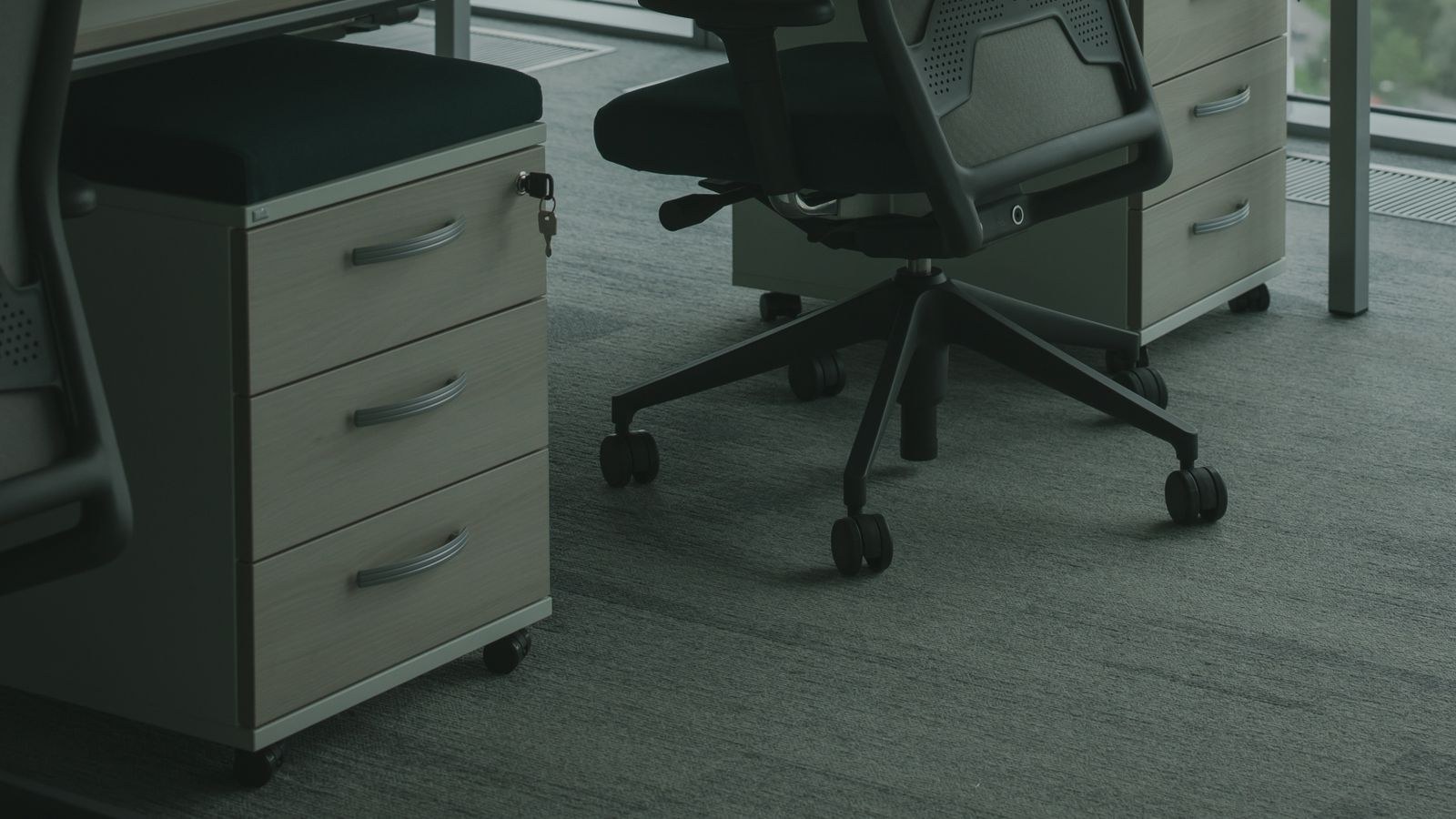
Three separate mechanisms damage carpet under a chair, and each needs a different response. Crushing is compression of the pile under concentrated point load, which flattens fibers until they lose their spring permanently. Abrasion is fiber wear from the rolling and twisting action of hard casters, which shreds the tips of the yarn and creates a visibly duller patch. Snagging happens on looped carpet such as Berber, where a hard caster edge catches a loop and pulls it, producing runs that spread.
Low pile carpet resists crushing best but abrades quickly. High pile and plush carpet hides abrasion but crushes badly and also makes the chair hard to roll, which increases the twisting force casters apply. Berber is the most vulnerable to snagging and the least tolerant of hard, narrow wheels. Identify which carpet you have before choosing a solution, because the right mat for plush is wrong for Berber.
What You Need
- A tape measure, to size the mat around the full chair travel area.
- A chair mat rated for your specific carpet pile depth.
- Replacement casters suited to carpet, if your chair came with hard plastic wheels.
- A flat-head screwdriver or pry tool for caster removal.
- A vacuum, and optionally a carpet rake or a stiff brush for fiber recovery.
- Furniture coasters or cups for the desk legs, which cause their own dents.
Step-by-Step: Protecting the Carpet
- Map the actual travel area. Sit at the desk and roll through a normal day’s range: pushing back to stand, sliding side to side, turning to a printer. Mark the outer limits with tape. Most people are surprised that the true area is larger than the mat they were about to buy, and a mat you roll off the edge of is worse than none because the lip catches the casters.
- Measure your carpet pile depth. Press a ruler into the carpet until it meets the backing and read the depth. Under about a quarter inch is low pile, up to about half an inch is medium, and anything deeper is high pile or plush. This number determines the mat you need.
- Choose the mat thickness to match. Low pile carpet works with thinner mats around 0.10 to 0.13 inches. Medium pile needs roughly 0.16 inches or more. High pile and plush require the thickest carpet-rated mats, often 0.19 inches or greater, because a thin mat will flex into the pile, crack along the flex lines, and fail within months.
- Confirm the mat has carpet grippers. Carpet mats have small studs or spikes on the underside that anchor into the pile. A mat designed for hard floors has a smooth back and will slide continuously on carpet, which is both annoying and useless as protection. Never use a hard-floor mat on carpet or the reverse.
- Let the mat flatten before use. Most mats ship rolled and arrive curled. Lay it flat, ideally in a warm room, and weight the corners for a day or two. Using a curled mat immediately puts stress on the edges and is a common cause of early cracking.
- Position it with a generous margin. Extend the mat at least 6 inches beyond your marked travel limits on every side, and further behind the chair where standing up pushes it furthest. Under the desk, the mat should reach the back legs so the chair never rolls onto bare carpet mid-movement.
- Match the casters to the surface. Standard hard nylon casters are made for carpet, but they are exactly what shreds and snags it when used bare. If you are running without a mat, soft polyurethane or rubber-tread casters spread load better and roll without the twisting drag that damages fibers. Wider wheels also reduce point pressure significantly.
- Swap the casters if needed. Most office chair wheels are friction-fit on a standard 11mm grip-ring stem. Tip the chair on its side, protect the finish with a cloth, and pull each caster straight out, using a flat pry tool against the base if it resists. Push the replacements in firmly until they seat with a click. No tools beyond that are usually required.
- Protect the desk legs too. Static furniture creates permanent dents that people blame on the chair. Fit felt pads or coasters under each desk leg, and if the desk is heavy, consider wide cups that spread the load across more carpet area.
- Set a simple maintenance routine. Vacuum the area and under the mat monthly, since grit trapped beneath a mat grinds against the backing and accelerates wear. Lift and reposition the mat slightly every few months so the same fibers do not carry the load forever.
Choosing the Right Mat
Mat selection comes down to three things: pile rating, size, and material. Pile rating is non-negotiable, since an undersized thickness will crack. Size should follow your travel map rather than the desk footprint. Material is a genuine tradeoff: polycarbonate is stiffer, clearer, and far more crack-resistant but costs more, while PVC and vinyl are cheaper and softer, with a tendency to dent under casters and become brittle over a few years. Our roundup of the best desk chair mats for carpet sorts options by pile depth, and the broader best desk chair mats list covers both carpet and hard-floor versions if you have a mixed setup.
Shape matters more than it seems. A rectangular mat is simplest, but a lipped mat with a tongue extending under the desk gives more coverage in the chair’s true travel zone without an oversized footprint in the room. For a fuller explanation of how mats interact with different floors, our guide to chair mats and protecting floors under a desk chair covers the tradeoffs in detail.
Casters Are Half the Answer
If you would rather skip the mat, better casters do a lot of the work. Soft-tread wheels roll more easily on carpet, which reduces the sideways scuffing that causes most abrasion, and larger diameters, typically 3 inches versus the standard 2, spread load and clear pile more smoothly. Our guide to choosing the right desk chair wheels for your floor type explains which tread suits which carpet. Bear in mind that no caster prevents crushing entirely, so a mat remains the better choice on plush carpet.
The Chair Itself Matters
Weight distribution starts at the base. A five-star base spreads load across five points rather than four, and a wider base spreads it further still. Chairs with tiny casters and a narrow base concentrate pressure and dig in noticeably faster. If you are replacing the chair anyway, our roundup of the best office chairs covers models with wide bases and quality caster hardware that are kinder to carpet from the start.
Safety and Care Notes
A mat that slides is a fall hazard, so confirm the grippers are engaged and the mat is not simply resting on a very low pile it cannot grip. Never place a carpet mat on a hard floor, where the studs prevent it sitting flat and create a rocking surface. Check the edges periodically for cracks, since a broken edge becomes a sharp trip point and can also cut carpet fibers.
Watch temperature too. Vinyl mats become brittle in cold rooms and can crack the first time a chair rolls onto them on a winter morning, so let a mat warm up before heavy use. Warm water and mild soap is enough for cleaning; solvents cloud and weaken plastic.
Troubleshooting
The mat keeps sliding. It is almost certainly a hard-floor mat, or a carpet mat with grippers too short for a very low pile. Confirm the underside has studs and match the mat to your measured pile depth.
The mat cracked within a year. It was too thin for the pile, or it was used while still curled. Move up a thickness rating and consider polycarbonate rather than vinyl for the replacement.
The chair is hard to roll on the mat. That usually means the mat is flexing into deep pile. A thicker, stiffer mat solves it. Soft casters designed for hard surfaces can also drag on a mat, so match the caster type to whichever surface you actually roll on.
The carpet is already matted. Light crushing often recovers. Vacuum thoroughly, mist the area lightly with water, then work the fibers upright with a carpet rake or stiff brush and let it dry. Deep, glossy wear where fiber tips have abraded away will not recover, so protect it from further damage instead.
Mistakes to Avoid
- Buying a hard-floor mat for carpet. It will slide constantly and protect nothing.
- Sizing the mat to the desk instead of the chair’s travel. Rolling off the edge causes damage and cracks the mat.
- Ignoring pile depth. Thickness rating is the specification that determines whether a mat survives.
- Using a curled mat straight from the box. Flatten it first or expect early edge failure.
- Forgetting the desk legs. Static dents get blamed on the chair and are just as permanent.
- Never vacuuming under the mat. Trapped grit grinds the carpet backing from below.
Frequently Asked Questions
How thick should a chair mat be for carpet?
Match it to pile depth. Low pile is fine around 0.10 to 0.13 inches, medium pile needs about 0.16 inches, and high pile or plush needs 0.19 inches or more. Going thinner than your pile requires is the most common cause of cracking.
Can I use a rug instead of a chair mat?
A low pile rug over carpet adds a sacrificial layer but rolls poorly and bunches under the casters. It protects the carpet beneath, but it wears out quickly and makes the chair harder to move.
Do soft casters remove the need for a mat?
They reduce abrasion and snagging significantly but not crushing, which is caused by load rather than wheel material. On low pile carpet, good casters alone may be enough. On plush, use both.
Will crushed carpet ever recover?
Light compression usually lifts with vacuuming, a light misting, and brushing the fibers upright. Once the fiber tips have abraded away and the patch looks shiny, the damage is permanent.
Final Thoughts
Protecting carpet under a rolling chair is one of the rare home problems where prevention is cheap and the cure does not exist. Measure your pile depth, map the real travel area, buy a carpet-rated mat thick enough for that pile, fit casters suited to the surface, and vacuum underneath every month or so. That sequence costs less than a single carpet repair and takes an afternoon. Do it before the track appears rather than after, because once the fibers have been ground flat, no mat you buy later will bring them back.