Owen Bradley
 A cordless stick vacuum is only as good as the cell pack inside it. When it is new you get a satisfying fifteen to sixty minutes of runtime depending on the mode; two years later the same machine dies halfway through the hallway and the light on the handle blinks red before you have finished a single room. That decline is not inevitable, and it is rarely a defect. Lithium-ion cells age according to how they are charged, how hot they get, how deeply they are discharged and how hard the motor works them. Change those four variables and a stick vacuum battery that would have faded in two years can stay usable for five or more. This guide covers the charging habits, storage rules, filter maintenance and settings that actually extend battery life, plus how to tell when a pack is genuinely finished.
How Lithium-Ion Vacuum Batteries Age
Every lithium cell has a finite number of charge cycles, typically a few hundred to around a thousand before capacity drops noticeably. But cycle count is only part of the story. Two chemical processes degrade the cells over time, and both of them speed up dramatically with heat and with time spent sitting at a full or empty charge.
The first is the growth of a resistive layer on the anode, which happens fastest when the pack sits at 100 percent for long periods, especially in a warm room. The second is capacity loss from deep discharge, which is why running the vacuum until it shuts down and then leaving it flat for weeks is the fastest way to kill it. Add heat from a high-power motor and an aggressive charger, and you get a pack that appears to lose a minute of runtime every month.
The practical takeaway: keep the pack cool, avoid the extremes of the charge range whenever you can, and do not let heavy suction modes cook the cells. Everything else in this guide is a variation on those three rules.
What You Need
- The original charger or dock supplied with the vacuum.
- A soft brush and a microfiber cloth for filters and contacts.
- Running water if your filter is washable — check the manual first.
- A pair of scissors or a seam ripper for hair wrapped around the brush roll.
- A cool storage spot away from radiators, garages and direct sun.
Step-by-Step: Making the Battery Last
- Stop charging to full and leaving it there. If your vacuum has a removable pack, take it off the dock once it reaches full and store it separately. Packs held at 100 percent in a warm hallway for weeks at a time age far faster than packs that sit around half charge. Some newer models include a storage or eco charge mode that stops at roughly 80 percent — turn it on if you have it.
- Avoid running the pack to complete shutdown. Finishing a room and putting the vacuum back with a little charge remaining is much kinder than pushing until the motor cuts out. Occasional full discharges do no lasting harm, but making a habit of them measurably shortens pack life.
- Charge at room temperature. Never charge a pack that is still hot from a long high-power run. Give it fifteen to twenty minutes to cool first. Equally, do not charge a cold pack straight from an unheated garage; lithium cells plate lithium metal when charged below freezing, which causes permanent damage.
- Use the correct charger. Third-party chargers and universal adapters often skip the temperature and voltage safeguards built into the original. The few dollars saved are not worth the risk to a pack that costs a significant fraction of the vacuum’s price.
- Default to the lowest suction mode that works. Maximum or boost mode can draw three to four times the current of the standard setting, which both drains and heats the pack. Save it for embedded pet hair and thick rugs, and let eco mode handle hard floors and light passes. This single habit often doubles usable runtime per charge.
- Clean the filters on schedule. A clogged filter forces the motor to work harder against restricted airflow, which raises current draw and heat. Tap out or wash the pre-motor filter weekly to fortnightly depending on use, and let it dry completely — at least 24 hours — before reinserting. Running a damp filter chokes airflow and can damage the motor.
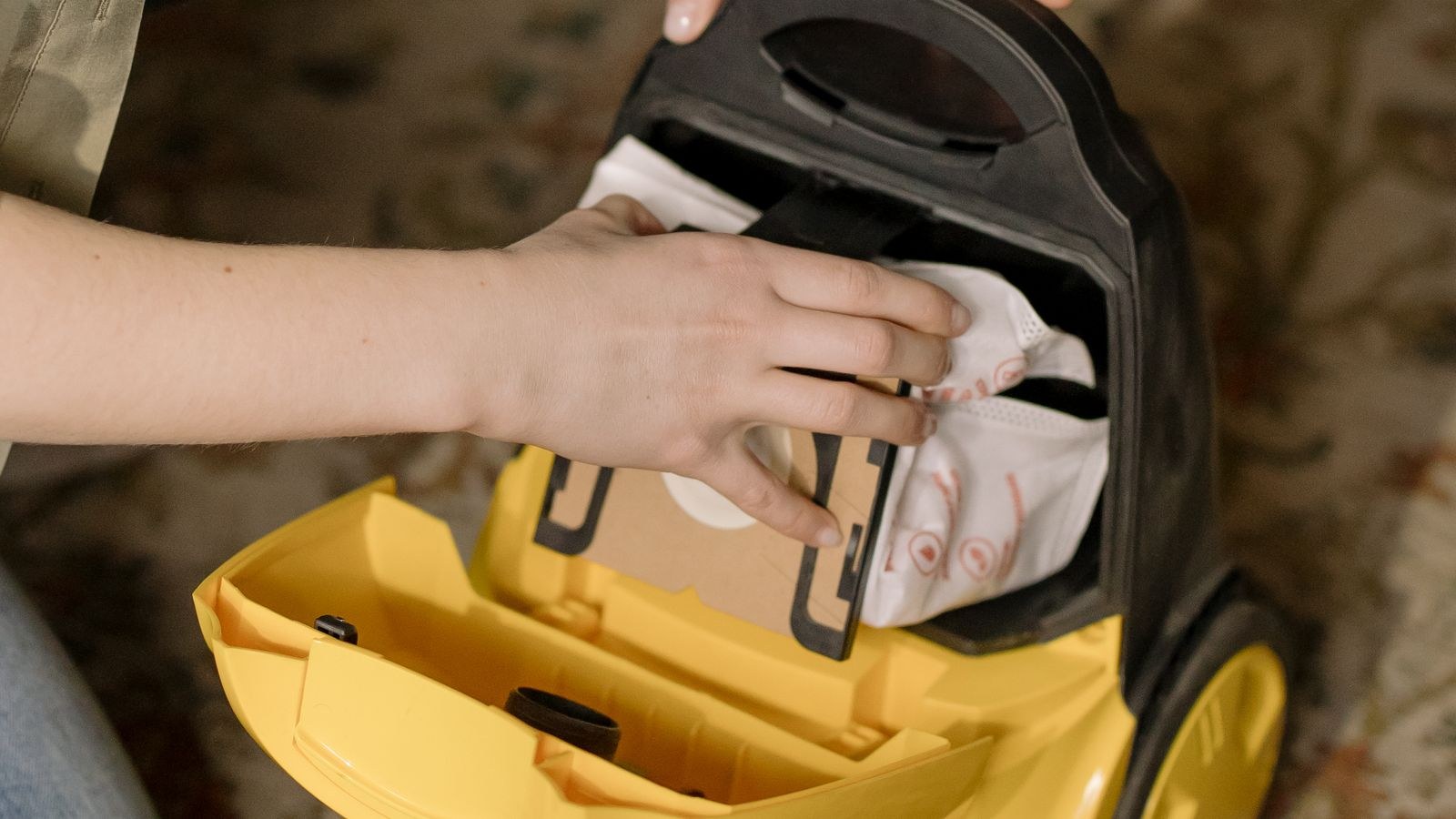
- Empty the bin before it fills. Most cordless vacuums lose suction sharply once the bin passes the max line, and the motor compensates by drawing more power. Emptying at two-thirds full keeps airflow and current draw where they should be.
- Clear the brush roll and airways. Cut away wrapped hair with scissors, check the wand and cyclone inlet for blockages, and confirm the floor head spins freely. A stalled or dragging brush roll is a hidden power drain that shows up as mysteriously poor runtime.
- Keep the battery contacts clean. Wipe the metal terminals on the pack and in the vacuum with a dry microfiber cloth every couple of months. Dust and oxide build resistance, which causes heat and can trigger false low-battery cut-offs.
- Store the vacuum somewhere cool and dry. Room temperature is ideal. A garage that swings from freezing to 100°F, or a spot in direct sunlight, will age the pack far faster than the vacuuming itself does. If you are storing the machine unused for a month or more, leave the pack at roughly half charge and top it up every few months.
Getting More From Each Charge
Runtime and battery health are related but separate problems. Even a healthy pack disappoints if you use it inefficiently. Vacuum in a planned route rather than wandering, so you are not repeatedly retracing floor you already covered. Use the correct floor head for the surface — a motorised brush roll on hard floors burns power for no benefit compared with a soft roller or a plain suction head.
Trigger-operated models save a surprising amount of power because the motor stops the instant you release. If yours has a lock-on button, use it only for long continuous runs. Finally, tackle the big open floor areas first while the pack is fresh, and save the small detail work with the crevice tool for the tail end of the charge when power output tapers.
If you are shopping and runtime is your main frustration, it is worth comparing how different designs manage power. Our roundup of the best cordless vacuum cleaners looks at real-world runtime rather than headline claims, while the wider best cordless vacuums comparison covers swappable-pack designs that let you carry a spare.
Swappable Packs and Spare Batteries
If your household needs more than one charge to cover the whole floor plan, a second pack is far cheaper than a second vacuum. Rotate the two so they age at the same rate rather than leaving one permanently on the shelf at full charge, and label them so you can spot when one starts fading first. Machines built around click-out packs, including many of the models in our best Dyson cordless vacuums comparison, make this trivial. For lighter-duty needs, the smaller units in our best battery operated vacuum cleaners list run cooler and often outlast bigger machines on the same cell chemistry.
Signs the Battery Is Genuinely Done
- Runtime under a third of the original even in the lowest suction mode.
- Sudden shutdowns from a healthy-looking charge indicator, which signal a failing cell in the pack.
- Charging that finishes far too quickly — a sign the pack can no longer accept a full charge.
- Any swelling, deformation, heat at rest or smell — stop using it immediately and recycle the pack.
- Error or blink codes that persist after cleaning the contacts and filters.
Never puncture, incinerate or bin a lithium pack. Take it to a battery recycling drop-off or a retailer take-back point, and tape over the terminals for transport.
Common Mistakes
- Leaving it docked at full charge permanently. Convenient, but it is the single biggest cause of premature capacity loss.
- Storing the vacuum in a garage or shed. Temperature swings punish lithium cells harder than daily use does.
- Using max mode for everything. It triples the current draw and heats the pack for a benefit you rarely need on hard floors.
- Ignoring the filter. Restricted airflow makes the motor work harder, which is a battery problem disguised as a suction problem.
- Buying an unbranded replacement pack. Cheap cells without proper protection circuits fade fast and pose a real fire risk.
- Reinstalling a damp filter. It chokes airflow, spikes power draw and can push moisture into the motor.
Frequently Asked Questions
Should I fully drain the battery occasionally to recalibrate it?
No. That advice comes from old nickel-based chemistries. Lithium-ion has no memory effect, and deep discharges cause wear rather than preventing it. If the charge indicator becomes inaccurate, a single full charge and discharge can help it recalibrate, but do not make it routine.
Is it bad to leave the vacuum on the wall dock?
It is fine if the dock is in a cool spot and your model has smart charging that stops at full or holds a reduced level. If it trickle-charges to 100 percent indefinitely in a warm room, remove the pack between uses instead.
How long should a stick vacuum battery last?
With reasonable habits, three to five years of household use is typical before you notice meaningful capacity loss. Heavy daily use on maximum suction can cut that to two years, while careful charging and mostly eco-mode use pushes it well past five.
Does cold weather affect runtime?
Yes. Lithium cells deliver less current when cold, so a vacuum stored in an unheated space will seem weak until it warms up. The capacity usually returns at room temperature, but charging while cold does cause permanent damage.
Is a cordless model right for my home at all?
It depends on floor area and surfaces. Large carpeted homes often need more sustained power than a single pack provides, and our cordless versus corded versus robot vacuum comparison breaks down where each design genuinely makes sense.
Final Thoughts
Battery care is not complicated, it is just consistent. Keep the pack cool, stop leaving it pinned at full charge, avoid running it flat, use the lowest suction mode that gets the job done, and keep filters and brush rolls clean so the motor never has to fight for airflow. Those habits cost nothing and routinely add years to a pack that would otherwise need replacing. If you are already seeing sudden shutdowns or runtime under a third of the original, the pack has reached the end of its useful life — recycle it properly and start the new one with better habits from day one in 2026.