Owen Bradley
 Almost every home has at least one piece of art hung too high. It is the most common decorating error there is, and it happens for an understandable reason: standing at the wall with a hammer, eye level feels like the right height, so that is where the nail goes. The result is art that floats disconnected from the furniture below it, pulling the eye upward and leaving a dead band of empty wall in the middle of the room. Learning to hang art at the right height takes one number, one piece of arithmetic, and a handful of adjustments for the specific piece of furniture underneath. Get it right and the whole room settles.
What You Need Before You Start
- Tape measure — a locking 25-foot tape is easiest to use solo.
- Pencil and a small piece of painter’s tape to mark without staining the wall.
- Spirit level, ideally 24 inches long.
- Hammer, picture hooks, and drywall anchors for heavier pieces.
- Felt bumpers for the bottom rear corners.
The 57-Inch Rule Explained
Galleries and museums hang the centre of a work about 57 inches above the floor. That figure approximates average standing eye level across adults, so a piece hung this way meets the viewer without forcing them to look up or down. Some institutions use 58 or 60 inches; the exact number matters far less than the principle, which is that the centre of the art — not the top, not the hook — is the reference point.
Applying it is simple. Measure 57 inches up from the floor and mark that height lightly on the wall. That mark is where the middle of your artwork will sit. Everything else is working out where the nail has to go so the centre lands there.
The Arithmetic: Finding the Nail Height
Here is the calculation that turns the 57-inch rule into an actual hole in the wall. Do it once and it becomes automatic.
- Measure the height of the frame. Top edge to bottom edge, in inches.
- Halve it. A 30-inch tall frame gives you 15.
- Add that to 57. 57 + 15 = 72. This is where the top of the frame will end up.
- Measure the wire drop. Hook a finger under the hanging wire and pull it taut toward the top of the frame, then measure from the top edge down to the peak of the wire. Say it is 4 inches.
- Subtract the drop. 72 − 4 = 68. Drive your hook so the point the wire rests on sits 68 inches from the floor.
The formula in one line: nail height = 57 + (frame height ÷ 2) − wire drop. The wire drop step is the one people skip, and skipping it is exactly why art ends up two to four inches higher than intended. Always measure the wire under tension, because a slack wire measures shorter than it hangs.
Adjusting for the Furniture Below
The 57-inch rule assumes art on an otherwise empty wall. As soon as furniture sits beneath it, the art has to relate to that furniture instead, and the governing measurement becomes the gap between them.
Above a Sofa
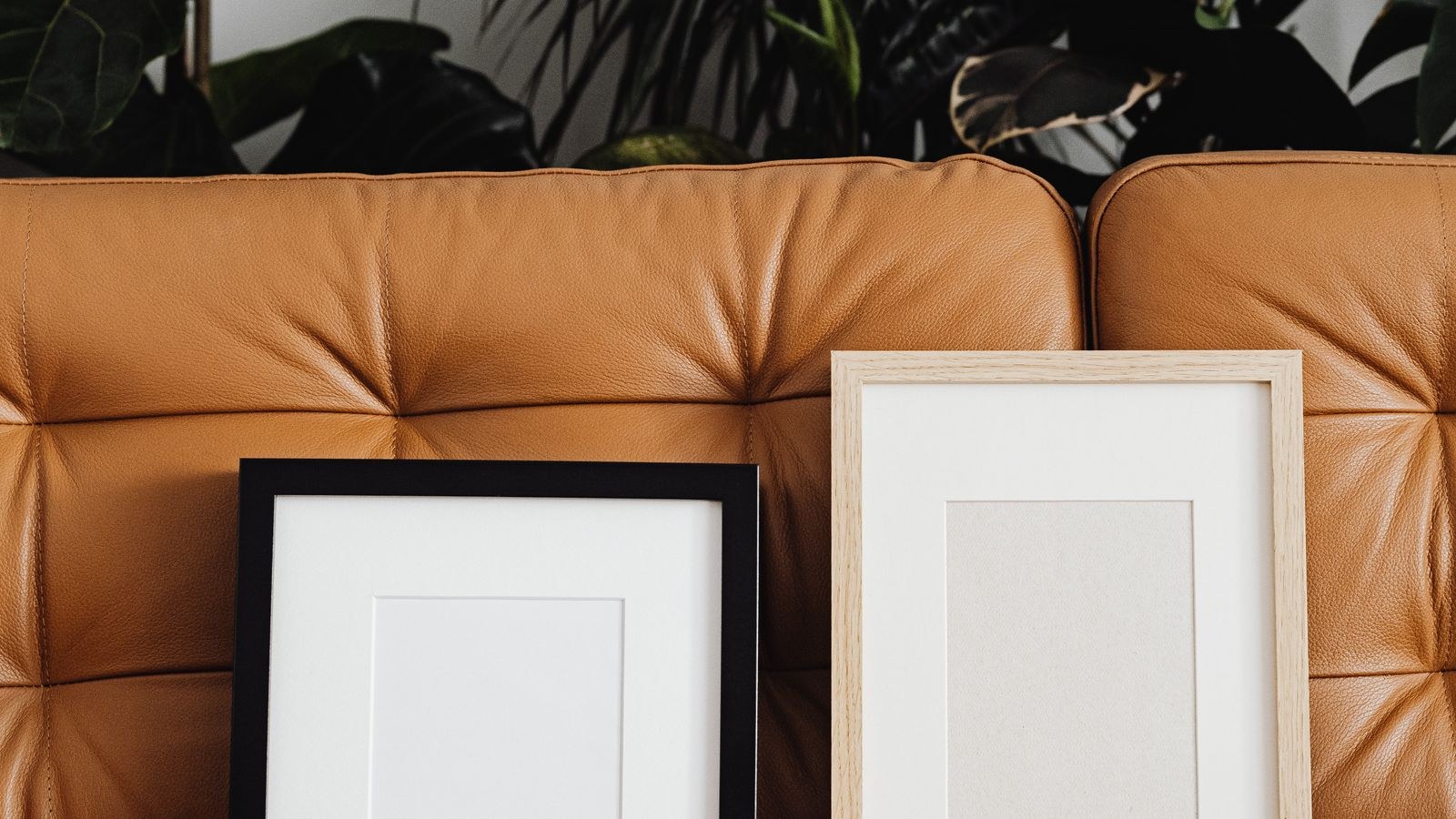
Leave 6 to 10 inches between the top of the sofa back and the bottom edge of the frame. Less than 6 and the piece looks crammed; more than 10 and it detaches. Because sofa backs vary from around 30 to 38 inches tall, this often pushes the centre slightly above or below 57 inches, and that is fine — the relationship to the furniture wins. Sofa back height is worth checking before you buy, and specs across the best sofas vary enough that a low-back mid-century frame and a high-back traditional one call for very different art placement.
Width matters too: the art should span roughly two-thirds of the sofa width. A single small print above a wide sofa always looks marooned no matter how carefully you measure the height.
Above a Bed
Use the same 6 to 10 inch gap above the headboard, and centre the piece on the bed rather than on the wall — the two are often not the same, especially in bedrooms with off-centre windows. Keep art above a bed light in weight and securely anchored. Bedroom scale is unforgiving, so when planning around a headboard or dresser it helps to know the actual dimensions of the pieces involved; a look through options for bedroom furniture gives you headboard heights to design against.
Above a Console, Sideboard or Desk
Narrower gaps work here: 4 to 8 inches above the surface, because these pieces are usually styled with lamps and objects that fill the intervening space. If a table lamp sits on the console, the frame should clear the top of the shade or sit clearly beside it, never awkwardly overlapping by an inch or two.
Hanging Art in Rooms Where People Sit
Standing eye level is the default, but it is not always the right target. In a dining room, a reading nook or a den, viewers are seated most of the time, and seated eye level runs roughly 10 to 12 inches lower. Dropping the art by a few inches in those rooms makes it feel considered rather than distant. Test it from the chair you actually use — whether that is one of the best living room chairs or a sculptural piece from a range of accent chairs, sit down and look before you commit to a nail hole.
Hallways go the other way. People move through them, rarely pause, and pass close to the walls, so art can sit at or slightly above the standard line without feeling remote.
Special Cases That Break the Rule
- Very tall ceilings. Resist the urge to raise everything. Instead, hang art at normal height and use a larger piece, or stack two works vertically, to fill the wall without abandoning human scale.
- Staircase walls. Follow the angle of the stair, keeping each piece 57 inches above the tread directly beneath it. The centres form a diagonal line parallel to the handrail.
- Above a fireplace. The mantel takes over as the reference. Leave 4 to 8 inches above it, and keep the piece within the width of the firebox opening or the mantel itself.
- Very large canvases. A piece over 50 inches tall would put its bottom edge near the floor under a strict 57-inch centre. Raise it so the bottom edge clears the baseboard by at least 8 inches instead.
- Leaning art. Oversized pieces propped on a mantel, console or floor sidestep the whole question and are a legitimate choice, especially in rentals.
Lighting Changes How Height Reads
A piece hung correctly can still look wrong if it sits in shadow while the wall above it is bright. Downlights aimed too steeply create glare on glass and a hard shadow under the frame, which visually pushes the art lower. Angling a spot at roughly 30 degrees, or lighting the area with lamps that spread light across the wall, keeps the piece legible. If lamps are doing the work, place them so the shade top sits below the bottom of the frame; the best lamps for living rooms come in enough height ranges to find one that clears without crowding.
Common Mistakes
- Measuring to the top of the frame instead of the wire. The single biggest source of error, and always in the same direction — too high.
- Hanging by eye while standing. Standing at the wall distorts your judgement. Step back to the far side of the room before finalising.
- Centring on the wall instead of the furniture. Art belongs to the sofa or bed beneath it, not to the architecture.
- Choosing a piece that is too small. No hanging height rescues undersized art above a large piece of furniture.
- Forgetting bumpers. Felt pads on the bottom corners stop the frame sliding out of level and keep it off the paint.
Frequently Asked Questions
Is 57 inches always correct?
It is the default, not a law. Use it on open walls, then let the furniture below dictate the final position when there is any. In seated rooms, drop it a few inches.
How high should art hang above a sofa?
Six to ten inches above the top of the sofa back. That gap keeps the art visually attached to the furniture regardless of what the 57-inch calculation says.
What about a group of pieces?
Treat the whole arrangement as one artwork. Find the centre of the entire group and place that at 57 inches, then hang from the middle outward so any error lands at the edges.
Does the rule change for low furniture?
Yes, slightly. Above a low console or bench, the 57-inch centre usually works unchanged because the gap below is already generous. Above tall furniture, the gap rule takes over.
Final Thoughts
Hanging art at the right height is a two-step habit: start from the 57-inch centre line, then let the furniture underneath adjust it. Run the arithmetic — half the frame height added to 57, minus the taut wire drop — instead of guessing, and step back across the room before you drive anything permanent. Do that consistently and every wall in the house will read as deliberate, with the art anchored to the room rather than drifting somewhere near the ceiling.