Owen Bradley
 A screw that spins forever without tightening is the most common failure in flat-pack furniture, and it is almost never the screw’s fault. Particle board and MDF hold threads by friction against compressed wood fibre, and once that fibre is crushed or torn there is nothing left to grip. The good news is that a stripped hole is repairable, usually in under half an hour, using materials most homes already have. This guide covers how to fix stripped screw holes in particle board and MDF with glue and dowels, toothpicks, epoxy or threaded inserts, and how to choose the right method for the load the joint has to carry.
Why Screw Holes Strip in Particle Board
Solid wood has continuous grain, so screw threads cut into fibres that run past the hole and hold. Particle board is chipped wood bound in resin, and MDF is compressed fibre; both hold a screw only through the small compressed collar the thread creates. Overtighten, drive with a power drill at full torque, or reuse the same hole two or three times and that collar crumbles into dust. Once it is gone the screw spins freely.
Moisture makes it worse. A damp panel swells, loses density and gives up threads far more easily, which is why kitchen and bathroom furniture strips more often than living room pieces. Load cycling matters too: a joint that flexes every day, such as a chair rail or a drawer runner, works the threads loose long before a static shelf bracket does.
Tools and Materials
- PVA wood glue for most repairs; two-part epoxy for high-load joints.
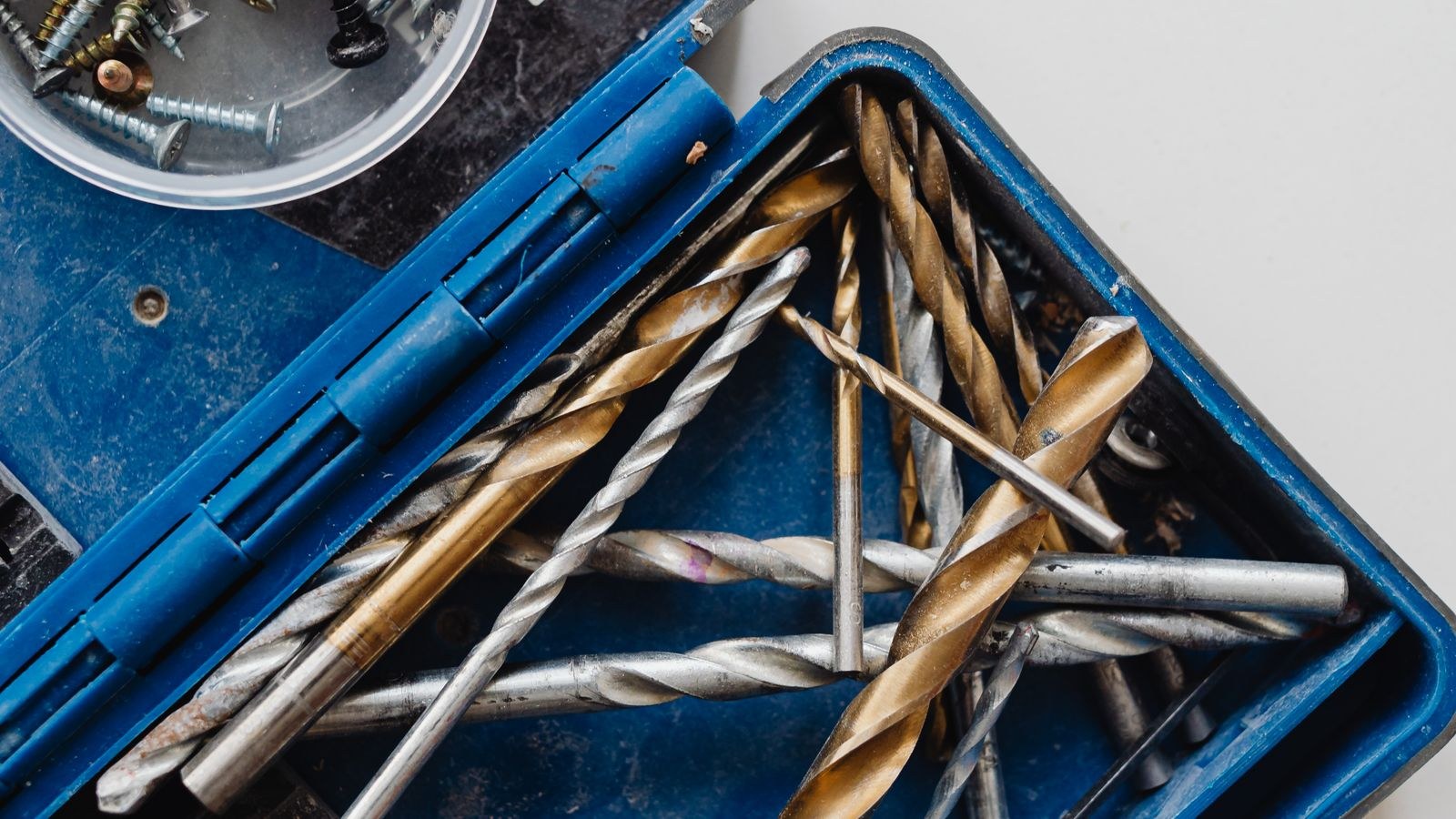
- Hardwood dowels in 6mm and 8mm, or a bundle of wooden toothpicks or matchsticks for small holes.
- Threaded metal inserts for joints that will be dismantled repeatedly.
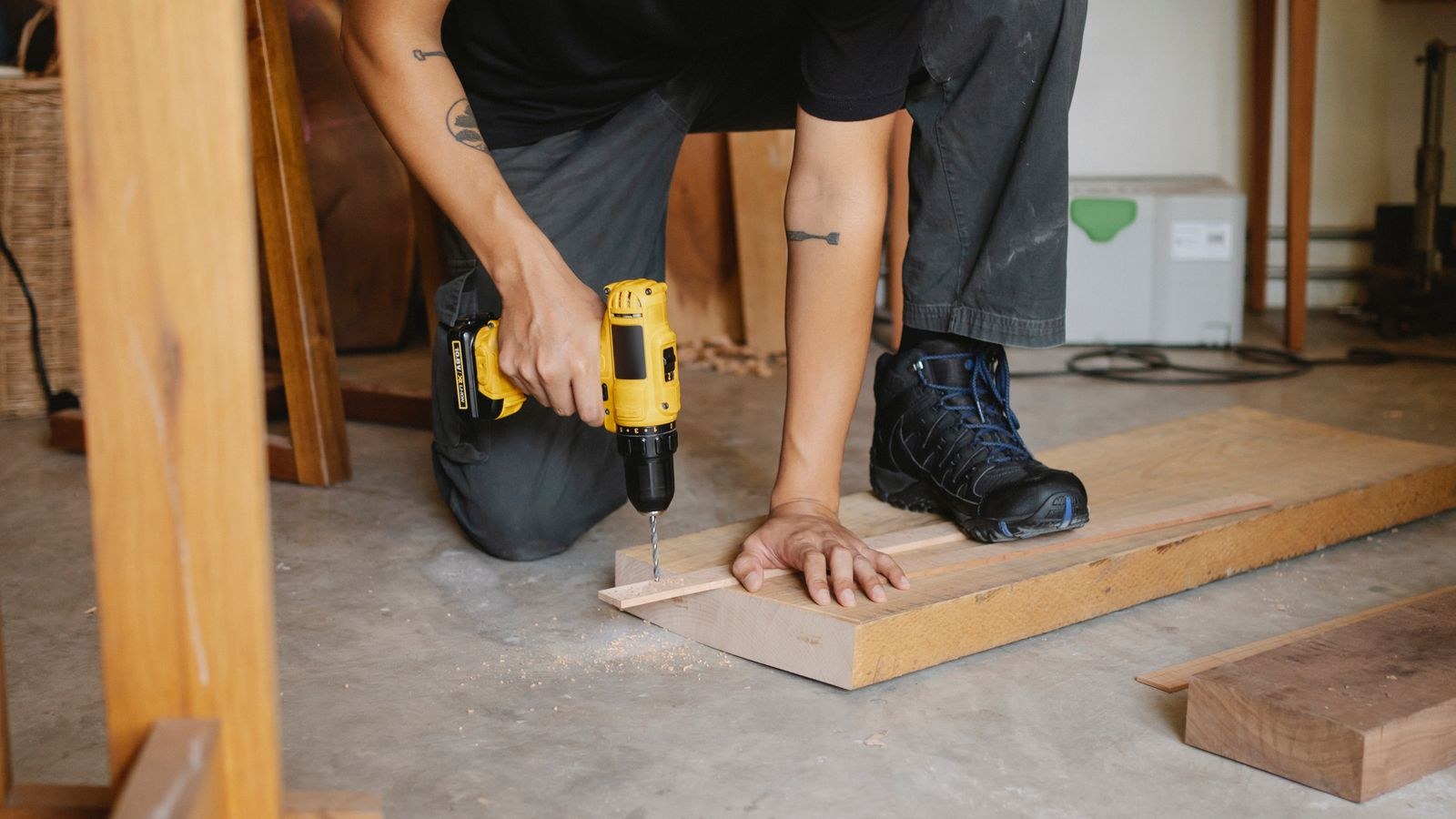
- A drill with bits matched to your dowel diameter.
- A sharp craft knife or flush-cut saw to trim dowels level.
- Clamps or masking tape to hold parts while glue cures.
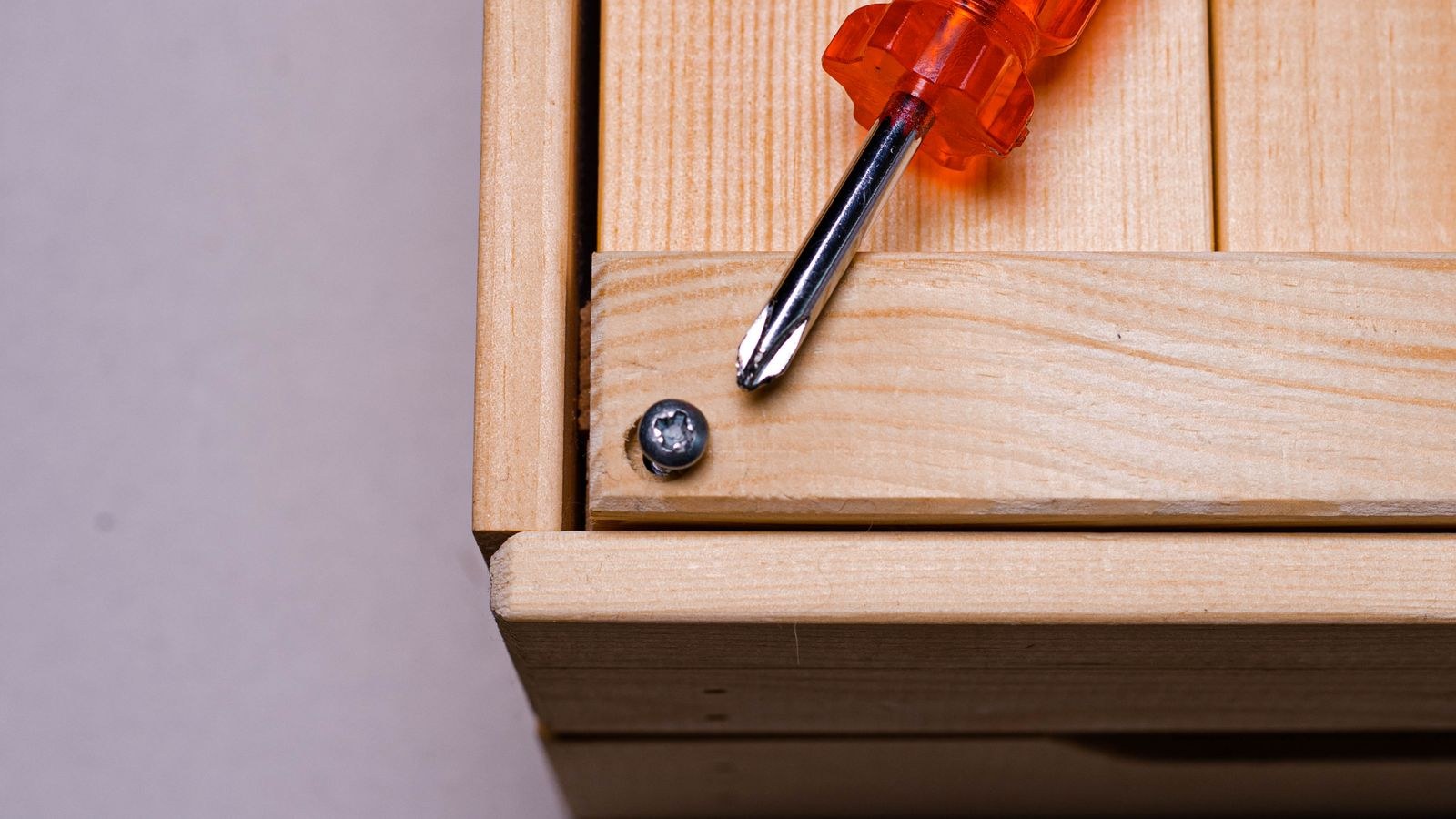
- A manual screwdriver. Every repaired hole should be re-driven by hand.
Skip the temptation to simply use a fatter screw. It works for about a week, then strips a wider hole and leaves you with a harder repair.
Choosing the Right Repair Method
- Toothpicks or matchsticks suit small, low-load holes such as a hinge screw or a back-panel fixing. Fast, cheap and surprisingly durable.
- Glue and dowel is the general-purpose fix. It rebuilds the hole with solid timber and works for shelf pins, runners, brackets and most structural joints.
- Epoxy or wood filler with a re-drilled pilot suits oddly shaped or badly blown-out holes where a round dowel will not sit.
- Threaded inserts are the strongest option and the right answer for anything assembled and disassembled repeatedly, such as bed frames and table legs.
- Relocating the fixing is legitimate when the panel edge has broken away entirely. Move the bracket half an inch and drill fresh material.
Match the Method to the Load
The quick test is whether the joint carries weight or motion. A cabinet hinge carries motion but little weight, so toothpicks are fine. A shelf bracket in a bookcase carries steady weight, so use a dowel. A chair leg carries weight, motion and shock, so use a threaded insert or a large dowel in epoxy. Choosing a stronger method than necessary costs nothing but a few extra minutes, so when unsure, go up a level.
Step by Step: The Glue and Dowel Repair
- Remove the screw and clear the hole. Blow out loose dust and pick away any crumbling fibre with the tip of a knife. Loose material stops glue bonding.
- Drill the hole out to a clean round shape. Use a bit matching your dowel, typically 8mm, and drill only as deep as the original hole. You are not making it bigger for its own sake; you are creating a clean cylinder for the dowel to bond to.
- Test fit the dowel dry. It should slide in with light hand pressure. If you have to hammer it, the fit is too tight and it will split the panel.
- Coat the dowel and the hole with glue. Run a thin bead inside the hole with a cocktail stick and roll the dowel in glue so it is covered on all sides.
- Insert and seat the dowel with light taps until it is fully home. Wipe squeeze-out immediately with a damp cloth, since dried glue resists paint and finish.
- Let it cure fully. PVA needs a minimum of one hour clamped and ideally overnight before the joint takes load. Epoxy follows its own stated cure time.
- Trim flush. Cut the protruding dowel level with the panel using a flush-cut saw or a sharp knife, then sand lightly.
- Drill a fresh pilot hole in the centre of the dowel, roughly 70 percent of the screw’s shank diameter and slightly shorter than the screw length.
- Drive the screw by hand. Stop the instant the head seats. This is the moment the repair is most often ruined by one extra turn.
The Toothpick Method for Small Holes
For hinge screws and other light fixings, push three or four wooden toothpicks dipped in PVA into the hole until it is packed tight. Snap them off flush, wipe the surface, and leave for at least an hour. The glue and wood together rebuild the collar the screw needs. Drive the screw straight in without a pilot hole, by hand, and stop as soon as it grips. Matchsticks work identically and are slightly thicker, which suits a hole that has opened up a little more.
This repair is far stronger than its reputation suggests, but it has limits. If the panel around the hole is soft, swollen or has visible cracks radiating outward, skip to a dowel or an insert instead.
Threaded Inserts for Joints You Will Take Apart
Bed frames, table legs and any piece that gets dismantled for moving deserve threaded inserts. These are metal sleeves with coarse external threads that bite into the panel and fine internal threads that accept a machine bolt. Because the bolt now turns against steel rather than wood fibre, the joint can be disassembled hundreds of times without wear.
Drill the hole to the diameter specified for the insert, wind the insert in square using a hex key or the correct driver, and stop when it sits flush. A drop of epoxy on the outer threads before installation adds significant holding power in soft board. Fit inserts before the piece is fully assembled where possible, since driving one square is much easier with the panel flat.
Preventing Stripped Holes Next Time
Most stripping is preventable with three habits. First, drill pilot holes in every particle board joint, sized at roughly 70 percent of the screw shank. Second, finish every screw by hand so you feel the point at which the head seats rather than blowing past it under power. Third, set your drill’s clutch to its lowest usable setting whenever you do use power. Keeping furniture out of damp corners helps too, and re-tightening high-stress joints after the first few weeks of use catches loosening before it becomes stripping. That short check is worth repeating once a year through 2026.
It also pays to know which joints are worth reinforcing pre-emptively. Modular seating frames such as those in the best IKEA sofas and the drawer runners across the best bedroom furniture ranges take the most repeated load. Seating is the classic case: the rail joints on dining chairs and the leg fixings on kitchen chairs loosen through everyday use and are far easier to re-glue while still snug than after they have blown out. Desk frames deserve the same attention, and the sequence in our guide on how to assemble a standing desk frame yourself shows where hand-tightening matters most.
Common Mistakes to Avoid
- Using a longer or fatter screw as a fix. It buys days and costs you a bigger hole.
- Skipping cure time. Loading a PVA repair after twenty minutes undoes the whole job.
- Filling with silicone or general-purpose filler. Neither holds a thread under load.
- Hammering an oversized dowel. Forcing a tight dowel splits the panel and turns a small repair into a large one.
- Re-driving with a power drill. The repaired hole is fresh timber and strips just as easily as the original did.
- Ignoring the cause. If the joint keeps loosening, the real problem is usually flex in the frame, not the screw.
Frequently Asked Questions
Can I fix a stripped hole without removing the furniture panel?
Usually yes. Toothpick and dowel repairs both work in place as long as you can access the hole straight on and keep glue off the visible face.
How long does a glue and dowel repair last?
Indefinitely when done properly. A hardwood dowel bonded with PVA is often stronger than the surrounding particle board, so the panel will fail before the repair does.
Will wood filler alone hold a screw?
Not reliably. Standard filler is designed for cosmetic repairs and crumbles under thread pressure. Use a dowel, epoxy formulated for structural use, or a threaded insert instead.
What size pilot hole should I drill in particle board?
About 70 percent of the screw’s shank diameter, and slightly shallower than the screw length. Too large and the thread has nothing to bite; too small and the panel splits.
Final Thoughts
Fixing a stripped screw hole is a matter of rebuilding something for the thread to grip, then not destroying it again on the way back in. Clean the hole, choose the method that matches the load, give the adhesive its full cure time, drill a properly sized pilot, and drive the screw by hand until the head just seats. Toothpicks handle hinges, dowels handle almost everything structural, and threaded inserts handle anything that comes apart repeatedly. Adopt pilot holes and hand-finishing as standard practice and you will rarely need this repair again.