Owen Bradley
 Leather is the rare upholstery that improves with age, but only if you look after it. Neglected, it dries out, stiffens and eventually cracks along the seat front and armrests where the flex is greatest. Over-cleaned with the wrong product, it loses its protective finish and starts absorbing every drop that lands on it. The middle path is simple and takes about half an hour: dust, wipe with a mild solution, condition, buff. This guide covers how to clean a leather sofa safely, what changes depending on whether your hide is protected, semi-aniline or full aniline, and the short list of household products that quietly destroy leather despite what the internet says.

Identify Your Leather Type First
Not all leather sofas want the same treatment, and the difference is about how much protective coating sits on the surface.
- Protected or pigmented leather has a polymer topcoat. It is the most common, most durable and most forgiving type. Water beads on it rather than soaking in.
- Semi-aniline leather carries a light protective layer but keeps visible grain. It tolerates gentle cleaning but marks more easily.
- Aniline leather is dyed through with no topcoat. It feels wonderful, develops a rich patina, and absorbs liquid almost instantly. Treat it as delicate.
- Nubuck and suede are sanded finishes that must never meet water. They need a dedicated brush and eraser, not a wet cloth.
A quick test: place a single drop of water on a hidden area. If it sits on the surface for a minute, you have protected leather. If it darkens the hide immediately, you have aniline and should keep moisture to an absolute minimum. Because construction and finish vary so much between pieces, it helps to understand what you are working with before you buy — our guide to the best leather sofas breaks down how finish affects daily upkeep.
What You Need
- A vacuum with a soft brush head and a narrow crevice tool
- Two or three soft white cloths, microfiber or cotton
- Distilled water — tap water minerals can leave a haze
- A pH-balanced leather cleaner, or a few drops of mild soap if you have none
- A leather conditioner or cream, cream-based rather than oily
- A dry buffing cloth
Skip the all-purpose sprays. Leather sits somewhere near pH 5 and alkaline household cleaners strip its natural oils, which is exactly what causes cracking a year later. A proper product is a small expense against the value of the furniture, and the best leather cleaner for sofas lists formulations matched to each finish type.
The Cleaning and Conditioning Routine
- Vacuum the whole piece. Lift every removable cushion and run the soft brush head across all surfaces, then work the crevice tool down the seams, around piping and along the deck. Grit trapped in a seam acts like sandpaper each time someone shifts their weight.
- Dry-wipe the surface. Go over the leather with a dry cloth to lift loose dust before any moisture arrives. This stops you turning surface dirt into a grey smear.
- Spot test your cleaner. Apply a small amount to the back of the sofa or under a cushion, wipe, and let it dry for ten minutes. Check for colour on the cloth or a change in sheen. If either appears, stop and consult a specialist.
- Damp-wipe panel by panel. Dampen — never soak — a cloth with your solution and wring it until it is barely moist. Wipe in long overlapping strokes following the natural lines of the piece, doing one cushion or panel at a time so nothing sits wet.
- Wipe with clean water. Follow immediately with a second cloth dampened in distilled water to remove residue. Cleaner left behind dulls the finish and attracts dust.
- Dry with a towel. Pat the surface dry rather than leaving it to air-dry. Standing droplets are how water spots form on semi-aniline and aniline hides.
- Let it rest. Give the leather fifteen to twenty minutes to return to room temperature and full dryness before the next step. Conditioning damp leather traps moisture under the product.
- Apply conditioner sparingly. Put a coin-sized amount on a cloth, not on the sofa, and work it in with small circles. Cover the whole piece evenly, paying extra attention to seat fronts, armrests and headrest areas that flex and dry out fastest.
- Wait, then buff. Let the conditioner absorb for ten to fifteen minutes, then buff with a clean dry cloth until the surface feels smooth rather than tacky. Any greasy feel means you used too much — buff harder rather than adding more.
Dealing With Specific Marks
Grease and Body Oil
The classic dark halo on a headrest is skin oil. Do not add liquid. Sprinkle cornstarch or talc over the mark, leave it several hours or overnight, then brush it away gently. Repeat if a shadow remains. Only condition after the mark has lifted.
Ink
Fresh ink sometimes lifts with a cotton swab barely damp with isopropyl alcohol, pressed and lifted rather than rubbed. Work from the edge inward and stop the moment any colour appears on the swab. Older ink usually needs a professional ink stick.
Water Spots
Counterintuitively, the fix is to lightly dampen a wider area around the spot with a barely moist cloth and blend the edge outward, then dry evenly. A hard boundary is what makes the mark visible, not the water itself.
Scuffs and Light Scratches
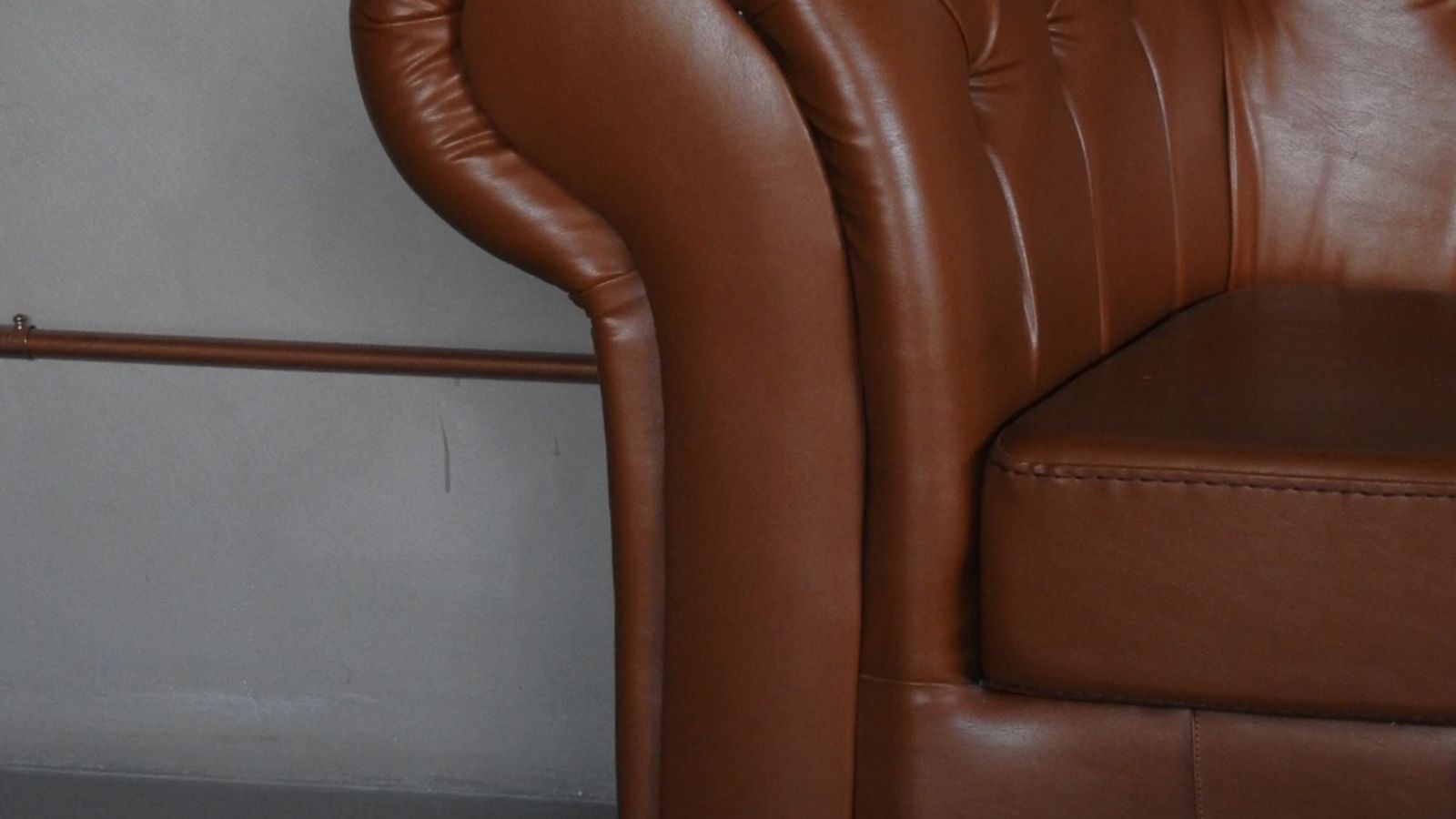
On aniline and semi-aniline, many surface scratches vanish when you rub them gently with a clean fingertip — body heat and natural oils redistribute the finish. Deeper scratches on pigmented leather need a colour-matched repair balm.
Things You Should Never Use
- Baby wipes. They carry alcohol and surfactants that gradually strip the topcoat, and the damage only becomes visible after months.
- Olive oil and coconut oil. They do not absorb properly, go rancid over time and leave a permanently sticky, smelly surface.
- Vinegar at full strength. Too acidic. It dries the hide and can dull a pigmented finish.
- Ammonia or bleach cleaners. These attack both the dye and the collagen structure of the leather itself.
- Steam cleaners and magic-eraser sponges. Heat and abrasion remove the finish faster than any stain.
- Saddle soap on furniture leather. It is designed for thick, unfinished tack leather, not thin upholstery hides.
Keeping Leather Soft Long Term
Leather is a natural material that needs moisture to stay flexible. Condition every six to twelve months in a normal climate, and every three to four months in dry heat or if the sofa sits near a radiator or air conditioning vent. Keep at least a couple of feet between the sofa and any heat source, and use blinds to keep direct sun off the hide, because ultraviolet light both fades the dye and evaporates the oils that keep it supple.
Wipe spills within seconds, not minutes, especially on unprotected hides. Keep pets’ claws away or accept the character marks. Higher-grade hides genuinely last longer under this routine because the fibre structure is denser and the surface is undamaged — the differences are explained in our comparison of the best top grain leather sofas and the softer, more supple options in the best Italian leather sofas.
Large multi-piece configurations need a little extra planning: clean and condition every module in the same session so the sheen matches, and rotate which seat gets daily use to spread the wear. If you are shopping for one, the best leather sectional sofas guide covers how modular seams affect long-term maintenance.
Frequently Asked Questions
How often should I clean a leather sofa?
Dust and dry-wipe weekly, do a full damp clean every two to three months, and condition twice a year. Daily-use pieces in dry climates benefit from more frequent conditioning.
Can I use dish soap on leather?
A few drops in a bowl of distilled water works as an occasional substitute on protected leather, but rinse thoroughly and condition afterwards. It is not gentle enough for regular use or for aniline hides.
Why is my leather sofa cracking?
Almost always dryness combined with sun or heat exposure. Once the surface has actually split, conditioner will not reverse it, so start a regular routine before you see damage.
Is conditioner really necessary?
Yes on aniline and semi-aniline, and still worthwhile on pigmented leather, where it keeps the topcoat flexible and slows the fine crazing that appears on high-flex seat fronts.
What removes odour from an old leather sofa?
Airflow and time do most of the work. Vacuum thoroughly, place open containers of baking soda nearby for a few days, and avoid spraying fragrance directly onto the hide.
Final Thoughts
Cleaning leather well means doing less than you think. Identify the finish, vacuum properly, use a barely damp cloth and a pH-appropriate cleaner, dry immediately, then condition lightly and buff. Keep the harsh household products and the kitchen oils far away from it. Follow that pattern two or three times a year and the sofa stays soft, evenly coloured and free of the cracked seat fronts that make older leather furniture look tired long before its frame gives out.