Owen Bradley
 Ask any two audio enthusiasts whether you should buy bookshelf or floorstanding speakers and you will get three opinions. The honest answer is that neither design is universally better, because the two shapes solve different problems. A tall tower moves more air and reaches deeper without help, while a compact box disappears into a room and often costs far less to buy in a matched pair. The bookshelf vs floorstanding speakers decision comes down to your room size, your listening habits, your budget, and how much floor space you are willing to surrender. This guide walks through each of those factors so that by the end you know which cabinet shape belongs in your living room, and what you will need to buy alongside it.

What Actually Separates the Two Designs
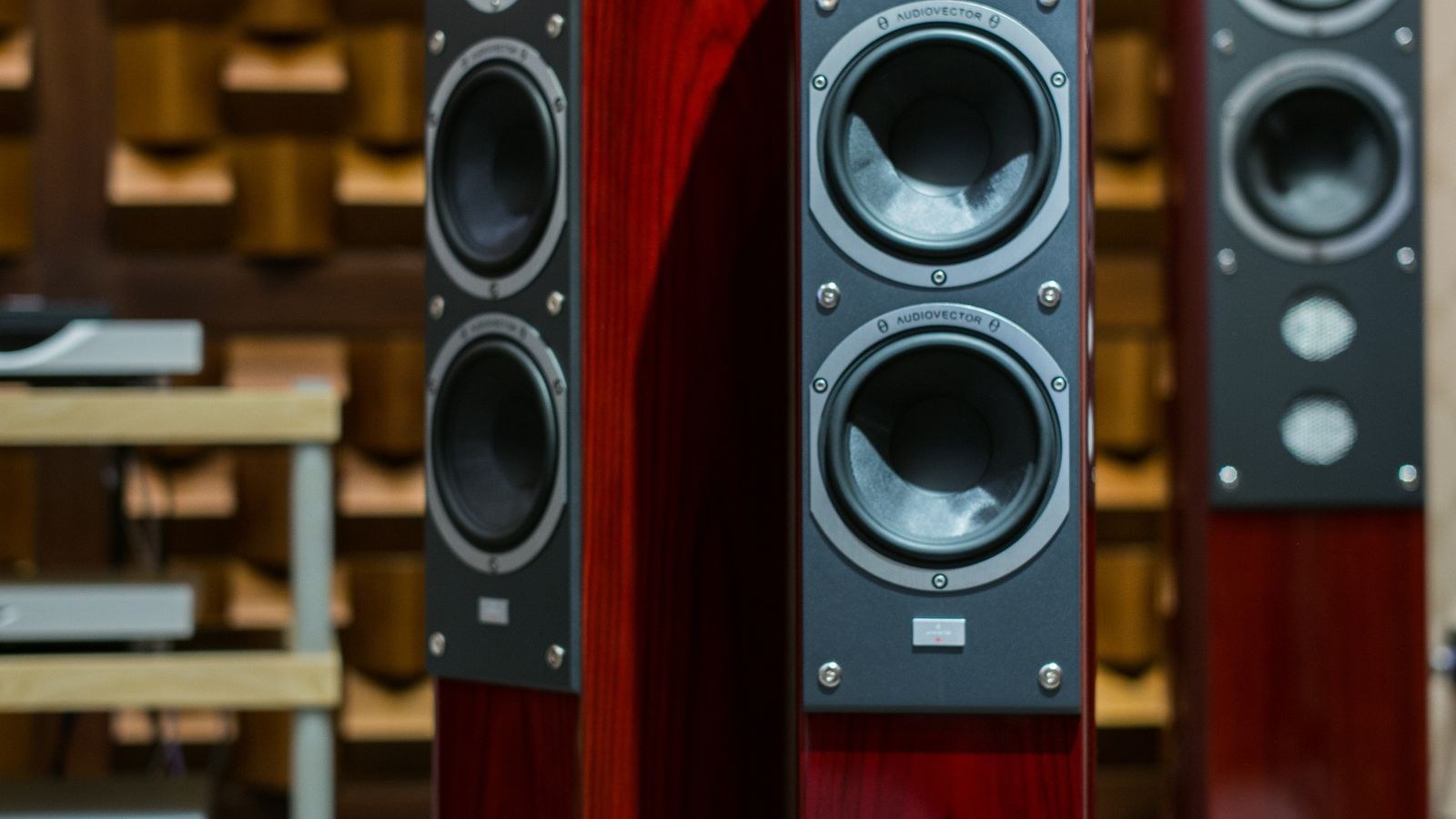
A bookshelf speaker, sometimes called a standmount or monitor, is a compact two-way cabinet with a tweeter and a mid-bass driver, typically 10 to 16 inches tall. It is designed to sit on a stand or a shelf at ear height. A floorstanding speaker, also called a tower, is a tall enclosure that stands directly on the floor, usually 32 to 48 inches high, and packs a tweeter plus two or three larger woofers into a much bigger internal volume.
That internal volume is the whole story. Bass output is a function of how much air a driver can move and how much cabinet volume sits behind it. A tower gives its woofers room to breathe, which is why a tower will almost always play louder and lower than a bookshelf speaker built to the same standard and price per pair. The trade-off is that the tower is a piece of furniture you cannot hide, and it demands more space around it to sound its best.
Room Size Is the Deciding Factor
Before comparing spec sheets, measure your room. Speaker output has to fill a volume of air, and a mismatch in either direction sounds wrong. A pair of large towers in a 10 by 11 foot bedroom will overload the space with bass, producing a boomy, one-note low end that no amount of tone control fixes. Conversely, small monitors in a 20 by 30 foot open-plan great room will sound thin and strained the moment you turn the volume past conversational level.
As a rough rule, rooms under roughly 200 square feet are natural bookshelf territory. Between 200 and 350 square feet either design works, and the choice becomes one of taste and budget. Above 350 square feet, or in any room that opens into a hallway or kitchen, towers start to earn their price. If you are furnishing a den, a bedroom, or an apartment living room, our roundup of the best speakers for small rooms narrows the field to designs that behave well when the walls are close.
Bass Extension: How Low Each Design Really Goes
Manufacturers publish a frequency response range, and that number is where most shoppers form their first impression. A typical quality bookshelf speaker reaches down to around 50Hz before rolling off. A comparable tower will often reach 35Hz or lower. That gap covers the bottom octave of a bass guitar, the weight of a kick drum, and most of the rumble in a film soundtrack.
Read those numbers carefully, though. A specification like “45Hz to 22kHz” means little without a tolerance figure such as plus or minus 3dB. A speaker quoted without tolerance may be technically producing 45Hz at a level 10dB below the rest of its output, which you will barely hear. Independent measurements are more reliable than marketing figures, and your own ears in your own room are more reliable still.
The practical takeaway is this: if you want genuine deep bass, you either buy towers or you buy bookshelf speakers plus a subwoofer. Both routes work. The second route often sounds better in small and medium rooms because a subwoofer can be positioned independently to smooth out room-induced peaks and dips, something a tower fixed beside your television cannot do.
The Hidden Cost of Bookshelf Speakers
Sticker prices mislead here. A pair of bookshelf speakers may cost half what comparable towers cost, but they are useless sitting on a sideboard at knee height. Tweeters are directional, and if the tweeter is not near ear height the treble dulls and the stereo image collapses. That means stands, and good stands are not cheap.
Budget for a pair of solid, mass-loadable stands with a top plate that suits your cabinet footprint and a height that puts the tweeter within a few inches of your seated ear level, usually 24 to 28 inches for a typical sofa. Filling the columns with sand or steel shot lowers the centre of gravity and kills cabinet resonance, which audibly tightens bass. Our guide to the best speaker stands explains how to match height and fill to your cabinets. Add stands and possibly a subwoofer, and the cost gap between a bookshelf system and a tower system narrows considerably.
Shelves and Cabinets Are Not Free Placement
The name is misleading. Putting one inside an actual bookshelf traps the cabinet and blocks any rear port. If a shelf is your only option, choose a sealed or front-ported design and pull the speaker as close to the front edge as safety allows.
Placement, Space, and Living With Each Design
Towers need breathing room. Most want at least 12 inches behind them and a similar distance from side walls, more if they have a rear port. Push a ported tower against a wall and the bass swells into a thick, indistinct mess. If your television sits in a shallow alcove or your sofa backs directly onto the speakers, that clearance may not exist.
Bookshelf speakers on stands need the same acoustic clearance in principle, but their smaller output makes them far less sensitive to wall proximity, and their smaller footprint makes it easier to find a workable spot. They also toe in more easily, letting you aim the tweeters at the listening position for a sharper stereo image.
Consider the household reality as well. Towers are heavy, they tip, and children and pets interact with anything at floor level. Stand-mounted monitors sit higher and can be moved by one person. If your setup gets rearranged often, the smaller design is the more practical companion.
Matching Speakers to Your Amplifier
Two figures decide whether your electronics can drive a given speaker: sensitivity and nominal impedance. Sensitivity, quoted in dB at one watt measured one metre away, tells you how loud a speaker plays for a given amount of power. A speaker rated 88dB needs roughly twice the power of one rated 91dB to reach the same volume. Impedance, usually 4, 6, or 8 ohms, tells you how hard the load is on your amplifier.
Towers frequently carry more drivers wired in parallel, which can drop impedance and demand more current from the amplifier, particularly at high volume. Modest receivers often cope fine with efficient bookshelf speakers but strain when asked to drive large, low-impedance towers in a big room. Check your amplifier’s rated output into the impedance your chosen speaker presents, and leave headroom rather than running at the limit, since a clipping amplifier is the fastest way to damage a tweeter.
Two-Channel Music Versus Home Theatre
How you listen shapes the answer. For focused two-channel music listening in a dedicated seat, a well-set-up pair of monitors on stands delivers a precise, holographic stereo image that many listeners prefer to a larger, more diffuse tower presentation. Small cabinets have less surface area to resonate and produce fewer diffraction artifacts around the tweeter.
For film and television, scale and dynamic headroom win. Towers handle explosive soundtrack peaks without compressing, and they carry a surround system’s front stage without relying on a subwoofer for every ounce of weight. If a full home theatre is the goal, browse the best tower speakers for front-channel candidates that stay composed at high volume, and compare them with dedicated best floor standing speakers options built with music reproduction as the priority.
Budget Tiers and Where the Money Goes
At the entry level, roughly the first few hundred dollars per pair, bookshelf speakers are the clear value winner. Building a tall cabinet with multiple drivers costs money that has to come out of the driver and crossover budget, so a cheap tower is frequently a cheap monitor stretched vertically with worse parts. Two good drivers in a small box will usually beat five mediocre ones in a big box.
In the mid range, the comparison becomes genuinely competitive, and this is where the stands-plus-subwoofer versus tower calculation matters most. At the high end, towers pull ahead again, because a serious cabinet gives designers room for dedicated bass drivers, complex crossovers, and internal bracing that a small enclosure simply cannot house. Whichever tier you shop, spend proportionally: a great speaker on a wobbly stand fed by an underpowered amplifier is a wasted purchase.
If your budget favours the compact route, our shortlist of the best bookshelf speakers groups models by the room sizes they suit and notes which ones genuinely need a subwoofer to feel complete.
Common Mistakes Buyers Make
The most frequent error is buying towers for a small room because they look more serious. Oversized speakers in a small space are the single most common cause of muddy, fatiguing sound, and the fix, moving to a smaller speaker, feels like a downgrade even though it is an upgrade. Match the speaker to the room first, always.
The second mistake is forgetting the supporting costs. Buyers compare a bookshelf pair against a tower pair on price alone, then discover the stands, the subwoofer, and the extra cable were never in the budget. Price the whole system, not the box.
A third mistake is trusting frequency response numbers over listening. Two speakers quoted identically can sound completely different because of driver quality, crossover design, and cabinet construction. Whenever possible, listen with music you know well, at the volume you actually use, in a room roughly the size of yours.
A Five-Question Decision Checklist
- How big is the room? Under 200 square feet, choose bookshelf. Over 350, lean tower.
- Is there floor space with wall clearance? No clearance means a tower will disappoint regardless of quality.
- Will you add a subwoofer? If yes, bookshelf speakers become far more competitive.
- Music or movies? Precise stereo imaging favours monitors; dynamic film soundtracks favour towers.
- What is the total budget? Include stands, cable, and any subwoofer before you compare pairs.
Frequently Asked Questions
Do bookshelf speakers always need a subwoofer?
Not always. In a small room, at moderate volume, with acoustic or vocal music, a capable monitor can sound complete on its own. For film soundtracks, electronic music, or any room above about 250 square feet, a subwoofer transforms the result and is usually the best value upgrade you can make.
Can I mix bookshelf and floorstanding speakers in one system?
Yes, and it is common practice. Many buyers use towers as front left and right channels and matching monitors as surrounds. The important thing is to keep the same manufacturer and product family where possible, so tweeter and midrange character match as sound pans across the room.
Are towers harder to drive than bookshelf speakers?
Often, yes. Towers tend to present a lower impedance and demand more current, especially at high volume in a large room. Check both sensitivity and impedance against your amplifier’s rated output before buying, and choose a higher-sensitivity design if your electronics are modest.
Will a bookshelf speaker sound worse at high volume?
It will reach its limit sooner. A small woofer has limited excursion, so pushed hard it compresses and distorts where a tower keeps going cleanly. If you regularly listen loud or host gatherings, that headroom difference matters more than any measured frequency response gap.
Final Thoughts
There is no trophy for owning the biggest cabinet. The right choice is the one your room, your amplifier, and your listening habits can actually support. Small and medium rooms reward well-placed monitors on proper stands, with a subwoofer added when you want weight. Large rooms and film-first systems reward towers that can move real air without strain. Set your total budget, measure your space honestly, and let those two constraints narrow the field before you start comparing brands. Do that and you will end up with a pair you enjoy for years, whichever shape it turns out to be.