Owen Bradley
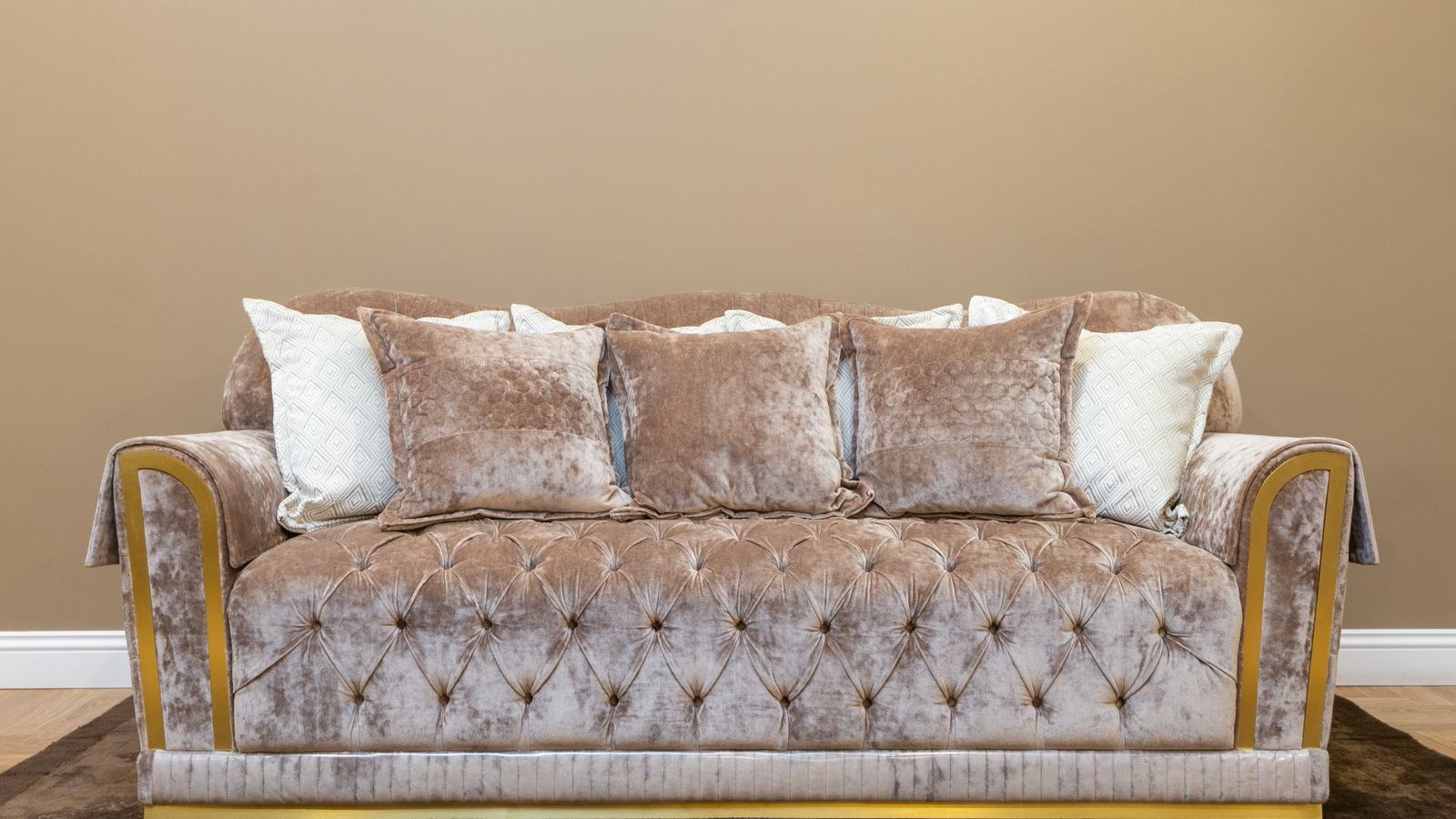
 A fabric sofa absorbs everything life throws at it: coffee rings, pet hair, greasy fingerprints and the slow grey haze of ordinary dust. The good news is that most of it comes out at home with basic supplies. The bad news is that the wrong method leaves permanent water rings, crushed pile or a bleached patch that is far uglier than the original stain. Learning how to clean a fabric sofa properly is mostly about restraint: less water, gentler chemistry, more patience during drying. This guide walks through the whole routine, from decoding the cleaning code on the tag to brushing the fibres back up at the end, so your upholstery comes out fresher rather than damaged.
Find the Cleaning Code Before You Do Anything
Every upholstered piece sold with a care tag carries a one-letter cleaning code, usually printed on a label under a seat cushion or stapled to the frame beneath the sofa. That letter decides everything that follows, and ignoring it is the single most common cause of ruined upholstery.
- W — water-based cleaners are safe. This covers most modern polyester, microfiber and performance weaves.
- S — solvent only. Water will leave rings on these fabrics, so you must use a dry-cleaning solvent.
- W/S — either water-based or solvent cleaners are acceptable, which gives you the most freedom.
- X — vacuum only. No liquid of any kind. Anything beyond dry brushing needs a professional.
If the tag is missing or unreadable, treat the sofa as an S code until you prove otherwise with a spot test. Natural fibres like linen, cotton velvet and silk blends are the most likely to water-stain; tightly woven synthetics are the most forgiving. Shoppers who want fabric that survives this kind of routine easily should look at the weave first, and our roundup of the best fabric sofas explains which upholstery types hold up under regular cleaning.
Tools and Supplies to Gather
Nothing here is exotic, and having it all in reach stops you from leaving a wet patch to dry unevenly while you hunt for a towel.
- A vacuum with a brush head and a crevice tool
- Three or four white microfiber cloths — white so no dye transfers
- A spray bottle for a fine mist, never a stream
- Mild dish soap or a dedicated upholstery cleaner
- Distilled white vinegar and baking soda for odours
- A soft-bristle upholstery brush
- A fan or two for airflow during drying
For anything beyond light soiling, a purpose-made product beats improvised mixtures because it is formulated to rinse out rather than leave a sticky residue that attracts dirt. Comparing the best upholstery cleaner for sofas is worth doing before you start, since W-code and S-code fabrics need different chemistry.
The Step-by-Step Cleaning Routine
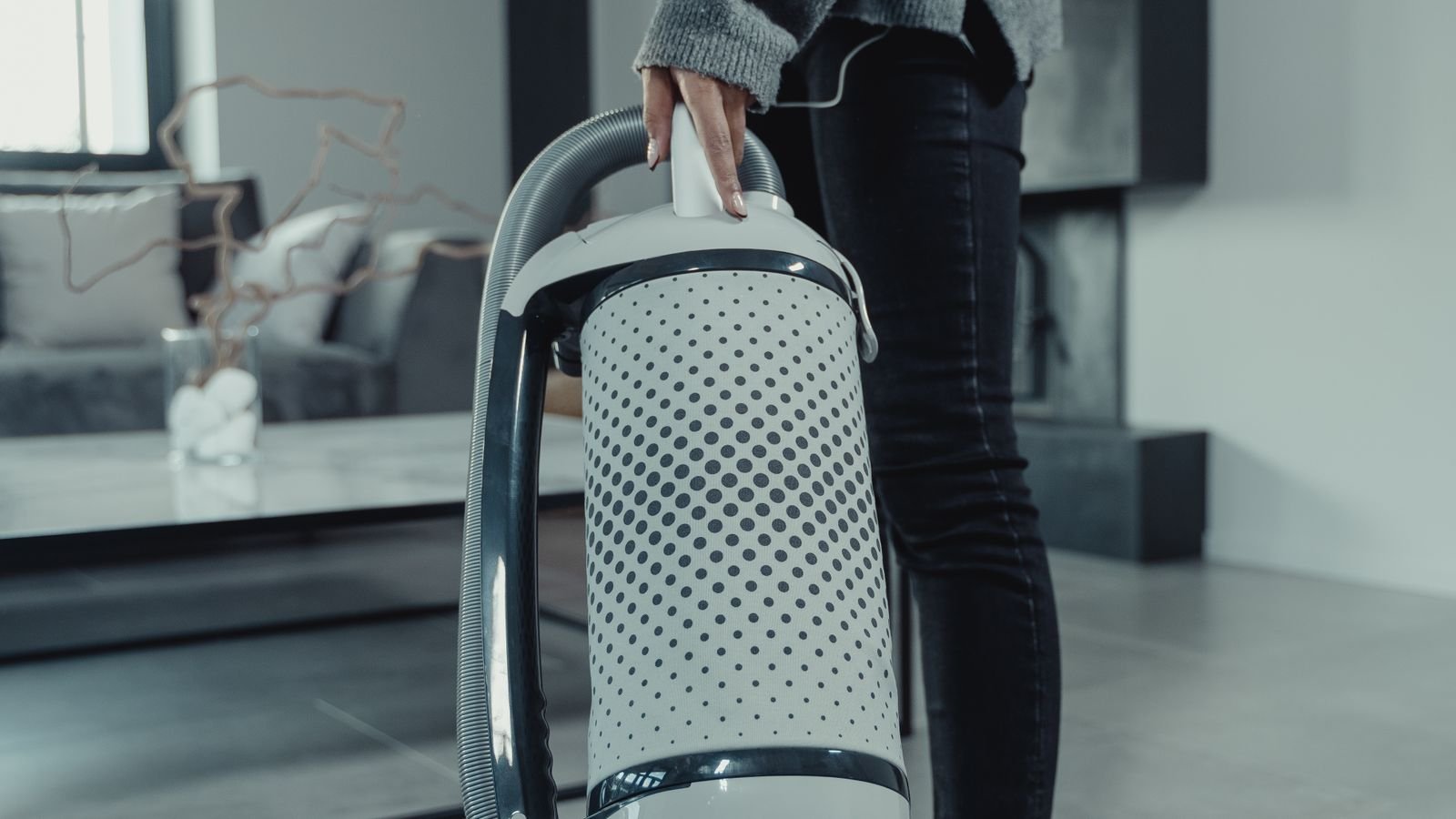
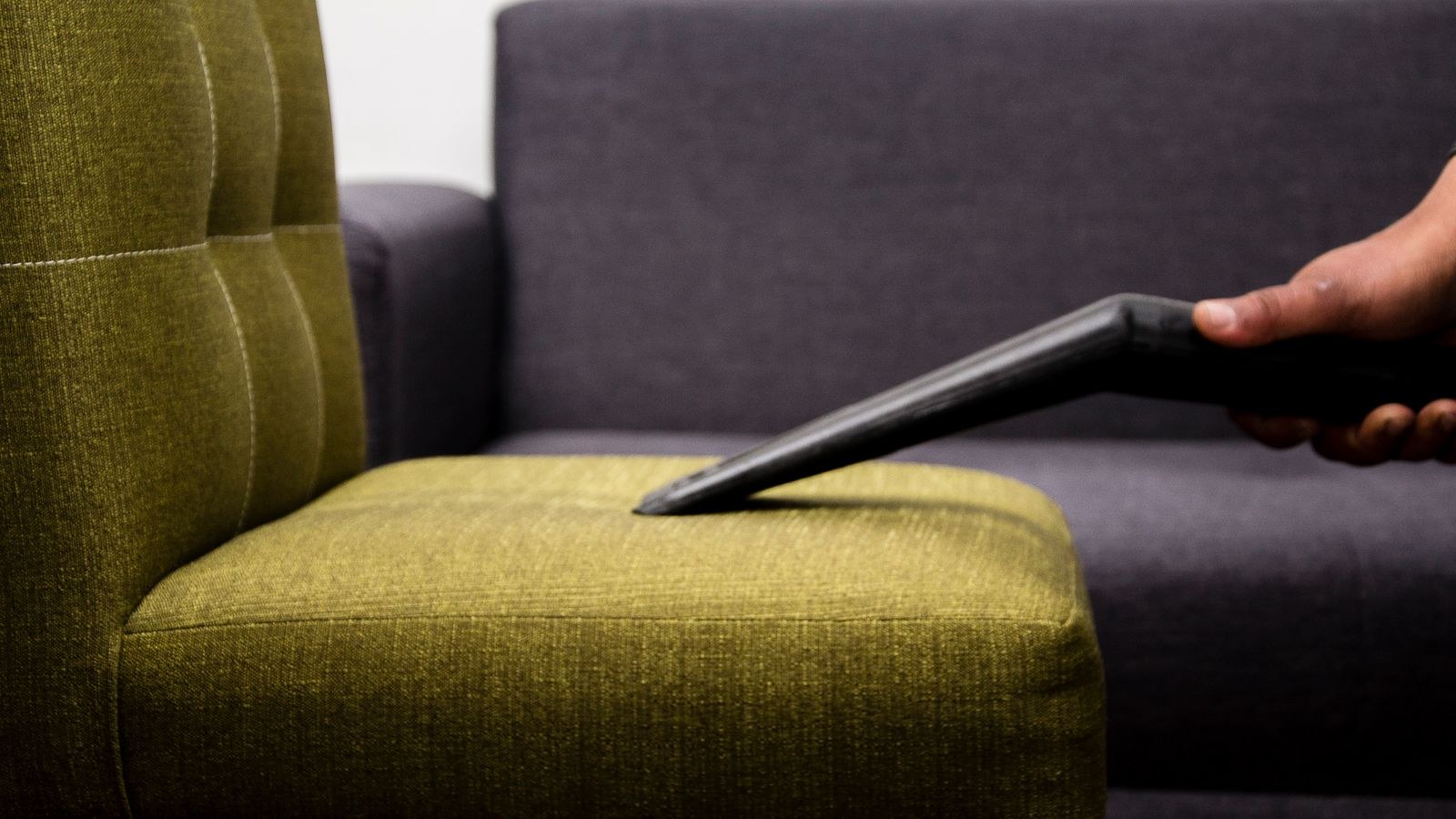
- Strip and vacuum thoroughly. Remove every cushion that comes off, including the back ones, and vacuum both sides plus the deck underneath. Use the crevice tool along seams and piping where crumbs and hair pack in hardest. Skipping this turns dust into mud the moment you add moisture.
- Lift hair and lint. Pet hair weaves into fabric and resists suction. Work a rubber glove or a dry sponge across the surface in short strokes to ball the hair up, then vacuum again. A dedicated pet tool makes this dramatically faster, and the best vacuum attachments for pet hair are the difference between one pass and ten.
- Spot test in a hidden place. Mist your solution onto the back panel or under the skirt, blot after five minutes and let it dry fully. Look for colour lifting onto the cloth, a stiff patch or a visible ring. If any of those appear, stop and use a solvent or call a professional.
- Pretreat individual stains. Blot, never rub. Rubbing spreads the stain sideways and abrades the fibres. Work from the outside of the mark inward so you do not push the edge wider, applying solution to the cloth rather than straight onto the fabric.
- Clean panel by panel. Mix a few drops of mild soap into warm water, mist a section lightly, agitate with the soft brush in overlapping circles, then lift the loosened soil with a clean damp cloth. Finish each panel completely before moving on so drying happens evenly across the piece.
- Rinse the residue. Wipe each cleaned panel with a cloth dampened in plain water and wrung out hard. Leftover detergent is what makes a sofa re-soil within weeks and feel tacky underhand.
- Deodorise with baking soda. Once the surface is barely damp, sift a light layer of baking soda over it, leave it for at least an hour and vacuum it away. It pulls odour out of the foam rather than masking it.
- Dry fast and thoroughly. Open windows, point a fan across the surface and give it four to eight hours before replacing cushions. Slow drying is what breeds mildew smell inside the foam.
- Brush the pile back. When everything is dry, sweep the soft brush in one consistent direction to restore the nap and even out any shading left by the cleaning strokes.
Handling the Most Common Stains
Coffee, Tea and Wine
Blot up all the free liquid first with a dry cloth, pressing straight down. Then treat with cool water and a drop of dish soap. Never use hot water on a tannin stain — heat sets it into the fibre permanently. Wine responds well to a little club soda applied immediately.
Grease and Body Oil
Cover the mark with cornstarch or baking soda and walk away for twenty minutes so the powder absorbs the oil, then vacuum. Only after that should you treat what remains with a degreasing solution. Adding liquid first drives the oil deeper.
Ink and Dye Transfer
Dab isopropyl alcohol onto a cotton swab and press it against the mark, replacing the swab constantly so you lift ink instead of smearing it. Test in a hidden spot first, as alcohol can strip colour from some dyes.
Pet Accidents
Blot dry, then use an enzyme cleaner rather than soap. Enzymes break down the proteins that cause lingering odour; ordinary detergent only removes the visible part and the smell returns in humid weather.
Safety and Fabric Protection Notes
Ventilate the room whenever you use solvents, and never mix cleaning products — combining bleach with ammonia-based cleaners produces genuinely dangerous fumes. Keep steam cleaners away from anything not rated W, because the heat and volume of water can shrink natural fibres and delaminate backing glue. Avoid bleach entirely on coloured upholstery, and keep direct sunlight off a damp sofa, which can fade the wet areas at a different rate than the dry ones and leave a permanent shadow.
Microfiber deserves a mention of its own because it behaves differently. Many microfiber pieces are S-coded and respond best to rubbing alcohol on a sponge, which evaporates without leaving a ring, followed by brushing with a stiff bristle brush once dry. If that low-maintenance behaviour appeals to you, the best microfiber sofas are worth a look for households with kids or pets.
Mistakes That Ruin a Sofa
- Soaking the fabric. If the foam gets wet, drying takes days and mildew wins. Mist, do not pour.
- Rubbing hard at a stain. This fuzzes the surface and creates a permanently dull patch even after the stain is gone.
- Skipping the spot test. Ten minutes of testing prevents a bleached panel you cannot undo.
- Cleaning one cushion only. A single freshly cleaned cushion sits noticeably brighter than its neighbours. Do the whole piece.
- Using coloured cloths or towels. Damp dye transfers straight into light upholstery.
- Putting cushions back damp. Trapped moisture between deck and cushion is the classic source of a musty living room.
Keeping It Clean Between Deep Cleans
A quick vacuum every week takes two minutes and removes the grit that abrades fibres from within every time someone sits down. Rotate and flip loose cushions monthly so wear and fading spread evenly, and blot spills the second they happen rather than after dinner. If the sofa sits in strong sunlight, close blinds during peak hours because ultraviolet light fades upholstery faster than any stain damages it.
For high-traffic households, a washable cover is the least glamorous but most effective protection available. It takes the hits, goes in the machine, and keeps the sofa underneath looking new for years. Browsing the best covers for sofas will show you which styles fit tightly enough to look intentional rather than draped.
Frequently Asked Questions
How often should I deep clean a fabric sofa?
Once or twice a year for a typical household, and every three to four months if you have pets, small children or the sofa is a daily napping spot. Weekly vacuuming stretches the interval considerably.
Can I use a steam cleaner on upholstery?
Only on fabric coded W or W/S, and only with a light pass. Steam is excellent for sanitising synthetics but risky on linen, cotton and anything with a glued backing.
Why did a water ring appear after cleaning?
Because the cleaned area dried unevenly, leaving dissolved soil at the edge. Lightly re-dampen the whole panel, blot uniformly, and dry it fast with a fan to blend the ring out.
Is baking soda safe on all fabric?
It is safe as a dry deodoriser on almost everything, since you vacuum it away. Only avoid it on delicate silk blends where the residue can be hard to fully remove from the weave.
When should I call a professional instead?
For X-coded fabrics, large set-in stains, flood water damage, or any antique and silk upholstery. Professional extraction also revives a badly soiled sofa far more effectively than surface cleaning.
Final Thoughts
Cleaning a fabric sofa well is a slow, gentle process rather than an aggressive one. Read the code, vacuum properly, test before you commit, work in light misted passes panel by panel, and give it the airflow it needs to dry within hours instead of days. Do that and you avoid every classic failure mode — the ring, the crushed nap, the faded patch, the musty smell. Add a weekly vacuum and quick spill response between deep cleans, and a well-made sofa will keep looking presentable for a decade rather than needing replacement in three.