Owen Bradley
 Buying a dehumidifier is one of those purchases where getting the size wrong costs you twice. Too small and the machine runs continuously, never reaches the humidity you set, and wears itself out trying. Too large and you pay more up front, use more power per cycle, and end up with a unit that short-cycles and dries the air unevenly. Sizing is not guesswork, though — it comes down to three measurable things: the floor area you need to treat, how damp that space actually is, and how cold it gets. Work through those and the right capacity becomes obvious.
How Dehumidifier Capacity Is Measured
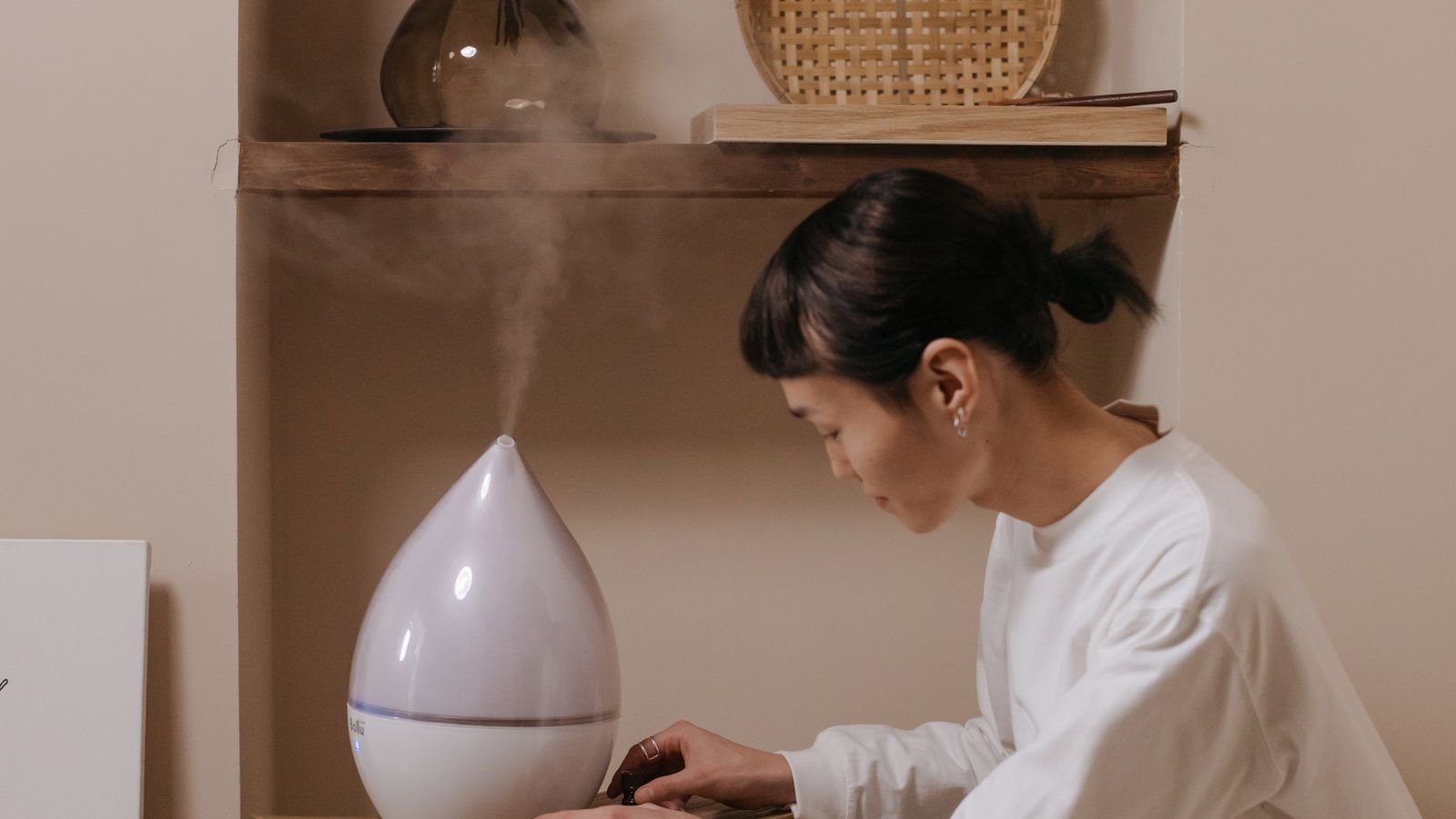
Capacity is quoted in pints of water removed per day, tested under standardised laboratory conditions. That number is not what you will see in your house — it is a benchmark for comparing machines, measured in warm, very humid air. Testing standards were tightened in recent years, so a modern unit labelled 20 pints may be the direct replacement for an older unit labelled 30 pints. When comparing a new machine against one you already own, check whether the older rating used the previous standard before concluding the new one is weaker.
The practical implication is simple: buy on today’s ratings, compare like with like, and assume real-world extraction in a cool basement will be well below the headline figure. Manufacturers are not being dishonest; ambient temperature and humidity genuinely change how much water a coil can condense.
Step-by-Step: Sizing Your Unit
- Measure the space in square feet. Multiply length by width for each room the unit will serve. A dehumidifier only treats air it can circulate, so do not add up rooms separated by closed doors — those need their own unit or a genuinely open floor plan.
- Assess how damp the space is. Put it into one of four bands: slightly damp (feels humid, musty smell in wet weather, 50–60% relative humidity); moderately damp (musty smell most of the time, occasional damp patches, 60–70%); very damp (damp spots on walls or floor, 70–80%); or wet (visible standing water, seepage, sweating walls, over 80%).
- Start from a baseline. For a slightly damp space, roughly 10 pints per day covers 500 square feet, with about 4 more pints for each additional 500 square feet.
- Adjust upward for dampness. Add about 5 pints for moderately damp, 10 pints for very damp, and 15 pints or more for wet conditions over the same floor area.
- Add for problem loads. Add capacity for each of these: multiple occupants in the space, a washer or dryer in the room, a bathroom or shower opening directly into it, several doors or windows to the outside, or a crawl space beneath.
- Check the temperature. If the space regularly drops below 65 degrees, you need a model rated for low-temperature operation with automatic defrost, and you should size up because extraction falls sharply in cold air.
- Round up, but not far. Choosing the next size up gives headroom for a bad summer. Jumping two or three sizes just wastes money and creates short-cycling.
Typical Sizing by Space
- Bathroom or small ensuite (under 150 sq ft): a small 10 to 20 pint unit, or a compact desiccant model, is plenty. Ventilation matters more than raw capacity here, and the units suited to this job are covered in the best dehumidifiers for bathrooms comparison.
- Bedroom (150–350 sq ft): 20 to 30 pints, with noise level as important as capacity. A machine you switch off because it keeps you awake removes no water at all.
- Living room or open lounge (350–700 sq ft): 30 to 40 pints for moderately damp conditions.
- Full basement (700–1,500 sq ft): 40 to 50 pints minimum, more if it is very damp or cool, and ideally with a continuous drain.
- Whole floor or large open plan (over 1,500 sq ft): 50 pints and up, or two units placed at opposite ends rather than one large machine in a corner.
- Crawl space: a purpose-built low-profile unit, not a domestic portable, because standard machines are not designed to work unattended in that environment.
Measure Before You Buy
Guessing at your dampness band is the biggest source of sizing error. An inexpensive digital hygrometer costs very little and removes all doubt. Place one in the problem room, leave it for a week, and note the readings morning and evening. Humidity swings a lot across a day, so a single spot check tells you almost nothing.
Target range for a comfortable, mould-resistant home is 45 to 55 percent relative humidity. Below 40 percent you start drying out timber, plaster and skin for no benefit. Above 60 percent, dust mites and mould become genuinely comfortable. If your readings sit at 75 percent, you know you are in the very damp band and can size confidently. Take readings in more than one spot too — a basement corner is often 10 points wetter than the middle of the room, and that corner is where problems appear first.
Why Oversizing Is a Real Problem
People often assume a bigger dehumidifier is simply a safer bet. It is not. A compressor dehumidifier that satisfies the humidistat within a few minutes will switch off, then restart shortly after. That start-stop cycling is the hardest duty on a compressor, uses a surge of power each time, and never runs long enough for the coil to get properly cold and extract efficiently. You get a machine that is loud in bursts, wears faster and costs more to run than a correctly sized unit humming along steadily.
Oversizing also makes it easy to overshoot into air that is too dry, which causes shrinking joints in furniture and flooring, static, and irritated sinuses. The right size is the one that runs a good proportion of the time and holds a steady reading, not the one that wins on paper.
Beyond Capacity: What Else Affects the Choice
Two machines with identical pint ratings can perform very differently. Compressor models are the standard choice and work best above roughly 65 degrees. Desiccant models cost more to run but keep working down to near freezing, making them the sensible pick for an unheated garage or a cool bedroom in winter. Tank size matters if you will not have a drain hose — a 40 pint unit with a small tank means emptying it twice a day. Continuous drainage removes that chore entirely, provided gravity is on your side or you fit a pump.
Noise is the deciding factor in sleeping spaces. Anything much above conversational level will be noticed at night, and units with a quiet or night mode trade some extraction for a slower fan. If a bedroom is your target room, weigh the noise ratings carefully alongside capacity; the models singled out in the best dehumidifiers for bedrooms roundup are chosen with that trade-off in mind. Energy efficiency ratings, auto-restart after a power cut, and a washable filter round out the list of features that matter in daily use.
Placement Changes Effective Capacity
A correctly sized machine in the wrong place underperforms. Give the unit clearance on all sides — most need at least 6 to 12 inches of free space around the intake and outlet, so pushing it against a wall or into a cupboard chokes it. Put it as close to the moisture source as practical: near the shower, near the washer, or at the damp end of a basement. Close doors and windows to the outside, or you are dehumidifying the neighbourhood. And keep it off deep carpet if the intake is on the base.
Frequently Asked Questions
What size dehumidifier do I need for a 1,000 square foot basement?
For a moderately damp basement of that size, a 40 to 50 pint unit is the usual answer. If the basement is very damp or drops below 65 degrees, size up and choose a model with low-temperature operation and a continuous drain option.
Is one large unit better than two smaller ones?
For a single open space, one correctly sized unit is simpler and cheaper. For a long or partitioned area, two smaller machines placed at opposite ends will hold humidity far more evenly than one large one struggling to circulate air past walls.
Can a dehumidifier be too powerful for a small room?
Yes. In a small room an oversized unit short-cycles, wastes energy and can pull the air uncomfortably dry. Match capacity to the room rather than buying the biggest model your budget allows.
Does a dehumidifier need to run all the time?
No. Set the humidistat to around 50 percent and let the machine cycle to maintain it. Continuous operation is only appropriate during active drying, such as after a leak or during a very wet spell.
How do I know if my dehumidifier is undersized?
It runs almost constantly and still cannot bring the reading down to the setpoint after several days. That is the definitive test, and no amount of cleaning or repositioning will fix it — the machine simply lacks the capacity for the space.
Final Thoughts
Sizing a dehumidifier well is a ten-minute exercise with a tape measure and a hygrometer, and it determines whether you end up with a quiet appliance that holds your home at a steady 50 percent or a noisy one that never quite gets there. Measure the area, measure the humidity honestly, adjust for temperature and moisture sources, then round up one step. Get that right and everything else — noise, running cost, tank emptying, lifespan — falls into place.