Owen Bradley
 Pet hair behaves differently from ordinary dust. It is barbed, statically charged, and it works its way down into carpet pile and upholstery weave where suction alone cannot reach it. That is why a house can look vacuumed and still shed a visible layer of fur onto dark trousers the moment someone sits down. Removing it properly is less about brute suction and more about technique: loosening the hair first so it sits on the surface, then collecting it, then treating the fabric so less hair grips next time. This guide walks through methods that actually work on carpet, rugs, sofas, and car interiors, along with the routine that keeps the problem manageable.
Why Pet Hair Is So Hard to Vacuum Up
Three things work against you. First, static: as hair rubs against synthetic carpet fibers it picks up a charge and clings electrostatically rather than sitting loose. Second, structure: pet hair has a scaled cuticle that hooks into looped and twisted pile the way velcro does. Third, depth: shed hair migrates downward with foot traffic until it rests at the base of the pile, below the airflow zone a vacuum nozzle creates. A vacuum passing over the surface removes the loose top layer and leaves the embedded majority behind, which is why the carpet looks better immediately after cleaning and fuzzy again a day later.
Tools That Genuinely Work
- A rubber-bristled broom or squeegee. Dragged across carpet, rubber generates static of its own and pulls embedded hair into visible clumps.
- A pumice stone or hair-removal block. Excellent on low-pile carpet and stair treads, though too aggressive for delicate wool.
- Damp rubber gloves. The best tool for upholstery. Wipe in one direction and hair rolls up into ropes.
- A fabric or velvet lint brush. Reusable, directional, and ideal for cushions and car seats.
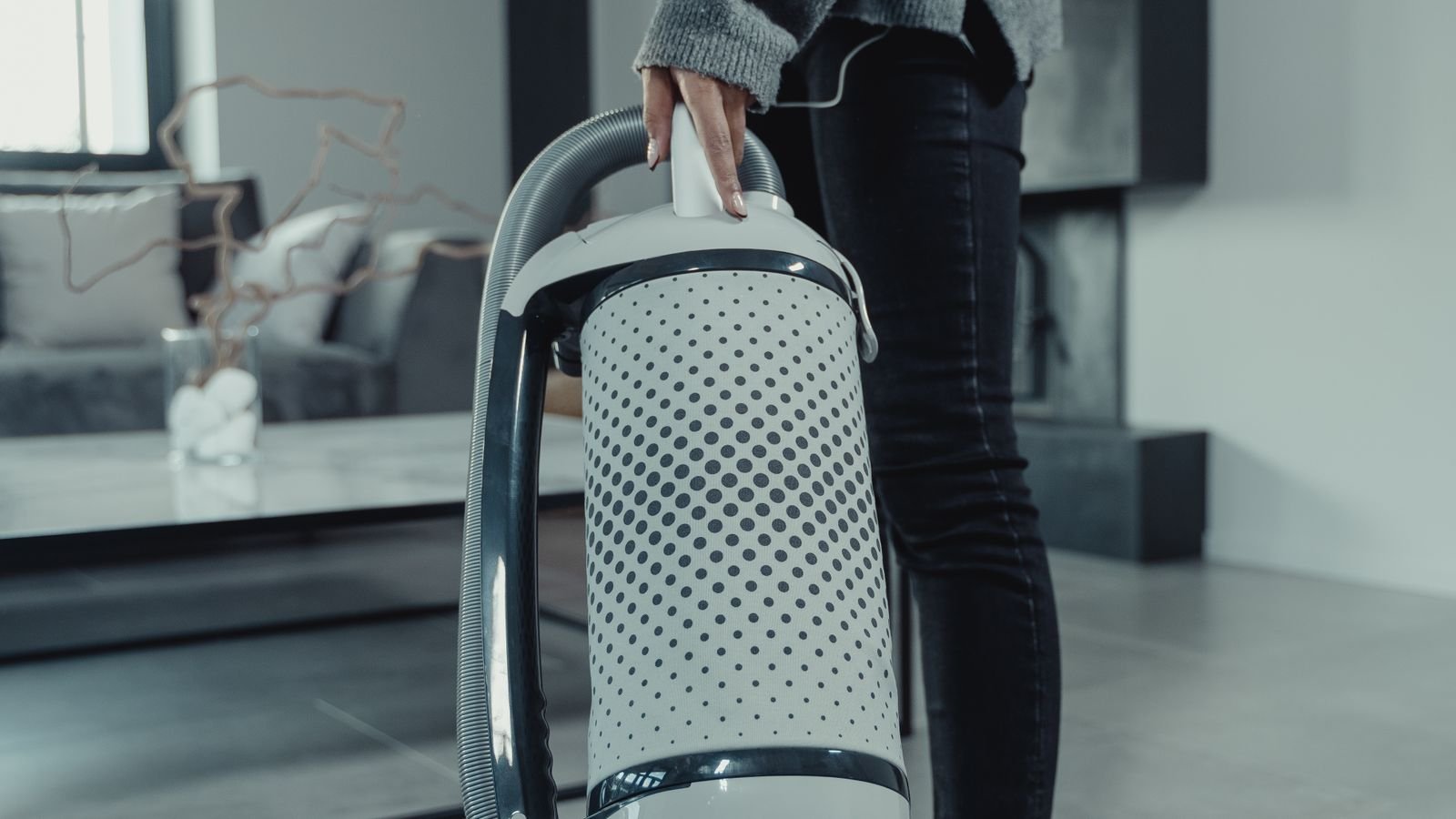
- A vacuum with a motorized brush head and tangle-resistant brushroll, plus a small motorized upholstery tool.
- A window squeegee for large rug areas, worked in short pulls toward you.
- Fabric softener solution in a spray bottle, one part softener to three parts water, to break static.
Suction still matters for the collection step, and a machine that clogs or tangles will undo the effort. Comparisons of the best vacuums for pet hair and the wider category of best vacuums for animal hair are worth reading if your current machine bogs down or wraps hair around the brushroll every session.
Step-by-Step: Removing Pet Hair From Carpet
- Clear the area of toys, cords, and small rugs, and pick up any large clumps by hand so they do not clog the nozzle.
- Break the static. Lightly mist the carpet with the diluted fabric softener solution and let it sit for a couple of minutes. The carpet should feel barely damp, never wet.
- Drag a rubber broom across the pile in short, firm strokes, always in the same direction. Embedded hair will lift and gather into visible lines.
- Sweep the loosened hair into piles and lift it by hand or with a dustpan before vacuuming. Feeding a large mat of hair straight into a vacuum is what causes tangles.
- Vacuum slowly in overlapping passes. Go at roughly half the speed that feels natural, and overlap each pass by a third.
- Cross-hatch the direction. Vacuum the whole area north to south, then repeat east to west. The second direction lifts hair the first pass laid flat.
- Work the edges and corners with a crevice tool, since pile against baseboards holds the heaviest concentration.
- Finish stubborn patches with a pumice stone, scrubbing gently in one direction on low pile only.
- Empty the bin and check the brushroll before storing the vacuum, because hair left wound on the brush reduces performance on the next run.
Step-by-Step: Removing Pet Hair From Upholstery
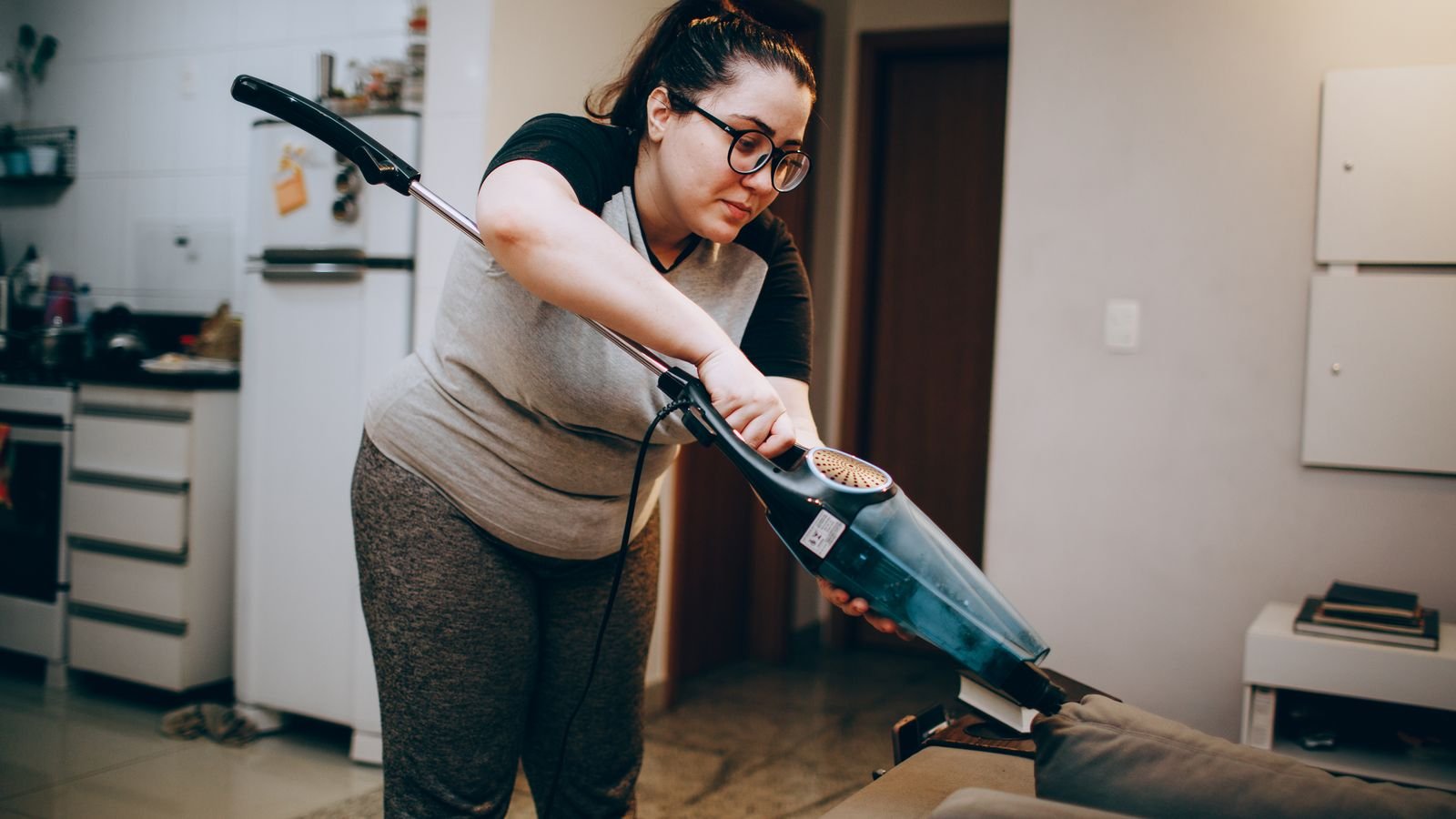
- Remove cushions and vacuum the frame first, including the crevices where the seat meets the back, using a crevice tool.
- Put on rubber washing-up gloves and dampen them slightly under a tap, then shake off excess water.
- Wipe in one direction with light pressure. Hair will bunch into ropes you can pick off and bin.
- Follow with a velvet or fabric lint brush stroked in the direction of the nap to catch what remains.
- Use a slightly damp microfiber cloth on leather and faux leather instead of gloves, wiping toward one corner.
- Vacuum with an upholstery tool, ideally a motorized mini head, working slowly across the whole surface.
- Treat both sides of removable cushions and vacuum inside the cushion covers if zips allow.
- Finish with a light anti-static mist and let the fabric dry fully before replacing cushions.
Handling Different Fabrics Safely
Technique should follow material. Microfiber and suede-effect fabrics respond well to a dry rubber glove or a soft brush, but water can leave visible rings, so keep them dry. Velvet needs strokes with the nap only; brushing against it forces hair deeper and marks the pile. Wool carpet and natural fiber rugs should never see a pumice stone, which will abrade and pill the surface; use a rubber broom instead. Leather needs only a damp cloth, since hair sits on the surface rather than embedding. For delicate or antique textiles, use low suction with a mesh screen over the nozzle to protect loose fibers. When in doubt, test any solution or abrasive tool on a hidden section first.
Cars, Stairs, and Other Awkward Spots
Car interiors trap hair in seat seams and along the base of the seat back. Work a rubber squeegee down the seat surface, then use a crevice tool along every stitched seam, and finish carpet mats by removing them entirely and scrubbing with a pumice stone outside. Stairs collect hair on the nose of each tread and in the corner where riser meets tread. Use a handheld or motorized stair tool and work top to bottom so debris falls onto sections you have not yet cleaned. Pet beds should be shaken outdoors, rolled with a rubber broom, and washed on a cycle of their own with an extra rinse, ideally after a quick vacuum to remove the bulk first.
Reduce the Hair Before It Reaches Your Floors
- Brush your pet daily, outdoors when weather allows. A deshedding tool removes loose undercoat that would otherwise end up in your carpet.
- Wash bedding weekly so it stops acting as a hair reservoir that redistributes with every movement.
- Use washable throws on the sofa spots your pet favors, and launder them rather than the whole sofa.
- Keep humidity between 40 and 50 percent, which dramatically reduces static cling.
- Run an air purifier in the main pet room to capture airborne dander before it settles.
- Place washable mats at doorways to catch hair moving between rooms.
Mistakes That Make Pet Hair Worse
- Vacuuming too fast, which gives airflow no time to lift embedded hair.
- Soaking carpet with water or softener, which turns loose hair into a matted paste and can leave residue that attracts dirt.
- Skipping brushroll cleaning, so each session starts with a partially blocked head.
- Letting the bag or bin fill past half, which is where suction on fine debris drops off sharply.
- Using a pumice stone on wool or high pile, causing permanent pilling.
- Ignoring the filter, since dander clogs filters far faster than ordinary house dust.
Frequently Asked Questions
How often should I vacuum with pets in the house?
High-traffic areas benefit from a quick pass every day or two, with a thorough cross-hatched session weekly. Heavy shedders during seasonal coat changes may need daily attention.
Does fabric softener spray damage carpet?
Used at roughly one part softener to three parts water and misted lightly, it is safe on most synthetic carpet. Test an inconspicuous area first, and never saturate the pile.
Why does hair come back the day after I vacuum?
You removed the surface layer while embedded hair remained deeper in the pile, and foot traffic worked it back up. Loosening with a rubber broom before vacuuming solves this.
Are bagged or bagless vacuums better for pet hair?
Bagged models contain dander better and are preferable for allergy households. Bagless models cost less to run but release dust when emptied, so empty them outdoors.
Can a robot vacuum keep up with a shedding dog?
A robot with a rubber brushroll running daily does an excellent job of maintenance, but it will not extract deeply embedded hair. Treat it as a supplement to a weekly deep clean, not a replacement.
Final Thoughts
The reliable formula for pet hair is loosen, collect, then prevent. Break the static and lift embedded hair with a rubber broom or damp gloves, vacuum slowly in two crossing directions with a clean brushroll and a half-empty bin, and then cut the incoming supply with daily brushing, washable throws, and sensible humidity. None of these steps takes long on its own, and together they turn a losing battle into a ten-minute routine. Keep a rubber broom and a pair of gloves where you can grab them quickly, and the surprise fur on your clothes before leaving the house becomes a rare event rather than a daily one.