Owen Bradley
 Houseplants fail indoors for one reason more often than any other, and it is almost never watering. It is light. A windowsill that looks bright to your eye may deliver a small fraction of what a plant actually needs, because human vision adapts to dimness while photosynthesis does not. Grow lights close that gap, and modern LED units make it cheap and practical to keep a monstera thriving in a north-facing flat or start seedlings in a basement in midwinter. The tricky part is that grow lights are sold with a bewildering vocabulary — PPFD, DLI, full spectrum, PAR — most of which is either misused in marketing or genuinely essential depending on which term it is. This guide cuts through it and sets up a working system.
The Only Three Terms You Need
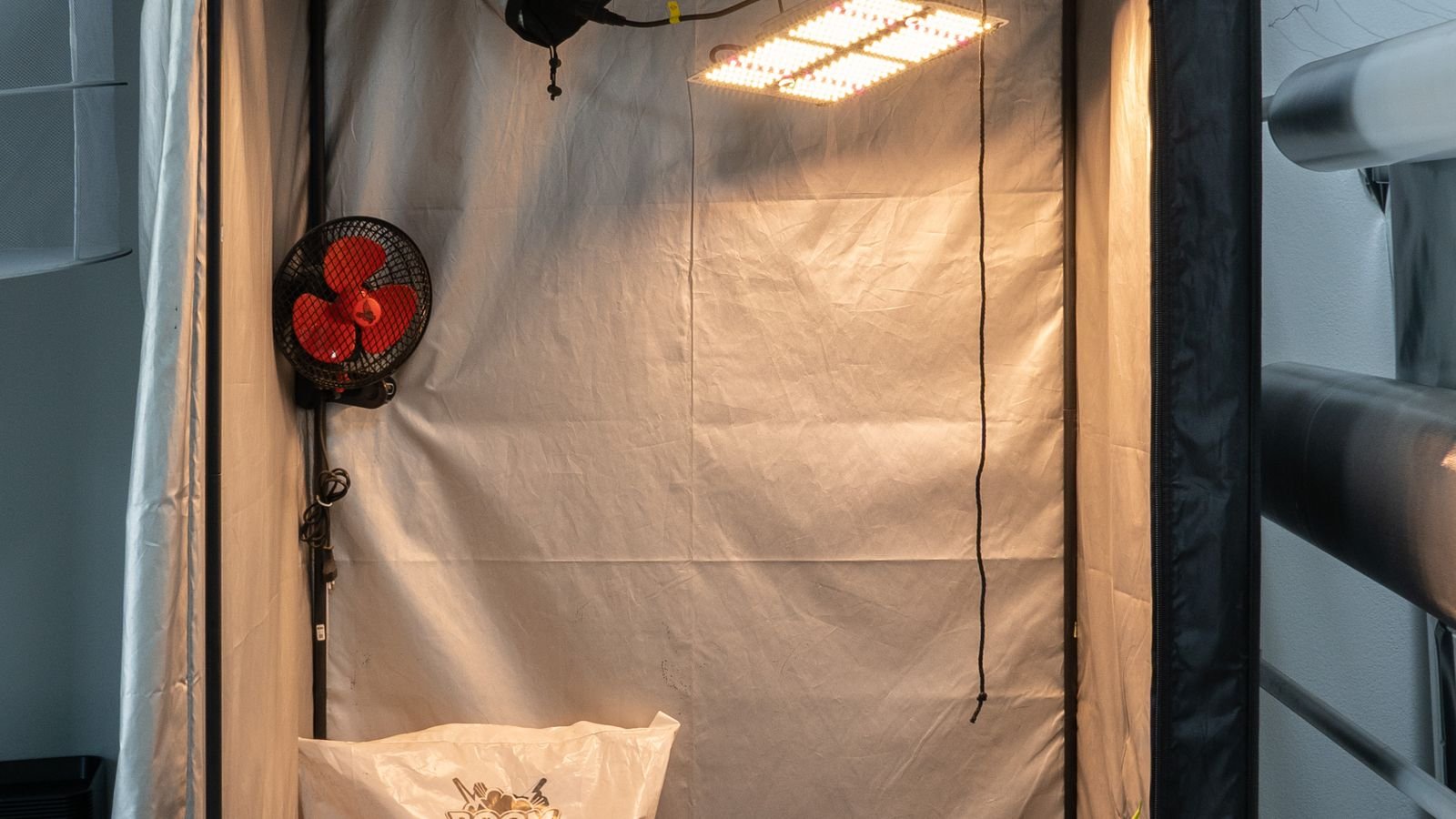
Grow light specifications are cluttered, but three numbers do almost all the useful work.
- PAR (photosynthetically active radiation) is the band of light between 400 and 700 nanometres that plants can actually use. A lamp’s lumen rating measures brightness as human eyes perceive it, which weights heavily toward green — precisely the wavelengths plants reflect. Lumens are therefore close to useless for evaluating a grow light.
- PPFD (photosynthetic photon flux density) measures how many usable photons land on a given area each second, at a stated distance. This is the number that matters, and a trustworthy manufacturer publishes a PPFD map showing values at several heights.
- DLI (daily light integral) is PPFD multiplied by hours of operation — the total daily light dose. It is the figure that determines whether a plant merely survives or genuinely grows.
Ignore any product that advertises only watts and lumens. Wattage tells you the electricity bill, not the light delivered.
How Much Light Different Plants Need
Matching output to species prevents both the leggy stretching of under-lit plants and the bleached, curled leaves of over-lit ones.
- Low-light foliage — pothos, ZZ plant, snake plant, philodendron. Target a PPFD around 50–150. These tolerate a modest lamp at a comfortable distance and forgive imprecision.
- Medium-light foliage — monstera, fiddle-leaf fig, calathea, most ferns. Target 150–300. This is the bracket most houseplant setups are aiming at.
- High-light plants and succulents — cacti, echeveria, citrus, most herbs. Target 300–600. Succulents in particular lose their compact form and colour without genuine intensity.
- Seedlings and vegetables — target 200–400 for seedlings rising to 400–600 for fruiting crops like tomatoes and peppers.
As a practical rule of thumb, if you have no light meter, most houseplants do well with a decent LED panel positioned 12 to 24 inches above the canopy and run for 12 to 14 hours a day.
What You Will Need
- An LED grow light sized to the area you want to cover — a bulb for one plant, a bar or panel for a shelf.
- A mechanical or smart timer. Non-negotiable. Plants need a consistent daily cycle, and you will not remember every day.
- An adjustable mounting method — an adjustable-height fixture, a clamp lamp, or a chain and hook system so you can raise the light as plants grow.
- A tape measure to set and verify distance.
- Optional: a light meter app or a PAR meter for checking actual delivered intensity.
- Optional: a small fan for air movement, which strengthens stems and reduces fungal issues under lights.
Choosing the Light Type
Three formats cover nearly every indoor situation.
Screw-in grow bulbs fit an ordinary lamp socket and suit a single plant or a small cluster. They are the easiest entry point and the least conspicuous in a living room. Their limitation is coverage — the useful cone is narrow, so a bulb lights one plant well and its neighbours poorly. For a single specimen plant this is exactly right, and a comparison of the best grow light bulbs for indoor plants is a practical way to see which bulbs deliver real PPFD rather than just marketing wattage.
LED bar lights mount under shelves and cast an even strip of light across a row of pots. They are the workhorse format for propagation shelves and herb setups, and they distribute light far more evenly than a single point source.
Panels and quantum boards cover a defined area at higher intensity. These are what you want for seed starting at scale, for fruiting vegetables, or for a dense plant shelf where every pot needs meaningful light.
On spectrum: full-spectrum white LEDs, which look like ordinary daylight, work excellently and are far more pleasant to live with than the purple blurple lamps that dominated early LED grow lighting. The purple units are not wrong — plants use red and blue most efficiently — but the colour distortion makes it impossible to spot pests or yellowing leaves, and the efficiency advantage of modern white LEDs has largely erased the gap.
Step-by-Step Setup
- Group plants by light requirement. Put the succulents and herbs together under the brightest fixture, and the pothos and ferns together under something gentler. Trying to serve both from one lamp fails both.
- Mount the fixture so its height is adjustable. Chain and S-hooks, a telescoping stand, or an adjustable clamp all work. Fixed-height mounting is the mistake you will regret within a month as plants grow toward the light.
- Set the initial distance. Start at the upper end of the manufacturer’s recommendation — usually 18 to 24 inches for a panel, 12 to 18 inches for a bulb — and lower it gradually while watching the plants respond.
- Position for even coverage. Intensity falls off sharply toward the edges of any fixture’s footprint, so keep plants within the central area and rotate pots weekly so every side gets its turn.
- Set the timer. Twelve to fourteen hours for foliage houseplants, fourteen to sixteen for seedlings and herbs. Choose a schedule and keep it identical every day.
- Give plants genuine darkness. The dark period is not wasted time — plants carry out important respiratory and growth processes at night. Running lights twenty-four hours a day harms most species.
- Add air movement. A small fan on low, aimed across rather than directly at the plants, thickens stems and prevents the still, humid microclimate that invites mould and fungus gnats.
- Adjust water and feeding upward. A plant receiving substantially more light grows faster, transpires more, and uses more nutrients. Under-lit plants need less water; well-lit ones need noticeably more.
- Observe for two weeks, then fine-tune. Plants tell you clearly whether the distance is right — see the next section for how to read them.
Reading the Plants to Fine-Tune Distance
You do not need a PAR meter if you can read the signs.
Too little light shows up as etiolation — long, pale, stretched stems with wide gaps between leaves as the plant reaches for a source it cannot find. New leaves come in smaller than old ones. Variegated plants revert toward plain green because they cannot afford the non-photosynthetic tissue. Succulents lose their tight rosette form and become elongated and floppy.
Too much light produces bleached, washed-out patches on the leaves nearest the fixture, crisp brown edges, and leaves that curl upward or fold inward to reduce their exposed surface. Some plants develop a red or purple blush as a protective response.
Correct light means compact growth with short internodes, new leaves matching or exceeding the size of old ones, strong colour, and steady development. If you see this, leave the setup alone and simply raise the light as the plant gains height.
Mistakes to Avoid
- Buying by wattage or lumens. Neither describes usable plant light. Insist on a PPFD figure at a stated distance.
- Running lights around the clock. Damaging for most species and wasteful for all of them.
- Fixed-height mounting. Plants grow; your light needs to move.
- One lamp for plants with different needs. Group by requirement instead.
- Forgetting to increase watering. A brightly lit plant dries out far faster than the same plant did in a dim corner.
- Placing plants at the edge of the footprint where intensity may be a third of what it is in the centre.
- Assuming a bright-looking room is enough. Eyes adapt over roughly a thousand-fold range; plants do not.
Frequently Asked Questions
Can I use a regular LED bulb as a grow light?
For very low-light plants, a bright daylight LED close to the foliage provides some benefit. For anything with real light requirements it falls short, because household bulbs are engineered for perceived brightness rather than photon output in the PAR range.
How many hours per day should grow lights run?
Twelve to fourteen hours for most foliage houseplants, fourteen to sixteen for seedlings and herbs. Consistency matters more than the exact figure, so use a timer.
Do purple grow lights work better than white ones?
They target red and blue wavelengths efficiently, but modern full-spectrum white LEDs perform comparably while letting you see the plants normally. For a home, white is the better practical choice.
Will grow lights raise my electricity bill much?
Not meaningfully at houseplant scale. A typical LED panel for a plant shelf draws roughly what a couple of household bulbs do, and runs for half the day.
How close should the light be to the plants?
Start at 18 to 24 inches for a panel or 12 to 18 for a bulb, then adjust based on how the plants respond. Bleached leaves mean move it up; stretching stems mean move it down.
Final Thoughts
Setting up grow lights properly is less about buying the most powerful fixture and more about matching intensity to the plants you actually have, mounting it so the height can change, and putting the whole thing on a timer so the cycle never varies. Group plants with similar needs, keep them within the central footprint of the fixture, give them a real dark period, add a little air movement, and increase water and feeding to match the faster growth. Watch the plants for two weeks and let their leaves tell you whether to raise or lower the light. Do that and a dim flat becomes somewhere plants genuinely thrive rather than slowly decline.