Owen Bradley
 A security camera system for a small business has to satisfy demands a home system never faces. It needs to hold footage long enough to be useful in an insurance claim or a police report, it needs to cover specific liability points rather than just the front door, and it has to be operated by staff who did not install it and will not read a manual. On top of that, recording in a workplace brings legal obligations around signage, employee notification, and data handling that vary by jurisdiction and that no amount of good hardware will excuse you from. Approached methodically the whole project is a weekend of planning and a day of installation. This guide covers the site survey, choosing between system architectures, camera placement, the installation sequence, configuration, and the operational habits that keep the system genuinely useful.
Define What the System Is Actually For
Businesses install cameras for several distinct reasons, and each pulls the design in a different direction. Write down which of these apply before you look at any hardware.
- Loss prevention. Needs high detail at the till, the stockroom door, and any high-value display. Identification-grade resolution matters more than wide coverage.
- Liability defence. Slip-and-fall claims and disputed incidents need wide coverage of customer areas with reliable timestamps and long retention.
- After-hours intrusion. Needs good low-light performance on perimeter doors and windows, plus motion alerts that actually reach someone.
- Staff safety. Cameras at rear exits, car parks, and cash-handling points, often paired with recorded audio where that is legally permitted.
- Operational insight. Queue lengths, opening procedures, delivery verification. Lower resolution is acceptable here.
The list you produce determines camera count, resolution, and how much storage you need. Skipping this step is why so many small businesses end up with eight cameras that all watch the same doorway and none that watch the safe.
Survey the Site
- Walk the premises and draw a rough floor plan. Mark every door, window, till, stockroom, and cash point.
- Identify the choke points. Every visitor passes through certain places. A camera facing the entrance at face height catches everyone; a camera in the middle of the shop floor catches shoulders and hats.
- Note the lighting at every hour. Visit at opening, at midday, and after dark. A doorway backlit by afternoon sun silhouettes everyone who walks in.
- Locate power and network runs. Mark the comms cupboard, existing cable routes, and any ceiling void or conduit you can use.
- Find a secure spot for the recorder. A recorder sitting on the counter is the first thing a burglar takes. It belongs in a locked cupboard or office.
- Check your obligations. Confirm what signage is required, whether you must notify employees, how long you may retain footage, and whether audio recording is permitted where you are. Get this in writing from a professional if there is any doubt.
Choose the System Architecture
- PoE IP system with an NVR. One cable per camera carries both power and data back to a network video recorder. This is the standard for small business installations: reliable, high resolution, local storage, no monthly fee. It requires cable runs.
- Analogue HD with a DVR. Uses coaxial cable, which is useful when an older system is already cabled and you only want to upgrade the cameras and recorder. Lower ceiling on resolution and features.
- Wireless cameras with cloud storage. Fastest to deploy and no cabling, but dependent on Wi-Fi reliability, subject to subscription costs, and vulnerable to an internet outage at exactly the wrong moment.
- Hybrid. A wired core covering the critical points, plus a couple of wireless cameras for awkward outbuildings. Common and pragmatic.
For most small premises a PoE system with local recording and optional cloud backup gives the best balance of reliability and running cost. Comparing recorder channel counts, storage capacity, and camera resolution across the best business security camera systems is worth the time, because buying a recorder with no spare channels is the most common regret in this category.
Plan Camera Placement and Coverage
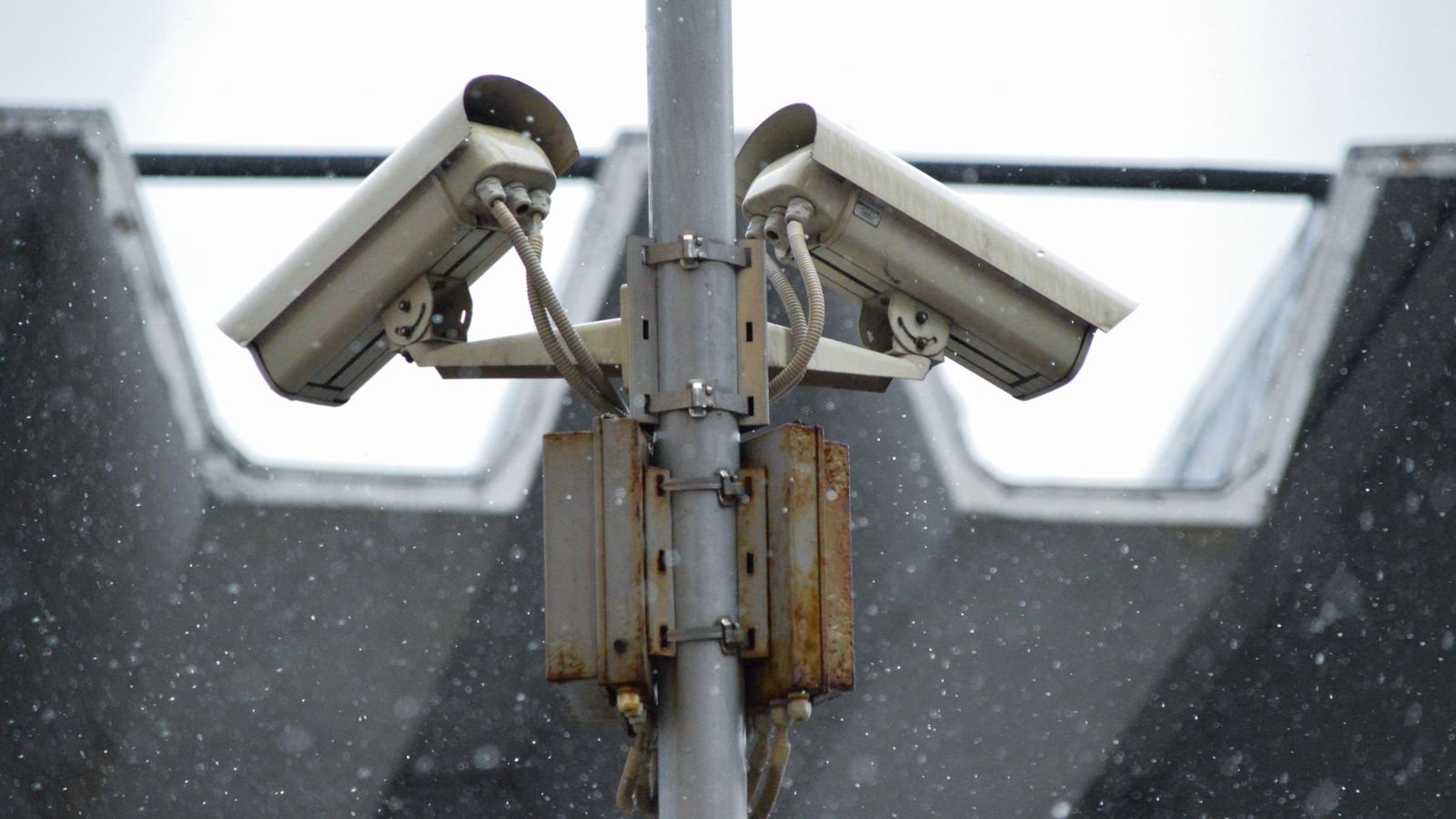
- Mount at 8 to 10 feet. High enough to be out of reach, low enough to capture faces rather than the tops of heads.
- Put one camera at face height near the entrance, angled to capture everyone coming in. This single camera produces more usable evidence than any other.
- Cover the till from behind and slightly above, framing both the drawer and the customer.
- Watch every exterior door, including the fire exit and the delivery door.
- Avoid pointing cameras directly at windows or bright lights. Backlighting destroys detail. Use wide dynamic range cameras where it is unavoidable.
- Respect private areas. Bathrooms, changing rooms, and staff break areas are off limits in most jurisdictions and are a serious legal exposure.
- Overlap coverage at critical points so one obstructed or vandalised camera does not create a blind spot.
Step-by-Step Installation
- Stage and test everything on a bench first. Connect each camera to the recorder in the office, confirm it comes up, and label it with its intended location. Diagnosing a dead camera at the top of a ladder is miserable.
- Install the recorder and storage. Fit the drives, place the unit in its locked location with ventilation, and connect it to the network and to an uninterruptible power supply.
- Run the cabling. Use outdoor-rated cable for any exterior run and keep data cable away from mains conductors to avoid interference. Respect fire-stopping at every wall and ceiling penetration. Leave a service loop at both ends.
- Mount the cameras. Drill, fit the bracket, seal exterior penetrations, and route the cable tail so no connector sits exposed to weather. Use the supplied junction boxes where provided.
- Aim each camera properly. Have somebody watch a live view while you adjust. Aim for the subject to fill a useful part of the frame — a face across a doorway should be recognisable, not a distant smudge.
- Set resolution and frame rate per camera. Full resolution at the entrance and till; lower settings elsewhere. This is the main lever on storage duration.
- Configure recording mode. Continuous recording on critical cameras and motion-triggered elsewhere is a good default. Pure motion recording risks missing slow or partially occluded events.
- Set the retention period. Calculate whether your storage actually delivers the number of days you need, and check your legal maximum retention too.
- Set the clock and time zone correctly. Sync to a network time source. An incorrect timestamp can render footage useless as evidence.
- Lock the system down. Change every default password, create separate accounts for staff who need live view only, disable unnecessary remote access features, and update the firmware.
- Configure alerts for after-hours motion, and test that they actually arrive on the right phones.
- Put up the required signage and complete any employee notification obligations before the system records a single frame.
Operating the System Well
- Practise exporting footage before you need it. Learn how to pull a clip with its timestamp and hash intact, and where it saves to.
- Check the recorder weekly. Confirm every channel is recording. Cameras fail quietly and nobody notices until the day it matters.
- Watch drive health. Surveillance drives run continuously and do eventually fail. Note the install date and plan replacement.
- Keep a written policy covering who may view footage, on what grounds, and how long it is retained. This protects both staff and the business.
- Back up critical incidents off the recorder immediately. Once the retention window rolls over, the footage is gone.
- Review the coverage after any layout change. A new display stand can blind a camera entirely.
Frequently Asked Questions
How many cameras does a small business need?
It depends on the layout rather than the floor area. A single-room shop may need four well-placed cameras; a premises with a stockroom, rear exit, and car park will need more. Cover the entrance, the till, every exterior door, and any high-value area, then add as needed.
How long should footage be retained?
Thirty days is a common target because incidents are often reported late. Check both your insurer’s expectations and any legal maximum that applies where you operate.
Do I have to tell employees they are being recorded?
In most jurisdictions yes, and often in writing. Covert recording of staff carries serious legal risk. Take proper advice rather than assuming.
Is cloud storage or local recording better?
Local recording gives you higher resolution without bandwidth limits and no ongoing fee; cloud storage survives the recorder being stolen. Many small businesses run local recording with cloud backup of key cameras.
Can I record audio as well as video?
Audio recording is regulated far more strictly than video in many places, sometimes requiring consent from all parties. Do not enable it without confirming the rules that apply to you.
Final Thoughts
A small business camera system is a planning exercise before it is a hardware exercise. Decide what the cameras are for, survey the site at different times of day, choose an architecture you can actually cable and maintain, and place cameras to capture faces at choke points rather than scattering them for coverage’s sake. Install the recorder somewhere locked and backed up by a UPS, change every default password, set the clock properly, and confirm your retention period genuinely matches the storage you bought. Then build the operating habits — weekly checks, practised exports, a written access policy — because a system nobody maintains stops being evidence and becomes decoration. Where the installation involves mains work, structural penetrations, or uncertainty about recording law, bring in qualified help.