Owen Bradley
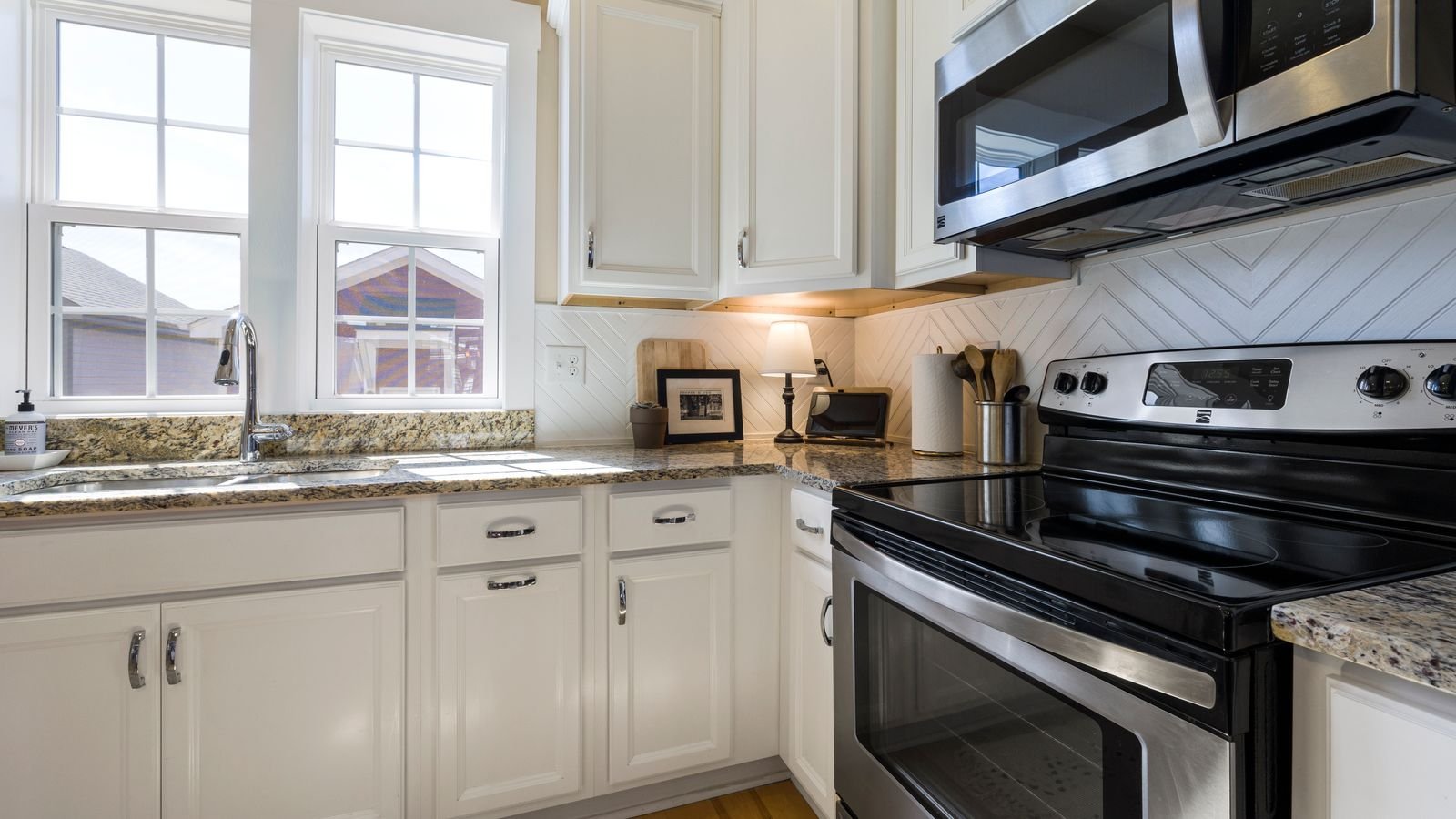
 Kitchens draw more electrical current than any other room in a typical home, and the outlets serving them are not interchangeable. A countertop that runs a kettle, a toaster, and an air fryer at the same time is asking far more of its circuit than a bedside lamp ever will, and choosing the wrong amperage — or the wrong outlet type on the right circuit — leads to breakers that trip during dinner, receptacles that discolour from heat, and in the worst cases a genuine fire risk. Getting this right is mostly a matter of arithmetic and a few firm rules. This guide explains how to work out the amperage each appliance needs, how kitchen circuits are normally arranged, how to match receptacles to circuits, and the mistakes that cause most kitchen electrical problems.
Start With the Basic Electrical Arithmetic
Everything in this decision comes down to one relationship: watts divided by volts equals amps. An appliance rated 1500 watts on a 120-volt supply draws 12.5 amps. That single calculation, applied to every appliance you plan to plug in, tells you nearly everything you need to know.
- Find the nameplate. Every appliance carries a label stating watts, amps, or both. Use the amps figure if given, since it accounts for the appliance’s actual behaviour.
- Apply the continuous-load rule. Anything expected to run for three hours or more should not exceed 80 percent of the circuit rating. On a 20-amp circuit that means a working ceiling of 16 amps.
- Add simultaneous loads, not total loads. The question is not how many appliances you own but how many run at once. A kettle and a toaster together on one 20-amp circuit is roughly 25 amps — a guaranteed trip.
- Account for motor inrush. Refrigerators, disposals, and dishwashers draw several times their running current for a fraction of a second at startup. That surge is why a fridge sharing a circuit with a heavy countertop appliance causes intermittent, hard-to-diagnose trips.
How Kitchen Circuits Are Normally Arranged
Modern residential wiring practice treats the kitchen as a special case, and understanding the standard arrangement tells you what your outlets should be.
- At least two small-appliance branch circuits serving the countertop receptacles, each rated 20 amps. These are dedicated to the kitchen and dining area and must not feed lighting.
- A dedicated circuit for the refrigerator, so a tripped countertop circuit does not silently defrost your food.
- A dedicated circuit for the dishwasher and another for a garbage disposal, sized to their nameplates.
- A dedicated high-amperage circuit for an electric range or cooktop, commonly 40 or 50 amps at 240 volts, with a matching receptacle configuration.
- A dedicated circuit for a built-in microwave, since a full-size unit can draw close to the whole capacity of a 15-amp circuit on its own.
- GFCI protection on all countertop receptacles, and increasingly on other kitchen outlets too, because of the proximity of water.
Local code always governs. The arrangement above reflects common practice, but the requirements in your jurisdiction, and the vintage of your home’s wiring, decide what is actually permitted.
Matching the Receptacle to the Circuit
- Identify the breaker rating for the circuit in question. Open the panel, read the number on the breaker handle, and confirm which outlets it controls by switching it off and testing.
- Check the wire gauge. A 20-amp circuit needs 12-gauge conductors; 14-gauge is only rated for 15 amps. If you find 14-gauge wire on a 20-amp breaker, stop — that is a serious defect and needs an electrician.
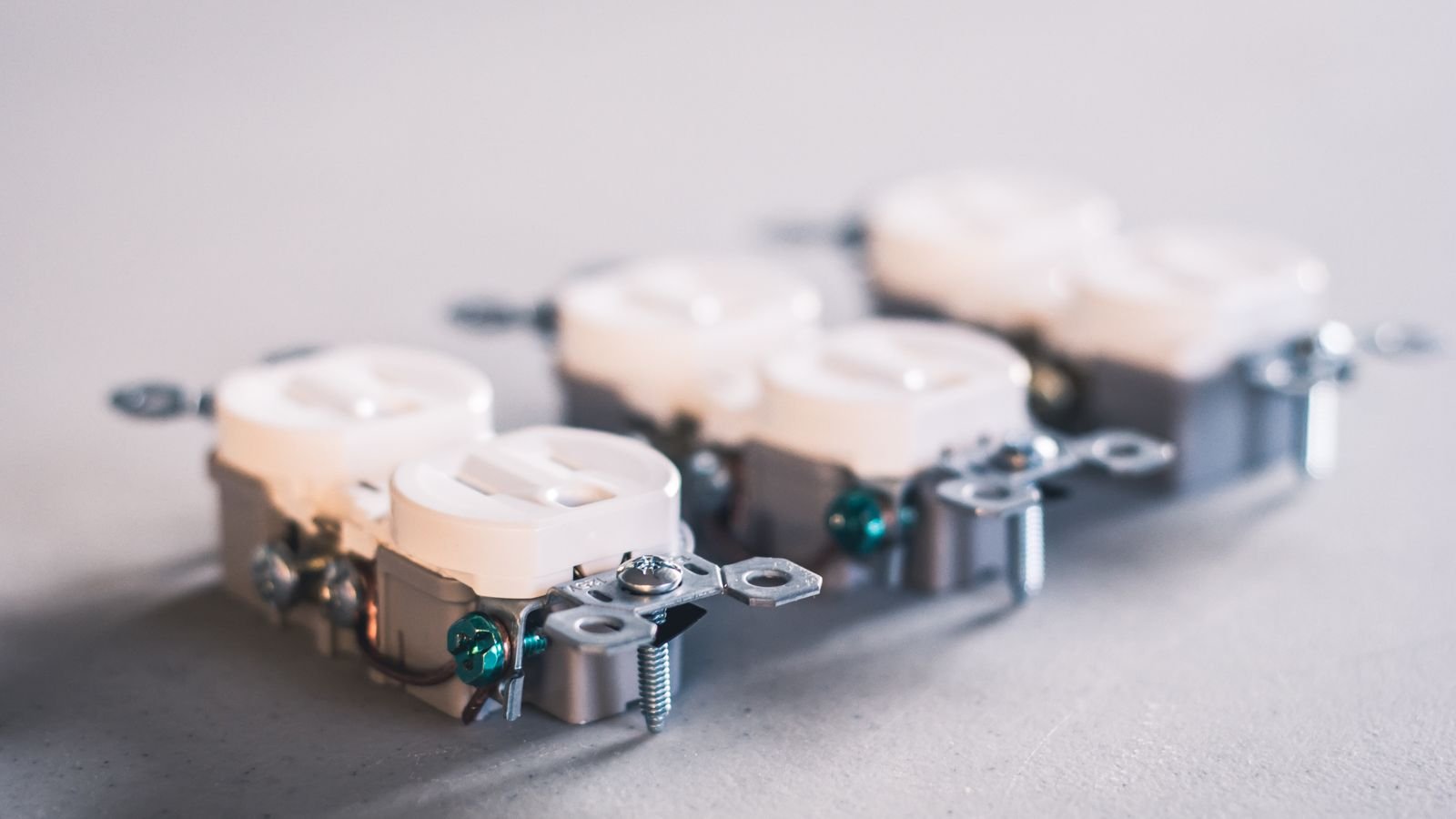
- Choose the receptacle rating. A 15-amp duplex receptacle may legally be used on a 20-amp circuit when more than one receptacle is on that circuit, because the load is shared. A 20-amp receptacle, identifiable by the T-shaped neutral slot, is required where a single receptacle sits alone on a 20-amp circuit.
- Never fit a 20-amp receptacle on a 15-amp circuit. It invites someone to plug in a 20-amp appliance that the wiring cannot safely carry.
- Use tamper-resistant receptacles where required, which in most modern codes means essentially everywhere in a dwelling.
- Confirm GFCI coverage for every countertop position, either via a GFCI receptacle at the first outlet in the run or a GFCI breaker at the panel.
When you are selecting the hardware itself, look at the amperage rating, the terminal type, and the build quality rather than just the price. Comparing the specifications and construction across the best power outlets is worthwhile for a kitchen in particular, because countertop receptacles are cycled far more often than any others in the house and cheap contacts loosen quickly.
Typical Kitchen Appliance Loads
- Electric kettle — commonly 1200 to 1500 watts, around 10 to 12.5 amps. Short duration but very heavy.
- Toaster or toaster oven — 800 to 1800 watts. A large toaster oven alone can approach the working limit of a 15-amp circuit.
- Air fryer — 1400 to 1800 watts, and it runs for twenty minutes or more, which pushes it toward continuous-load territory.
- Microwave — 900 to 1500 watts of output, but the input draw is higher than the cooking wattage printed on the front.
- Coffee maker — 800 to 1500 watts while brewing, much less on the warming plate.
- Refrigerator — modest running draw of 3 to 6 amps, but a startup surge several times that.
- Dishwasher — 10 to 12 amps, higher during the heated dry cycle.
- Electric range — the outlier, requiring a dedicated 240-volt circuit rated 40 or 50 amps depending on the model.
Add the appliances you genuinely use simultaneously on one countertop run. If the total exceeds 16 amps, you need to split the load across circuits or add one.
Deciding Whether You Need a New Circuit
- Log the trips. Note exactly which appliances were running each time the breaker goes. A pattern usually appears within a week.
- Measure rather than guess. A clamp meter on the circuit conductor at the panel gives you a real number instead of a nameplate estimate.
- Check the panel’s spare capacity. A new circuit needs a free breaker position and headroom in the service. A full panel means a subpanel or a service upgrade, which changes the scope entirely.
- Weigh the routing. Running new cable from the panel to the kitchen is often the largest part of the cost, especially through finished walls.
- Bring in a licensed electrician for anything involving the panel, new circuits, or 240-volt appliance connections. This is not a category where a good outcome and an unqualified installer overlap.
Mistakes to Avoid
- Fitting a bigger breaker to stop nuisance trips. This is the single most dangerous shortcut in domestic wiring. The breaker protects the wire, not the appliance.
- Using an extension lead or power strip for a heating appliance. Kettles, toasters, and air fryers should go straight into a wall receptacle.
- Putting the refrigerator on a shared countertop circuit. A trip you do not notice for a day costs you a fridge full of food.
- Back-stab wiring. Push-in rear terminals on receptacles are permitted on 15-amp devices but make a far weaker connection than screw terminals. In a kitchen, always use the screws.
- Ignoring a warm faceplate. A receptacle that feels warm, buzzes, or shows discoloration has a loose or degraded connection and needs attention immediately.
- Assuming all countertop outlets share one circuit. Test before you assume; kitchens are frequently split in non-obvious ways.
Frequently Asked Questions
Can I plug a 20-amp appliance into a 15-amp outlet?
No. A true 20-amp appliance has a plug with a sideways blade that will not physically fit a 15-amp receptacle, and that incompatibility is deliberate.
Why does my breaker trip only when two appliances run together?
Because the combined draw exceeds the circuit rating. Each appliance is fine alone; the sum is not. Move one to a different circuit.
Do I need 20-amp receptacles on a 20-amp kitchen circuit?
Only when a single receptacle is alone on that circuit. Where multiple receptacles share the circuit, 15-amp devices are normally acceptable — though local code has the final say.
Is GFCI protection required for a refrigerator outlet?
Recent code editions have extended GFCI requirements to cover most kitchen receptacles including the refrigerator. Older installations may predate that. Check the edition your jurisdiction has adopted.
What does a T-shaped slot on a receptacle mean?
It identifies a 20-amp receptacle, which accepts both standard 15-amp plugs and 20-amp plugs with the perpendicular blade.
Final Thoughts
Choosing outlet amperage for kitchen appliances comes down to three checks: work out the real simultaneous draw using watts divided by volts, confirm the circuit’s breaker rating and wire gauge actually match, and then fit a receptacle appropriate to that circuit rather than to the appliance you happen to own today. Keep the refrigerator, dishwasher, and any built-in microwave on dedicated circuits, respect the 80 percent rule for anything that runs long, and use screw terminals on every kitchen device. If the numbers say you need another circuit, add one properly rather than working around it with extension leads or a larger breaker. When the work reaches the panel or a 240-volt connection, hand it to a licensed electrician and have the result inspected.