Owen Bradley
 Most homes have smoke alarms, and most of those homes have the wrong alarm in at least one room. The sensor type that responds fastest to a smouldering sofa fire is not the one that responds fastest to a flaming pan, and the alarm that works perfectly in a bedroom will nuisance-trip constantly if you mount it just outside a bathroom. Getting the placement and the technology right costs no more than getting it wrong. This guide works through sensor types, power options, and interconnection, then goes room by room so you can build a plan for the whole house. It is general guidance — always follow the manufacturer’s instructions and any building regulations that apply where you live, since those take precedence.

Ionisation Versus Photoelectric Sensors
Two sensing technologies dominate, and they respond to different fires.
Ionisation alarms detect the tiny particles produced by fast, flaming fires — burning paper, a flare-up on a hob, a fire that has taken hold. They respond quickly to those events and comparatively slowly to smouldering ones. They are also the type most prone to nuisance alarms from cooking, which is why they get taped over or have their batteries removed.
Photoelectric alarms use a light beam and a sensor to detect larger smoke particles from slow, smouldering fires — an overheating cable in a wall, a cigarette in upholstery, bedding against a heater. These fires kill more people, because they generate large volumes of smoke while occupants sleep. Photoelectric units are also far less prone to cooking nuisance trips.
Most fire safety guidance now favours photoelectric alarms for general residential use, and dedicated photoelectric smoke alarms are widely available. Dual-sensor units that combine both technologies in one housing give the broadest coverage and are a sensible choice where you want a single alarm to handle everything.
Power: Battery, Hardwired, and Sealed Long-Life Units
Three power arrangements exist, and the right one depends on your building and your tolerance for maintenance.
Replaceable-battery alarms are cheapest and install anywhere in minutes. Their weakness is human: batteries get removed for other devices, low-battery chirps get ignored, and replacement gets forgotten. If you choose these, put a reminder in the calendar.
Sealed ten-year lithium alarms solve that problem by making the battery non-removable and matching its life to the alarm’s own service life. You install it, test it periodically, and replace the whole unit at end of life. For most homes without existing wiring, this is the best-value choice, and roundups of battery smoke detectors concentrate heavily on this type.
Hardwired alarms with battery backup draw mains power and fall back to a battery during an outage. They are required by regulation in new construction in many places and are the standard for interconnected systems. Guides to hardwired smoke alarms cover the models designed for permanent installation on a dedicated circuit.
Interconnection: The Feature That Matters Most
A single alarm sounding in a basement will not reliably wake someone asleep on the second floor with the door closed. Interconnection fixes this: when one alarm detects smoke, every alarm in the house sounds simultaneously.
This is achieved either by a physical interconnect wire between hardwired units, or by a wireless radio link between battery units. Wireless interconnection has matured considerably and lets you retrofit a whole-house system without pulling cable, which is transformative in an older property. Comparison articles on interconnected smoke alarms cover both approaches.
Two caveats. Interconnected alarms generally must be from the same manufacturer and often the same product family — mixing brands rarely works. And some systems benefit from location-announcing models that say which room detected the smoke, which is genuinely useful when you are disoriented and half-awake.
Combination Smoke and Carbon Monoxide Units
Carbon monoxide is a separate hazard with separate detection requirements. It is odourless, produced by any incomplete combustion, and requires a chemical or electrochemical sensor rather than a smoke sensor.
Combination units save ceiling space and installation effort, and are a good fit near sleeping areas. However, the two sensors have different optimal mounting heights — smoke rises, while carbon monoxide mixes fairly evenly with air — and different service lives, with carbon monoxide sensors typically expiring sooner. Some households prefer separate units so each can be placed and replaced independently. Roundups of combination smoke and carbon monoxide detectors explain where the compromise is worthwhile.
Room by Room: Bedrooms and Sleeping Areas
Alarms inside each bedroom and in the hallway outside them are the highest-priority positions in any home, because fatal fires overwhelmingly occur at night. Photoelectric sensors are the usual recommendation here, since smouldering fires from bedding, cables, and electrical faults are the realistic risk.
Consider alarms with a low-frequency sound signal or a voice message for households including older adults, deep sleepers, or children, as these have been shown to rouse people more reliably than a high-pitched tone. Strobe and vibrating-pad options exist for anyone with hearing loss.
Room by Room: Kitchens and Adjacent Areas
Standard alarms should not be mounted in a kitchen, because cooking smoke and steam will cause constant nuisance trips and the alarm will end up disabled. Guidance generally suggests keeping alarms a stated minimum distance from cooking appliances — check the figure in your product’s instructions.
Where you need detection close to a kitchen, use a heat alarm instead. Heat alarms trigger on rapid temperature rise rather than smoke, so they ignore toast and steam while still detecting a genuine fire. They are slower than smoke alarms and should never replace them elsewhere in the house, but in a kitchen they are the correct tool.
Room by Room: Hallways, Stairs, and Landings
Stairwells act as chimneys, carrying smoke upward quickly, which makes landings essential detection points. Fit an alarm on every level, including finished basements and the top of every staircase.
Avoid mounting at the very apex of a vaulted ceiling, where a pocket of dead air can delay smoke reaching the sensor. Manufacturer instructions usually specify a small offset from the peak. Similarly, keep alarms away from ceiling fans, air vents, and windows, where moving air can push smoke away from the unit.
Room by Room: Garages, Basements, Attics, and Utility Rooms
Garages present a temperature and exhaust problem: most smoke alarms have an operating range that garages exceed in both directions, and vehicle exhaust triggers them. Use a heat alarm in an attached garage, and fit a carbon monoxide detector in the adjoining living space rather than in the garage itself.
Basements should have an alarm mounted near the stairway to the floor above, positioned to catch smoke rising from utility equipment. Attics generally do not need alarms unless they are habitable, and unconditioned attic temperatures fall well outside most units’ rated range. Laundry rooms benefit from photoelectric alarms placed a sensible distance from the dryer vent.
Placement Rules That Apply Everywhere
- Ceiling mounting is preferred; wall mounting should be near the ceiling, following the offset in the instructions.
- Keep alarms away from air vents, fans, and open windows.
- Avoid bathrooms and any room where steam is routine.
- Do not mount in unheated spaces outside the stated temperature range.
- Keep clear of the immediate area around cooking appliances and fireplaces.
- Never paint an alarm or cover it, even temporarily during decorating.
Testing, Maintenance, and Replacement
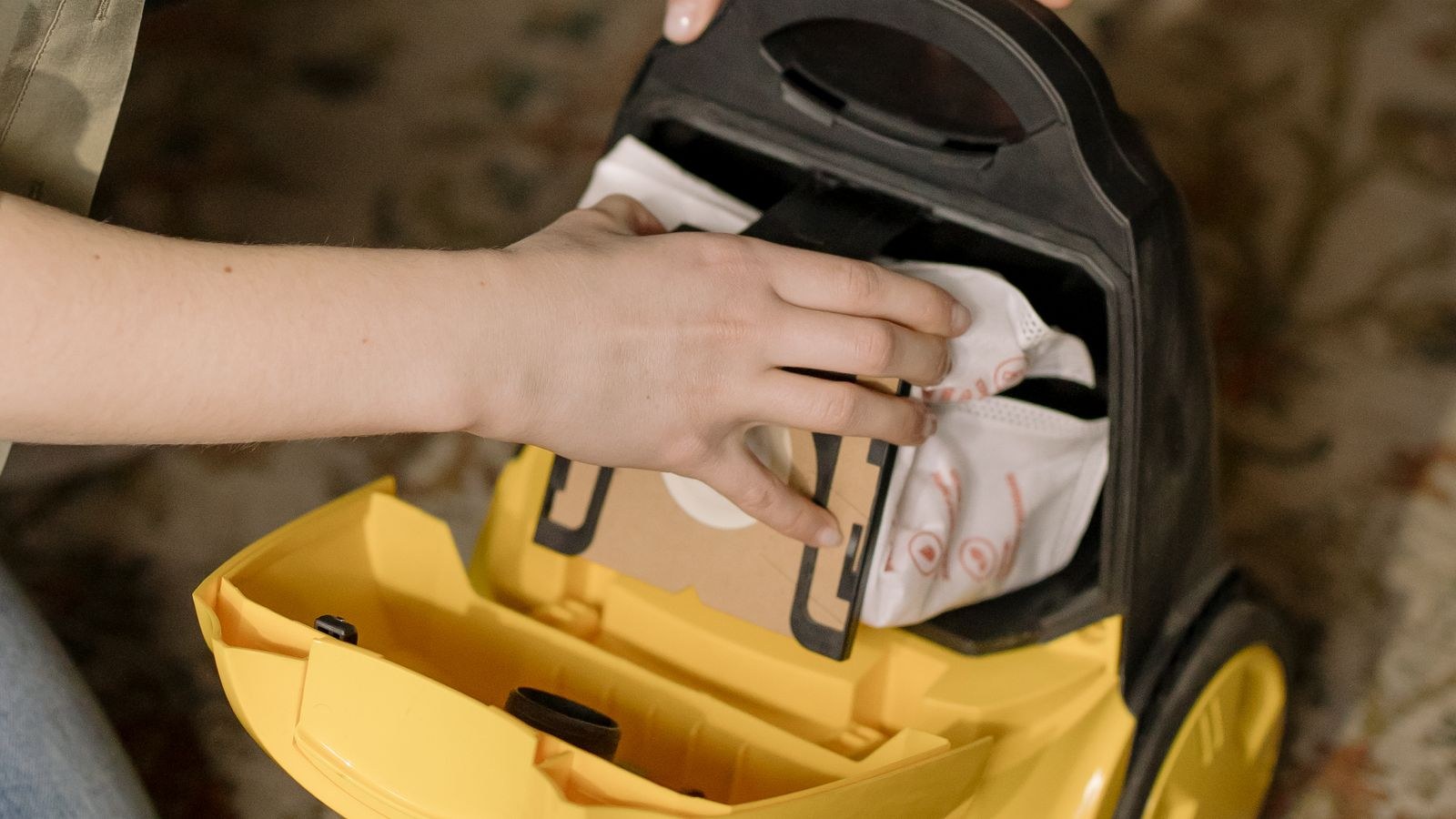
Test every alarm with its test button on a regular schedule — monthly is the usual recommendation. Vacuum the vents gently a couple of times a year, since dust and insects are a leading cause of both failures and false alarms.
Every smoke alarm has a finite service life, typically ten years from the date of manufacture printed on the back. Sensors degrade whether or not the alarm has ever sounded, so an old unit that still chirps on test is not necessarily working. Write the replacement date on the housing when you install it. Carbon monoxide sensors often expire sooner, so check that date separately on combination units. Roundups of smoke alarms for homes and general smoke detectors for home use are a useful reference when it is time to replace a full set.
Common Mistakes to Avoid
- Fitting a single alarm in a hallway and calling the house covered.
- Mounting a standard smoke alarm in or immediately beside a kitchen.
- Removing the battery to stop a nuisance alarm and never replacing it.
- Mixing brands in an interconnected system that cannot communicate.
- Keeping units past their printed end-of-life date because they still beep on test.
- Assuming a carbon monoxide detector also detects smoke, or the reverse.
Frequently Asked Questions
How many smoke alarms does a house need?
The common baseline is one inside every bedroom, one in the hallway outside sleeping areas, and at least one on every level including the basement. Larger or subdivided homes need more. Local regulations may specify a minimum, so check those first.
Photoelectric or ionisation — which should I buy?
Photoelectric is the usual recommendation for general residential use because it responds faster to smouldering fires and nuisance-trips less on cooking. Dual-sensor units cover both fire types and are a reasonable choice where you want a single alarm to do everything.
Do smoke alarms expire?
Yes. Sensors degrade over time, and most manufacturers specify a ten-year service life from the date of manufacture printed on the unit. Replace the whole alarm at that point regardless of whether it still passes its test.
Can I put an alarm in the kitchen?
Not a standard smoke alarm. Use a heat alarm, which responds to rapid temperature rise and ignores cooking smoke and steam. Keep smoke alarms at the distance from cooking appliances specified in the instructions.
Are wirelessly interconnected alarms as reliable as wired ones?
Modern wireless systems are well proven and are widely used in retrofit installations where running interconnect cable is impractical. They must all come from the same compatible product family, and you should test the whole-house link after installation and periodically thereafter.
Final Thoughts
Start with a floor plan, mark every bedroom, every landing, and every level, and decide the sensor type for each position based on what could realistically burn there. Choose interconnected units so one detection wakes the whole house, and pick sealed long-life or hardwired power so maintenance never becomes the weak link. Then write the replacement date on each unit as you install it. A plan built that way in 2026 takes an afternoon and is the single most effective safety investment available to a homeowner.