Owen Bradley
 A smart plug that refuses to connect is one of the most frustrating small failures in a smart home, mostly because the error messages are so uninformative. “Setup failed” tells you nothing about whether the problem is the plug, the app, the router, or the password you typed. The good news is that the vast majority of connection failures come down to a short list of causes, and you can work through them methodically in about fifteen minutes. This guide walks through diagnosing a smart plug that will not pair or keeps dropping offline, starting with the fixes that resolve most cases and moving toward the less common ones.
First, Read the Status Light
The LED on the plug is your primary diagnostic tool, and every manufacturer documents its meaning in the manual.
- Fast blinking almost always means pairing mode — the plug is waiting to be configured.
- Slow blinking usually means the plug has credentials but cannot reach the network or the cloud.
- Solid on generally indicates a successful connection.
- Alternating colors often signals a firmware update in progress; leave it alone for several minutes.
- No light at all points to no power reaching the device or a hardware failure.
Knowing which state you are in immediately tells you whether the problem is at setup or after setup, and those are two very different investigations.
Fix 1: Confirm You Are on the 2.4 GHz Band
This is the single most common cause of smart plug setup failure. Almost every smart plug on the market has a 2.4 GHz-only radio. It cannot see a 5 GHz network at all. If your phone is connected to the 5 GHz band during setup, the plug never receives usable credentials.
Modern routers often broadcast both bands under one network name, steering devices automatically. That convenience breaks smart plug pairing. To fix it:
- Log into your router’s admin page.
- Temporarily give the 2.4 GHz band a distinct name, such as adding “-2G” to the end.
- Connect your phone to that 2.4 GHz network.
- Run the smart plug setup again.
- Once paired, you can merge the band names back together — the plug remembers the credentials.
If you cannot change router settings, another workaround is to create a temporary 2.4 GHz mobile hotspot from a second phone, pair the plug to it, then reconfigure. Some routers also offer a guest network you can lock to 2.4 GHz.
Fix 2: Check the Wi-Fi Password and Network Name
Passwords are case sensitive and the app usually reports a generic failure rather than “wrong password.” Type it manually rather than relying on autofill, which sometimes inserts a saved password for a different network.
Special characters occasionally cause trouble with older plug firmware. If your password contains characters like ampersands, percent signs, or spaces, and nothing else has worked, testing with a temporary simple password is a legitimate diagnostic step.
Network names with emoji or non-ASCII characters can also break pairing on budget hardware. So can hidden SSIDs — most smart plugs cannot join a network that does not broadcast its name.
Fix 3: Move the Plug Closer During Setup
Smart plugs have small antennas and sit inside wall recesses, behind furniture, or in basements — all signal-hostile locations. Pair the device in the same room as the router, confirm it works, then move it to its final spot.
If it connects near the router but goes offline at its destination, you have a coverage problem, not a pairing problem. A mesh node, a repositioned router, or a different outlet on the same wall usually solves it. Metal appliance housings, refrigerators, and mirrors are particularly effective at killing 2.4 GHz signal at close range.
Fix 4: Reset the Plug Properly
A half-reset plug that still holds old credentials will fail every subsequent setup attempt. The reset sequence varies, but it is typically holding the power button for five to ten seconds until the LED blinks rapidly. Some models require a specific pattern, such as three quick power cycles.
- Unplug the device and wait ten seconds.
- Plug it back in and wait for it to fully boot.
- Press and hold the button until the LED changes to the fast-blink pairing pattern.
- Release and immediately begin setup in the app.
- Keep the phone unlocked and the app in the foreground for the entire process.
Backgrounding the app mid-setup interrupts the handshake and is a surprisingly frequent cause of failure.
Fix 5: Check Phone Permissions and Settings
Smart plug apps need permissions that are easy to deny by accident:
- Location access is required on both Android and iOS to read Wi-Fi network information during setup. Denying it produces a setup that mysteriously stalls at the network selection screen.
- Local network access on iOS must be enabled or the app cannot discover the plug at all.
- Bluetooth is used by many plugs for the initial provisioning handshake even though the final connection is Wi-Fi.
- VPNs route your traffic away from the local network and will block discovery. Turn any VPN off during setup.
- Private Wi-Fi address or MAC randomization can conflict with router filtering rules. Disabling it for your home network is worth testing.
Fix 6: Look at the Router Configuration
Several router features silently block smart plugs:
- AP isolation or client isolation prevents devices on the network from seeing each other. This must be off.
- MAC address filtering will reject the plug unless you add its address to the allow list.
- Device limit reached. Consumer routers often cap connected clients. Removing unused devices frees a slot.
- WPA3-only security. Many smart plugs only support WPA2. Set the network to WPA2/WPA3 mixed mode.
- Channel congestion. If your 2.4 GHz band is crowded, manually setting channel 1, 6, or 11 often improves reliability.
- DHCP pool exhausted. Rebooting the router or expanding the address range resolves this.
Fix 7: Rule Out the Outlet and the Plug Itself
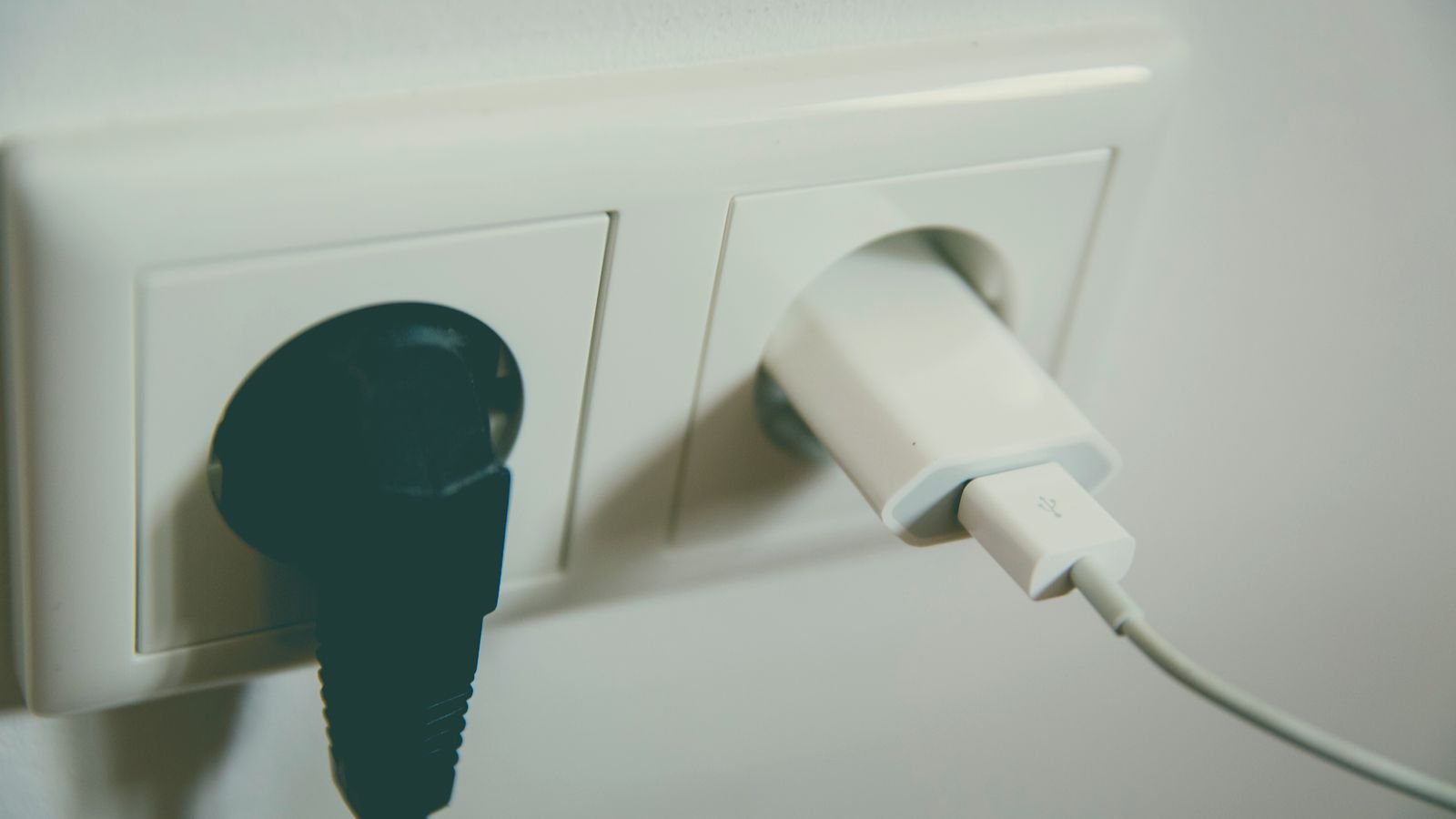
Before blaming software, confirm the hardware. Test the wall outlet with a lamp. If the outlet is on a switched circuit, someone may be cutting power to your plug without realizing it. GFCI outlets that have tripped look completely normal until you press the test and reset buttons.
Avoid plugging a smart plug into a surge strip during troubleshooting — some strips with filtering interfere with the plug’s operation. Plug directly into the wall.
If a plug worked for months and suddenly stopped, and every other device on your network is fine, the unit may simply have failed. Relays and power supplies in inexpensive plugs do wear out. Testing a known-good plug in the same outlet settles the question quickly. If you are replacing it, comparing the best smart plugs is worth doing, since build quality and firmware reliability differ substantially between models.
When the Plug Connects but Keeps Dropping
Intermittent disconnection is a different problem from failed pairing. Common causes include weak signal at the final location, a router that reassigns IP addresses aggressively, firmware bugs, and interference from microwaves or cordless phones on the 2.4 GHz band.
Assign the plug a static or reserved IP address in your router’s DHCP settings. Update the plug’s firmware through the app. Then check whether the drops correlate with a specific time of day — a neighbor’s device, an automated router reboot, or a scheduled backup saturating the network can all show up as recurring outages.
Common Mistakes to Avoid
- Trying to pair while connected to a VPN or a work network profile.
- Letting the phone screen lock mid-setup.
- Standing too far from the plug during provisioning.
- Assuming a plug is dead when the outlet itself is switched or GFCI-tripped.
- Skipping the full factory reset between failed attempts.
- Running an outdated version of the manufacturer’s app.
Frequently Asked Questions
Why does my smart plug work at home but not remotely?
Local control uses your network; remote control uses the manufacturer’s cloud. If local works and remote does not, the issue is the account, the cloud service, or your internet connection rather than the plug.
Does a mesh network cause problems?
Usually not, but mesh systems that aggressively steer devices between bands can confuse a 2.4 GHz-only plug. Pair near the main node and, if your system allows it, disable band steering temporarily.
Can I use a smart plug with a space heater?
Only if the plug is explicitly rated for that load, and many are not. Exceeding the amperage rating is a real fire risk. Check the rating printed on the housing against the appliance nameplate.
Will resetting the plug delete my schedules?
Yes. A factory reset clears all local configuration. Schedules stored in your account may repopulate after re-pairing, but assume you will need to rebuild them.
How many smart plugs can one network handle?
Practically, consumer routers start to struggle somewhere between 30 and 50 total wireless clients. If you are running a large number of plugs, a router with a higher client limit or a dedicated IoT network is the right upgrade.
Final Thoughts
Work the list in order rather than jumping around. Check the status light, confirm you are on 2.4 GHz, retype the password, move the plug near the router, do a genuine factory reset, and verify app permissions. Those six steps resolve the overwhelming majority of smart plug connection problems. If the plug still refuses after all of that, and a known-good unit works in the same outlet, you have your answer — it is the hardware, and no amount of further troubleshooting will bring it back.