Owen Bradley
 A coffee table is the one surface in the living room that has to be beautiful and useful at the same time. Style it too sparsely and the room feels unfinished; style it too enthusiastically and there is nowhere to set a mug down, which means everything gets shoved aside within a week. The arrangements that actually survive daily life follow a simple structure — a contained zone, a variation in height, something living, and something personal — with roughly half the surface left clear. This guide walks through how to style a coffee table in four layers, how to adapt the formula to round, square and oversized tables, and how to keep it looking intentional rather than cluttered.
What You Are Working With
Before choosing objects, take stock of the table itself. Three things drive every decision that follows.
- Shape. Rectangular tables split naturally into two or three zones; round tables want a single centred cluster; square tables suit a loose triangle of items.
- Size. Aim to fill no more than half to two-thirds of the surface. The empty space is not wasted — it is what makes the styled part read as deliberate.
- Height and material. A low table with a glass top shows everything from above and needs objects with visual weight; a chunky timber table can carry heavier pieces without looking crowded.
Check the relationship to the seating too. The table should sit 14 to 18 inches from the sofa edge — close enough to reach a drink without leaning, far enough to walk past — and its top should land within a couple of inches of the seat height.
Step-by-Step: The Four-Layer Method
- Clear the table completely. Start from empty. Styling around whatever is already there is how tables accumulate rather than get designed.
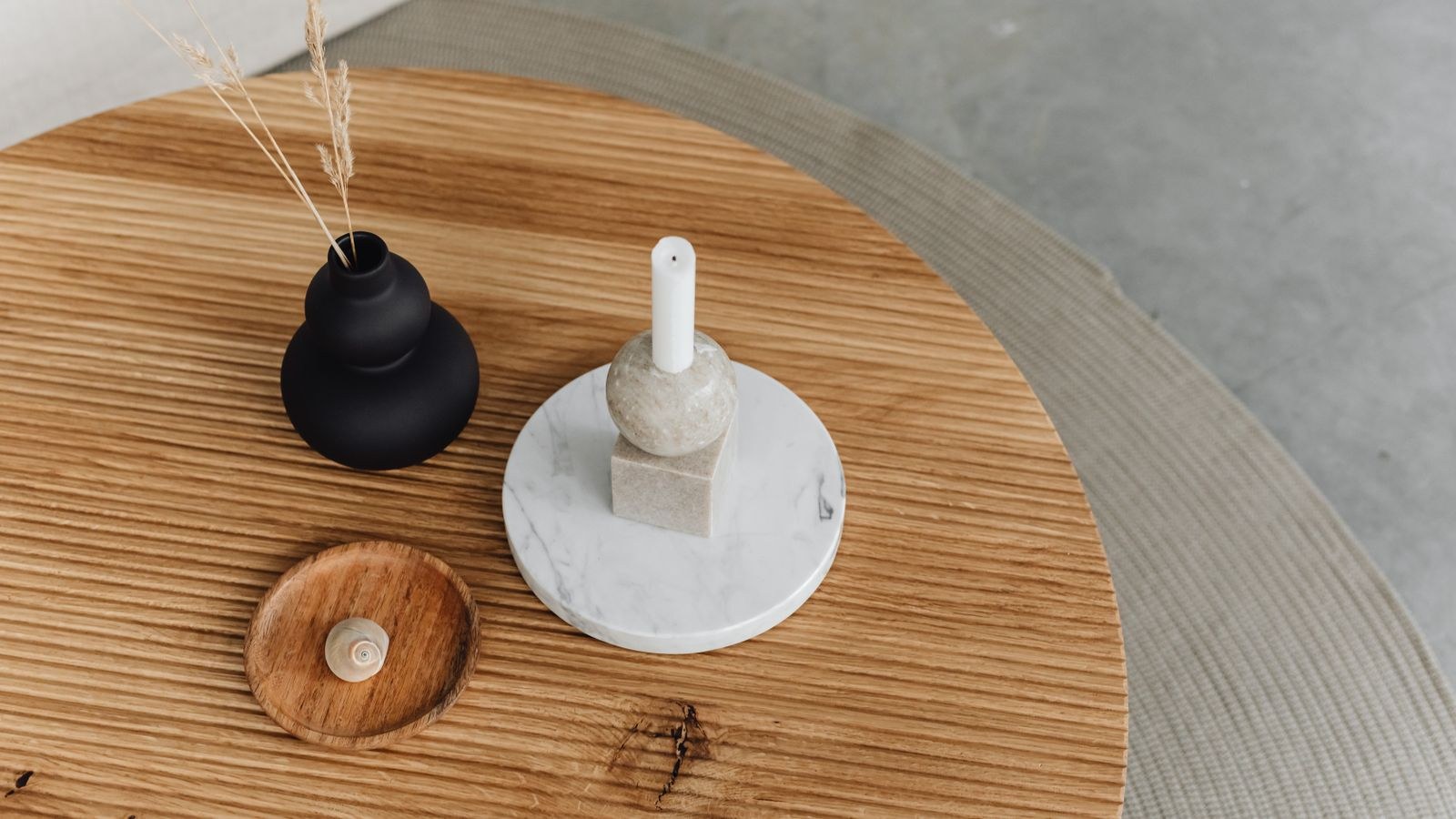
- Layer one: the anchor. Place a tray, a stack of large books, or a runner. This is the contained zone that keeps everything else from sprawling. A tray is the most forgiving choice because it can be lifted off in one motion when the table is needed.
- Layer two: height. Add one tall element — a vase, a candlestick, a sculptural object. Nothing should exceed about 12 to 14 inches or it blocks the sightline across the room. Height is what stops the arrangement reading flat.
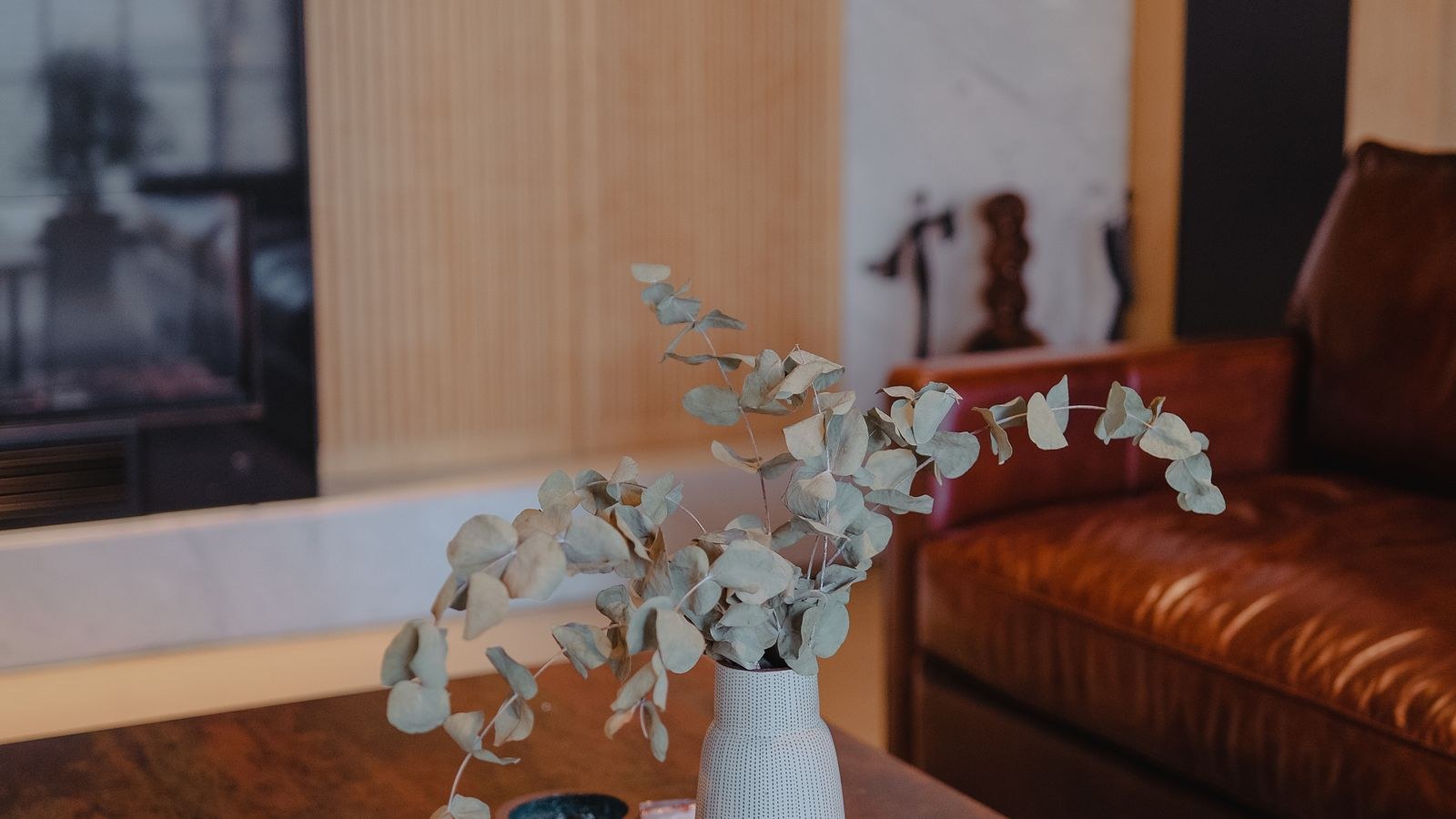
- Layer three: something living. A small plant, a bowl of stems, or a few branches. Organic shape and texture break up the hard edges of books and ceramics. Fake greenery works if the leaves are matte rather than shiny.
- Layer four: something personal. A candle you actually burn, a bowl of matchboxes, a small object from a trip, a decorative box holding remotes. This is what stops the table looking like a showroom.
- Vary the shapes. Step back and check you have a mix of round, square and organic forms. Three circular objects in a row look accidental; a round bowl beside a square stack of books looks composed.
- Edit ruthlessly. Remove one item, then look again. Nine times out of ten the arrangement improves. Leave at least half the surface bare.
- Live with it for a week. Whatever you keep moving out of the way every evening is in the wrong place or should not be there at all.
The Rule of Three and Visual Triangles
Odd-numbered groupings read as more natural than even ones, because the eye cannot pair them off and instead moves around the group. Arrange your three or five elements so their tops form a triangle rather than a straight line — tallest at one point, mid-height at another, lowest at the third. This is the single technique that separates styled tables from tables with objects on them.
On a long rectangular table, use two triangles instead of one large group: a primary cluster around two-thirds of the way along and a smaller secondary moment at the other end, with clear space between them. On a round table, keep everything in one centred cluster and let the negative space form a ring around it.
Choosing the Objects
Books
Large-format hardbacks are the workhorse of coffee table styling. Stack two or three, largest at the bottom, and either use them as a plinth for a smaller object or leave them as a horizontal counterweight to something tall. Turn spines toward the seating if the covers are attractive, or stack them spine-out for a library feel.
Trays
A tray should span roughly one-third to one-half the length of the table. Rectangular trays suit rectangular tables, round trays soften square ones. Anything in the tray reads as one composed unit rather than several loose items, which is why trays make small collections look intentional.
Vessels and Greenery
One generous vessel beats three small ones. If you use real plants, choose something that tolerates the light level honestly — a trailing pothos or a small snake plant survives most living rooms. Cut stems in a low bowl look considered and last a week; a towering bouquet blocks the room and dies in three days.
Candles and Texture
Group candles in odd numbers at varying heights, and pick unscented ones for a room where people eat. A small textural item — a woven coaster stack, a stone dish, a length of chain link — adds tactile contrast without taking space.
Making It Work With the Rest of the Room
A coffee table is a supporting player, so it should echo the room rather than compete with it. Pull one colour from the upholstery into a book cover, a vase or a candle, and repeat a material already present — brass, oak, marble, ceramic — so the table looks connected rather than shopped separately.
Scale is dictated by the seating. The table should measure roughly two-thirds the length of the sofa it faces, so a 90-inch sofa pairs with a table around 60 inches long. That proportion sits behind the dimensions listed across the best sofas, and checking sofa length before buying a table saves the common mistake of a small table stranded in front of a long seat. If the room is arranged around a pair of living room chairs rather than a single sofa, the table needs to be reachable from every seat, which usually means a round or square shape rather than a long rectangle.
Textiles do more for the table than any object on it. A throw draped over the sofa arm or an accent chair nearby carries colour across the seating group and softens the hard tabletop by association. Options among the best throws for sofas in a texture that contrasts with your upholstery are the fastest way to tie a styled table into the wider room. Lighting completes it: a lamp on a nearby side table casting light across the tabletop makes the objects read as three-dimensional after dark, and the best lamps for living rooms include low-profile shapes that light the surface without glare in the eyeline.
Adapting to How You Actually Live
Households with small children or large dogs need a different version of this. Skip glass, ceramics and candles, and use a single soft-sided tray or a fabric basket that can be lifted off in one movement. Ottomans used as coffee tables need a rigid tray to create a stable surface, and nothing on them should be breakable. If the table doubles as a dining surface for weeknight meals, keep the whole arrangement to one tray so clearing it takes two seconds — an arrangement that takes five minutes to dismantle will simply be shoved to one side instead.
Storage-friendly styling helps enormously. A lidded box or a shallow basket on the lower shelf handles remotes, coasters and chargers, which are the three things that ruin more coffee tables than any design mistake.
Common Mistakes
- Filling the whole surface. Leave half of it clear or the table stops functioning within days.
- Everything at one height. Without a tall element the arrangement reads as scattered rather than styled.
- Too many small objects. Five tiny items look like clutter; one substantial piece looks intentional.
- Ignoring the view from the sofa. Style it, then sit down and look. Anything blocking the television or the conversation across the room has to go.
- A table wildly out of scale. No amount of styling rescues a table half the length of the sofa it serves.
- Nothing to hold the daily debris. Without a box or bowl for remotes and coasters, the arrangement loses to real life every time.
Frequently Asked Questions
How many items should be on a coffee table?
Three to five elements for most tables, grouped so their heights form a triangle. Large tables can carry two separate groupings; small ones often need just a tray and a single object.
How tall can objects be?
Keep everything under about 12 to 14 inches so people can see and talk across the table. Height belongs on side tables and consoles where it does not interrupt the sightline.
Do I need a tray?
Not strictly, but it is the easiest tool available. It contains loose items, defines a zone, and lifts off in one motion when the table is needed for something else.
What should I do about remotes and chargers?
Give them a home rather than fighting them. A lidded box on the table or a basket on the lower shelf keeps them within reach and out of the composition.
Final Thoughts
Styling a coffee table that still works comes down to structure over quantity: anchor with a tray or book stack, add one element with height, bring in something living, finish with something personal, and stop there. Vary the shapes, arrange the heights into a triangle, and protect at least half the surface as usable space. Tie the palette to the seating around it and give the everyday clutter a container of its own, and the arrangement will still look considered a month from now — which is the only test that really matters.